HelloGrowthCRM software
Built for real small-business sales teams
HelloGrowthCRM helps reps qualify faster, follow up on time, and close more deals—with practical automation in one place.
- AI lead scoring and pipeline visibility
- Built-in dialer, WhatsApp, and email automation
- Sales forecasting and RevOps-ready reporting
Revenue generation is the process of earning income from your business activities, primarily through sales of products or services. It involves strategies and actions that convert prospects into paying customers. This article explains why revenue generation matters for small businesses, outlines practical steps to improve it, highlights common mistakes to avoid, and provides a clear example with US figures.
Why this comes up / what goes wrong
Many small-business owners in the US struggle with revenue generation because they rely on inconsistent sales methods like texting, emailing, or spreadsheets without a clear plan. This leads to slow follow-up, lost leads, and missed income opportunities. Without a structured approach, it’s hard to track which efforts bring in money and which don’t. Owners often wonder how to turn more inquiries into paying customers and grow their business sustainably.
Often, the problem is not a lack of leads but poor management of those leads. For example, a busy sales team might forget to follow up quickly or use multiple communication tools that don’t sync, causing confusion and delays. Without a clear sales pipeline, it’s difficult to see where each lead stands or predict future revenue. This uncertainty can stall business growth and cause cash flow issues.
Step-by-step
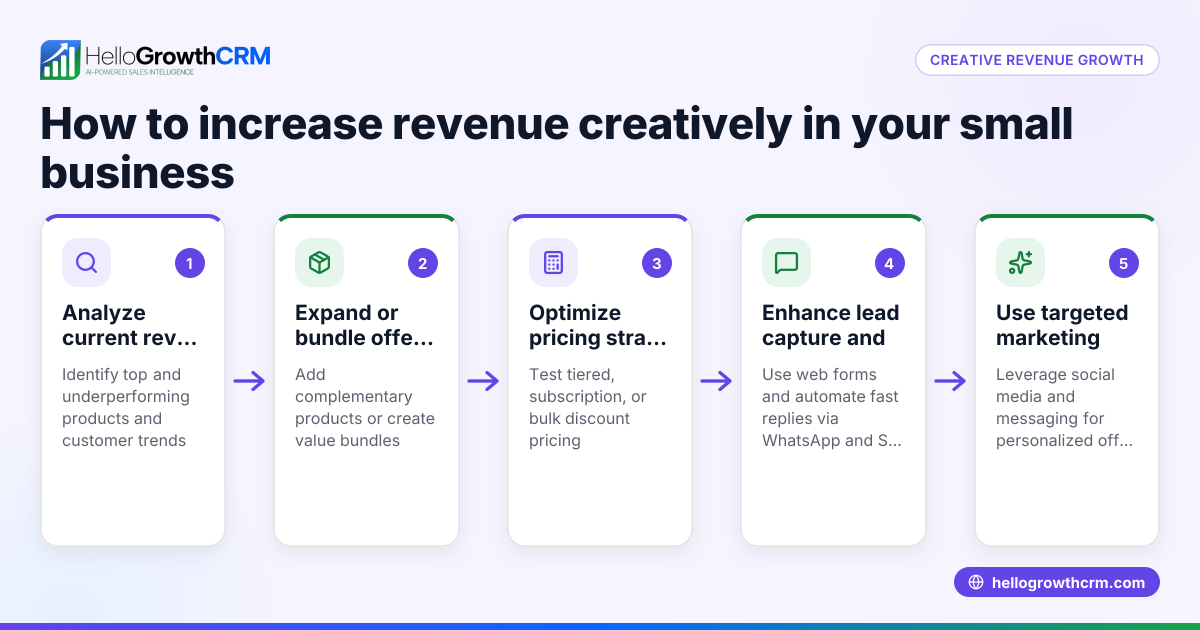
- Identify Your Revenue Sources List all ways your business makes money—product sales, services, subscriptions, or contracts. Check which sources bring in the most income and which are underperforming.
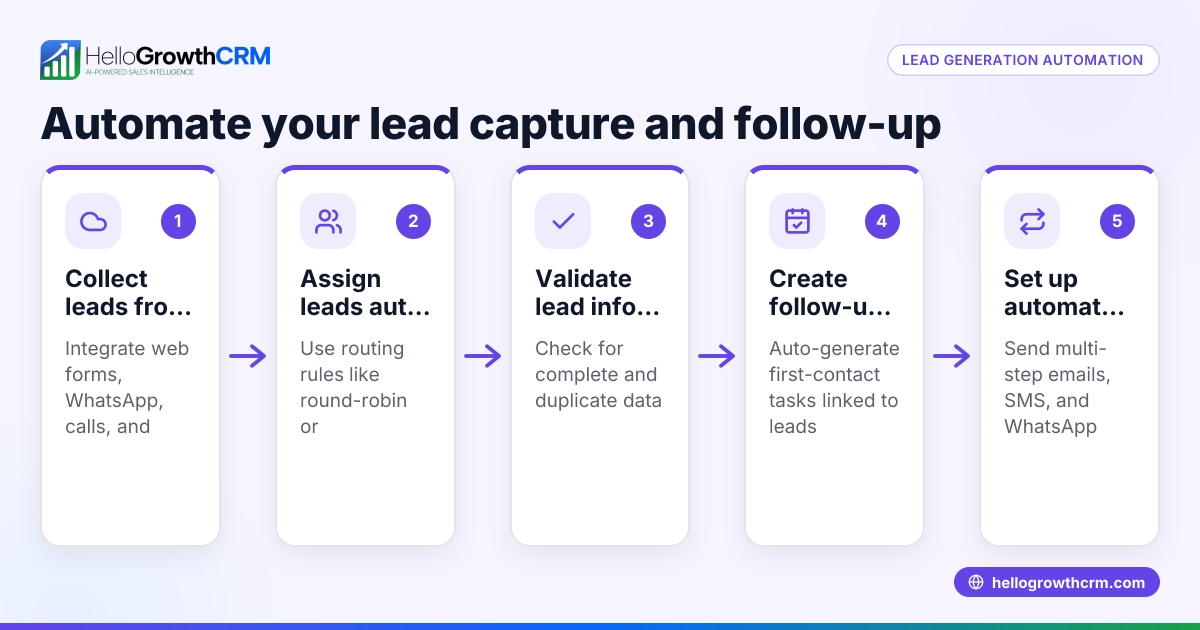
- Capture Leads Efficiently Use web forms, phone calls, or direct contacts to gather potential customer information quickly. Check that no leads slip through without follow-up by centralizing contact info.
- Qualify and Score Leads Prioritize leads based on their likelihood to buy using criteria like budget, need, and timing. Check your lead database regularly to focus on high-potential prospects.
- Engage Leads with Clear Communication Use consistent messaging via email, WhatsApp, or SMS. Check that your follow-ups are timely and relevant to each lead’s stage.
- Manage Your Sales Pipeline Track each lead’s stage from inquiry to sale on a visual pipeline board. Check your pipeline daily to move deals forward and avoid stagnation.
- Close Sales and Invoice Promptly Confirm orders clearly and send invoices without delay. Check that payments are tracked and recorded accurately.
- Analyze and Forecast Revenue Review past sales data to predict future income and set realistic goals. Check your sales forecasting regularly to adjust strategies. See sales forecasting for more details.
- Optimize and Repeat Identify which strategies work best and improve others. Check your lead sources and sales tactics monthly to refine your approach.
Example (fictional figures)
A plumbing company in Austin, Texas, wants to increase revenue generation in Q1 2026.
- January sales: $48,000
- February sales: $52,000
- March sales goal: $60,000
Step 1: Calculate total sales for Q1 $48,000 + $52,000 + $60,000 = $160,000
Step 2: Set a revenue growth target for Q2 at 10% $160,000 × 10% = $16,000
Step 3: Calculate Q2 revenue goal $160,000 + $16,000 = $176,000
The company plans to improve lead follow-up and use WhatsApp and SMS sequences for faster communication, which helps convert more leads into customers. They monitor their pipeline daily and adjust efforts based on results.
Common mistakes
- Ignoring Lead Follow-Up Prevent by setting reminders and using sequences via WhatsApp and SMS to keep in touch without delays. Delayed responses often cause lost sales.
- Not Tracking Sales Pipeline Prevent by using a visual pipeline board to see deal stages clearly and avoid losing prospects. Without this, deals can stall unnoticed.
- Overlooking Revenue Forecasting Prevent by regularly reviewing sales data and adjusting plans with tools like sales forecasting. This helps avoid surprises in cash flow.
- Using Disorganized Contact Methods Prevent by consolidating communication channels such as email and WhatsApp to keep customer data in one place. Learn about WhatsApp and SMS CRM.
- Failing to Analyze Which Leads Convert Prevent by scoring leads and focusing efforts on high-potential contacts to maximize revenue. Ignoring this wastes time on unlikely buyers.
- Setting Unrealistic Revenue Goals Prevent by basing targets on historical data and realistic growth rates. Overambitious goals can demotivate your team.
Frequently asked questions
What are effective revenue generation strategies for small businesses? Effective strategies include improving lead capture, timely follow-up, prioritizing high-potential leads, using consistent communication channels, managing a clear sales pipeline, and regularly forecasting sales to adjust efforts.
How can I improve revenue generation with limited resources? Focus on quality over quantity by prioritizing leads that are more likely to buy, automate follow-ups with email or WhatsApp sequences, and track your sales pipeline to avoid missing opportunities.
Why is sales forecasting important for revenue generation? Sales forecasting helps predict future revenue based on past data, allowing you to plan marketing and sales activities better. You can adjust your strategies to meet revenue goals more effectively. See sales forecasting for details.
How can CRM tools help with revenue generation? A CRM centralizes leads, communication, and sales tracking. Using tools that support WhatsApp and SMS can speed up follow-up and improve conversion rates. Learn more about WhatsApp and SMS CRM.
What mistakes should I avoid when trying to increase revenue? Avoid ignoring leads, not tracking your pipeline, failing to forecast sales, using scattered communication channels, and neglecting lead qualification.
Key takeaways
- Revenue generation means earning income by converting leads into paying customers.
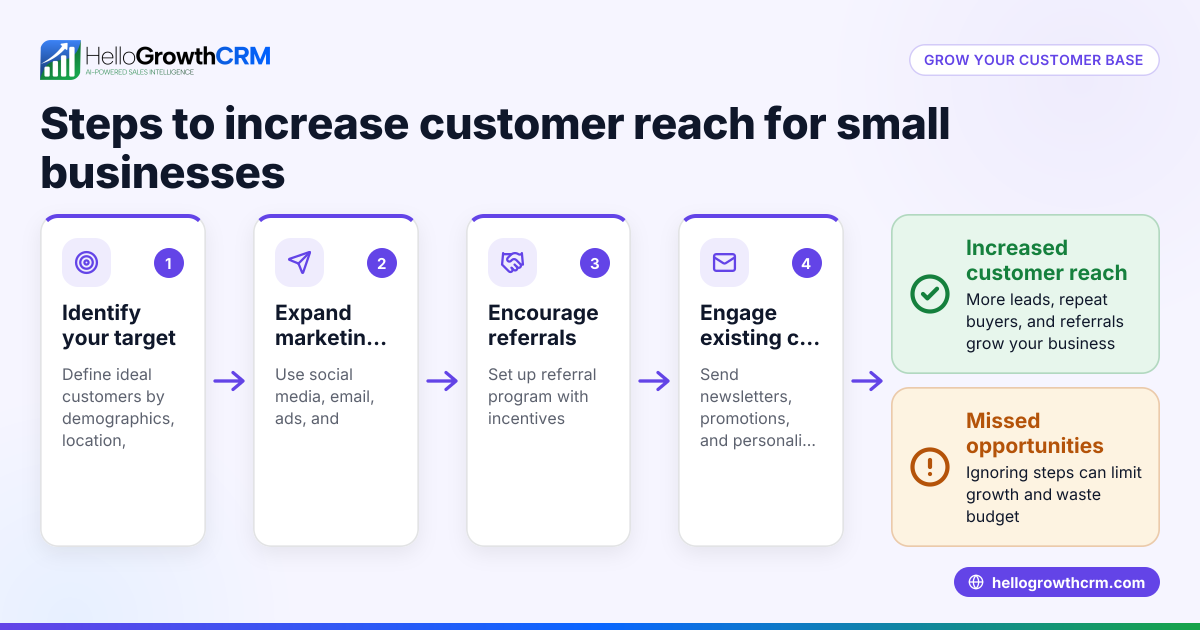
- Follow a clear process: capture leads, qualify, communicate, manage pipeline, close sales, and forecast.
- Use consistent communication and timely follow-up to avoid losing leads.
- Track and analyze your sales data regularly to improve strategies.
- Avoid common mistakes like ignoring leads or poor pipeline management.
- Use realistic goals based on data to keep your team motivated.
Start growing your revenue by organizing your sales efforts and tracking progress carefully.
Start on the Free Forever plan (200 leads, no credit card) at Free CRM.
Ready to put this into practice?
Set up your pipeline, WhatsApp follow-ups, and AI lead scoring in minutes — free, no credit card.
Try HelloGrowthCRM freeGet CRM tips in your inbox
Join thousands of sales professionals who get weekly insights on CRM strategy, AI automation, and pipeline optimization.

The HelloGrowthCRM team publishes guides on CRM strategy, AI sales tools, and revenue operations for small business sales teams.