HelloGrowthCRM software
Built for real small-business sales teams
HelloGrowthCRM helps reps qualify faster, follow up on time, and close more deals—with practical automation in one place.
- AI lead scoring and pipeline visibility
- Built-in dialer, WhatsApp, and email automation
- Sales forecasting and RevOps-ready reporting
A roofing sales pitch is a clear, persuasive message delivered by a roofing company to potential customers to explain why they should select that company for roofing services. It focuses on benefits, addresses customer concerns, and encourages the lead to move forward, such as scheduling an inspection or requesting a quote. This article covers why roofing sales pitches matter, step-by-step creation, a realistic example with USD figures, common pitfalls, and how HelloGrowthCRM helps keep roofing sales organized.
Why this comes up / what goes wrong
Small roofing business owners and sales representatives often struggle to convert leads because their sales pitch is unclear, too generic, or does not address customer concerns. Many rely on informal conversations, text messages, or email without a structured approach. This causes slow follow-up, missed opportunities, or losing leads to competitors who communicate value more effectively. Without a clear sales pitch, it is difficult to build trust, explain pricing, or stand out from other roofing companies.
Step-by-step
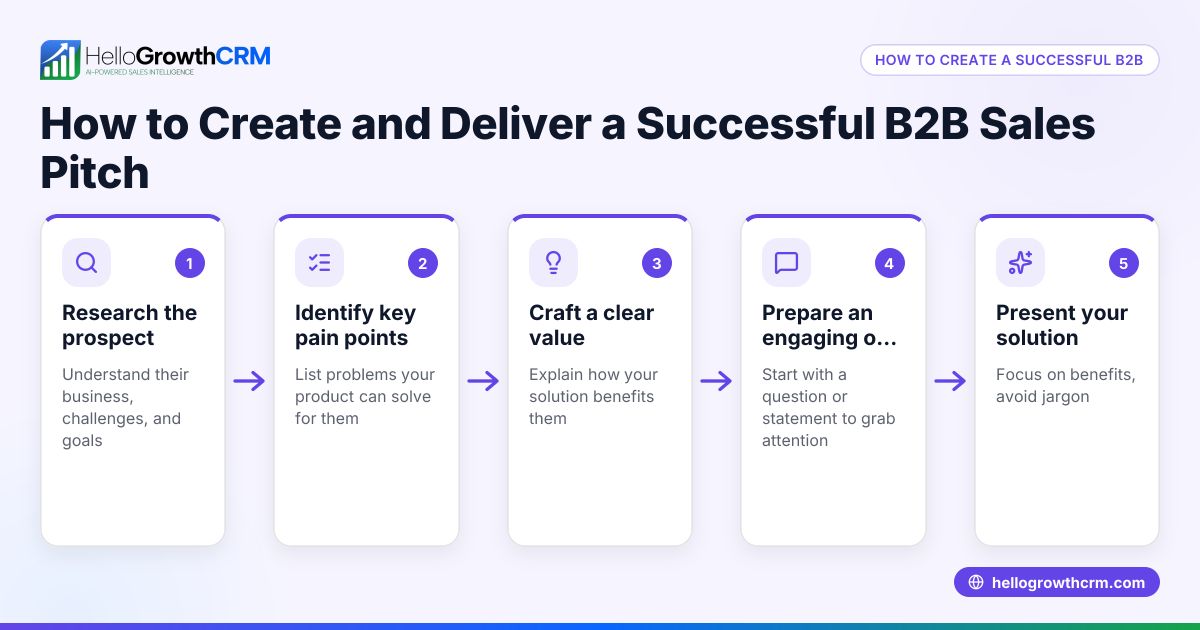
- Research your customer’s needs: Understand the customer's roofing situation, such as damage, replacement, or maintenance, and what matters most to them—cost, warranty, speed, or quality.
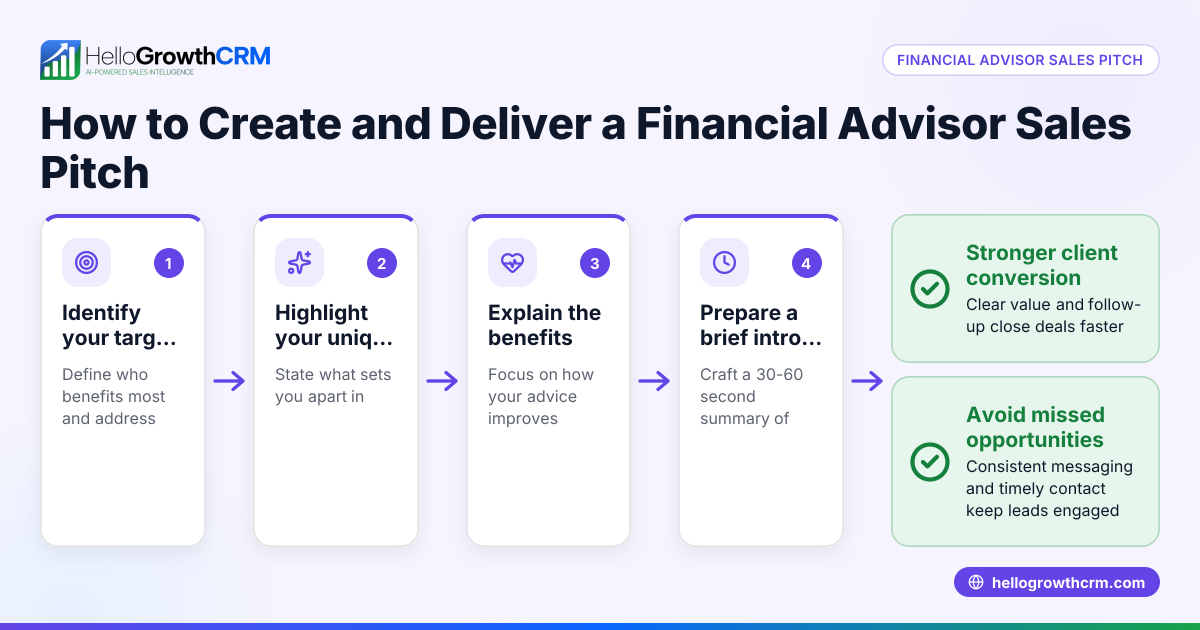
- Introduce your company briefly: State your roofing company’s name, years in business, certifications, and local expertise to build credibility.
- Highlight key benefits: Emphasize what sets your roofing services apart, such as high-quality materials, expert installation, warranties, insurance claim handling, or fast turnaround.
- Address common objections: Proactively mention how you handle concerns like pricing transparency, cleanup after work, or required permits.
- Present a clear call to action: Invite the customer to schedule a free inspection, get a written quote, or discuss financing options.
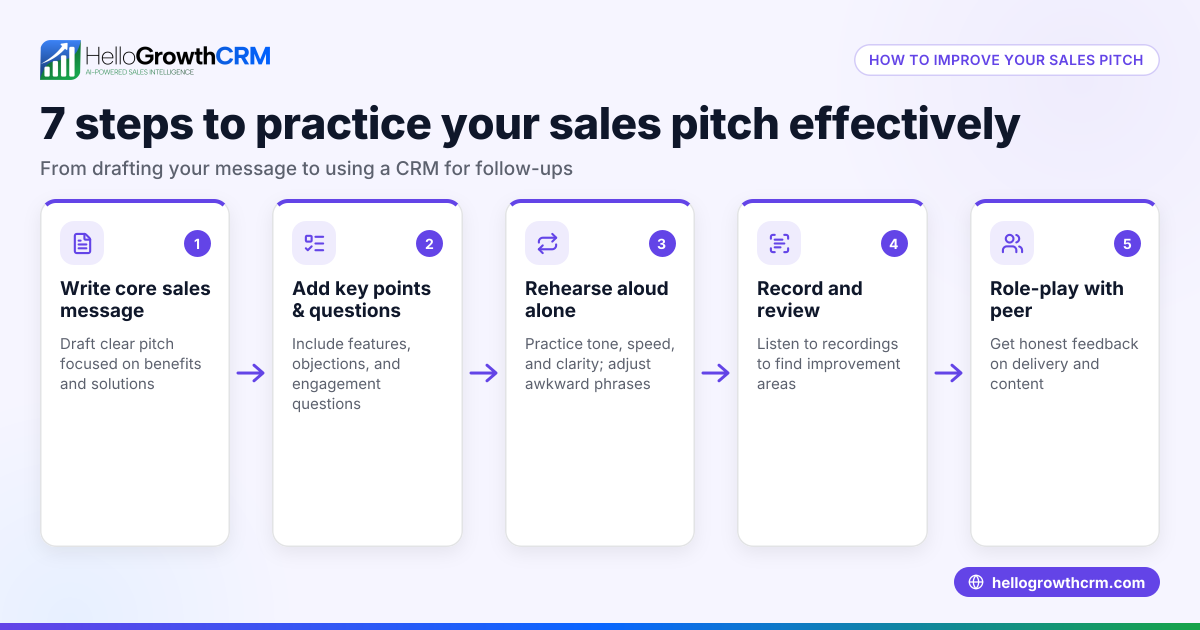
- Follow up promptly: Set a reminder to contact the lead within 24 to 48 hours after the pitch to answer questions and advance the sale.
- Track your pitch progress: Use a system to log each lead, pitch stage, and follow-up date to avoid forgetting or losing leads.
You can use tools such as HelloGrowthCRM to manage these steps efficiently by tracking deals in a pipeline, scheduling follow-ups, and logging customer interactions. Learn more about HelloGrowthCRM for the United States.
Example (fictional figures)
A roofing contractor in Charlotte, North Carolina, named "Charlotte Roof Pros," pitches a new lead on 06/15/2026. The customer needs a roof replacement after storm damage and values durability and warranty.
- Step 1: Research shows the customer prioritizes durability and warranty.
- Step 2: "Charlotte Roof Pros has 15 years of experience serving Charlotte and is fully licensed and insured."
- Step 3: "We use top-rated shingles with a 30-year warranty and offer a 5-year workmanship guarantee."
- Step 4: "We handle all insurance claims and clean up thoroughly after the job."
- Step 5: "Can we schedule a free inspection this week to provide a detailed quote?"
The contractor provides a quote on 06/20/2026:
- Material cost: $8,500
- Labor cost: $7,000
- Insurance handling fee: $500
- Total quote = $8,500 + $7,000 + $500 = $16,000
On 06/22/2026, the contractor follows up with the customer to answer questions and confirm the next steps.
This clear, benefit-focused pitch with transparent pricing helps the customer feel confident choosing Charlotte Roof Pros.
Common mistakes
- Being vague or generic: Avoid statements like "We do good roofing." Instead, specify material quality, warranty, or local experience.
- Ignoring customer concerns: Don’t skip addressing objections such as cost or cleanup. Bring them up proactively.
- Failing to follow up: Many leads go cold because the sales rep doesn’t follow up promptly. Use reminders and CRM tools to stay on track.
- Not tracking leads and pitch stages: Without a system, it’s easy to forget who you pitched and when, causing lost sales.
- Using too much technical jargon: Keep the pitch simple and clear; avoid roofing terms customers might not understand.
Prevent these mistakes by preparing a clear script, using a CRM with pipeline tracking, and setting follow-up tasks regularly. See how HelloGrowthCRM for the United States helps roofing teams manage follow-ups.
Doing this in HelloGrowthCRM
HelloGrowthCRM provides a Deals (pipeline) feature that tracks your roofing leads from first contact through each sales stage. For example, a quotation sent last week appears as a deal in the "quote sent" stage with a follow-up date, so you never forget to check in. If your team has field reps, Territories and field operations tools allow them to log visits from their phones, while managers see daily activity. If you don’t have a dedicated sales manager, Managed RevOps offers weekly support to keep your follow-up queue active and your pipeline clean. Learn about WhatsApp and SMS CRM and the built-in CRM dialer that help roofing sales teams communicate efficiently.
Frequently asked questions
What should I include in a roofing sales pitch? Include your company introduction, key benefits like materials and warranties, how you handle objections, and a clear call to action such as scheduling an inspection.
How long should a roofing sales pitch last? Keep it concise—aim for a brief and clear message whether in person or by message or email. Focus on what matters most to the customer.
How can I follow up without seeming pushy? Set a polite follow-up schedule, such as a call or message 1-2 days after the pitch, offering to answer questions or provide additional information.
Can I track roofing leads and follow-ups efficiently? Yes, using a CRM with pipeline management and follow-up reminders helps you organize leads and keep sales moving forward.
What is the best way to handle objections during a roofing sales pitch? Address common objections upfront in your pitch, such as cost transparency and cleanup, and be ready to provide clear, honest answers during follow-up conversations.
Key takeaways
- A roofing sales pitch is a clear, benefit-focused message to convert leads into customers.
- Research customer needs and tailor your pitch accordingly.
- Include company credentials, benefits, objection handling, and a call to action.
- Follow up promptly and track leads to avoid missed opportunities.
- Avoid vagueness, ignoring objections, and poor follow-up.
- Use pipeline and follow-up tools like HelloGrowthCRM to manage your roofing deals effectively.
Start improving your roofing sales pitch today and keep every lead on track. Start on the Free Forever plan (200 leads, no credit card).
This article is general information, not tax or legal advice. Rules change; confirm the current position with the IRS or your state's department of revenue, or with your CPA, before acting.
Ready to put this into practice?
Set up your pipeline, WhatsApp follow-ups, and AI lead scoring in minutes — free, no credit card.
Try HelloGrowthCRM freeGet CRM tips in your inbox
Join thousands of sales professionals who get weekly insights on CRM strategy, AI automation, and pipeline optimization.

The HelloGrowthCRM team publishes guides on CRM strategy, AI sales tools, and revenue operations for small business sales teams.