HelloGrowthCRM software
Built for real small-business sales teams
HelloGrowthCRM helps reps qualify faster, follow up on time, and close more deals—with practical automation in one place.
- AI lead scoring and pipeline visibility
- Built-in dialer, WhatsApp, and email automation
- Sales forecasting and RevOps-ready reporting
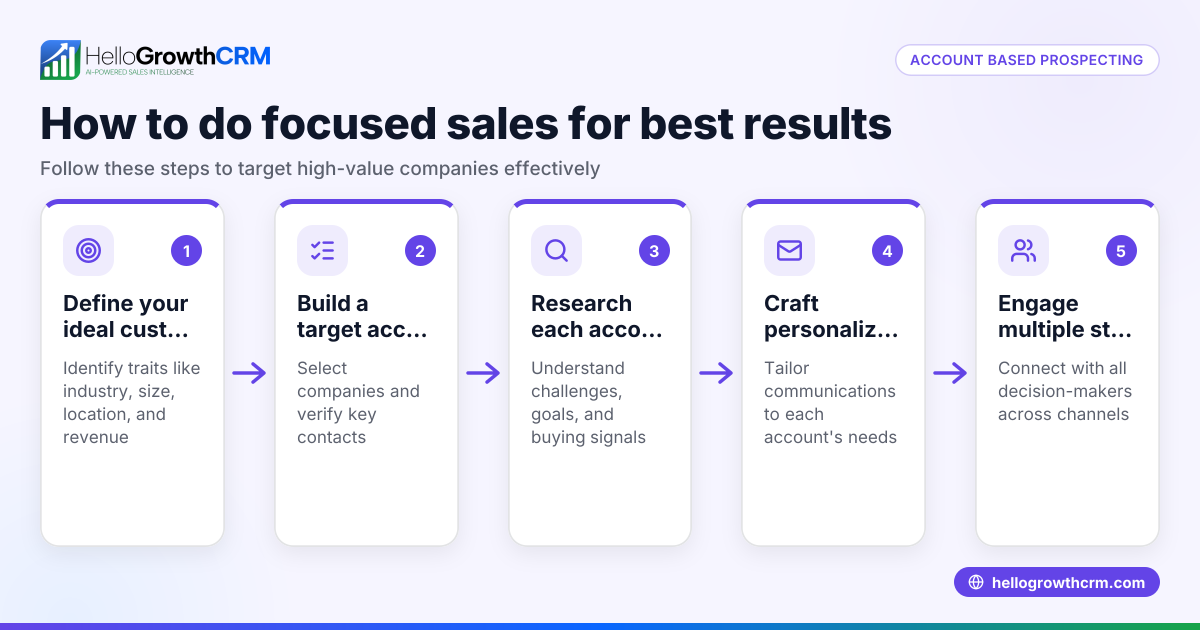
Sales account planning is the process of organizing and managing your key customer accounts to increase sales and improve customer relationships. It means setting clear goals for each account, identifying opportunities to grow revenue, planning specific actions, and scheduling follow-ups to make sure no opportunities are missed.
This article explains why sales account planning is important for small businesses, provides a step-by-step guide on how to create one, shares a practical example with realistic US figures, outlines common mistakes and how to avoid them, and shows how HelloGrowthCRM supports this process.
Why this comes up / what goes wrong
Many small-business owners struggle with managing their sales accounts because they rely on scattered notes, text messages, or spreadsheets. Without a clear account plan, it’s easy to lose track of important leads and follow-ups. This disorganization causes missed sales opportunities, wasted time chasing cold leads, and frustrated customers who feel neglected.
For example, a small plumbing company may have several commercial clients but no system to track when to follow up on proposals or renew contracts. Without a plan, sales reps might forget to check in, losing potential revenue.
Sales account planning helps by giving structure to your sales efforts. It makes sure you prioritize your best accounts, know what actions to take, and follow up consistently.
Step-by-step
- Identify Your Key Accounts: List the customers or prospects that currently generate significant revenue or have strong growth potential. Check their current sales value and how important they are strategically.
- Gather Account Information: Collect details about each account’s business needs, decision-makers, purchase history, and challenges. This helps tailor your sales approach.
- Set Clear Objectives: For each account, decide what you want to achieve—such as increasing order size by 20%, renewing a service contract, or introducing a new product.
- Develop Strategies and Actions: Plan specific activities for each account. This might include sending a proposal, scheduling a product demo, or arranging a site visit. Assign responsibilities and deadlines for these actions.
- Schedule Follow-ups and Reviews: Use reminders or calendar tools to ensure timely follow-up on proposals or meetings. Regularly review progress and adjust your plan as needed.
- Track and Measure Results: Monitor your sales pipeline and outcomes for each account. Check which strategies are working and where you need to improve.
Make sure your system allows easy updating of account details and clear visibility of your sales pipeline to avoid missing any steps.
Example (fictional figures)
A plumbing company in Austin, Texas, wants to increase sales with a commercial building maintenance client.
- Current annual sales: $120,000
- Goal: Increase sales by 25% within 12 months
Steps:
- Objective: Increase sales to $150,000 by 12/31/2026
- Strategy: Offer a new preventive maintenance package
- Action: Send proposal by 08/15/2026
- Follow-up: Schedule call on 08/22/2026
Calculations:
$120,000 × 25% = $30,000 $120,000 + $30,000 = $150,000
This plan helps the sales rep focus on measurable goals and timely follow-up.
Common mistakes
- Not updating account information regularly: Prevent this by scheduling periodic reviews of each account’s data to keep it accurate and relevant.
- Missing follow-up deadlines: Avoid this by setting reminders or using a CRM with pipeline and task board features to track next steps.
- Ignoring smaller accounts with growth potential: Prevent this by segmenting accounts by size and opportunity, then reviewing all segments routinely.
- Failing to assign clear responsibilities: Make sure each action has a designated owner to avoid confusion and delays.
- Neglecting to track sales data and results: Use pipeline tracking to monitor deal stages and outcomes for continuous improvement.
Using a CRM with pipeline management and task boards can help avoid these mistakes. HelloGrowthCRM supports this with features designed for small businesses. Learn more at HelloGrowthCRM for the United States.
Doing this in HelloGrowthCRM
HelloGrowthCRM helps small businesses with sales account planning through its Deals (pipeline) feature. For example, a quotation sent last week shows up as a deal at the 'quote sent' stage with a follow-up date, so it is not forgotten. Field sales reps can log visits from their phones, and managers see the day's activities using Territories, field operations and commissions. If you don’t have a dedicated sales manager, Managed RevOps provides a revenue specialist who works your follow-up queue every week to keep your pipeline clean and active. Find out more about these features at WhatsApp and SMS CRM and built-in CRM dialer.
Frequently asked questions
What is the main goal of sales account planning? The main goal is to organize your sales efforts around key accounts to increase revenue and improve customer relationships by setting clear objectives and follow-ups.
How often should I update my sales account plans? Update your plans regularly—at least monthly or after significant interactions—to keep information current and adjust strategies as needed.
Can small businesses benefit from sales account planning? Yes, even small businesses benefit by focusing efforts, improving follow-up, and growing important customer relationships.
What tools help with sales account planning? CRM software with pipeline management, task boards, and follow-up reminders can streamline sales account planning and execution. HelloGrowthCRM offers these features tailored for small and mid-sized businesses.
How do I prioritize accounts in my plan? Prioritize accounts by current revenue, growth potential, strategic importance, and likelihood of closing deals.
Key takeaways
- Sales account planning organizes and prioritizes your key customers to grow sales.
- It requires clear objectives, strategies, and timely follow-ups.
- Regular updates and reviews prevent missed opportunities.
- Avoid common mistakes like poor data management and unclear responsibilities.
- HelloGrowthCRM’s deals pipeline and follow-up features support effective account planning.
Start organizing your sales accounts today to improve follow-up and revenue. You can Start on the Free Forever plan (200 leads, no credit card) with HelloGrowthCRM and see how it helps your team stay on track.
Ready to put this into practice?
Set up your pipeline, WhatsApp follow-ups, and AI lead scoring in minutes — free, no credit card.
Try HelloGrowthCRM freeGet CRM tips in your inbox
Join thousands of sales professionals who get weekly insights on CRM strategy, AI automation, and pipeline optimization.

The HelloGrowthCRM team publishes guides on CRM strategy, AI sales tools, and revenue operations for small business sales teams.