HelloGrowthCRM software
Built for real small-business sales teams
HelloGrowthCRM helps reps qualify faster, follow up on time, and close more deals—with practical automation in one place.
- AI lead scoring and pipeline visibility
- Built-in dialer, WhatsApp, and email automation
- Sales forecasting and RevOps-ready reporting
A sales follow up email template helps small businesses keep leads engaged and improve conversion rates by providing a clear, polite, and professional message to send after initial contact. A good template includes a greeting, reference to previous communication, a reminder of benefits, a call to action (CTA), and a polite closing. This article explains why sales follow-ups are important, how to write them step-by-step, a worked example with Indian business figures, common mistakes to avoid, and how HelloGrowthCRM supports follow-up automation.
Why this comes up / what goes wrong
Many Indian small business owners lose leads because follow-up is slow, inconsistent, or too informal. Sales processes often run on WhatsApp or Excel sheets, making it hard to track who to contact and when. Without a clear email template, sales teams may send messages that are too pushy, unclear, or forget to follow up altogether. This leads to missed sales and wasted effort. A structured follow-up email template maintains professionalism, keeps communication timely, and increases the chance of a response.
Step-by-step
- Start with a polite greeting: Use the prospect’s name to personalise your email.
- Reference your previous interaction: Mention the last call, meeting, or message to remind them why you are reaching out.
- State the purpose clearly: Explain briefly why you are following up, such as answering questions or checking interest.
- Highlight the value or benefit: Remind them of the product or service benefit relevant to their needs.
- Include a clear call to action (CTA): Ask for a specific response, like scheduling a call or confirming interest.
- Keep it concise and professional: Use short sentences and avoid long paragraphs.
- Close politely: Thank them for their time and include your contact details.
- Check before sending: Review for spelling errors, correct names, and ensure the tone is respectful.
Use sales templates to download ready-made formats and sales task boards to organise and track follow-up tasks efficiently.
Example (fictional figures)
Subject: Following up on your interest in our packaging solutions
Dear Mr. Sharma,
I hope you are doing well. I wanted to follow up on our call on 10/04/2024 regarding your packaging requirements.
We offer customised packaging that can reduce your costs by up to 15%. For example, if your current monthly packaging spend is ₹1,00,000, a 15% saving means:
₹1,00,000 × 15% = ₹15,000
This could save you ₹15,000 every month.
Would you be available for a brief call next week to discuss how we can help you achieve these savings?
Thank you for considering us.
Best regards,
Rahul Verma Sales Manager XYZ Packaging Solutions rahul.verma@xyzpack.com
Common mistakes
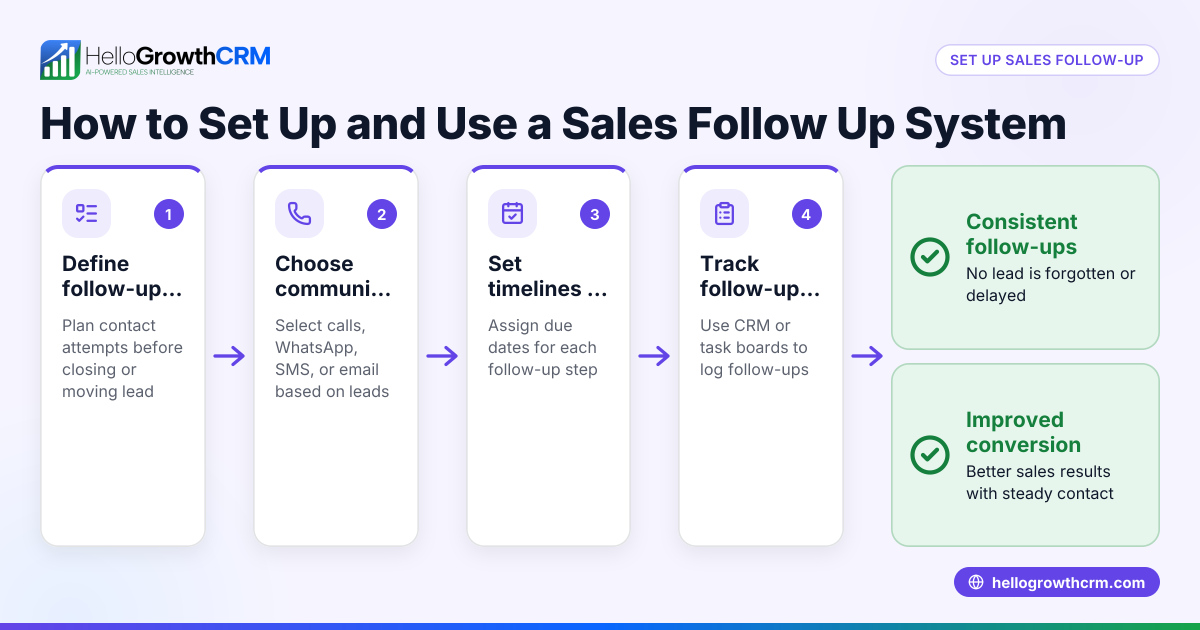
- Sending follow-ups too soon or too late: Wait 3-5 days after the last contact. Use task boards to schedule reminders and avoid spamming.
- Being too pushy or vague: Clearly state your purpose and include a polite call to action.
- Ignoring personalisation: Always address the prospect by name and reference prior communication.
- Overloading with information: Keep emails concise; provide details only when requested.
- Forgetting to proofread: Check for spelling, grammar, and correct names before sending.
- Not tracking follow-ups: Use tools like sales task boards to avoid missed follow-ups.
Doing this in HelloGrowthCRM
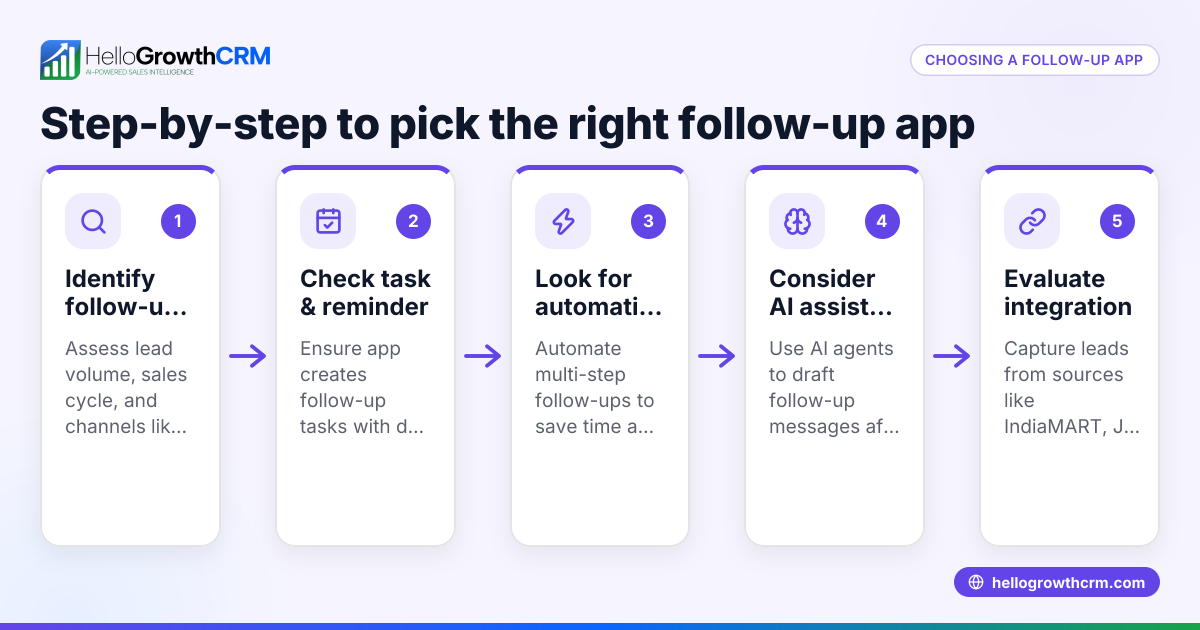
HelloGrowthCRM offers automated sequences and campaigns that run a five-step follow-up over two weeks. This sequence automatically stops once the prospect replies, saving time and ensuring no lead is forgotten. You can also download free sales tools, including follow-up cadence and pipeline templates, from the free sales tools and calculators section without needing an account. Each follow-up becomes a task with a due date in the system, and the day’s calls appear as a clear list, reducing reliance on memory and improving team coordination.
Frequently asked questions
How many follow-up emails should I send? Typically, 3 to 5 follow-ups spaced over 1 to 2 weeks are effective. Too many emails can annoy prospects, while too few may miss opportunities.
What is the best time to send follow-up emails? Send follow-ups during business hours, preferably mid-morning or early afternoon on weekdays. Avoid weekends and late evenings.
Can I use the same template for all prospects? Templates should be customised for each prospect’s industry, needs, and previous interactions to increase relevance and response rates.
Should I include pricing in the follow-up email? Only include pricing if the prospect has shown interest or requested it. Otherwise, focus on value and benefits.
How do I handle no response after multiple follow-ups? After 3-5 attempts without a reply, it’s best to pause and revisit the lead later. You can also ask if they prefer no further contact.
Use sales templates for ready-made email formats and sales task boards to keep your follow-ups organised.
Key takeaways
- Use a polite, clear, and personalised sales follow up email template.
- Reference previous contact and state your purpose early in the email.
- Include a clear call to action and keep the email concise.
- Avoid common mistakes like poor timing, lack of personalisation, and missing follow-up tracking.
- Automate follow-ups using HelloGrowthCRM’s sequences and task boards.
Start using a structured sales follow up email template to improve your lead conversion. To automate and streamline your sales follow-ups, start on the Free Forever plan (200 leads, no credit card).
Ready to put this into practice?
Set up your pipeline, WhatsApp follow-ups, and AI lead scoring in minutes — free, no credit card.
Try HelloGrowthCRM freeGet CRM tips in your inbox
Join thousands of sales professionals who get weekly insights on CRM strategy, AI automation, and pipeline optimization.

The HelloGrowthCRM team publishes guides on CRM strategy, AI sales tools, and revenue operations for small business sales teams.