HelloGrowthCRM software
Built for real small-business sales teams
HelloGrowthCRM helps reps qualify faster, follow up on time, and close more deals—with practical automation in one place.
- AI lead scoring and pipeline visibility
- Built-in dialer, WhatsApp, and email automation
- Sales forecasting and RevOps-ready reporting
A sales forecast spreadsheet template is a useful tool for small business owners in New Zealand who want to estimate future sales revenue. It simplifies the process by providing a ready-made format where you input your expected sales quantities and prices over time. This helps you plan inventory, staff, and cash flow more effectively.
Why this comes up / what goes wrong
Small business owners in NZ often search for a "sales forecast spreadsheet template nz" because they need a practical, easy-to-use format to organise their sales projections. Many run their sales on text, email, or spreadsheets but lack a clear, structured forecast. Without a template, forecasts can be inconsistent or incomplete, leading to poor business decisions. Owners might struggle with setting up formulas, choosing the right time periods, or including all relevant sales channels.
Step-by-step
- Choose your spreadsheet platform: Use Excel or Google Sheets for easy editing and sharing.
- Set your forecast period: Decide whether to forecast monthly, quarterly, or yearly. Monthly is common for small businesses.
- List your products or services: Create rows for each product or service you sell.
- Estimate sales volume per period: Enter the number of units you expect to sell in each month or quarter.
- Set the unit price: Enter the selling price per unit for each product or service.
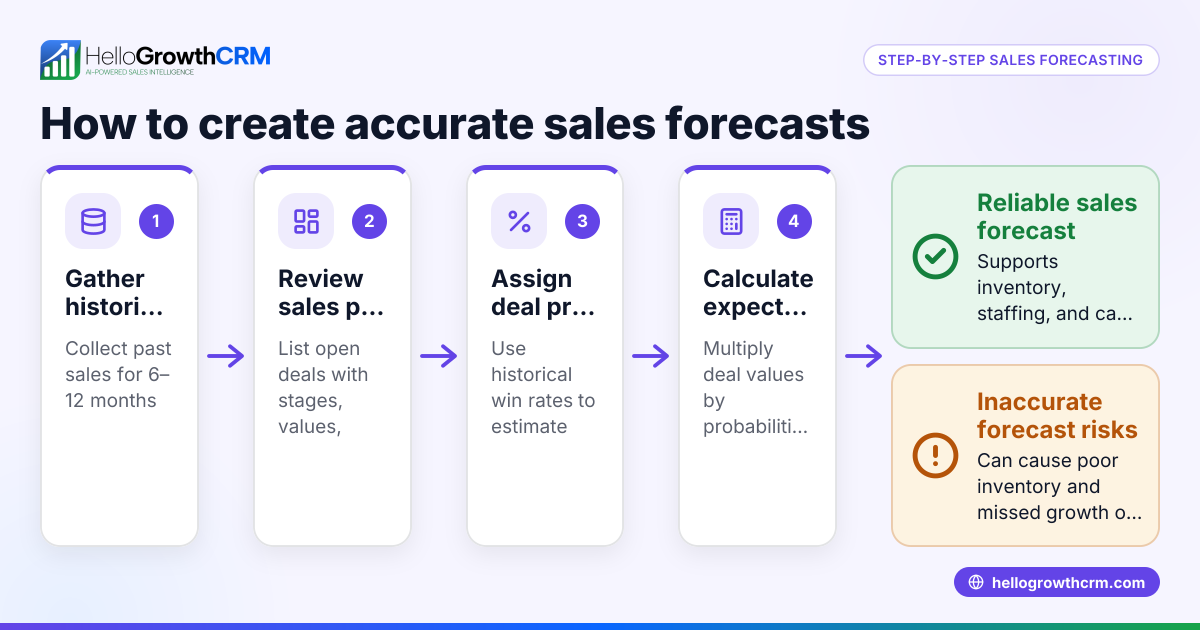
- Calculate sales revenue: Multiply sales volume by unit price for each period (formula:
=Volume × Price). - Sum total sales: Add all product revenues for each period to get your total forecasted sales.
- Include notes or assumptions: Add a section explaining how you estimated sales (e.g., seasonality, marketing campaigns).
- Check formulas and totals: Verify all multiplication and sum formulas are correct to avoid errors.
- Review and update regularly: Adjust your forecast monthly based on actual sales data.
For free downloadable sales templates and calculators, visit our free sales tools and calculators.
Example (fictional figures)
A Christchurch building company forecasts sales for April to June 2024.
| Product | Apr Volume | Apr Price | Apr Revenue | May Volume | May Price | May Revenue | Jun Volume | Jun Price | Jun Revenue |
|---|---|---|---|---|---|---|---|---|---|
| Residential Builds | 3 | NZ$250,000 | NZ$750,000 | 4 | NZ$250,000 | NZ$1,000,000 | 2 | NZ$250,000 | NZ$500,000 |
| Renovations | 5 | NZ$40,000 | NZ$200,000 | 6 | NZ$40,000 | NZ$240,000 | 4 | NZ$40,000 | NZ$160,000 |
Calculations for April revenue:
NZ$250,000 × 3 = NZ$750,000 NZ$40,000 × 5 = NZ$200,000 Total April revenue = NZ$750,000 + NZ$200,000 = NZ$950,000
Repeat for May and June:
May revenue: NZ$250,000 × 4 = NZ$1,000,000 NZ$40,000 × 6 = NZ$240,000 Total May revenue = NZ$1,000,000 + NZ$240,000 = NZ$1,240,000
June revenue: NZ$250,000 × 2 = NZ$500,000 NZ$40,000 × 4 = NZ$160,000 Total June revenue = NZ$500,000 + NZ$160,000 = NZ$660,000
This clear layout helps the company plan cash flow and resource allocation over the quarter.
Common mistakes
- Overly optimistic sales volumes: Prevent by basing estimates on past sales and market research.
- Ignoring seasonality: Adjust sales volumes for seasonal demand changes.
- Forgetting to update prices: Check and update unit prices regularly to reflect market changes.
- Not checking formulas: Double-check all calculations to avoid errors in totals.
- Leaving out key products or services: Make sure all revenue streams are included.
- Failing to review forecasts regularly: Update forecasts monthly to reflect actual sales trends.
For more tips and templates, see our sales templates.
Doing this in HelloGrowthCRM
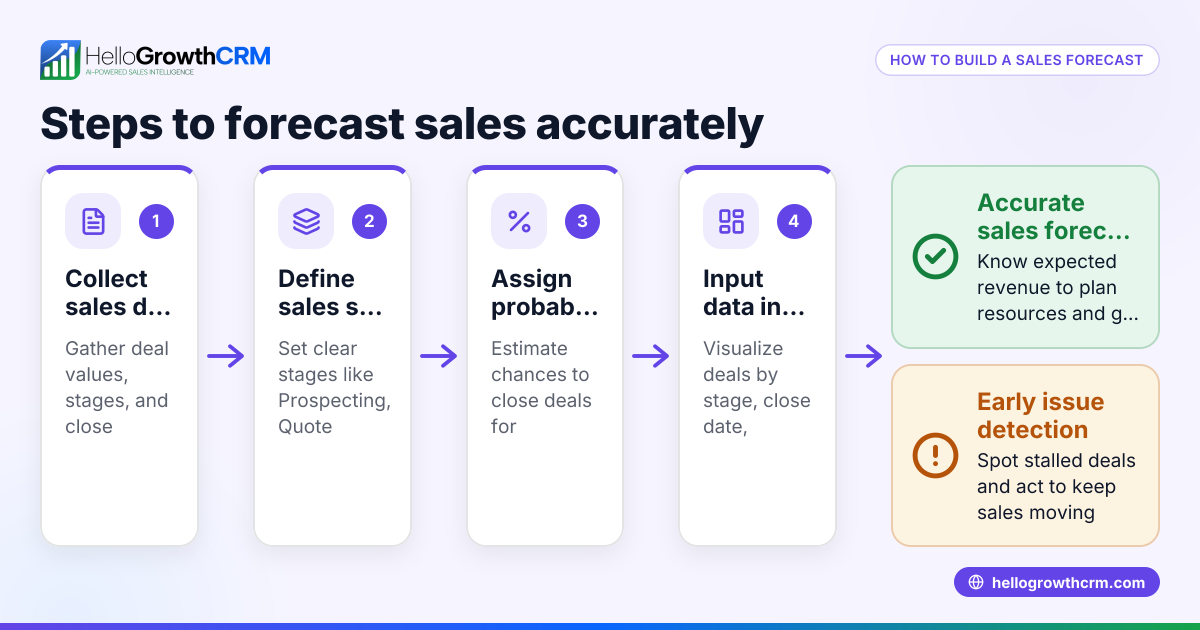
HelloGrowthCRM offers free sales tools, templates and calculators including pipeline templates you can download without signing up. Its pipeline forecast and AI insights feature helps you see which sales stages deals are stalling in, without building a spreadsheet. The deals (pipeline) feature tracks quotations as deals with follow-up dates, so you never forget to follow up and can forecast sales more accurately. Learn more about these features in our AI CRM and sales forecasting pages.
Frequently asked questions
What is the best sales forecast spreadsheet template for NZ small businesses? A good template includes rows for each product or service, columns for forecast periods (monthly or quarterly), and formulas to calculate revenue from volume and price. It should be easy to update and include notes for assumptions. You can find free templates tailored for NZ businesses on our free sales tools and calculators page.
How often should I update my sales forecast? It’s best to update your sales forecast monthly, using actual sales data to adjust future estimates. This keeps your forecast accurate and helps you manage cash flow and inventory effectively.
Can I use HelloGrowthCRM instead of a spreadsheet for sales forecasting? Yes, HelloGrowthCRM provides pipeline forecast and AI insights that project expected sales based on your current deals, stages, and historical patterns, reducing the need for manual spreadsheets.
What common errors should I avoid in my sales forecast? Avoid overestimating sales volumes, ignoring seasonality, not updating prices, and failing to check formulas. Regular review and realistic assumptions improve forecast accuracy.
Where can I find sales forecast templates without signing up? HelloGrowthCRM offers free downloadable sales templates and calculators without requiring an account. Visit our free sales tools and calculators page to access them.
Key takeaways
- Use a clear, structured spreadsheet with product rows and monthly columns.
- Calculate revenue by multiplying forecast volume by unit price.
- Check formulas and update your forecast regularly.
- Avoid common mistakes like over-optimism and ignoring seasonality.
- Download free NZ-specific sales templates at HelloGrowthCRM’s tools page.
- Consider using HelloGrowthCRM’s AI-powered pipeline forecast to reduce spreadsheet work.
Start forecasting your sales confidently with a free template or try HelloGrowthCRM’s tools. Start on the Free Forever plan (200 leads, no credit card).
Ready to put this into practice?
Set up your pipeline, WhatsApp follow-ups, and AI lead scoring in minutes — free, no credit card.
Try HelloGrowthCRM freeGet CRM tips in your inbox
Join thousands of sales professionals who get weekly insights on CRM strategy, AI automation, and pipeline optimization.

The HelloGrowthCRM team publishes guides on CRM strategy, AI sales tools, and revenue operations for small business sales teams.