HelloGrowthCRM software
Built for real small-business sales teams
HelloGrowthCRM helps reps qualify faster, follow up on time, and close more deals—with practical automation in one place.
- AI lead scoring and pipeline visibility
- Built-in dialer, WhatsApp, and email automation
- Sales forecasting and RevOps-ready reporting
Sales pipeline software for B2B sales teams in New Zealand is designed to organise your sales process from first contact to closing deals. It helps you track where each lead is, schedule follow-ups, and predict revenue, which is crucial for small and mid-sized businesses that often lose leads due to slow responses or scattered tools.
Why this comes up / what goes wrong
Many New Zealand small business owners running B2B sales teams face challenges like managing leads across emails, texts, and spreadsheets. Without a central system, leads slip through the cracks, follow-ups are missed, and sales opportunities are lost. This is especially common when the sales process is informal or when the founder or sales leader juggles multiple roles without dedicated support.
Choosing the right sales pipeline software is vital to streamline the sales process, improve visibility, and increase revenue. However, the options vary widely, and businesses need to consider New Zealand-specific needs such as ease of use for small teams, integration with local tools, and practical features that support follow-up and forecasting.
Step-by-step
- Identify your sales process stages: Write down the typical stages your B2B sales go through, from lead generation to closing. This helps you pick software that fits your workflow.
- Check for lead capture and follow-up features: Ensure the software can capture leads automatically from your website or integrations and allows you to set follow-up reminders so no lead is forgotten.
- Evaluate pipeline visibility and forecasting: Look for tools that show where deals are stalled and forecast expected revenue based on deal stages and historical data.
- Consider team size and usage: Choose software that your team can easily adopt and use daily, avoiding overly complex systems that slow down your sales.
- Assess support and automation options: For founders without dedicated sales managers, software with managed revenue operations support or automation can help maintain consistent follow-up and pipeline hygiene.
- Review pricing and plans: Compare plans but focus on features that impact your sales process, not just cost. Avoid per-user pricing traps if your team grows.
- Test with a trial or free plan: Use free trials or free-tier plans to see how the software fits your business before committing.
- Check local relevance: Ensure the software supports New Zealand business practices, such as local currency and time zones.
Example (fictional figures)
Consider a Christchurch-based building company, KiwiBuild Ltd, with a 5-person sales team. They want to track leads and forecast sales for their commercial projects.
- KiwiBuild receives 30 new leads monthly.
- Average deal size: NZ$50,000.
- Conversion rate: 25% (7.5 deals closed per month).
- Sales cycle length: 2 months.
They choose software that helps track deals through stages: Lead, Contacted, Quote Sent, Negotiation, Closed.
Calculation of expected monthly revenue:
Number of leads × Conversion rate = Deals closed 30 × 25% = 7.5 deals
Expected revenue per month = Deals closed × Average deal size 7.5 × NZ$50,000 = NZ$375,000
With pipeline forecasting, they see that 10 deals are currently in 'Quote Sent' stage with an average 60% probability to close.
Expected value of 'Quote Sent' deals = Number of deals × Average deal size × Probability 10 × NZ$50,000 × 60% = NZ$300,000
This helps KiwiBuild prioritise follow-ups and manage cash flow expectations.
Common mistakes
- Ignoring follow-up scheduling: Leads get forgotten without reminders. Prevent this by choosing software with built-in follow-up dates and alerts.
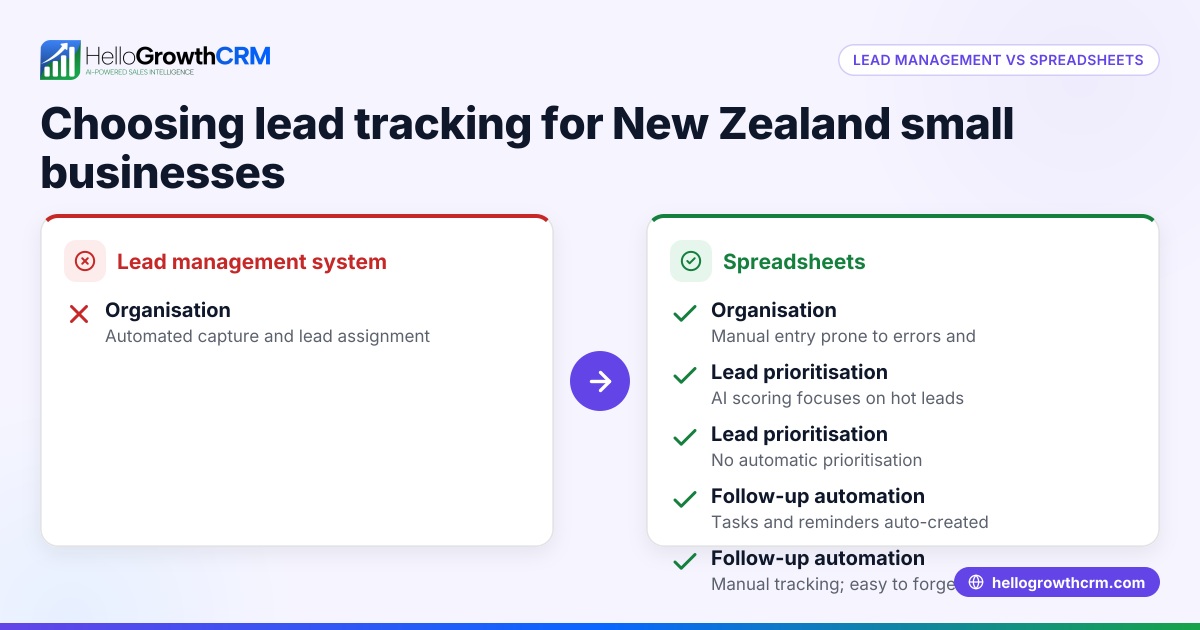
- Using spreadsheets alone: Spreadsheets lack automation and real-time updates, causing delays. Avoid this by moving to dedicated pipeline software.
- Overcomplicating the pipeline: Too many stages or fields confuse the team. Keep your pipeline simple and aligned with your actual sales process.
- Not reviewing pipeline health regularly: Without regular checks, stalled deals accumulate unnoticed. Use software with AI insights or reporting to spot issues early.
- Choosing software without local support: Lack of local relevance can cause integration or usability problems. Pick tools that support New Zealand business needs.
- Neglecting team adoption: If the team does not use the software consistently, it fails. Involve the team in the selection and training process.
Doing this in HelloGrowthCRM
HelloGrowthCRM offers a Deals (pipeline) feature that tracks open opportunities from first contact through to close, showing deals like a quotation sent last week at the 'quote sent' stage with a follow-up date, so it is not forgotten. For founders without a sales manager, the Managed RevOps service assigns a specialist to work the follow-up queue weekly, ensuring no lead is missed. The Pipeline forecast and AI insights feature provide owners with visibility on which deals are stalling without needing to build spreadsheets, helping prioritise action. Learn more about HelloGrowthCRM's AI CRM, sales forecasting, and HelloGrowthCRM for New Zealand.
Frequently asked questions
What features should B2B sales pipeline software have? Key features include lead capture, pipeline stage tracking, follow-up scheduling, sales forecasting, and reporting. Automation and AI insights can improve efficiency, especially for small teams without dedicated sales managers.
How can I ensure my sales team actually uses the software? Choose user-friendly software that matches your sales process. Involve your team in the selection and training. Regularly review pipeline data together to encourage consistent use.
Is sales forecasting important for small B2B teams? Yes, forecasting helps predict revenue, manage cash flow, and identify stalled deals. Software with AI-assisted forecasting can save time and provide useful insights without complex spreadsheets.
Can I start with a free plan before committing to paid software? Many providers, including HelloGrowthCRM, offer free plans with essential features to test the software's fit for your business before upgrading.
How do I handle follow-ups effectively? Use software that allows you to set follow-up dates and reminders for each deal stage. Managed services like Managed RevOps can help if you don't have a sales manager.
Key takeaways
- Choose sales pipeline software that fits your actual B2B sales stages and local New Zealand business needs.
- Prioritise lead capture, follow-up scheduling, and pipeline visibility features.
- Avoid spreadsheets and overly complex pipelines that reduce team adoption.
- Use sales forecasting and AI insights to manage stalled deals and predict revenue.
- Consider managed support if you lack dedicated sales management.
- Test software with a free plan to ensure it suits your team.
Start organising your B2B sales pipeline with a system designed to keep leads moving and your team focused. You can Start on the Free Forever plan (200 leads, no credit card) today and see how it fits your business.
Ready to put this into practice?
Set up your pipeline, WhatsApp follow-ups, and AI lead scoring in minutes — free, no credit card.
Try HelloGrowthCRM freeGet CRM tips in your inbox
Join thousands of sales professionals who get weekly insights on CRM strategy, AI automation, and pipeline optimization.

The HelloGrowthCRM team publishes guides on CRM strategy, AI sales tools, and revenue operations for small business sales teams.