HelloGrowthCRM software
Built for real small-business sales teams
HelloGrowthCRM helps reps qualify faster, follow up on time, and close more deals—with practical automation in one place.
- AI lead scoring and pipeline visibility
- Built-in dialer, WhatsApp, and email automation
- Sales forecasting and RevOps-ready reporting
Sales ramp up is the process of increasing your sales output and efficiency steadily over a period, usually after hiring new salespeople, launching a product, or entering a new market. It means building pipeline, improving follow-up, and converting leads into customers at a growing pace until your sales reach a steady, predictable level.
Why this comes up / what goes wrong
Many small business owners face sales ramp up challenges when they try to grow their sales team or expand their sales efforts. For example, a company might hire new sales reps but see slow results because the reps take time to learn the product, build relationships, and get comfortable with the sales process. Without a clear ramp-up plan, leads can be lost due to slow follow-up or poor tracking. Sales may stall because the team relies on scattered tools like spreadsheets, texts, and emails, making it hard to keep momentum.
Step-by-step
- Set clear ramp-up goals: Define what increasing sales means for your business in measurable terms—new customers, revenue, or deals closed—and set a timeline. Check that goals are realistic based on your market and team size.
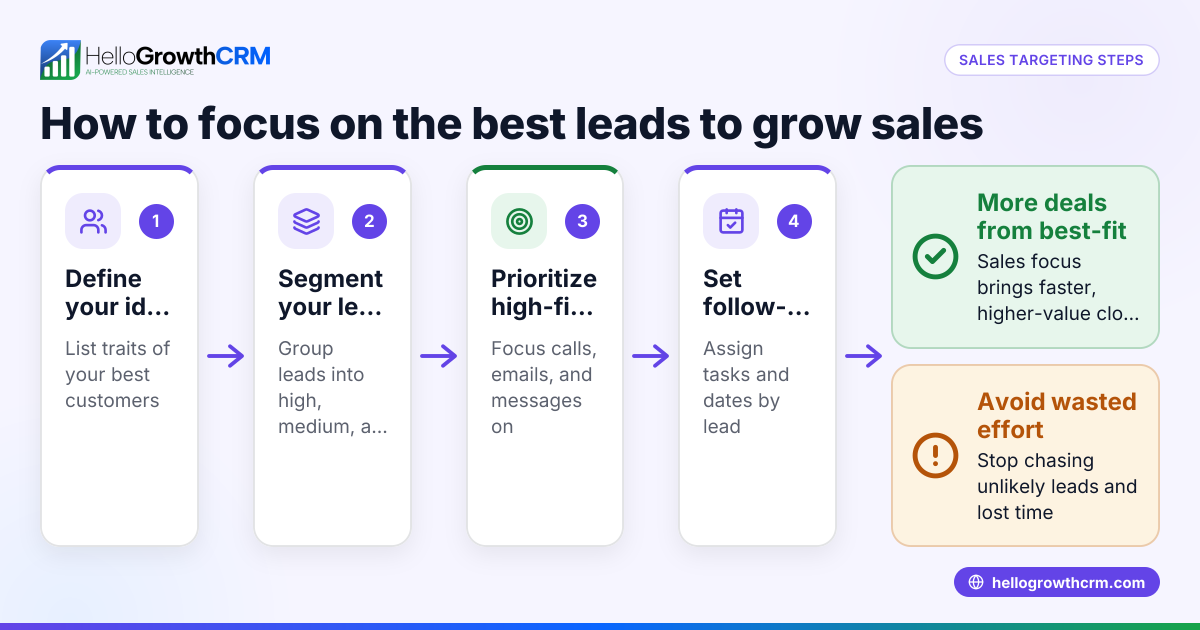
- Build a structured sales pipeline: Organize your leads and opportunities in stages to track progress clearly. Check that each deal has a next action and a due date so nothing slips through the cracks.
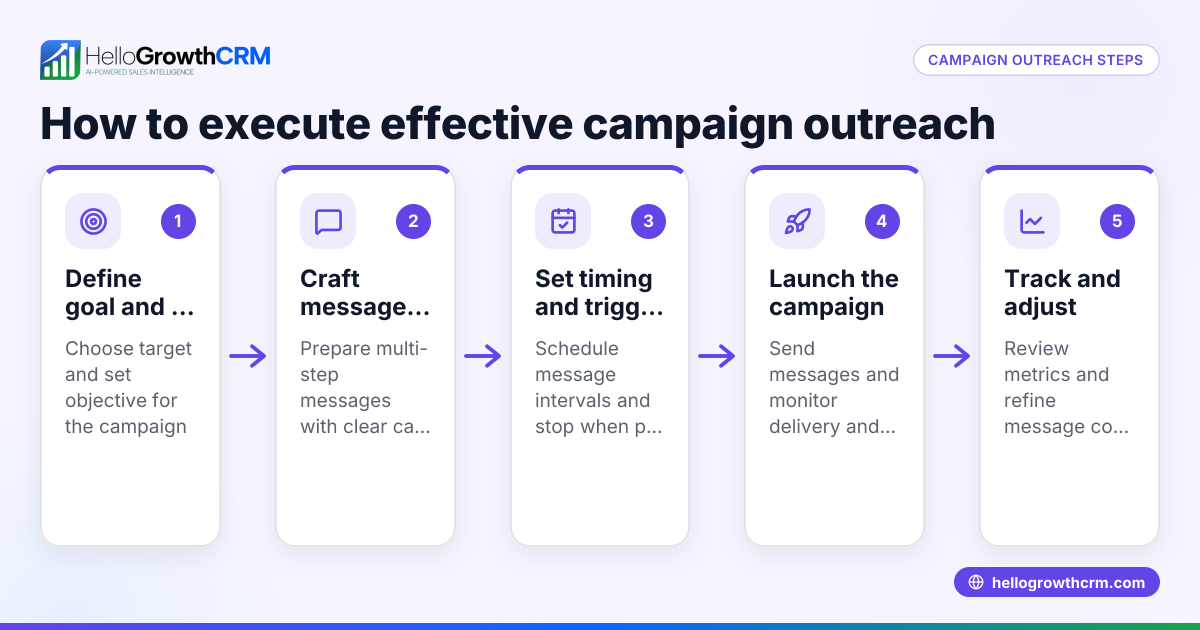
- Implement consistent follow-up: Develop a follow-up schedule for leads and deals. Check that every lead is contacted multiple times with planned messages at appropriate intervals.
- Train your sales team: Provide training on product knowledge, sales scripts, and tools to speed up their productivity. Check their comfort level regularly and offer coaching.
- Monitor results regularly: Track key metrics like number of calls, meetings, proposals sent, and deals closed. Check progress weekly and adjust your approach based on what works.
- Use technology to automate and organize: Use CRM tools to automate follow-ups, track tasks, and keep the sales process visible to everyone. Check that your CRM supports pipeline tracking, task management, and automated outreach.
Example (fictional figures)
A plumbing company in Austin, Texas, hires two new sales reps on 01/01/2026. They want to ramp up sales over 3 months to add $90,000 in monthly revenue.
- Month 1 goal: $20,000 new sales
- Month 2 goal: $30,000 new sales
- Month 3 goal: $40,000 new sales
They plan the ramp-up like this:
Month 1: $20,000 Month 2: $30,000 Month 3: $40,000
Total ramp-up sales after 3 months = $20,000 + $30,000 + $40,000 = $90,000
They track deals and follow-up tasks weekly to ensure progress. Each deal moves through stages with follow-up dates to prevent leads from being forgotten.
Common mistakes
- Setting unrealistic goals: Avoid goals that are too high too soon. Prevent by basing goals on past data and team capacity, and by regularly reviewing progress.
- Ignoring follow-up: Leads go cold when follow-up is inconsistent. Prevent by scheduling follow-ups as tasks and using automation to ensure timely contact.
- Relying on memory or scattered tools: This causes lost leads and missed opportunities. Prevent by centralizing sales activities in a CRM that tracks deals and tasks.
- Not tracking progress: Without measurement, you can’t adjust your strategy. Prevent by reviewing your pipeline and sales activities regularly.
- Neglecting training: New reps struggle without support. Prevent by providing ongoing coaching and resources.
Doing this in HelloGrowthCRM
HelloGrowthCRM helps with sales ramp up by keeping your sales pipeline visible and actionable. Deals (pipeline) allow you to track open opportunities from first contact through close, with stage movement and follow-up dates so no quote or lead is forgotten. Activities and task boards turn every follow-up into a task with a due date, making the day’s calls a manageable list instead of a memory test. Sequences and campaigns automate multi-step outreach workflows that run on their own and stop immediately when a prospect replies. These features help small and mid-sized businesses organize and speed up their sales ramp up efforts efficiently. Learn more about HelloGrowthCRM for the United States, its WhatsApp and SMS CRM, and the built-in CRM dialer.
Frequently asked questions
What is a typical sales ramp up period? Sales ramp up periods vary but commonly last 3 to 6 months, depending on the product complexity and sales cycle length. The goal is to reach steady sales performance after this time.
How do I measure if my sales ramp up is successful? Track metrics like new leads generated, follow-up activities completed, proposals sent, and deals closed. Compare these to your ramp-up goals regularly to see if you are on track.
Can I speed up the sales ramp up? Yes, by improving training, automating follow-ups, and using a CRM to keep your team organized, you can shorten the ramp-up time.
What if my sales reps are not hitting ramp-up goals? Review their activities and pipeline for bottlenecks, provide coaching, and adjust goals if needed. Consistent tracking helps identify issues early so you can act.
How does automation help in sales ramp up? Automation ensures timely follow-ups and consistent outreach without manual effort, reducing lost leads and increasing conversion chances. It also frees your team to focus on selling.
Why is a structured sales pipeline important? A structured pipeline organizes your sales process into clear stages, making it easier to track progress and next steps. This prevents leads from falling through the cracks and helps forecast sales.
Key takeaways
- Sales ramp up means gradually increasing sales results over a set period.
- Set realistic goals, build a structured pipeline, and maintain consistent follow-up.
- Track progress regularly and train your sales team.
- Avoid common mistakes like poor follow-up and lack of measurement.
- Use tools like HelloGrowthCRM to automate and organize your sales activities.
Start your sales ramp up with clear steps and the right tools. To get started, Start on the Free Forever plan (200 leads, no credit card).
Ready to put this into practice?
Set up your pipeline, WhatsApp follow-ups, and AI lead scoring in minutes — free, no credit card.
Try HelloGrowthCRM freeGet CRM tips in your inbox
Join thousands of sales professionals who get weekly insights on CRM strategy, AI automation, and pipeline optimization.

The HelloGrowthCRM team publishes guides on CRM strategy, AI sales tools, and revenue operations for small business sales teams.