HelloGrowthCRM software
Built for real small-business sales teams
HelloGrowthCRM helps reps qualify faster, follow up on time, and close more deals—with practical automation in one place.
- AI lead scoring and pipeline visibility
- Built-in dialer, WhatsApp, and email automation
- Sales forecasting and RevOps-ready reporting
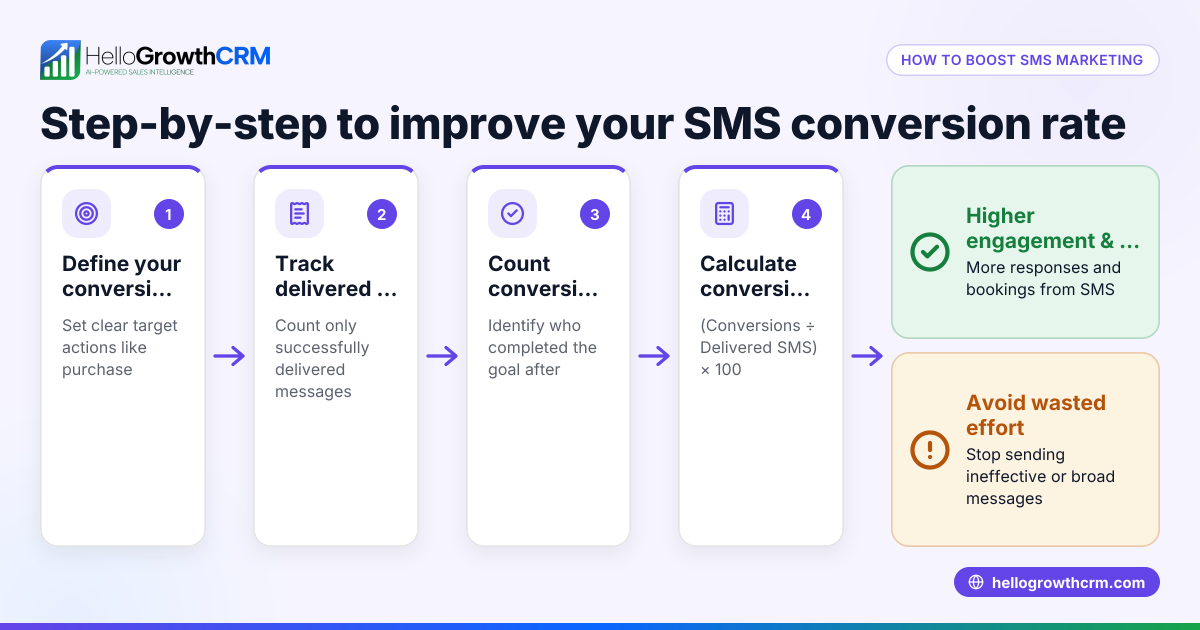
SMS engagement means how effectively your text messages connect with customers and leads, prompting them to open, read, and respond. For small businesses, this means using SMS to maintain timely communication that drives sales and customer satisfaction. This article covers why SMS engagement matters, a step-by-step guide to improve it, a detailed example with calculations, common mistakes to avoid, and how HelloGrowthCRM supports SMS engagement by logging conversations and enabling follow-ups.
Why this comes up / what goes wrong
Small-business owners often rely on SMS because it is direct, personal, and fast. However, many struggle with low response rates or losing leads due to slow or inconsistent follow-up. Running sales communication across text messages, email, and spreadsheets can cause disorganization, missed messages, or delays. Without a clear strategy, messages may be ignored or seen as spam, leading to lost opportunities and frustrated customers. This makes understanding and improving SMS engagement critical to staying competitive and growing your business.
Step-by-step
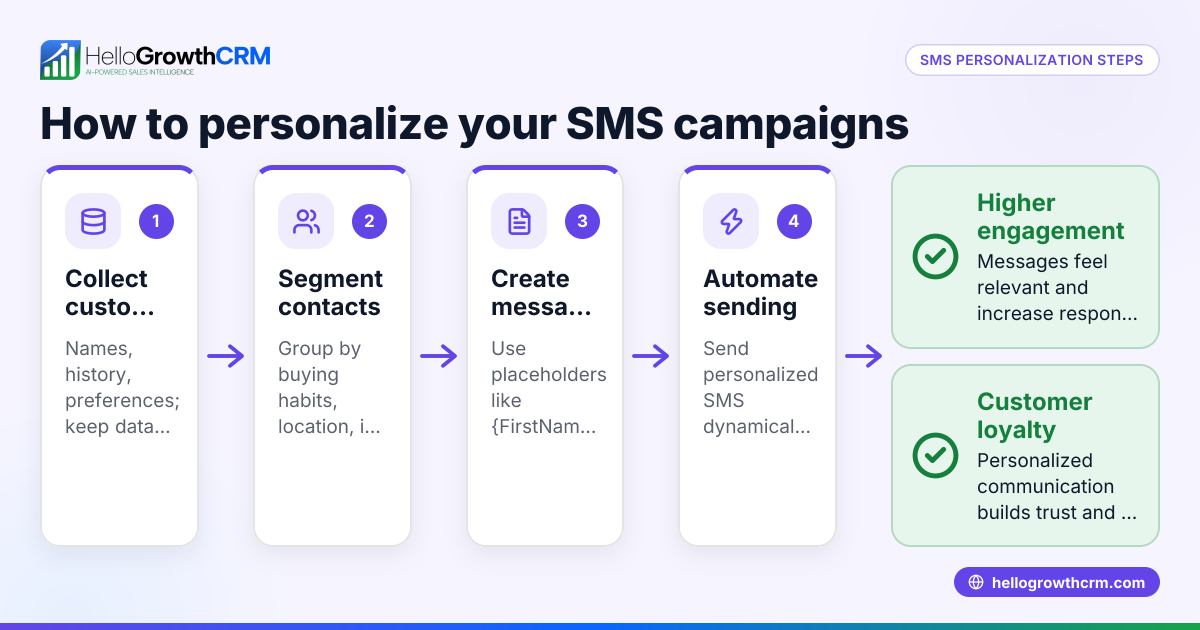
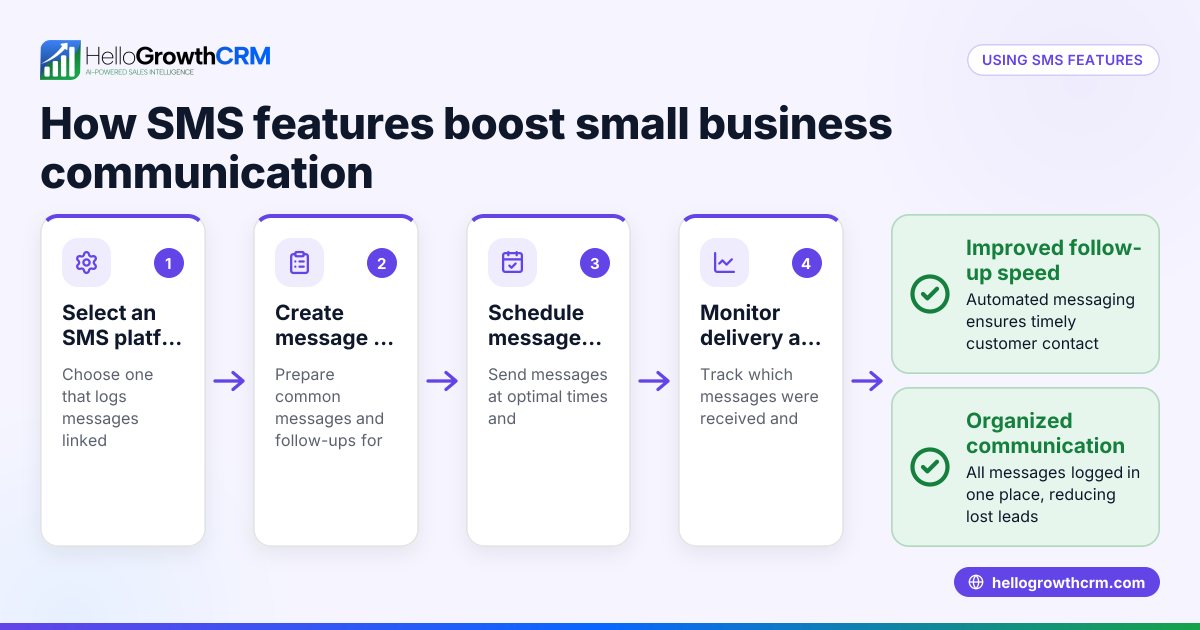
- Collect and segment your contacts carefully. Make sure your SMS list includes only people who have explicitly consented to receive texts. Segment your contacts by criteria such as interest, purchase history, or lead stage. This ensures messages are relevant and increases engagement.
- Craft clear, concise messages with a call to action. Each SMS should have one clear purpose, like scheduling a call or confirming an appointment. Keep messages brief, easy to understand, and actionable.
- Schedule your messages for optimal timing. Experiment with sending messages during business hours or times when your audience is most likely to respond. Avoid sending texts late at night or on weekends.
- Personalize messages when possible. Use the recipient’s name or reference previous interactions to make messages feel relevant and increase the chance of a reply.
- Track responses and follow up promptly. Monitor replies and respond quickly to keep the conversation going. Use a system to log conversations and set reminders for follow-ups.
- Analyze engagement metrics regularly. Review open rates, response rates, and click-throughs if your messages include links. Adjust your message content and timing based on what performs best.
- Comply with legal requirements. Ensure all SMS communications follow regulations such as the Telephone Consumer Protection Act (TCPA). Always obtain consent and provide opt-out options.
Example (fictional figures)
A residential real estate team in Phoenix, Arizona, sends SMS follow-ups to potential homebuyers.
- They have a list of 500 leads.
- They send an SMS campaign offering a free home evaluation.
- The average response rate is 20%.
Calculations:
500 leads × 20% response rate = 100 responses
Of those 100 responses, 40 schedule appointments.
40 appointments × $5,000 average commission = $200,000 potential revenue
This example shows how improving SMS engagement can directly impact sales revenue by converting leads into appointments.
Common mistakes
- Sending too many messages: Bombarding customers with frequent texts annoys them and causes opt-outs. Prevent this by limiting message frequency to 1-2 per week.
- Ignoring replies: Failing to respond quickly loses momentum and trust. Prevent this by tracking conversations and setting reminders for timely follow-up.
- Generic messages: Unpersonalized texts feel like spam and reduce engagement. Prevent this by segmenting contacts and customizing messages.
- Not measuring results: Without tracking engagement metrics, you cannot improve your campaigns. Prevent this by using tools to monitor open and response rates.
- Poor timing: Sending messages at inconvenient times lowers response rates. Prevent this by testing and scheduling messages thoughtfully.
Doing this in HelloGrowthCRM
HelloGrowthCRM supports SMS engagement by logging WhatsApp and SMS conversations on each lead record. This helps sales teams keep track of all messages and follow up efficiently. Follow-ups can be sent directly as WhatsApp or SMS messages from the CRM, ensuring timely and organized communication. Learn more about WhatsApp and SMS CRM and how it fits for small businesses in the United States. The CRM also includes a built-in CRM dialer to complement your messaging efforts.
Frequently asked questions
What is a good SMS engagement rate for small businesses? Engagement rates vary by industry and audience. A response rate between 15-25% is typical for well-targeted campaigns. Tracking your own rates over time helps set realistic goals.
How can I avoid my SMS messages being marked as spam? Always get explicit consent before texting. Personalize messages, limit frequency, and provide an easy opt-out option. Avoid overly promotional language.
Can SMS engagement replace email marketing? SMS is more immediate and personal but works best alongside email and other channels. Combining SMS with email and CRM tools improves overall engagement.
Is it legal to send marketing SMS in the US? Marketing SMS must comply with the Telephone Consumer Protection Act (TCPA) and other regulations. Always obtain consent and honor opt-out requests promptly. (docs.fcc.gov)
How does HelloGrowthCRM help with SMS engagement? It logs WhatsApp and SMS conversations on lead records and allows follow-ups via messages from the CRM, helping teams stay organized and responsive.
Key takeaways
- SMS engagement measures how customers interact with your text messages.
- Segment your audience and personalize messages for better results.
- Track responses and follow up promptly to maintain engagement.
- Avoid common mistakes like spamming or ignoring replies.
- Use tools like HelloGrowthCRM to log conversations and manage follow-ups.
SMS engagement is a practical way to connect with customers quickly and personally. Start improving your SMS communication today with organized workflows and timely follow-ups. You can Start on the Free Forever plan (200 leads, no credit card) to try out SMS and WhatsApp messaging in HelloGrowthCRM.
Ready to put this into practice?
Set up your pipeline, WhatsApp follow-ups, and AI lead scoring in minutes — free, no credit card.
Try HelloGrowthCRM freeGet CRM tips in your inbox
Join thousands of sales professionals who get weekly insights on CRM strategy, AI automation, and pipeline optimization.

The HelloGrowthCRM team publishes guides on CRM strategy, AI sales tools, and revenue operations for small business sales teams.