HelloGrowthCRM software
Built for real small-business sales teams
HelloGrowthCRM helps reps qualify faster, follow up on time, and close more deals—with practical automation in one place.
- AI lead scoring and pipeline visibility
- Built-in dialer, WhatsApp, and email automation
- Sales forecasting and RevOps-ready reporting
An unanswered call happens when someone tries to reach your business by phone but no one picks up or responds. For small-business owners, unanswered calls can mean missed leads, delayed customer responses, and lost sales opportunities. Knowing how to identify, respond to, and manage unanswered calls helps keep your business responsive and competitive.
Why this comes up / what goes wrong
Small-business owners often juggle multiple roles, making it hard to answer every call. Calls may go unanswered because staff are busy with other customers, the business has limited phone lines, or calls come outside of operating hours. Without a system to track missed calls, leads can fall through the cracks. This results in lost revenue and frustrated potential customers who may turn to competitors.
Step-by-step
- Identify unanswered calls quickly: Regularly check your phone logs or call history to see which calls were not answered. Note the caller’s number, time, and date.
- Return calls promptly: Call back missed calls as soon as possible, ideally within the same business day, to show you value the customer's interest.
- Prepare before calling back: Review any information you have about the caller or the inquiry to personalize your response and improve the chance of connecting.
- Log the outcome of each callback: Record whether you reached the person, left a voicemail, or need further follow-up.
- Schedule follow-ups when needed: If the callback is not answered, set reminders to try again or use alternative contact methods like email or SMS.
- Analyze call patterns: Look for trends in unanswered calls, such as specific times or days with more misses, to adjust staffing or hours accordingly.
- Use a CRM with call management features: A CRM that includes a built-in dialer can help organize calls, log outcomes, and schedule follow-ups efficiently.
Example (fictional figures)
A two-location dental practice in Columbus, Ohio, receives an unanswered call from a potential patient on 04/15/2026 at 2:30 PM. The receptionist is busy with another patient and cannot answer.
Step 1: Identify the missed call at 2:30 PM on 04/15/2026.
Step 2: Call back at 3:00 PM the same day.
Step 3: Prepare patient intake questions before calling back.
Step 4: The receptionist calls back and leaves a voicemail because the patient does not answer.
Step 5: Log the call outcome as “Left voicemail, follow-up needed.”
Step 6: Schedule a follow-up call for 10:00 AM on 04/16/2026.
Step 7: Review call data and notice that most unanswered calls occur between 2 PM and 3 PM.
Step 8: Decide to add an extra staff member during that hour to reduce missed calls.
Financial impact example:
- Assume each new patient brings $500 in revenue.
- The practice misses 10 calls monthly during 2-3 PM.
- If 30% of missed calls convert when returned, potential revenue lost is:
$500 × 10 calls = $5,000 potential revenue
$5,000 × 30% conversion rate = $1,500 recovered by callbacks
Adding staff costs $20/hour × 1 hour/day × 22 working days = $440 monthly
Net gain = $1,500 - $440 = $1,060 monthly by reducing unanswered calls.
Common mistakes
- Ignoring missed calls: Leads and customers may be lost if you don’t call back promptly. Prevent this by setting daily reminders to check missed calls.
- Not logging call outcomes: Without tracking, follow-up actions become inconsistent. Use a CRM or call log to document results.
- Calling back at inconvenient times: Calling repeatedly during busy hours can annoy prospects. Check the best callback times based on past interactions.
- No follow-up plan: One callback attempt may not be enough. Schedule multiple attempts and use alternative contact methods like SMS or WhatsApp.
- Failing to analyze call data: Without reviewing patterns, missed calls will continue. Regularly analyze call logs to optimize staffing and hours.
- Using separate tools for calls and lead management: This causes fragmented information and missed follow-ups. Integrate call handling into your CRM.
Doing this in HelloGrowthCRM
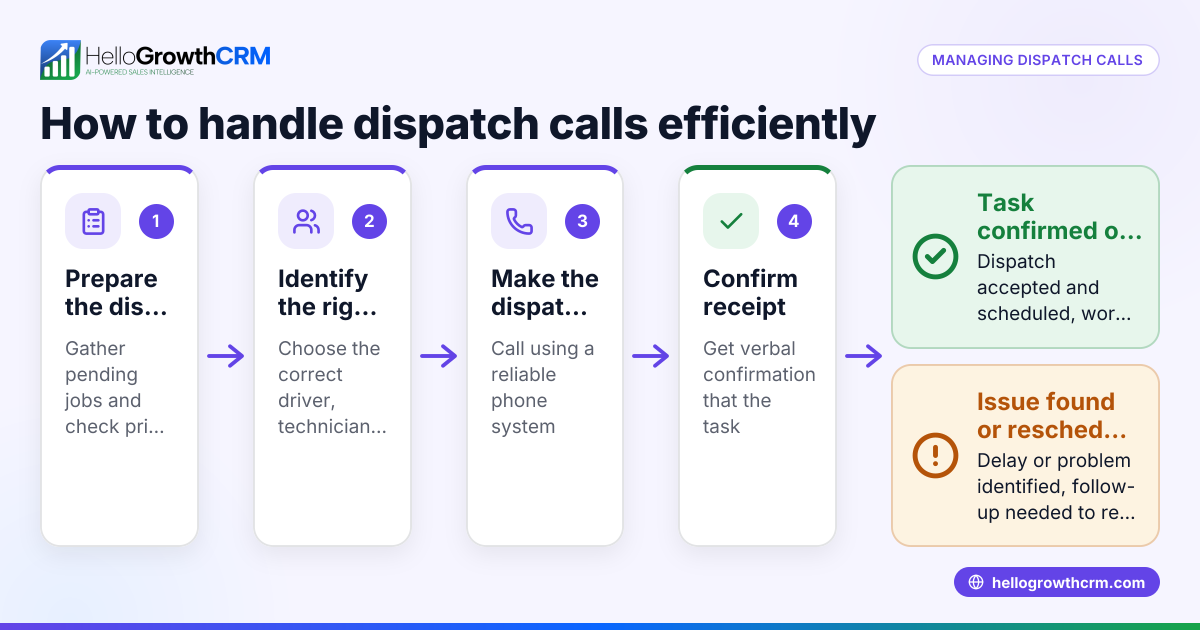
HelloGrowthCRM includes a built-in dialer that lets your rep work through call lists directly inside the CRM. Each call’s outcome is logged on the lead’s record, keeping your call history organized and easy to review. This helps ensure no unanswered call is forgotten and follow-ups happen on time. Learn more about the built-in CRM dialer and how HelloGrowthCRM supports WhatsApp and SMS CRM communication for your US business on HelloGrowthCRM for the United States.
Frequently asked questions
What counts as an unanswered call? An unanswered call is one where the person receiving the call does not pick up or respond. It may go to voicemail or simply ring out without answer.
How soon should I return an unanswered call? Try to return missed calls within the same business day to maintain customer interest and show professionalism.
Can I automate follow-ups for unanswered calls? Yes, CRMs with built-in dialers and messaging sequences can automate reminders and follow-ups via calls, WhatsApp, or SMS.
Why do calls go unanswered even when staff is available? Missed calls can happen due to simultaneous calls, distractions, or limited phone lines. Analyzing call patterns helps identify and fix these issues.
How do I prevent losing leads from unanswered calls? Log every missed call, prioritize callbacks, and use a CRM to track and schedule follow-ups systematically.
What is the benefit of using a CRM with a built-in dialer? It centralizes call management, logs outcomes automatically, and helps schedule timely follow-ups, reducing missed opportunities.
Key takeaways
- An unanswered call means a call was not picked up or responded to.
- Promptly identify and return missed calls to avoid losing leads.
- Logging call outcomes and scheduling follow-ups is essential.
- Analyze call patterns to improve staffing and availability.
- Avoid common mistakes like ignoring missed calls or not tracking outcomes.
- Use a CRM with a built-in dialer to manage calls and follow-ups efficiently.
Start managing your unanswered calls better today. Start on the Free Forever plan (200 leads, no credit card) and keep your leads organized and followed up effectively.
Ready to put this into practice?
Set up your pipeline, WhatsApp follow-ups, and AI lead scoring in minutes — free, no credit card.
Try HelloGrowthCRM freeGet CRM tips in your inbox
Join thousands of sales professionals who get weekly insights on CRM strategy, AI automation, and pipeline optimization.

The HelloGrowthCRM team publishes guides on CRM strategy, AI sales tools, and revenue operations for small business sales teams.