HelloGrowthCRM software
Built for real small-business sales teams
HelloGrowthCRM helps reps qualify faster, follow up on time, and close more deals—with practical automation in one place.
- AI lead scoring and pipeline visibility
- Built-in dialer, WhatsApp, and email automation
- Sales forecasting and RevOps-ready reporting
Understanding per user per month pricing for US B2B sales CRM means knowing how subscription costs relate to each individual license your sales team needs. It affects your budget, scaling, and ROI on your customer relationship management platform. Founders and RevOps managers must consider user counts, feature access, and hidden fees to choose the best CRM.
Key takeaways
- Per user per month pricing charges by individual license, directly impacting total CRM costs.
- User-based CRM plans scale costs with team size; adding or removing users changes monthly fees.
- AI-powered CRMs may charge more per user but offer benefits like AI lead scoring for better sales efficiency.
- Transparent pricing helps avoid surprises; watch for add-ons, integration fees, or limits on key features.
- Founders and RevOps should balance cost with features like pipeline management, automation, and reporting.
- Understanding per user pricing supports accurate sales forecasting and budget planning for growing B2B sales teams.
What is per user per month pricing in B2B sales CRMs?
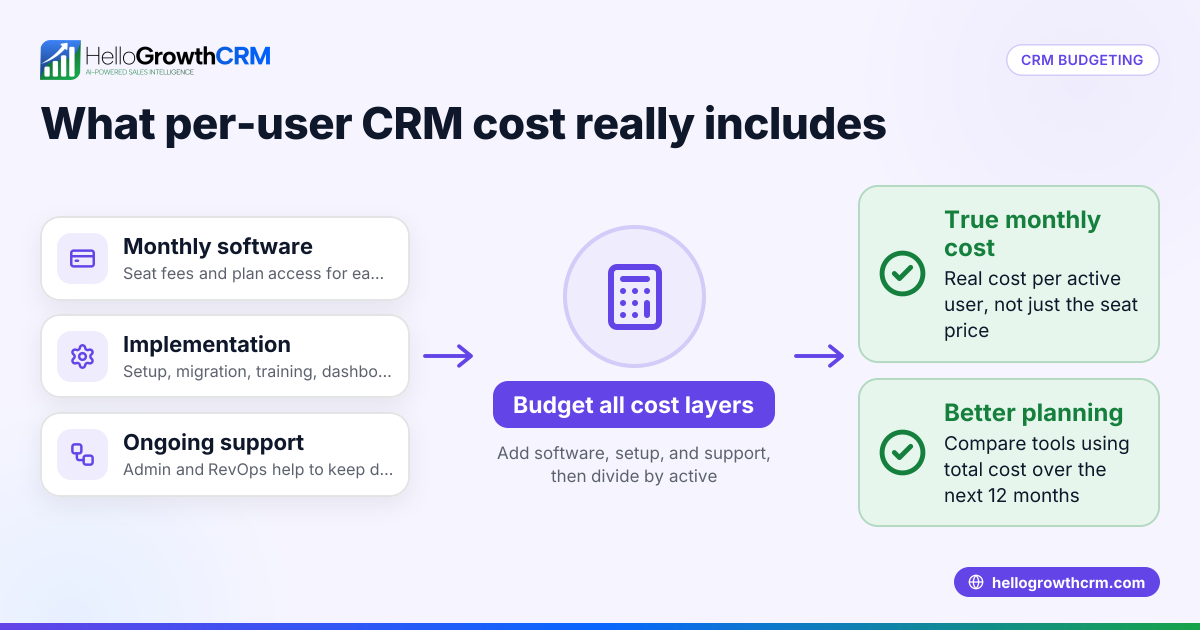
The term “per user per month” pricing means you pay a fixed price for each CRM license monthly. If your sales team has 10 users and the rate is $40 per user per month, your monthly bill is $400. This model is common among US-based CRMs and fits the dynamic needs of teams that grow or shrink.
Per user pricing typically includes access to the core CRM features tied to that user’s account, such as lead management, calling tools, and email integration. Higher-tier plans or add-ons for special features—like AI lead scoring or advanced analytics—may raise the price per user.
This pricing style gives clarity but requires careful management; adding extra users for short-term projects can quickly increase costs. Founders and RevOps managers must forecast user counts accurately and choose platforms with flexible user licensing.
How do AI capabilities influence per user costs?
AI user per pricing usually means you pay a premium per license for features like AI lead scoring, automated outreach, and sales forecasting. These capabilities save sales reps time and improve win rates, justifying the higher user fee.
AI-powered CRMs analyze customer data in real-time, prioritize leads likely to convert, and offer personalized sales playbooks. For example, an AI lead scoring feature included in the per user monthly price helps sales reps focus on the best prospects in complex B2B pipelines.
While the monthly user cost may increase, the boost in productivity and sales efficiency often offsets the investment. Choosing an AI CRM platform with transparent AI user per costs is essential for scaling smarter.
How does per user pricing affect CRM budgeting for growing sales teams?
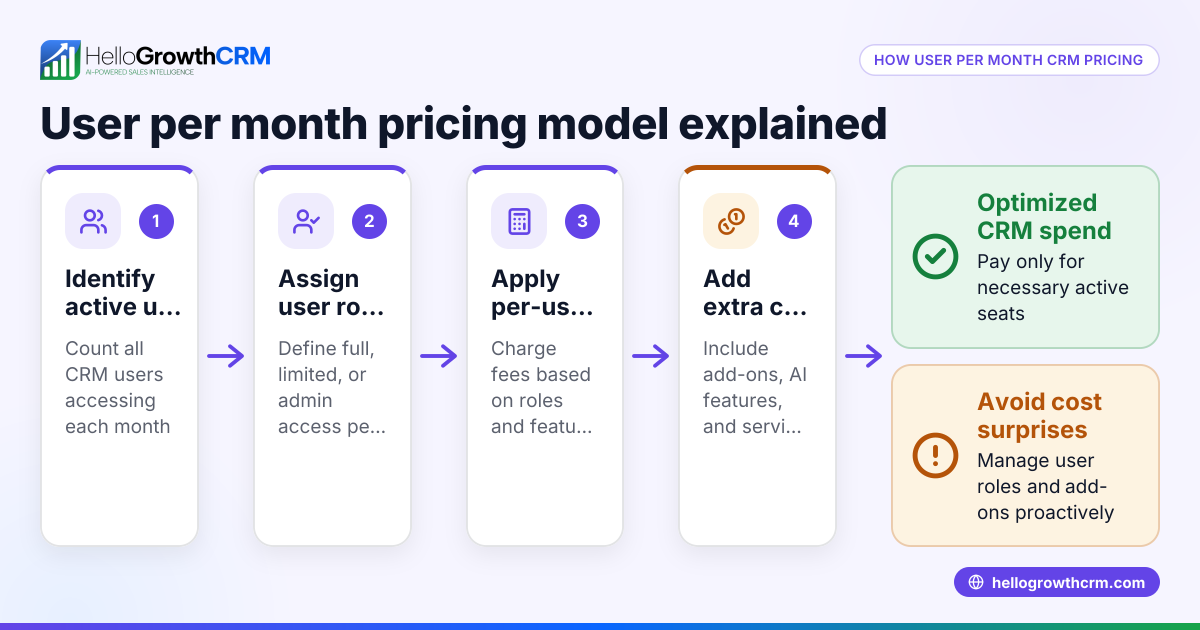
Per user per month pricing directly impacts how you budget for your CRM. As your US B2B sales team grows from 5 to 20 reps, your monthly subscription dollars multiply accordingly. This scaling requires early forecasting to ensure no surprises.
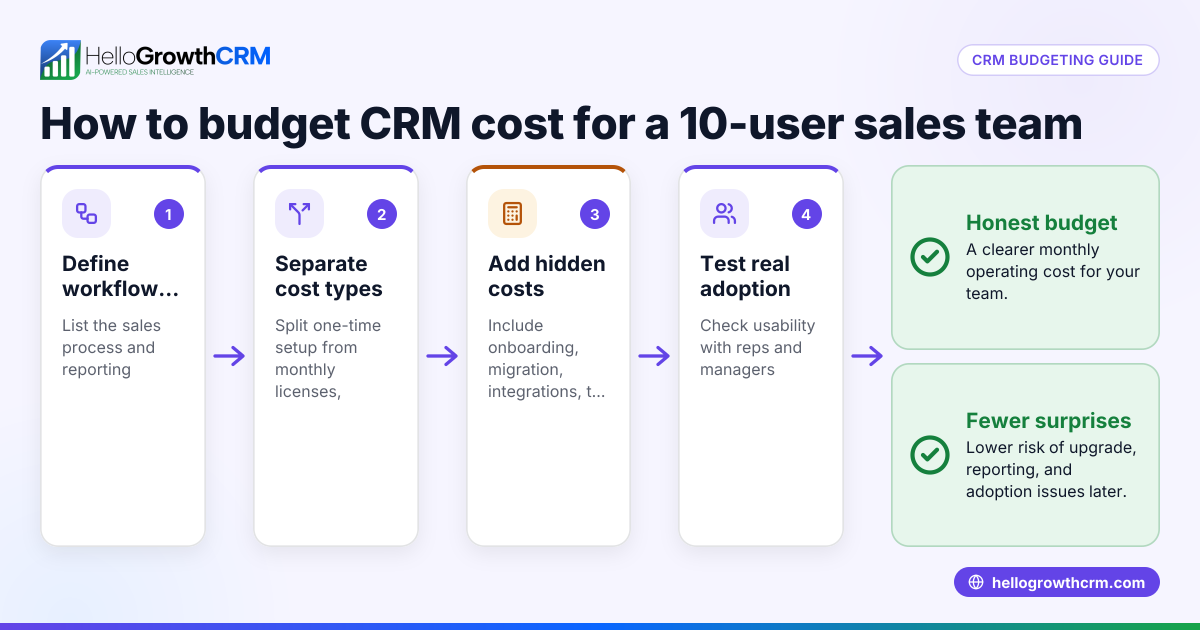
Budgeting with per user pricing means:
- Counting active users accurately every billing cycle.
- Forecasting team growth realistically to include future per user charges.
- Considering seasonal or project-based user add-ons.
- Reviewing contract terms for billing cycles, discounts, and overage fees.
Many companies in Chicago, Houston, or Detroit adjust CRM user licenses quarterly to match sales headcount. Advanced sales forecasting tools integrated into some CRMs help align user costs with predicted revenue growth, optimizing budgets.
Why do some CRMs charge more per user than others?
Prices per user vary based on CRM features, customer support, and included tools. CRMs offering AI lead scoring, calling, WhatsApp messaging, or managed RevOps add value that justifies a higher user rate.
Some vendors bundle features into tiers. Basic plans might cost less but restrict email automation or integrations with ERP systems common in US manufacturing. Premium plans with sales forecasting dashboards and automated workflows raise the per user cost.
Additionally, working with vendors who provide dedicated RevOps support or advanced reporting usually means extra fees. Understanding exactly which features influence the user price and which are add-ons helps decide the best fit.
How can founders and RevOps managers optimize costs with per user pricing?
Managing per user costs effectively means not paying for unused seats or unnecessary features. Here are key steps:
- Audit actual CRM user activity regularly; deactivate or reassign licenses not in use.
- Negotiate volume discounts if you have large teams.
- Prioritize CRMs offering flexible user license management.
- Integrate CRM with your finance tools (like QuickBooks or Stripe) to streamline billing.
- Use platforms with built-in sales automation to reduce reliance on costly third-party tools.
- Monitor legal compliance in outreach (CAN-SPAM, TCPA) embedded within CRM to avoid fines.
HelloGrowthCRM offers user-friendly management and feature transparency to help US B2B teams control their CRM spend efficiently.
How does per user pricing relate to sales automation and integrations?
Sales automation tools significantly enhance team productivity but can influence per user costs if bundled or sold as add-ons. Automations like email sequences, AI lead scoring, and calling cadence are critical to maximizing user value.
Similarly, integrating your CRM with ERP systems, QuickBooks, or tools like Stripe can sometimes involve additional fees or influence the per user rate depending on the vendor’s policies. Look for CRMs with flexible yet comprehensive integration options without inflating user costs.
Efficient sales teams in US metro areas rely on these automations and integrations to keep pipelines moving and reduce manual data entry. The per user cost must factor in these efficiencies for a true ROI analysis.
What is the impact of US compliance laws on CRM per user pricing?
Compliance with laws like CAN-SPAM (email marketing) and TCPA (phone calling) is mandatory in US B2B sales. Some CRM vendors include compliance tools in their per user plans to manage opt-outs, consent, or call recording.
These features add value but may increase the price per user depending on their sophistication. Vendors with managed RevOps services can help navigate these regulations as part of the package, potentially saving your team costly mistakes.
Founders should ensure their CRM user licenses cover these compliance aspects to avoid penalties, especially when managing large outbound call or email campaigns.
What are common misconceptions about per user CRM pricing?
One common misconception is that all users cost the same. Some vendors charge full price for occasional users; others offer “read-only” licenses at a lower rate. Understanding user types and what each can access is crucial.
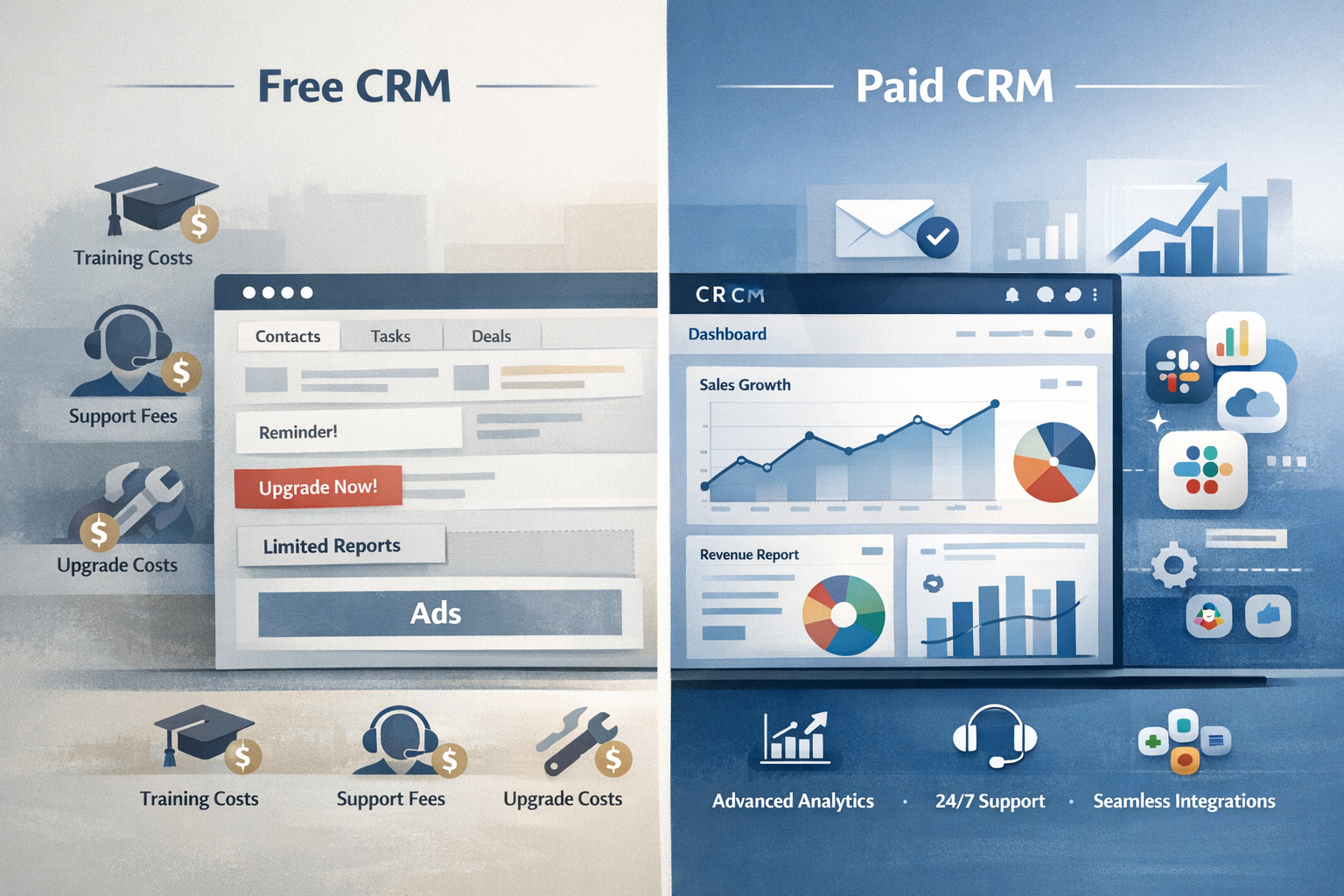
Another myth is that the cheapest per user price equals best value. Lower cost often means fewer features, less support, or hidden fees for integrations or emails. Always evaluate the full package.
Lastly, some sales leaders assume adding AI or automation features is an all-or-nothing upgrade rather than selectable add-ons affecting only certain users’ fees.
How do per user costs affect sales forecasting accuracy?
Accurate sales forecasting requires clear visibility into team size and user licenses. If user counts fluctuate and billing cycles mismatch, it leads to inconsistent CRM access and data gaps.
CRMs with integrated sales forecasting tools help link user activity and pipeline progress to revenue projections. This forecasting alignment ensures budgeting for user subscriptions matches expected income.
US sales managers especially rely on these tools in competitive markets like Houston or Chicago for precision in planning headcount growth and CRM investment.
Conclusion
Understanding per user per month pricing in US B2B sales CRMs is vital for founders and RevOps managers aiming to scale efficiently. It impacts your budget, process automation, and compliance readiness. Choosing an AI CRM with transparent pricing, flexible user management, and essential features like AI lead scoring and sales forecasting helps maximize ROI. Ready to streamline your sales processes with the right CRM user pricing? Start your free trial or book a demo today.
Frequently asked questions
What does “per user per month” pricing include in B2B CRMs?
It includes the license cost for each user to access the CRM platform monthly, covering features assigned to that user. Some plans may add charges for premium features or integrations.
How can AI tools increase per user CRM costs?
AI tools like lead scoring or automated workflows add sophistication and value but generally increase the monthly user fee. The productivity gains usually offset these costs.
Can I reduce CRM costs with inactive users?
Yes. Many CRMs charge for every active license. Deactivating unused seats avoids paying for idle users.
Are there volume discounts in per user CRM pricing?
Often yes. Many vendors offer discounts or custom pricing when you purchase licenses for large teams.
How do compliance requirements impact CRM pricing?
CRMs with built-in CAN-SPAM or TCPA compliance features may have higher per user pricing, reflecting the cost of compliance tools and services.
Do integrations with ERP or finance tools affect per user costs?
Sometimes yes. Some vendors charge for integrations as add-ons or include them only in higher-priced user tiers. Always check the pricing details.
Read next
This article covers one part of a bigger topic. For the complete picture, read our guide to user per month.
Frequently Asked Questions
Ready to put this into practice?
Set up your pipeline, WhatsApp follow-ups, and AI lead scoring in minutes — free, no credit card.
Try HelloGrowthCRM freeGet CRM tips in your inbox
Join thousands of sales professionals who get weekly insights on CRM strategy, AI automation, and pipeline optimization.

The HelloGrowthCRM team publishes guides on CRM strategy, AI sales tools, and revenue operations for small business sales teams.