HelloGrowthCRM software
Built for real small-business sales teams
HelloGrowthCRM helps reps qualify faster, follow up on time, and close more deals—with practical automation in one place.
- AI lead scoring and pipeline visibility
- Built-in dialer, WhatsApp, and email automation
- Sales forecasting and RevOps-ready reporting
A website for sales is more than just a digital brochure; it is a central tool to generate and manage sales leads online. It enables potential customers to find your business, understand your offer, and take action such as enquiring or buying directly. For small and mid-sized UK businesses, having a website focused on sales helps reduce lost leads from slow follow-up or disorganised contact methods like WhatsApp or spreadsheets.
Why this comes up / what goes wrong
Many small business owners start with informal sales methods such as WhatsApp messages, emails, or Excel sheets to track enquiries. While manageable at first, this approach often leads to lost or delayed responses, missed opportunities, and difficulty tracking sales progress. Without a website designed to support sales, businesses struggle to capture leads systematically and follow up effectively. The result is fewer closed deals and slower growth.
Step-by-step
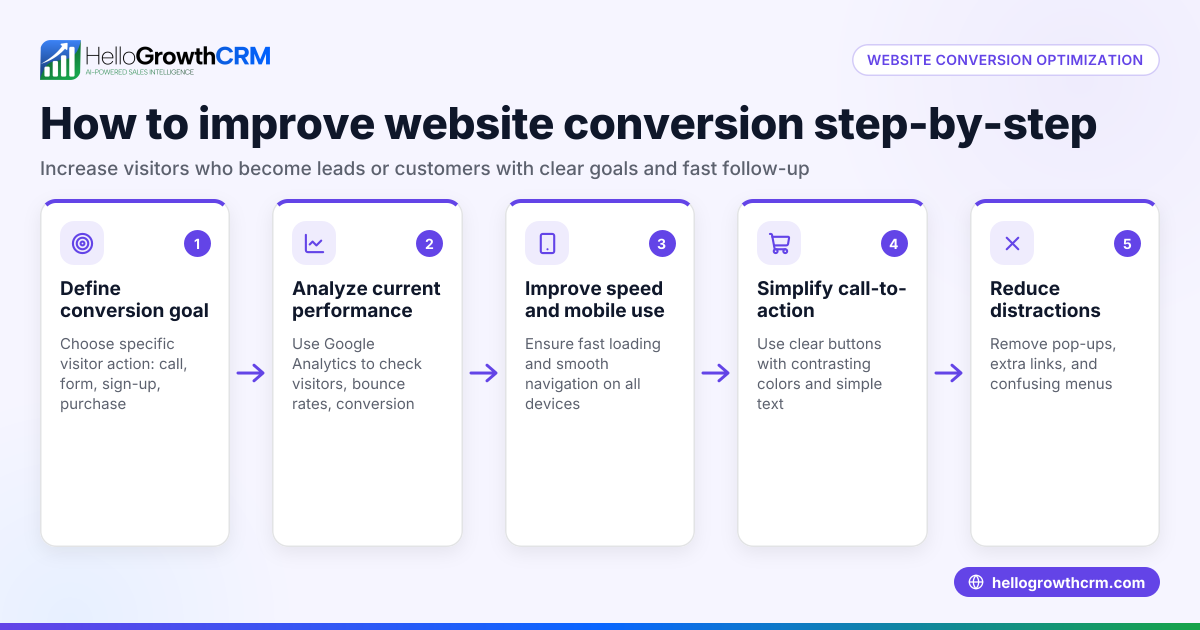
- Define your sales goals and target audience: Decide what you want to sell through your website and who your ideal customers are. This clarity guides your website design and content.
- Choose a clear, sales-focused website structure: Include pages such as product or service descriptions, pricing, testimonials, and a clear call to action (e.g., contact form, quote request, or buy button). Make sure the navigation is simple.
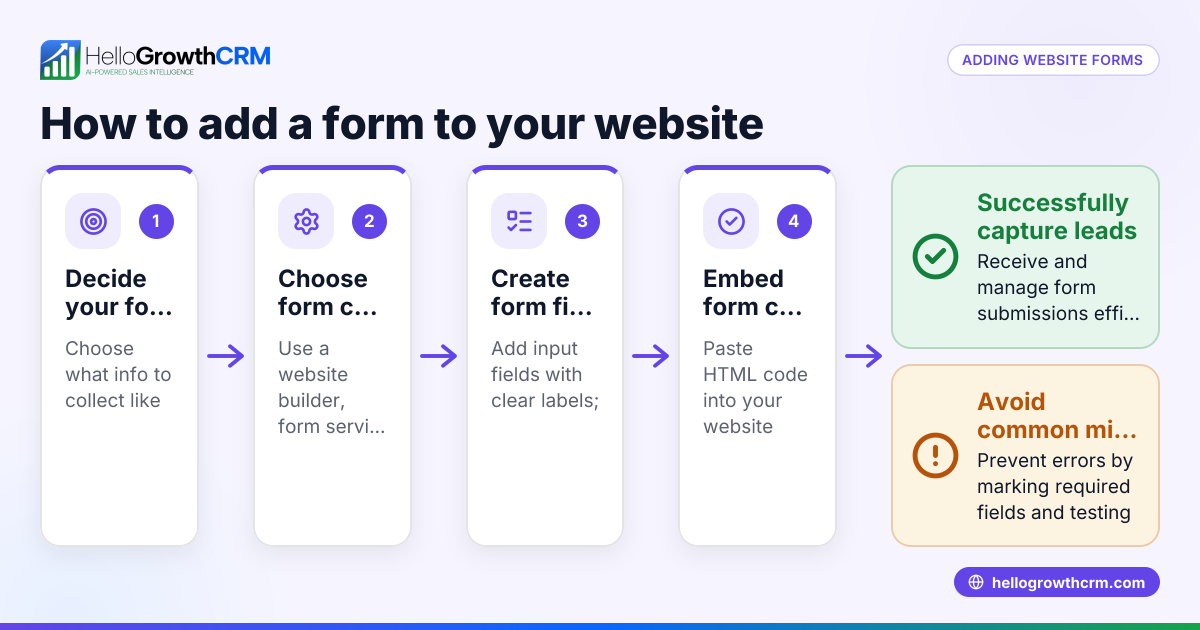
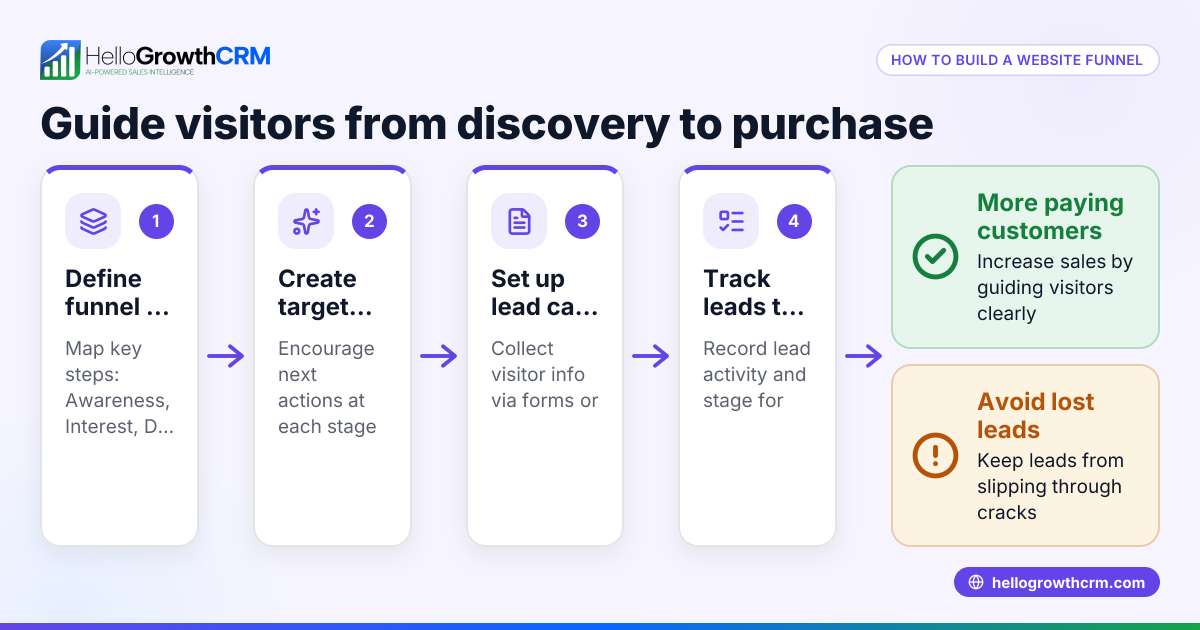
- Set up lead capture methods: Add web forms or contact buttons so visitors can easily express interest. Check that these forms work correctly and data is collected securely.
- Integrate your website leads with a CRM: Connect your website to a CRM system to automatically capture enquiries and track follow-up. This avoids losing leads in WhatsApp or spreadsheets.
- Plan and implement a follow-up process: Assign team members or use automation to contact leads promptly. Check that follow-ups happen within the same business day to maintain interest.
- Use sales pipeline tracking: Monitor leads as they move through stages like contact made, quote sent, and deal won or lost. This helps prioritise efforts and forecast sales.
- Regularly review and optimise your website and sales process: Gather feedback, check analytics, and update content or forms to improve conversion rates.
Example (fictional figures)
A kitchen-fitting company in Leeds launches a website for sales on 01/03/2026 to attract new customers.
- They set a goal to generate 50 new enquiries monthly.
- Website setup costs: £3,000.
- Average sale value: £4,000.
- Conversion rate from enquiry to sale: 20%.
Calculations:
Expected monthly sales = 50 enquiries × 20% conversion = 10 sales
Expected monthly revenue = 10 sales × £4,000 = £40,000
Annual revenue from website sales = £40,000 × 12 months = £480,000
Return on investment (ROI) in the first year = £480,000 - £3,000 = £477,000
This example shows how a website for sales can become a significant revenue driver when combined with effective lead capture and follow-up.
Common mistakes
- Ignoring lead follow-up: Leads captured on the website go cold if not contacted quickly. Prevent this by using tools or services that ensure same-day follow-up, like Managed RevOps support.
- Overcomplicating the website: Too many pages or unclear navigation confuse visitors. Keep the site focused on sales with clear calls to action.
- Not integrating with a CRM: Manually tracking leads in spreadsheets or WhatsApp leads to errors and lost opportunities. Use a CRM with deals pipeline features to track quotations and follow-up dates reliably.
- Failing to assign responsibility: Without a designated person or team managing sales leads, follow-up can be inconsistent. Managed RevOps can provide this support for founders without sales managers.
- Neglecting mobile users: Many visitors use smartphones, so ensure your website and sales tools work well on mobile devices.
- Not analysing sales data: Without reviewing sales pipeline and lead sources, you miss chances to improve. Use CRM reporting features for insights.
Doing this in HelloGrowthCRM
HelloGrowthCRM helps UK businesses run sales from their website by capturing leads automatically and tracking them as deals in a pipeline. When a quotation is sent, it appears at the 'quote sent' stage with a follow-up date, so no opportunity is forgotten. For founders without a sales manager, Managed RevOps provides weekly follow-up execution and pipeline hygiene to keep leads moving. Field sales teams can log visits and activities via mobile, with managers seeing daily progress in territories and commissions. Learn more about HelloGrowthCRM for the United Kingdom and its WhatsApp and SMS CRM and built-in CRM dialer features.
Frequently asked questions
What is the main purpose of a website for sales? A website for sales aims to attract potential customers, provide information about products or services, and convert visitors into leads or buyers through clear calls to action and easy contact options.
How can I ensure leads from my website don't get lost? Integrate your website with a CRM system that automatically captures enquiries and sets follow-up tasks. Using tools like HelloGrowthCRM with deals pipeline and Managed RevOps ensures timely contact and lead tracking.
Do I need technical skills to create a website for sales? Basic website builders allow you to create a sales-focused website without coding. For better integration and lead management, consider platforms that connect with CRMs or get professional help.
How often should I update my sales website? Regular updates keep content relevant and improve user experience. Review your website quarterly to add new offers, update pricing, and improve lead capture based on analytics.
Can a website replace personal sales calls? A website complements personal sales efforts by capturing leads and providing information 24/7. Personal follow-up calls remain important to close deals and build relationships.
Key takeaways
- A website for sales is a focused tool to generate and convert leads online.
- Clear structure, lead capture forms, and calls to action are essential.
- Integrating with a CRM prevents lost leads and supports timely follow-up.
- Managed RevOps can help founders without sales managers keep leads moving.
- Regular review and optimisation improve sales results.
Start building your website for sales today and manage your leads efficiently with HelloGrowthCRM. Start on the Free Forever plan (200 leads, no credit card).
Ready to put this into practice?
Set up your pipeline, WhatsApp follow-ups, and AI lead scoring in minutes — free, no credit card.
Try HelloGrowthCRM freeGet CRM tips in your inbox
Join thousands of sales professionals who get weekly insights on CRM strategy, AI automation, and pipeline optimization.

The HelloGrowthCRM team publishes guides on CRM strategy, AI sales tools, and revenue operations for small business sales teams.