Product & Tools
ASM Full Form: Area Sales Manager Role
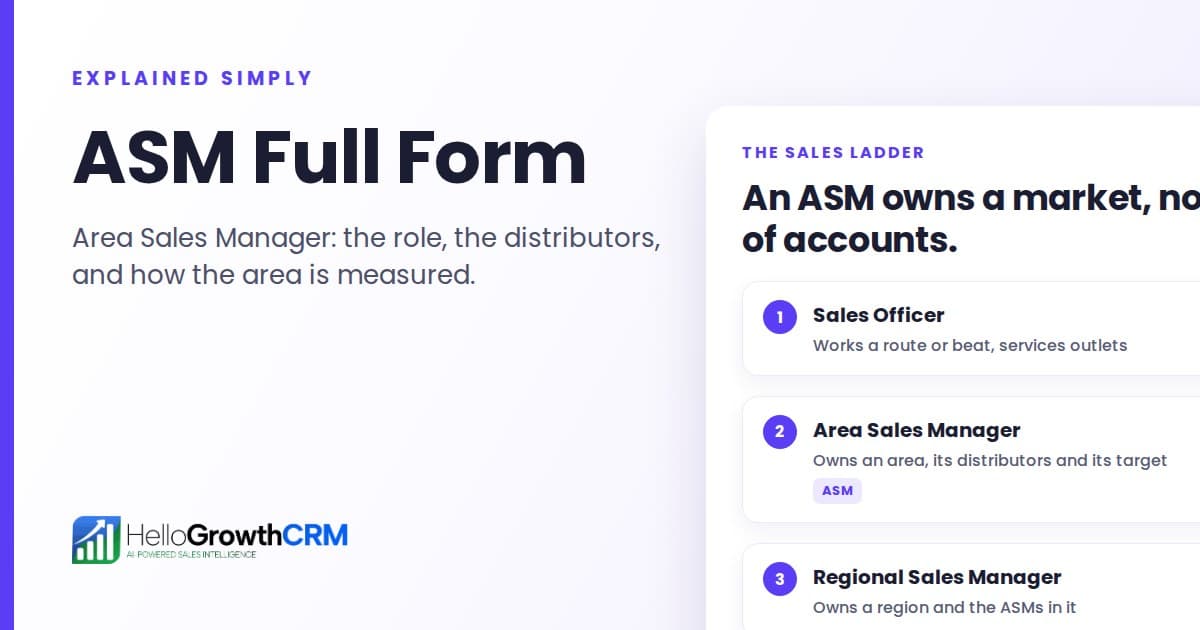
ASM full form is Area Sales Manager. What an ASM does, ASM vs TSM vs RSM, beat plans and distributors, how the role is measured, and the meaning in Hindi.
Practical CRM and sales guides for UK founders and small teams — lead follow-up, pipeline visibility and RevOps you can apply this week, plus the best of our global library.
709 articles
ASM full form is Area Sales Manager. What an ASM does, ASM vs TSM vs RSM, beat plans and distributors, how the role is measured, and the meaning in Hindi.
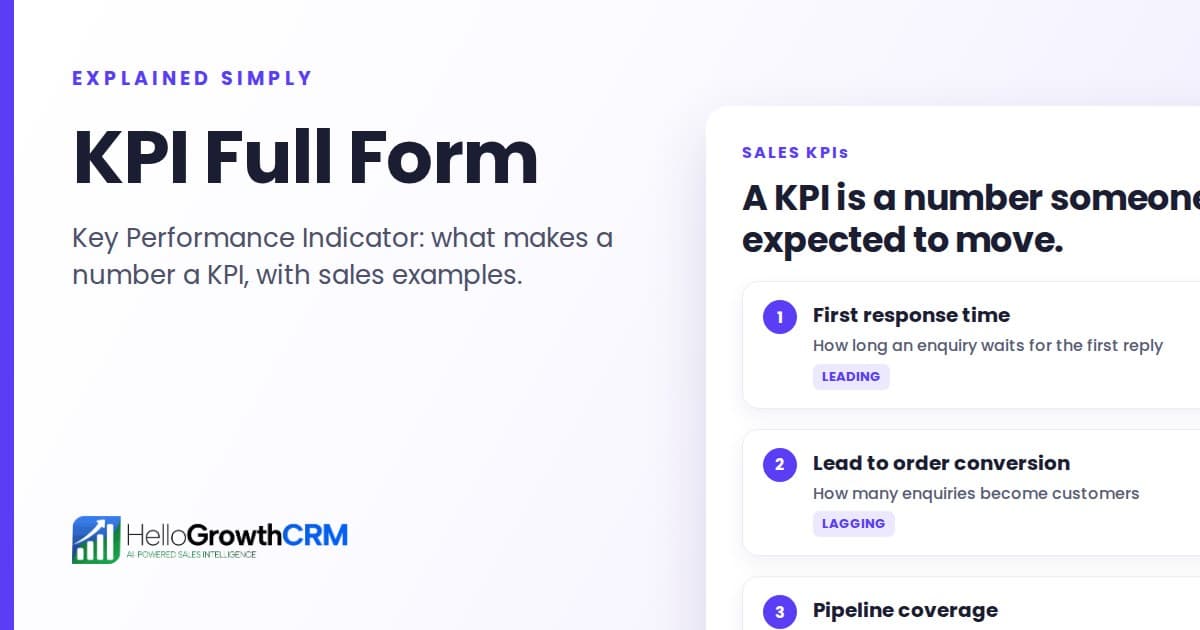
KPI full form is Key Performance Indicator. What makes a number a KPI, sales KPI examples, KPI vs KRA vs target, and the meaning in Hindi.
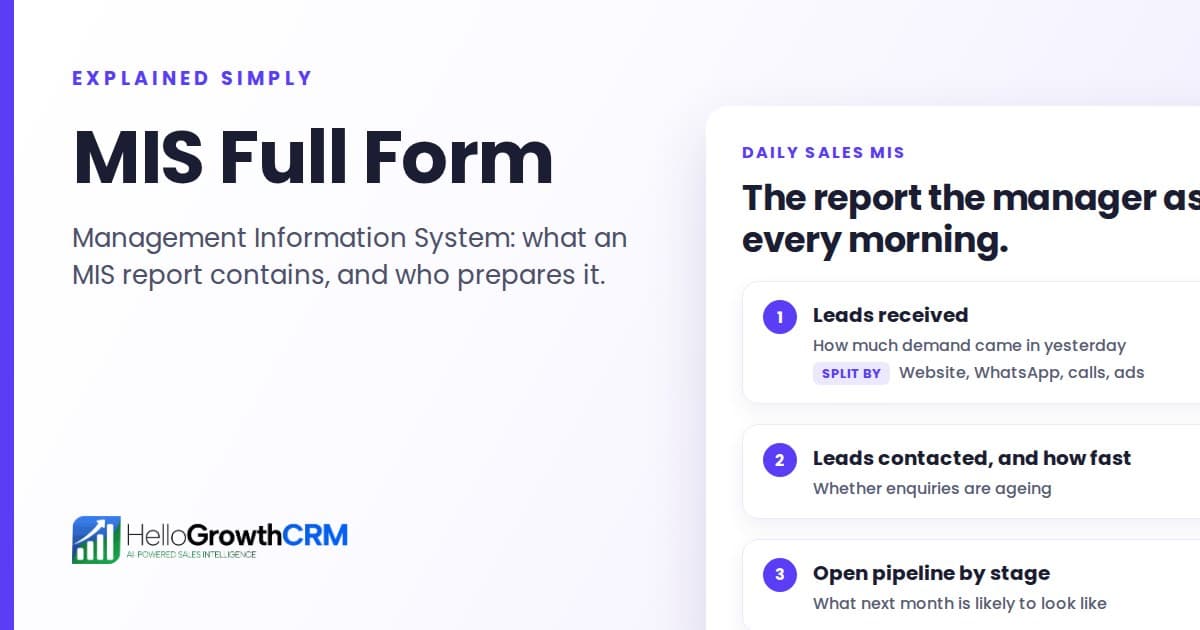
MIS full form is Management Information System. See what an MIS report contains, daily and monthly formats, the MIS executive role, and the Hindi meaning.
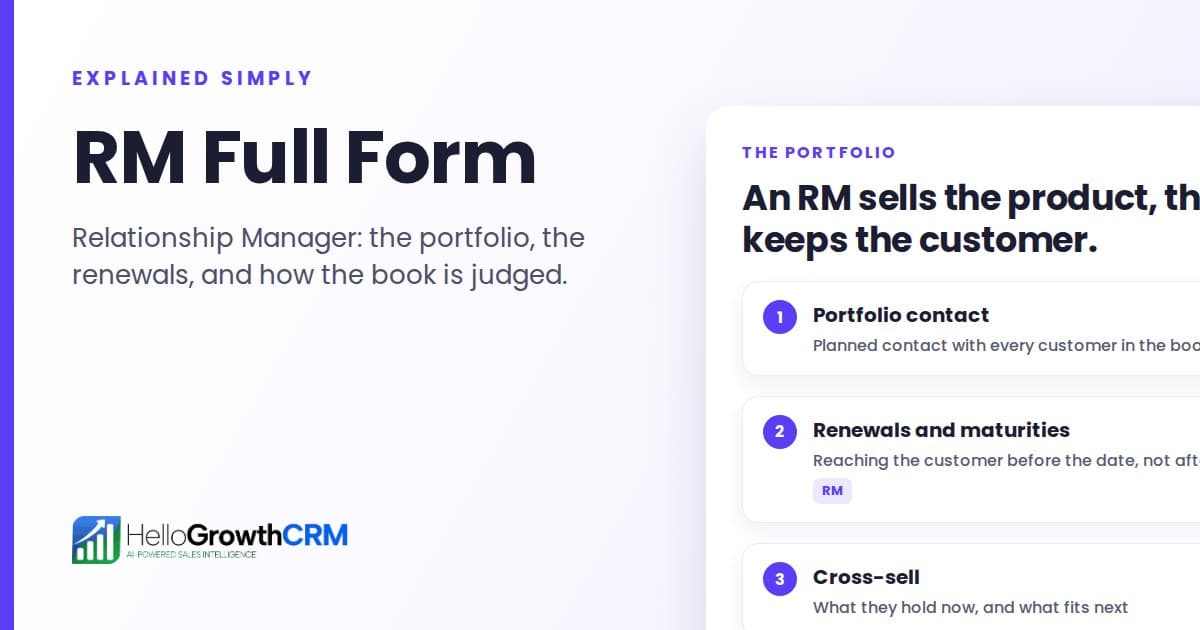
RM full form is Relationship Manager. What an RM does in banking and insurance, RM vs sales executive, how the role is measured, and the Hindi meaning.
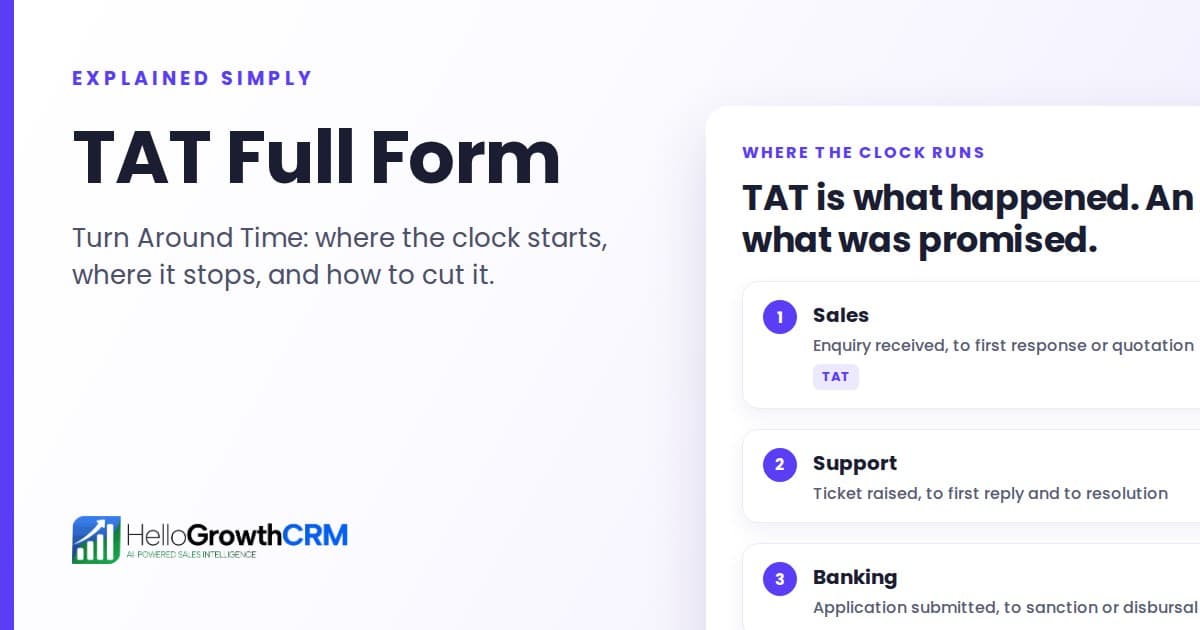
TAT full form is Turn Around Time. How TAT is calculated, what it means in sales, banking, support and logistics, TAT vs SLA, and the meaning in Hindi.

A CRM deal inspection framework is a repeatable, CRM-based method for checking whether every active opportunity has clear next steps, a believable.

A CRM deal desk workflow for B2B sales teams is a structured approval process inside the CRM that routes discounts, legal review, pricing exceptions.

CRM pipeline rules for forecast accuracy are the standardized entry, exit, data, and activity requirements that govern how deals move through each.

A CRM pipeline governance checklist is a practical set of rules, fields, inspection rhythms, and ownership standards that keeps every deal in your CRM

AI lead prioritization in CRM is the process of using artificial intelligence to rank, score, and route B2B leads based on real buying signals—such as

A CRM forecast review process is a repeatable way for B2B sales teams to inspect pipeline quality, deal risk, next steps, and commit accuracy inside a
What AI sales assistants genuinely do well, where they fail, the questions to ask a vendor, and how to run a two-week evaluation that produces a real answer.
What an API integration really involves, in plain language: the four questions to ask a vendor, what breaks, what it costs to maintain, and when not to bother.
Why quotations go quiet, how to write one that survives internal circulation, and a follow-up sequence that gets a decision instead of a polite delay.
How to build a beat plan that holds: outlet classification, visit frequency, route sequencing, productivity metrics and why most permanent journey plans drift.
The interview questions that produce a usable customer case study, in the order to ask them, plus recruiting, approvals and what to do with a vague answer.
Fifty CRM and sales terms defined in working language, plus the four distinctions teams collapse most often and what that mistake costs in reporting.
What a compliant GST invoice for services must contain, how place of supply works, when to charge IGST, and the practical mistakes that cause disputes.
What Indian telecalling teams should understand about preference registers, registration and consent, plus the habits that keep a calling team out of trouble.
Payment reminder wording that gets paid without damaging the relationship, written out in full for each stage, with the timing and the escalation points.
SMS and WhatsApp fail differently. Which channel to use at each sales stage, the consent rules involved, template friction and how to build a sensible fallback.
This is the the UK edition of our CRM blog. Browse every article in the global library, or explore how HelloGrowthCRM works for teams in UK.