HelloGrowthCRM software
Built for real small-business sales teams
HelloGrowthCRM helps reps qualify faster, follow up on time, and close more deals—with practical automation in one place.
- AI lead scoring and pipeline visibility
- Built-in dialer, WhatsApp, and email automation
- Sales forecasting and RevOps-ready reporting
Account based marketing (ABM) is a strategy where you focus your marketing and sales resources on a defined set of high-value accounts instead of broad audiences. The goal is to deliver personalized messaging and build deeper relationships with key prospects. ABM’s main benefits include better alignment between sales and marketing, more efficient use of resources, and improved conversion rates for targeted accounts. However, it requires more planning, coordination, and time than traditional marketing.
Why this comes up / what goes wrong
Small-business owners often struggle with slow lead follow-up, scattered data across emails and spreadsheets, and difficulty prioritizing prospects. They hear about ABM and wonder if it can help focus their limited resources on the best potential customers. Without clear guidance, they may find ABM too complex or question whether the extra effort will pay off. This is especially true for small sales teams juggling many roles who need a clear, manageable approach.
Step-by-step
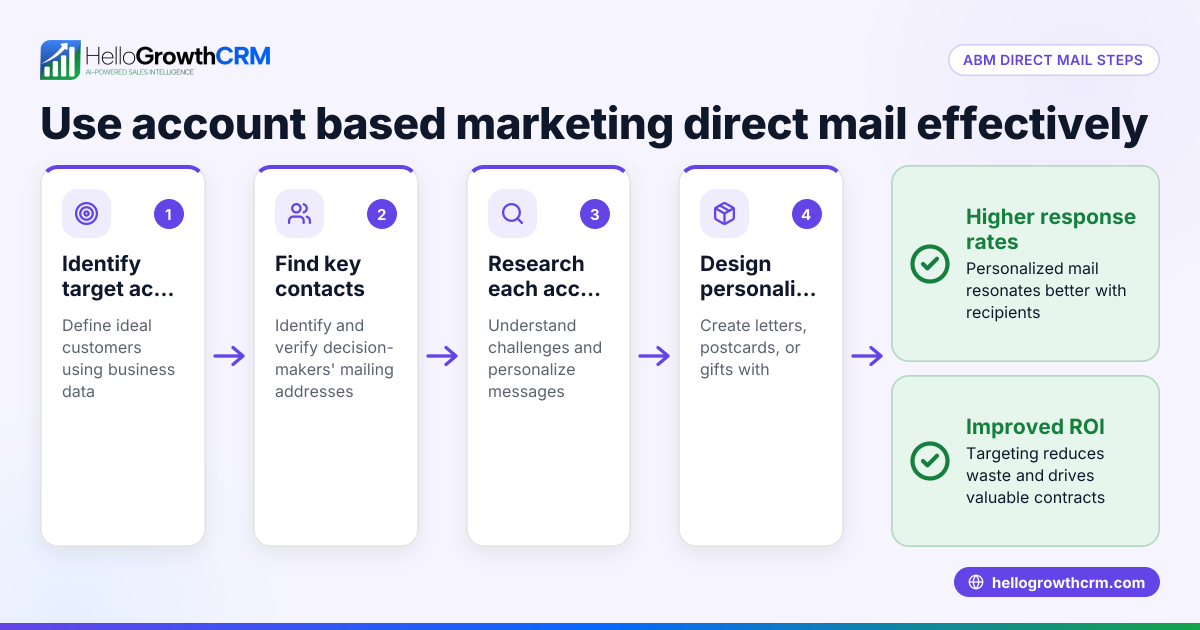
- Identify high-value target accounts: Define criteria such as company size, industry, revenue potential, and product fit. Review your existing customer data to find patterns that indicate high-value accounts.
- Research each account thoroughly: Learn about their challenges, key decision-makers, and buying process using LinkedIn, company websites, and news sources.
- Align sales and marketing teams: Set shared goals, messaging, and responsibilities to ensure consistent outreach and avoid mixed signals.
- Create personalized content and outreach plans: Tailor emails, messages, and campaigns to each account’s specific needs and interests.
- Use task boards to manage follow-ups: Assign tasks with due dates for calls, emails, and meetings to maintain momentum and accountability.
- Engage prospects on preferred channels: Contact leads via WhatsApp, SMS, email, or calls depending on what works best for each account.
- Track interactions and adjust: Log all communications and measure progress to refine your approach based on what works.
- Evaluate ROI regularly: Compare the time and resources spent to the revenue generated from targeted accounts to decide if ABM is paying off.
Example (fictional figures)
A plumbing company in Austin, Texas, starts an ABM campaign on 01/02/2026 targeting 10 commercial property management firms.
- Estimated annual contract value per firm: $75,000
- Total potential revenue: $75,000 × 10 = $750,000
- Initial ABM setup and research cost: $20,000
- Personalized campaign running cost over 6 months: $10,000
- Total investment: $20,000 + $10,000 = $30,000
- After 6 months, 3 firms sign contracts worth $75,000 each:
$75,000 × 3 = $225,000
- ROI calculation:
$225,000 − $30,000 = $195,000 net gain
$195,000 ÷ $30,000 = 6.5 or 650% ROI
This example shows that while ABM requires upfront investment, targeting the right accounts can yield strong returns.
Common mistakes
- Trying to target too many accounts at once: This dilutes your ability to personalize effectively. Prevention: Start with a manageable number of accounts and scale up gradually.
- Lack of alignment between sales and marketing: Leads to inconsistent messaging and lost opportunities. Prevention: Hold regular coordination meetings and share clear goals.
- Not tracking follow-ups properly: Leads can fall through the cracks without organized task management. Prevention: Use task boards to assign and monitor follow-up activities activities-tasks.
- Using generic messaging: Reduces engagement and lowers conversion rates. Prevention: Customize outreach based on detailed account research.
- Ignoring preferred communication channels: Leads may not respond to email but will engage on WhatsApp or SMS. Prevention: Engage leads on channels they prefer and log conversations in your CRM whatsapp-sms.
- Stopping outreach too soon: Prospects often require multiple touches before responding. Prevention: Use automated sequences to maintain follow-up over time sequences-campaigns.
Doing this in HelloGrowthCRM
HelloGrowthCRM supports ABM by turning each follow-up into a task with a due date so you never miss a step. The day's calls appear as a clear list, removing the burden of remembering every detail. WhatsApp conversations with leads are logged automatically, and follow-ups can be sent as WhatsApp or SMS messages. You can set up five-step sequences that run over two weeks and automatically stop when the prospect replies, ensuring consistent yet efficient outreach.
Frequently asked questions
What types of businesses benefit most from ABM? ABM works best for businesses with a small number of high-value target accounts, such as B2B companies selling complex products or services. Small and mid-sized businesses with limited marketing budgets can use ABM to focus efforts where they matter most.
How long does it take to see results from ABM? ABM often has a longer sales cycle than broad marketing because it involves building relationships with multiple stakeholders. Expect several months before closing deals, but the deals tend to be larger and more profitable.
Can small sales teams handle ABM? Yes, but it requires discipline and the right tools to manage tasks and communications efficiently. Using task boards and automated message sequences helps small teams stay organized and consistent.
Is ABM only about digital outreach? No, ABM includes digital channels like email, WhatsApp, and SMS, but also phone calls, meetings, and events. The key is personalized, multi-channel engagement.
How do I measure ABM success? Track metrics like engagement rates, meetings set, pipeline growth, and closed deals from target accounts. Compare these against the resources invested to evaluate ROI.
Key takeaways
- ABM targets specific high-value accounts with personalized outreach.
- It improves sales and marketing alignment and ROI per account.
- ABM requires more upfront effort and coordination than broad marketing.
- Use task boards and multi-channel messaging to stay organized and responsive.
- Start small, track results, and adjust your approach.
Start focusing your sales and marketing efforts with HelloGrowthCRM. Start on the Free Forever plan (200 leads, no credit card).
Ready to put this into practice?
Set up your pipeline, WhatsApp follow-ups, and AI lead scoring in minutes — free, no credit card.
Try HelloGrowthCRM freeGet CRM tips in your inbox
Join thousands of sales professionals who get weekly insights on CRM strategy, AI automation, and pipeline optimization.

The HelloGrowthCRM team publishes guides on CRM strategy, AI sales tools, and revenue operations for small business sales teams.