HelloGrowthCRM software
Built for real small-business sales teams
HelloGrowthCRM helps reps qualify faster, follow up on time, and close more deals—with practical automation in one place.
- AI lead scoring and pipeline visibility
- Built-in dialer, WhatsApp, and email automation
- Sales forecasting and RevOps-ready reporting
In the United States, automated lead follow up works best when it is built around consent rules, state-by-state operations, and the real way American customers book, pay, and reply.
A US business usually is not missing leads because it lacks software. It is losing them because inquiry sources behave differently, calls and texts carry legal risk, teams work across several time zones, and the money trail often continues outside the card processor. If your workflow ignores those details, automation sends more messages but creates less clarity.
This matters whether you run an HVAC company in Phoenix, a dental practice in Austin, a staffing agency in Chicago, or a med-spa in Miami. The same CRM sequence should not treat a Google Business Profile call, a Yelp message, a Facebook form, and a referral introduction as interchangeable. In the United States, the operational context is the follow-up strategy.
Google, Yelp, Angi, Thumbtack, Facebook, and referrals should not enter one generic queue
Lead automation starts with source design. In the United States, many local-service businesses live on Google Business Profile, Yelp, Angi, Thumbtack, Facebook, LinkedIn, and word-of-mouth referrals. Those sources produce different buyer intent and different contact expectations.
A Google Business Profile lead often wants immediate scheduling or a return call. A Thumbtack lead may be comparing several providers at once and respond better to fast qualification. A LinkedIn inquiry can require more context before a booking link makes sense. A referral may need a warmer message that names the referrer and skips generic pitch language.
That means automation should first classify the lead, then choose the opening action. A referral can go to a human task with a personalized note. A late-night Google inquiry can get an instant acknowledgment plus a scheduling option. A Yelp message may need manual review if staff must answer platform-specific questions before moving the conversation elsewhere.
If you use a CRM, the useful part is not “automation” in the abstract. It is lead capture, qualification, and pipeline entry that keep those sources organized from the start. HelloGrowthCRM’s lead capture and AI lead scoring tools and its pipeline management layer are relevant here because they let a team separate intent, assign ownership, and move an inquiry into the right next action instead of one catch-all drip.
TCPA, CAN-SPAM, and state privacy law decide whether your first touch can be a text, call, or email
In the United States, automated follow up is constrained by several overlapping rules, not one simple national privacy standard. For calls and texts, the Telephone Consumer Protection Act matters. The Federal Communications Commission administers key TCPA rules, and the Federal Trade Commission also plays a role in telemarketing oversight. For email, CAN-SPAM sets the federal baseline for commercial messages and requires a working opt-out. At the state level, privacy obligations can also apply, including the California Consumer Privacy Act and the California Privacy Rights Act, enforced through the California Privacy Protection Agency and the California Attorney General.
The practical point is simple: channel choice is a compliance question before it is a conversion question. A business that automates SMS because replies are fast may be creating evidence problems if it cannot show how consent was obtained and what the consumer was told. Under the TCPA, consent records are not just internal housekeeping; they can become central in disputes.
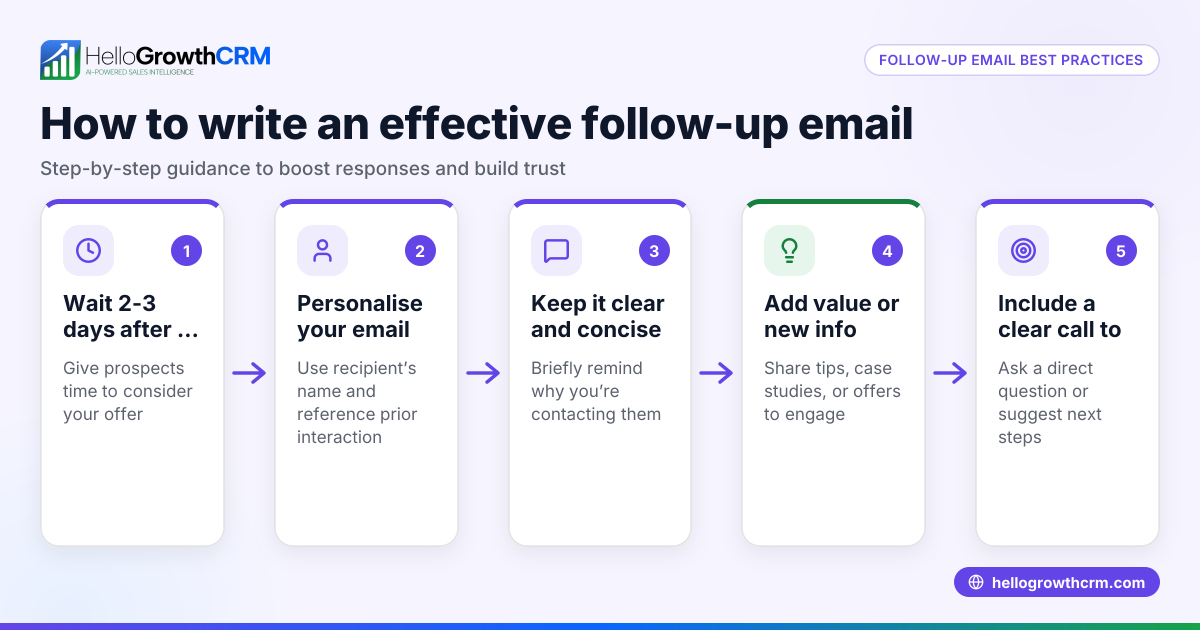
Email is not a free-for-all either. CAN-SPAM does not ban commercial email, but it does require process discipline. Your automated email follow up should preserve unsubscribe handling, sender identity, and message history. If your business touches protected health information, HIPAA changes the design again because lead data may move from ordinary sales handling into regulated health information workflows.
A good US setup stores the source, timestamp, form language, and the channel the lead used first. If a person called you, that is different from checking a box to receive texts. If a person filled out a website form for a med-spa consultation, that may raise both privacy and sector-specific issues. Automation should respect those distinctions instead of flattening them.
US time zones make “send tomorrow morning” a risky rule
The United States makes scheduling harder than many businesses expect. A single company can cover Eastern, Central, Mountain, Pacific, Alaska, and Hawaii time, while Arizona and Hawaii do not observe daylight saving time in the same way as most states. A lead captured in October for an appointment in March can be shifted by a daylight-saving change if your workflow stores loose local assumptions instead of the actual time zone context.
That affects more than calendar invites. It affects when texts are sent, when calls are queued, and whether a reminder feels prompt or intrusive. Federal holidays are widely observed, but state holidays vary, which matters if a team routes work nationally or uses local branch calendars. A staffing agency with recruiters in Chicago and clients on both coasts should not treat “start of business day” as one national moment.
Automation should therefore use the lead’s service location, not only the assigned rep’s location. For field businesses, the address where the work will happen is often the right anchor. For remote services, the prospect’s stated time zone is usually better. Booking pages should show availability clearly, and reminder sequences should survive seasonal time changes. If you rely on scheduling and booking tools, the value is not convenience alone; it is removing avoidable timing errors that make US follow up feel careless.
Routing has to follow state licenses and territory, not whoever clicked fastest
In the United States, lead routing often intersects with state licensing. State licensing boards can determine who may perform or even discuss certain regulated services. That is separate from tax registration and separate from your internal sales territories. A roofing company expanding across state lines, or a health-adjacent business operating under clinician oversight, cannot safely route every inquiry to the next available rep without checking geography and role.
For service businesses, county lines, metro areas, and travel radius also matter. A Phoenix HVAC contractor may cover one suburban ring differently from central-city work because dispatch time changes the economics of the job. A Chicago staffing agency may divide accounts by state labor rules or client location. In both cases, the routing logic belongs inside follow up because the wrong first owner slows response and creates handoff noise.
This is where territory and workflow rules become operational rather than theoretical. A CRM can route by service area, assign tasks, and keep the contact history tied to the record so a reassigned lead does not restart from zero. HelloGrowthCRM supports workflow triggers, lead routing, validation rules, and territory management and field operations tools, which is useful if your US business needs ownership to reflect geography, licensing, or on-site coverage.
ACH, checks, and wires leave gaps unless follow up records the payment trail
Many US businesses close the lead long before the money is fully visible in one system. Credit card payments are only part of the picture. Customers may pay by ACH, Zelle, check, or wire transfer. That matters because ACH and check payments do not naturally appear in a card processor dashboard, so your follow up and collections trail can break if staff assume “paid” status updates itself.
For local services, the path from lead to job often includes an estimate, a deposit, scheduling, final invoice, and a balance chase. Automation should reflect the payment rail actually used. If a customer says a check is in the mail, the next reminder should differ from the one sent after a declined card. If a commercial client pays by ACH after internal approval, the workflow should hold on finance follow up but continue operational scheduling.
The arithmetic below is illustrative; the figures are made up to show the shape of the decision. An HVAC contractor sends an illustrative proposal for $4,800, requests an illustrative deposit of $1,200 to hold the install date, then invoices the illustrative balance of $3,600 after completion. The customer says an illustrative ACH transfer was sent, but operations cannot see it in the card processor. If the CRM only watches card events, the customer may receive an awkward overdue message while the dispatch team assumes the job is cleared. A better workflow creates a manual payment-status checkpoint for ACH and check, then triggers the next message only after the record is updated. This illustrative example leaves out bank cut-off times, returns, and state-specific contract rules.
For document flow, quote and invoice tracking inside the CRM can reduce those blind spots. HelloGrowthCRM includes quoting, proposals, invoices, and payment reconciliation tied to deal records, which helps when the handoff from sales to operations depends on whether money was promised, requested, or actually received.
Sales tax and contractor paperwork shape the data you need before a lead becomes a customer
The United States does not have a federal VAT or GST. Instead, sales tax is imposed at the state level and often at the local level, and the treatment can depend on what you sell and where the customer is. For a business automating follow up, the lesson is not to turn the CRM into a tax engine. It is to collect the location and transaction context early enough that your team does not need to rebuild the record later.
If you sell taxable goods in more than one state, economic nexus rules may determine whether you need to collect sales tax in a particular state. Those rules vary, and the current rules are published by state departments of revenue. Federal tax administration also matters in adjacent ways: the IRS governs EINs and information reporting such as Form 1099, which affects how contractors and vendors are handled even if that is not part of marketing automation itself.
Why mention tax in an article about lead follow up? Because bad intake creates expensive cleanup. If the lead form never captures service address, business name, or whether the buyer is a business or consumer, someone must chase that information later before invoicing, exemption review, or contractor paperwork can proceed. Your automated sequence should ask only for what is operationally necessary at that stage, but it should ask for the right fields.
For many US firms, a short internal review is enough before automating the customer-to-job handoff:
- Does the record capture the service location, not just a billing contact?
- Will your team know whether the buyer is a business, household, or regulated entity?
- If a contractor or subcontractor enters the workflow, have you separated customer records from vendor paperwork such as EIN or Form 1099 data?
- Do state department of revenue rules for your footprint require location detail before invoice creation?
Spanish-language follow up is a mainstream US design choice, not a side campaign
In many US metro markets, English-only automation leaves revenue on the table and creates preventable friction. Spanish-language follow up is not an edge case in cities such as Miami, Phoenix, Los Angeles, Houston, and large parts of Texas, Florida, California, Arizona, Nevada, and Illinois. If your ads, referral partners, or intake staff attract Spanish-speaking leads, your automation should preserve that language preference from first contact onward.
The important decision is consistency, not volume. If the lead arrives through a Spanish landing page or speaks Spanish on the first call, the confirmation, reminder, and booking messages should not switch back to English by default. Nor should your workflow assign the lead to a rep who cannot continue the conversation. Language choice belongs in routing, templates, and scheduling pages, not only in marketing creative.
This is especially important in health-adjacent and regulated categories. A med-spa or dental practice may need consumer-friendly explanations, consent handling, and appointment reminders that are clear and accurate in the language the patient actually uses. Where HIPAA is implicated, vendor arrangements and data handling need a more careful review than an ordinary retail lead flow.
One US follow-up system works if every touch stays on the same record
The practical challenge in the United States is fragmentation. A lead might call after finding you on Google Business Profile, receive an email quote, ask a question by text, pay by ACH, and then have an on-site appointment rescheduled because of weather or a state holiday. When those touches live in separate inboxes and phones, automation becomes guesswork.
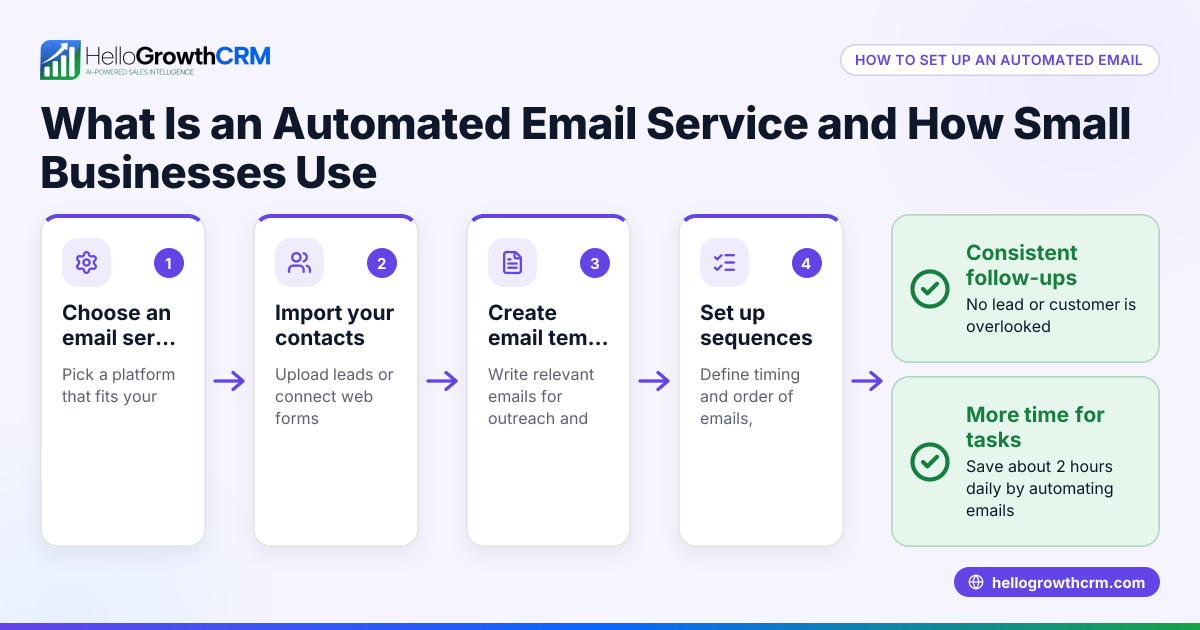
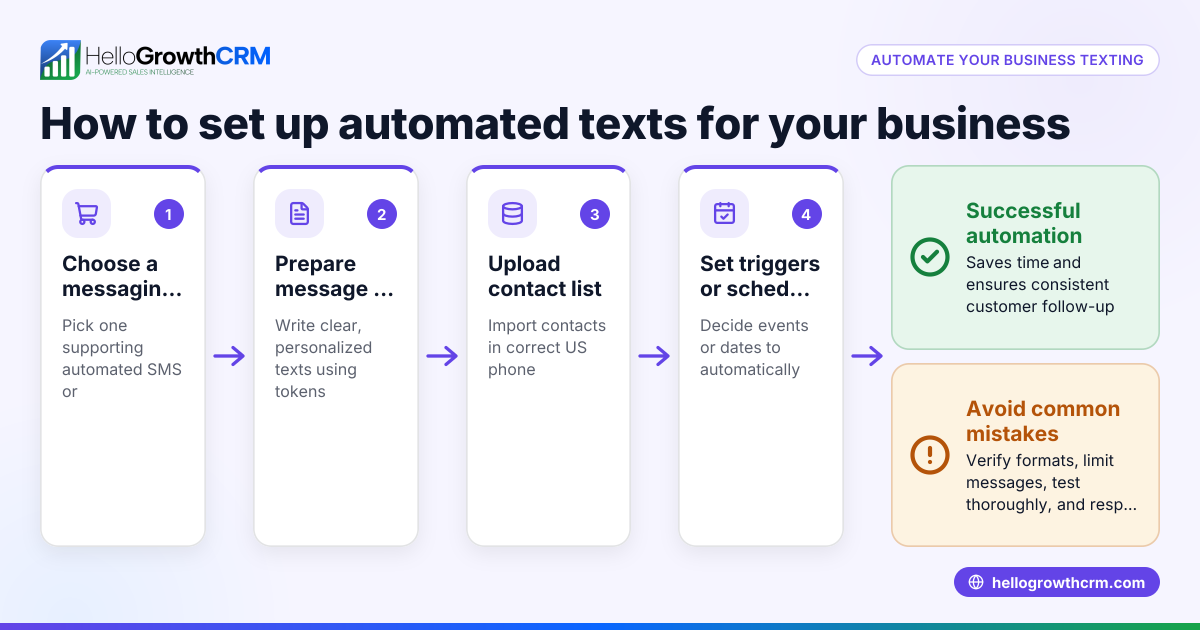
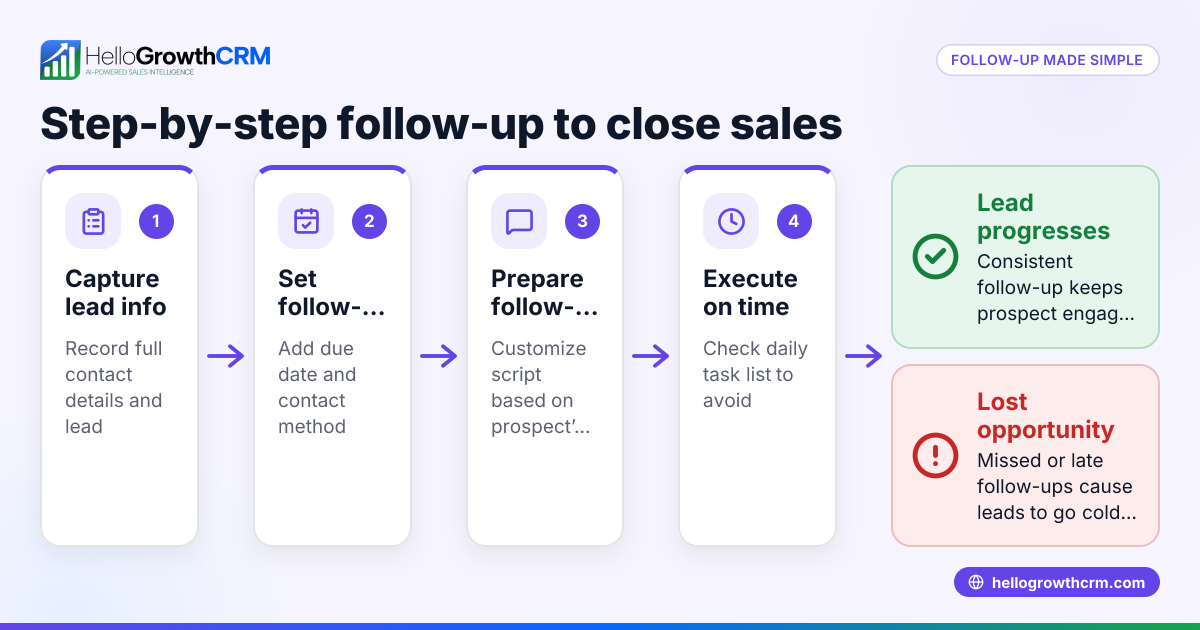
A workable system keeps calls, messages, tasks, notes, and stage changes tied to one record. That is more important than adding clever copy. In HelloGrowthCRM, that can mean using the built-in dialer for logged calls, SMS and messaging workflows for channel-based follow up, and task boards that keep internal handoffs visible. If your team is still building process, the free CRM can be enough to organize leads, tasks, templates, and scheduling before you add more automation.
For a US business, automated lead follow up succeeds when it mirrors local reality: source-specific intent, channel consent, state-aware routing, time-zone accuracy, and a payment trail that does not disappear outside card processing.
Ready to put this into practice?
Set up your pipeline, WhatsApp follow-ups, and AI lead scoring in minutes — free, no credit card.
Try HelloGrowthCRM freeGet CRM tips in your inbox
Join thousands of sales professionals who get weekly insights on CRM strategy, AI automation, and pipeline optimization.

The HelloGrowthCRM team publishes guides on CRM strategy, AI sales tools, and revenue operations for small business sales teams.