HelloGrowthCRM software
Built for real small-business sales teams
HelloGrowthCRM helps reps qualify faster, follow up on time, and close more deals—with practical automation in one place.
- AI lead scoring and pipeline visibility
- Built-in dialer, WhatsApp, and email automation
- Sales forecasting and RevOps-ready reporting
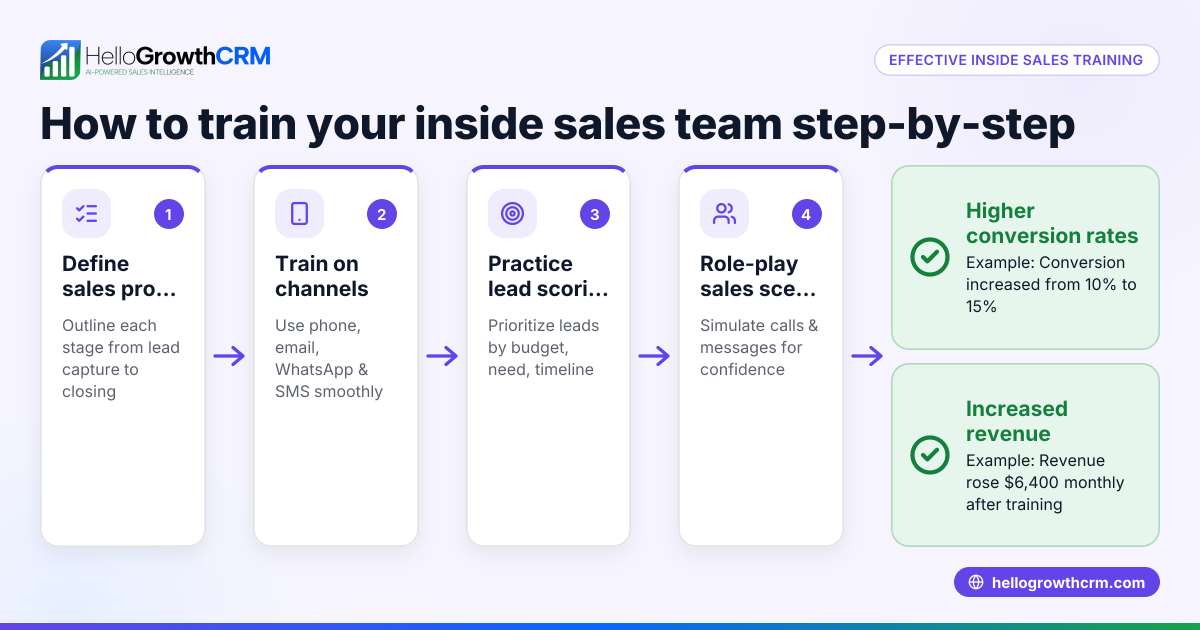
Call center sales training is the process of teaching call center agents the skills and techniques needed to effectively sell products or services over the phone. It focuses on communication, product knowledge, objection handling, and closing techniques to improve sales performance. This article explains why call center sales training matters for small businesses, outlines step-by-step how to train your team, shares a realistic example, common mistakes to avoid, and how HelloGrowthCRM can support your sales efforts.
Why this comes up / what goes wrong
Small-business owners often find that their call center or inside sales teams struggle to convert leads into customers. This can happen because agents lack consistent training on sales techniques or product details. Without structured sales training, calls may be slow, unfocused, or fail to handle objections effectively. As a result, leads are lost, follow-ups are missed, and sales targets fall short. For companies running sales primarily via phone, text, and email, this gap in skills can waste time and revenue. Owners want to understand how to train their teams to sell confidently, close deals faster, and track progress efficiently.
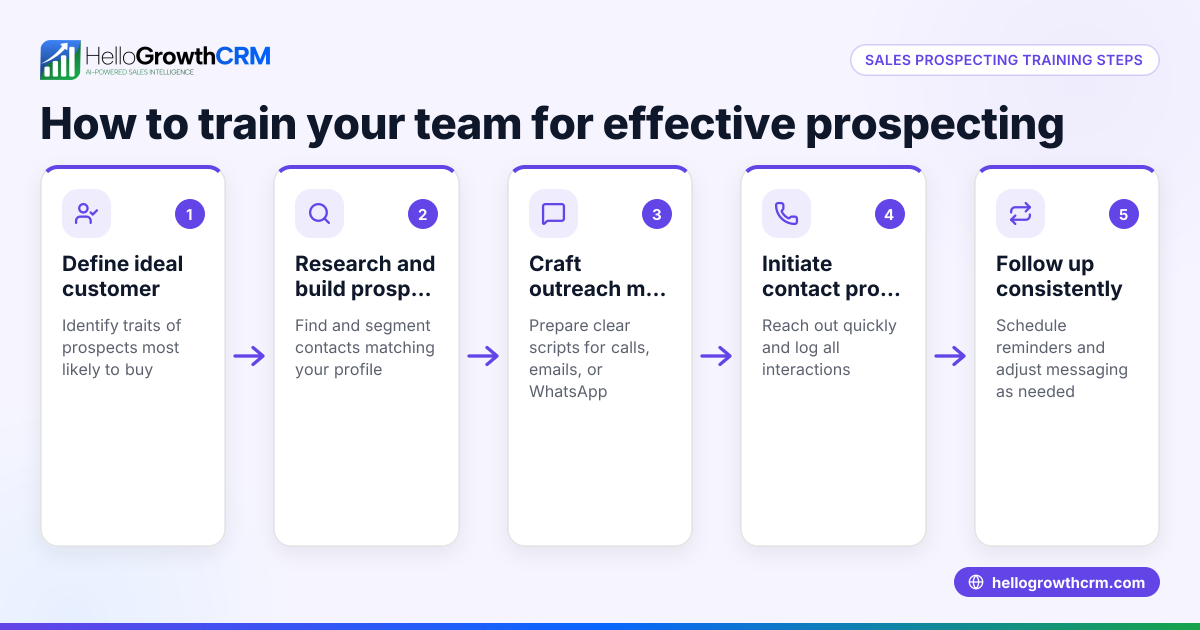
Step-by-step
- Assess your current sales process and team skills
- Review how your call center currently handles leads.
- Identify common challenges agents face (e.g., objection handling, product knowledge).
- Check call scripts, follow-up procedures, and sales tracking methods.
- Define clear sales goals and key performance indicators (KPIs)
- Set targets such as number of calls per day, conversion rate, or deal size.
- Decide what success looks like for your team.
- Develop or update training materials
- Create call scripts tailored to your products and customer profiles.
- Include modules on product features, competitive advantages, and common objections.
- Prepare role-play exercises and example scenarios.
- Conduct initial training sessions
- Schedule live or virtual sessions to teach sales fundamentals.
- Use role-playing to practice calls and objection handling.
- Provide feedback and answer questions.
- Implement ongoing coaching and feedback
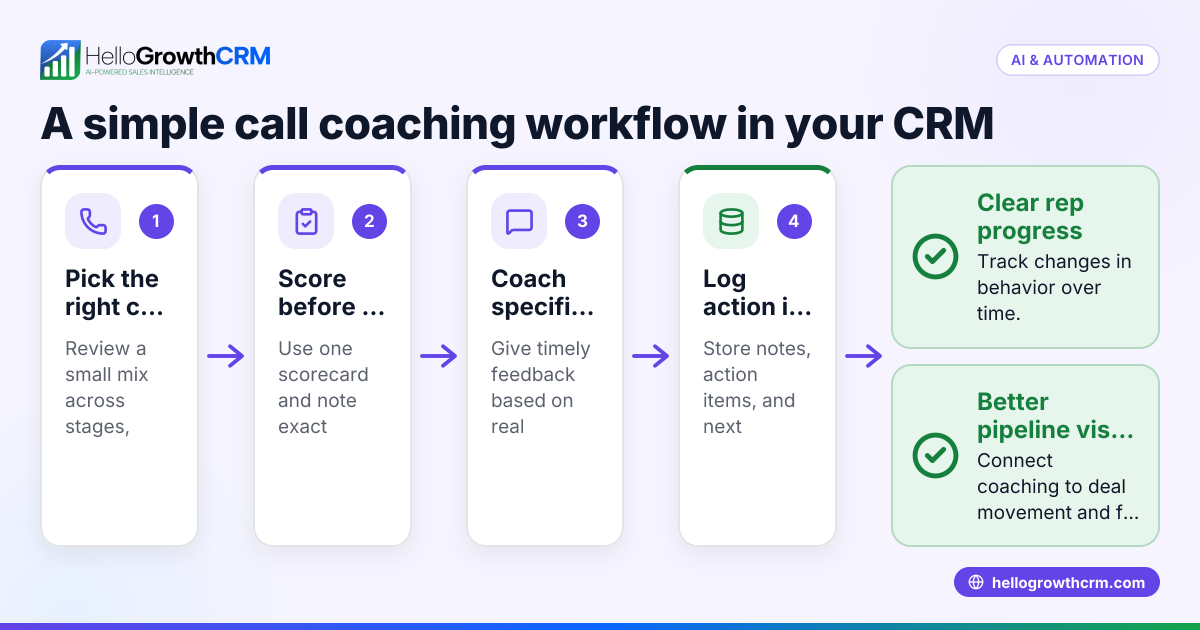
- Monitor calls regularly and review outcomes.
- Give agents constructive feedback and tips.
- Update training as products or market conditions change.
- Use technology to support training and sales tracking
- Equip agents with tools like a built-in CRM dialer to call leads directly and log outcomes.
- Track deals in a pipeline to see which stage each lead is at and schedule timely follow-ups.
- Define territories and monitor field sales activity if applicable.
- Measure results and refine training
- Analyze sales data and agent performance.
- Adjust training content and coaching based on what works best.
Example (fictional figures)
A Denver-based B2B software reseller started call center sales training on 03/01/2026. Before training, their average conversion rate was 10% on 500 calls per month, generating $100,000 in sales.
- Calls per month = 500
- Conversion rate before training = 10%
- Sales before training = $100,000
After training, conversion improved to 15%, and average deal size increased from $200 to $250.
- New conversion rate = 15%
- New average deal size = $250
- New sales = 500 × 15% × $250
- New sales = 500 × 0.15 × $250 = $18,750
Wait, that seems low; check calculation:
- Number of sales = 500 × 0.15 = 75 sales
- Total sales value = 75 × $250 = $18,750
This is less than before. The discrepancy is because the previous average deal size was $200 but total sales were $100,000, implying more sales or a different calculation. Let's adjust for clarity.
Assuming previous average deal size was $200, sales volume must have been:
- Number of sales before = $100,000 / $200 = 500 sales
But that conflicts with 10% conversion on 500 calls (which would be 50 sales). Let's correct initial data:
- Calls per month = 500
- Conversion rate before training = 10% → 50 sales
- Average deal size before training = $2,000
- Sales before training = 50 × $2,000 = $100,000
After training:
- Conversion rate = 15% → 75 sales
- Average deal size = $2,500
- Sales after training = 75 × $2,500
- Sales after training = $187,500
Increase in sales:
- $187,500 - $100,000 = $87,500
This example shows how improving conversion rate and deal size through training can significantly increase revenue.
Common mistakes
- Skipping needs assessment
- Prevent by analyzing current team skills and sales gaps before designing training.
- Using generic scripts not tailored to your product or customers
- Prevent by customizing scripts and examples to your specific offerings.
- One-time training without follow-up
- Prevent by scheduling regular coaching and refresher sessions.
- Ignoring sales tracking and feedback
- Prevent by using tools to monitor calls, deals, and agent performance.
- Overloading agents with information at once
- Prevent by breaking training into manageable modules with practice opportunities.
- Not involving managers in training and monitoring
- Prevent by engaging supervisors to provide ongoing support and accountability.
Doing this in HelloGrowthCRM
HelloGrowthCRM supports call center sales training with a built-in dialer that lets your telecallers work from inside the CRM and log every call outcome directly on the lead. This keeps your team organized and accountable. The Deals (pipeline) feature tracks open opportunities from first contact through closing, showing quotations at the 'quote sent' stage with follow-up dates so no deal is forgotten. For businesses with field teams, territories and field operations tools allow reps to log visits from their phones while managers monitor daily activities. Learn more about the built-in CRM dialer and explore training resources at the CRM academy. If you operate in the United States, see how HelloGrowthCRM adapts for your market at HelloGrowthCRM for the United States.
Frequently asked questions
What skills are most important in call center sales training? Effective communication, product knowledge, objection handling, and closing techniques are essential. Training should focus on these areas to help agents engage prospects and close deals confidently.
How often should call center sales training occur? Initial training should be comprehensive, followed by ongoing coaching and refresher sessions regularly. This keeps skills sharp and adapts to changing products or market conditions.
Can technology improve call center sales training outcomes? Yes. Tools like a built-in CRM dialer and pipeline management help agents track leads and calls efficiently, while managers can monitor performance and provide timely feedback.
How do I measure the success of call center sales training? Track KPIs such as call volume, conversion rates, average deal size, and revenue before and after training. Improvements in these metrics indicate effective training.
Should scripts be rigid or flexible? Scripts should guide calls but allow flexibility for agents to personalize conversations based on customer responses. This balance improves engagement.
Key takeaways
- Call center sales training teaches agents skills to improve phone sales performance.
- Start by assessing your current process and defining clear sales goals.
- Develop tailored training materials and conduct ongoing coaching.
- Use technology like HelloGrowthCRM's built-in dialer and deals pipeline to support training and tracking.
- Avoid common mistakes such as skipping needs assessment and neglecting follow-up.
- Measure training success by tracking key sales metrics regularly.
Start improving your call center sales skills today by starting on the Free Forever plan (200 leads, no credit card).
Ready to put this into practice?
Set up your pipeline, WhatsApp follow-ups, and AI lead scoring in minutes — free, no credit card.
Try HelloGrowthCRM freeGet CRM tips in your inbox
Join thousands of sales professionals who get weekly insights on CRM strategy, AI automation, and pipeline optimization.

The HelloGrowthCRM team publishes guides on CRM strategy, AI sales tools, and revenue operations for small business sales teams.