HelloGrowthCRM software
Built for real small-business sales teams
HelloGrowthCRM helps reps qualify faster, follow up on time, and close more deals—with practical automation in one place.
- AI lead scoring and pipeline visibility
- Built-in dialer, WhatsApp, and email automation
- Sales forecasting and RevOps-ready reporting
A chemical manufacturing CRM is essential for managing complex sales processes, multiple product lines, and regulatory compliance communications in the chemical industry. Indian chemical manufacturers often face challenges such as losing leads due to slow follow-up, managing sales on WhatsApp and spreadsheets, and coordinating sales teams across locations. This article explains why a CRM tailored to manufacturing needs matters, how to select the right one, and practical steps to implement it.
Why this comes up / what goes wrong
Chemical manufacturing businesses in India, ranging from MSMEs to mid-sized firms, often receive leads from multiple sources like IndiaMART, trade shows, and direct inquiries. Without a CRM, these leads are tracked manually on spreadsheets or WhatsApp chats, leading to missed follow-ups and lost sales. Sales teams struggle to update lead status, assign tasks, and forecast sales accurately. Regulatory complexities and product variations require detailed records and timely communication, which generic CRMs may not support well. Accountants and business owners find it hard to monitor sales pipelines and team productivity without centralized data.
Step-by-step
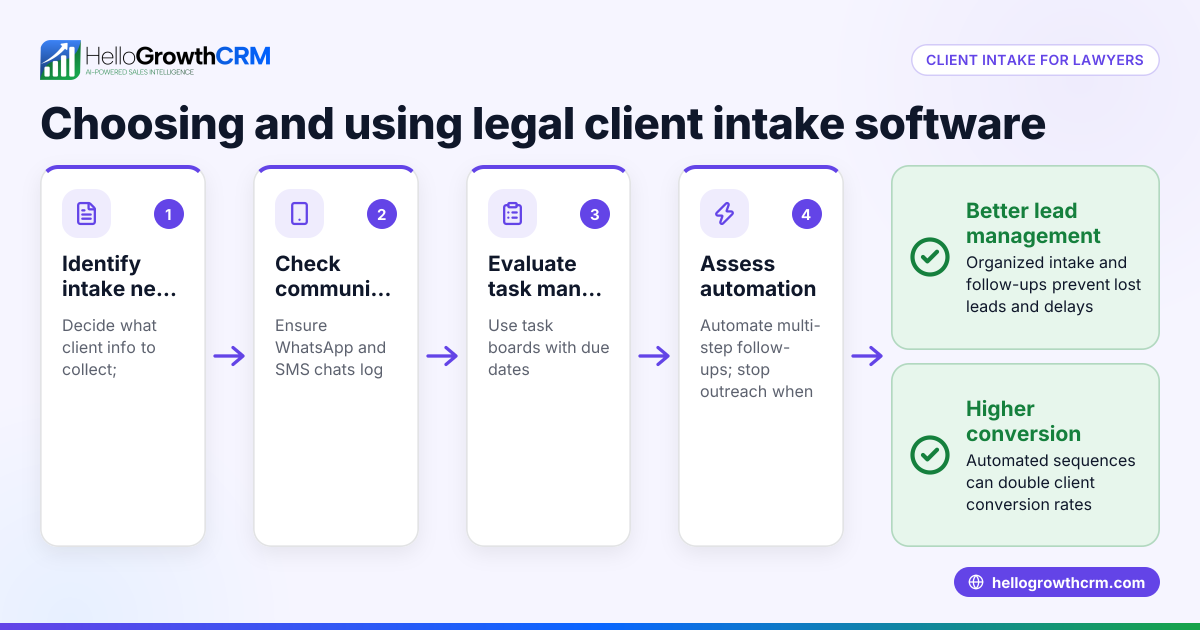
- Identify your sales process needs: List how leads come in (IndiaMART, JustDial, website forms), how many follow-ups are typical, and the communication channels (WhatsApp, SMS, calls).
- Check for industry-specific features: Look for CRM features that support lead capture from Indian marketplaces, AI lead scoring, and pipeline boards suited for manufacturing sales cycles.
- Evaluate communication integration: Ensure the CRM logs WhatsApp and SMS conversations on lead records and supports follow-up messaging to avoid losing context.
- Assess automation capabilities: Consider AI agents that can draft follow-up messages after calls to save time and keep reps focused on selling.
- Consider team size and budget: Start with a plan that fits your team size; small teams can use free plans with core pipeline management before upgrading.
- Test sales forecasting and reporting: Verify that the CRM provides clear pipeline views and forecasting tools to help plan production and inventory.
- Check ease of use: The CRM should be easy for telecalling teams and sales reps to adopt, with minimal training.
- Look for local support and compliance: Confirm the CRM works well within Indian business contexts and integrates with local lead sources.
For more details on manufacturing CRMs, see Manufacturing.
Example (fictional figures)
Consider a chemical manufacturing MSME in Pune with 5 sales reps handling 1,000 leads monthly.
- Monthly leads: 1,000
- Conversion rate without CRM: 5% (50 orders)
- Average order value: ₹1,20,000
Assume that without a CRM, some leads are lost due to slow follow-up. With a CRM, lead management improves, reducing lost leads and increasing orders.
If the CRM helps recover 80 additional leads that convert:
Additional revenue = 80 × ₹1,20,000
Additional revenue = ₹96,00,000
This example shows how a CRM can improve lead management and increase revenue by ensuring timely follow-ups and better pipeline visibility.
Common mistakes
- Using generic CRMs without WhatsApp integration: Leads and conversations on WhatsApp remain scattered. Prevent by choosing a CRM with WhatsApp and SMS logging.
- Ignoring team adoption challenges: Complex CRMs discourage use. Prevent by selecting user-friendly interfaces tailored for telecalling teams.
- Overlooking automation: Manually drafting follow-ups wastes time. Prevent by using AI agents that draft messages for review.
- Not verifying lead source integration: Leads from IndiaMART or JustDial may not sync. Prevent by confirming CRM supports these marketplaces.
- Skipping sales forecasting checks: Without forecasting, production planning suffers. Prevent by testing pipeline and reporting features before purchase.
- Starting with a paid plan unnecessarily: Small teams can start free and upgrade. Prevent by evaluating Free Forever plans first.
Learn more about communication integration in CRMs at WhatsApp and SMS CRM.
Doing this in HelloGrowthCRM
HelloGrowthCRM offers WhatsApp and SMS integration where conversations with leads are logged on lead records, enabling easy follow-ups. Its AI agents draft follow-up messages after calls, allowing sales reps to review and send quickly, saving time. Small teams (up to two users) can manage their pipeline on the Free Forever plan with no cost until they need calling or WhatsApp automation. This makes HelloGrowthCRM a practical choice for chemical manufacturers looking to streamline sales and reduce lead loss. Explore more at HelloGrowthCRM for India.
Frequently asked questions
What features should a chemical manufacturing CRM have? A chemical manufacturing CRM should capture leads from Indian marketplaces, log WhatsApp and SMS conversations, support AI-assisted follow-ups, provide pipeline and task management, and offer sales forecasting tools suited to manufacturing cycles.
Can small chemical manufacturers benefit from a CRM? Yes, even small teams benefit by preventing lead loss, improving follow-ups, and tracking sales pipelines efficiently. Free or entry-level plans help small teams start without upfront costs.
How does WhatsApp integration help in chemical manufacturing sales? WhatsApp is widely used in India for business communication. Integration ensures all conversations are recorded on lead records, preventing information loss and enabling timely follow-ups.
Is AI lead scoring useful for chemical manufacturers? AI lead scoring helps prioritize leads based on engagement and potential, enabling sales teams to focus on the most promising prospects, which is crucial in competitive chemical markets.
How to ensure the sales team adopts the CRM? Choose a CRM with a simple interface, mobile-friendly features, and automation that reduces manual work. Training and ongoing support also help in adoption.
Key takeaways
- Chemical manufacturing CRMs must handle leads from Indian marketplaces and integrate WhatsApp and SMS.
- AI agents can automate follow-up drafting, saving time for sales reps.
- Small teams can start with free plans before upgrading to paid features.
- Avoid common mistakes by checking communication integration, ease of use, and forecasting capabilities.
- HelloGrowthCRM offers WhatsApp-native CRM features and AI agents suited for manufacturing sales teams.
Start managing your chemical manufacturing sales pipeline more effectively. Start on the Free Forever plan (200 leads, no credit card).
Ready to put this into practice?
Set up your pipeline, WhatsApp follow-ups, and AI lead scoring in minutes — free, no credit card.
Try HelloGrowthCRM freeGet CRM tips in your inbox
Join thousands of sales professionals who get weekly insights on CRM strategy, AI automation, and pipeline optimization.

The HelloGrowthCRM team publishes guides on CRM strategy, AI sales tools, and revenue operations for small business sales teams.