HelloGrowthCRM software
Built for real small-business sales teams
HelloGrowthCRM helps reps qualify faster, follow up on time, and close more deals—with practical automation in one place.
- AI lead scoring and pipeline visibility
- Built-in dialer, WhatsApp, and email automation
- Sales forecasting and RevOps-ready reporting
Client follow up automation means using tools to automatically send follow-up messages to your prospects or clients after an initial interaction. This helps maintain engagement without relying on memory or manual reminders. Automated follow-ups increase the chance of converting leads by ensuring timely, consistent communication.
Why this comes up / what goes wrong
Small-business owners often struggle with timely client follow-up because sales activities run across scattered tools like text messages, emails, and spreadsheets. Without automation, leads can slip through the cracks due to busy schedules or forgetfulness. Slow or inconsistent follow-up causes lost sales opportunities and wasted marketing spend. Owners and sales reps need a system that manages follow-up tasks and messages automatically to keep prospects engaged.
Step-by-step
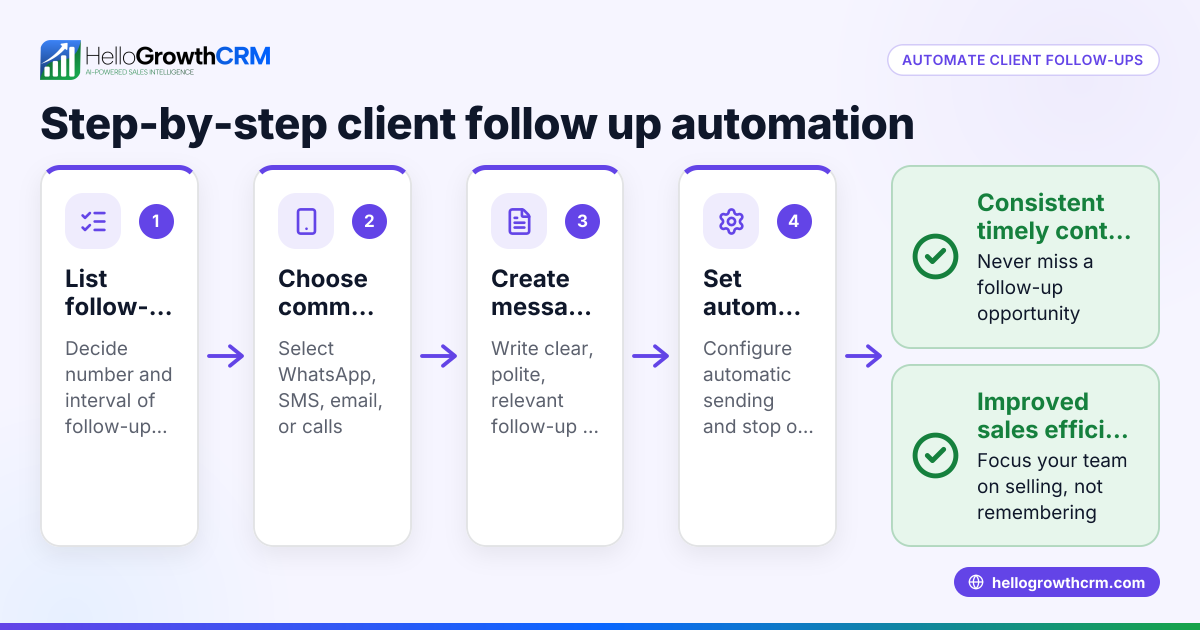
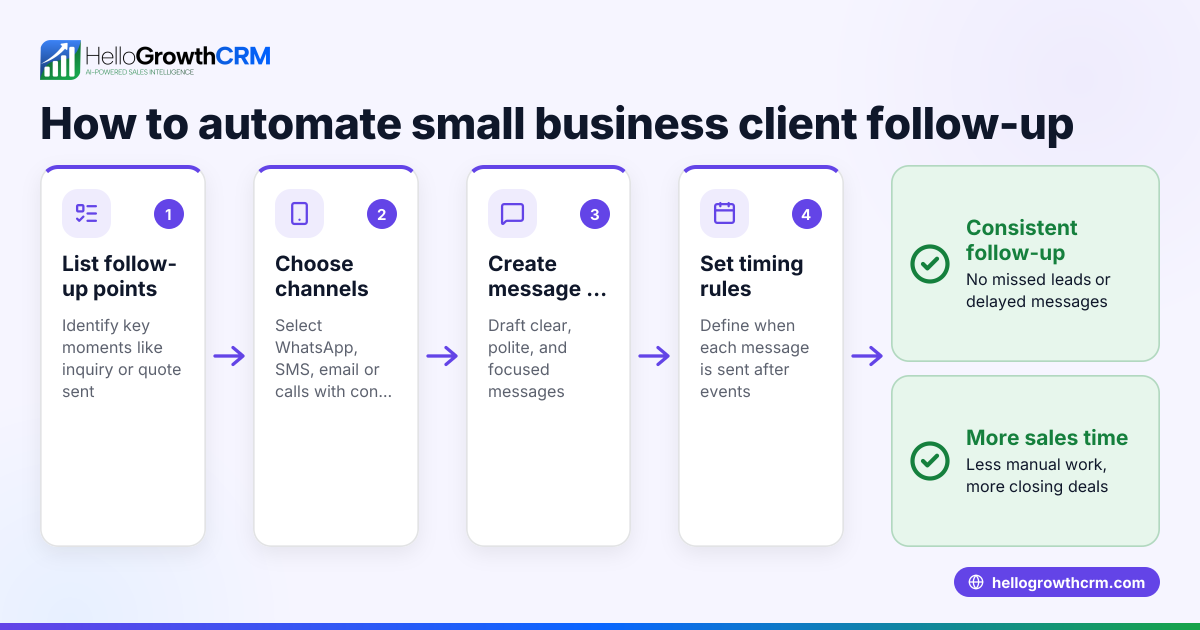
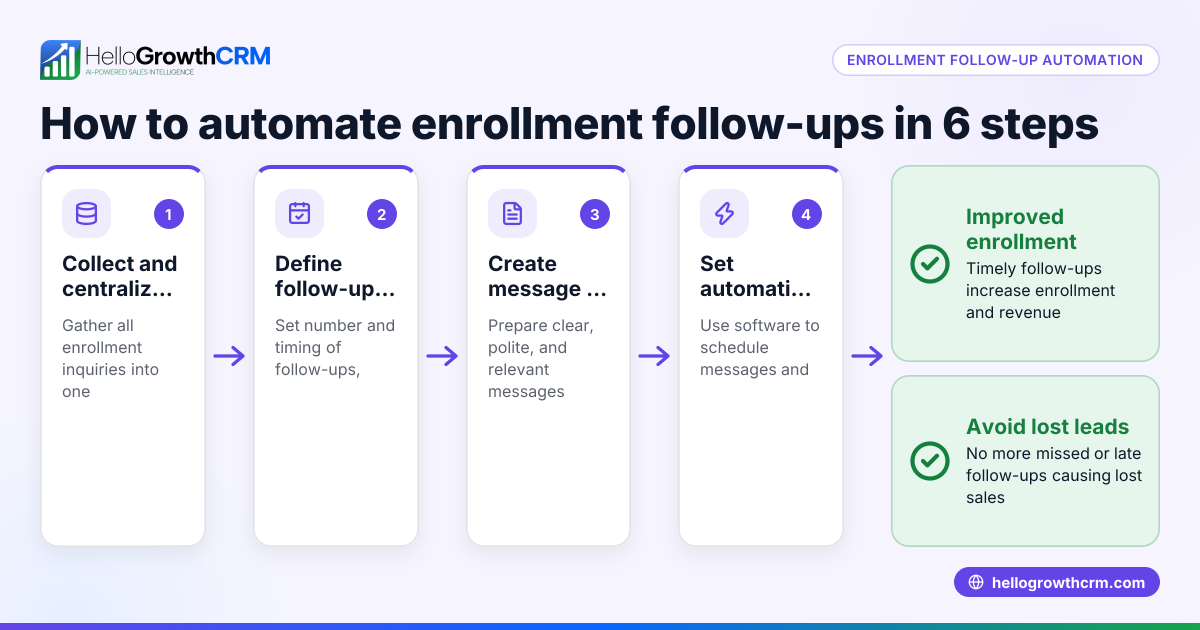
- Identify your follow-up goals: Decide what you want to achieve with follow-up automation, such as booking calls, sending proposals, or checking in after meetings.
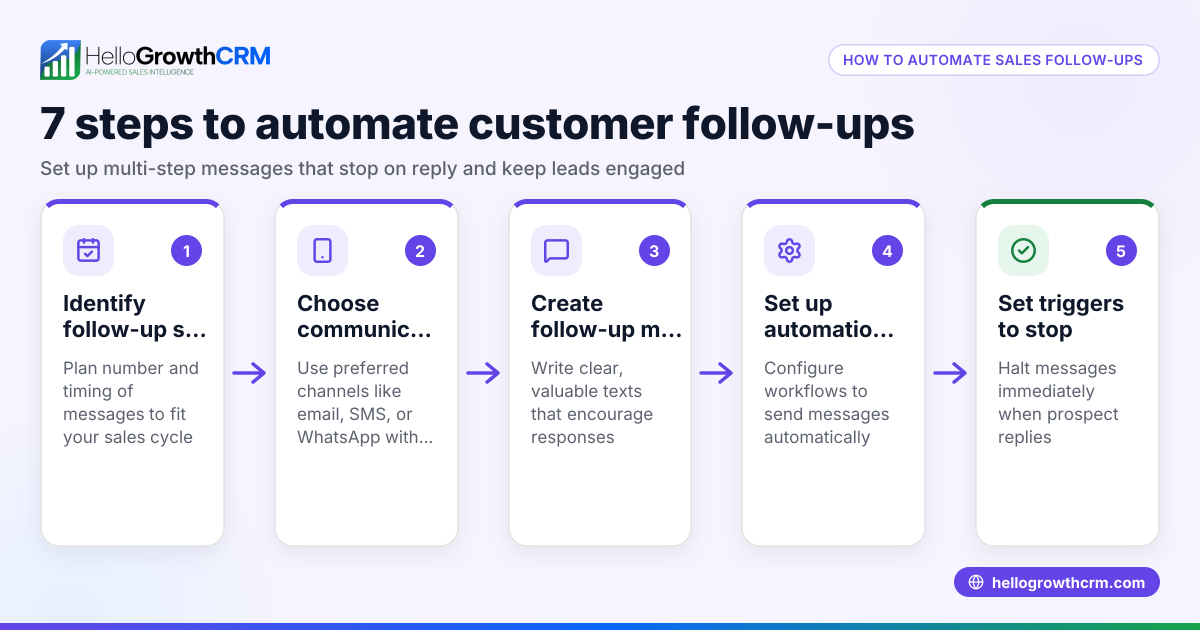
- Map your follow-up sequence: Plan a series of messages over a set period (e.g., five messages over two weeks) that gradually build interest or provide value.
- Choose communication channels: Decide whether to use email, SMS, WhatsApp, or a combination depending on your audience preferences.
- Set triggers for automation: Define when the follow-up should start, such as after a web form submission or a sales call.
- Create message templates: Write clear, personalised messages for each step in your sequence.
- Automate task creation: Set up tasks with due dates for each follow-up step to keep your team on track.
- Monitor responses and adjust: Ensure the automation stops when a prospect replies, and review follow-up effectiveness regularly.
- Integrate with your CRM: Use a CRM that supports sequences and task boards to centralize follow-up automation and tracking.
Check that your automation tool can pause sequences immediately upon prospect reply to avoid over-messaging.
Example (fictional figures)
A staffing agency in Halifax, Nova Scotia, wants to automate follow-up after a candidate inquiry.
- They plan a five-step follow-up over two weeks.
- Each message is spaced 3 days apart.
- The goal is to schedule a phone interview.
Follow-up timeline:
- 2024-05-01: Inquiry received, follow-up sequence starts.
- 2024-05-01: Message 1 sent.
- 2024-05-04: Message 2 sent.
- 2024-05-07: Message 3 sent.
- 2024-05-10: Message 4 sent.
- 2024-05-13: Message 5 sent.
If the candidate replies on 2024-05-05, the sequence stops immediately.
Financial impact:
- Average placement fee: C$5,000
- Conversion rate without follow-up: 10%
- Conversion rate with automation: 15% (assumed improvement)
Calculations:
- Without automation: 100 leads × 10% = 10 placements × C$5,000 = C$50,000
- With automation: 100 leads × 15% = 15 placements × C$5,000 = C$75,000
Additional revenue due to automation:
C$75,000 - C$50,000 = C$25,000
This example shows how automated follow-up can increase placements and revenue.
Common mistakes
- Over-automating without personalisation: Sending generic messages can annoy prospects. Prevent this by customising templates and reviewing AI drafts before sending.
- Not stopping sequences upon reply: Continuing to message after a prospect responds harms relationships. Use automation that halts sequences immediately when a reply is detected.
- Ignoring task management: Forgetting follow-up tasks leads to missed opportunities. Use sales task boards to track daily calls and follow-ups so nothing is missed. See sales task boards.
- Using too many channels at once: Bombarding prospects with messages across email, SMS, and WhatsApp can overwhelm them. Choose appropriate channels and space messages.
- Failing to monitor and adjust: Not reviewing follow-up results means inefficiencies persist. Regularly analyse response rates and tweak your sequences.
Doing this in HelloGrowthCRM
HelloGrowthCRM supports client follow up automation with:
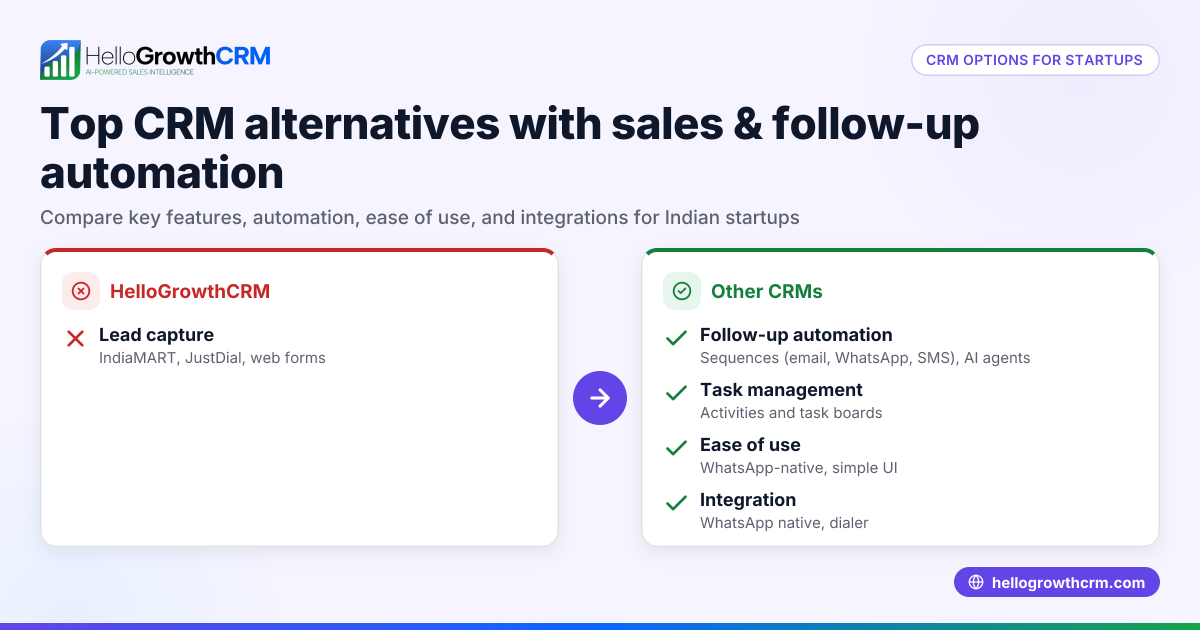
- Sequences and campaigns: Run a five-step follow-up over two weeks that automatically stops when the prospect replies. This keeps your outreach timely and relevant. Learn more about email automation and sequences.
- AI agents: After a call, an AI agent drafts the follow-up message for your review and sending, saving time while keeping messages personalised. See AI CRM.
- Activities and task boards: Each follow-up becomes a task with a due date, and your daily calls appear as a list, reducing reliance on memory. Details at sales task boards.
These features help Canadian small businesses automate follow-ups effectively.
Frequently asked questions
How soon should I start automated follow-up after a lead comes in? Start follow-up within 24 hours of lead capture to keep interest high and increase conversion chances.
Can I customize the timing and content of follow-up messages? Yes, you can tailor both the schedule and the message templates to fit your sales process and client preferences.
What if a prospect replies during the automated sequence? Good automation systems stop the sequence immediately upon any reply to avoid over-contacting and allow personal engagement.
Is it better to use one channel or multiple channels for follow-up? Using the prospect’s preferred channel is best; some businesses combine email, SMS, and WhatsApp carefully to increase reach without overwhelming.
How do I keep track of all follow-up tasks and calls? Using a CRM with task boards helps you see all due follow-ups and calls in one place, preventing leads from being forgotten.
Key takeaways
- Automate follow-up to ensure timely, consistent communication with prospects.
- Plan multi-step sequences with clear timing and personalised messages.
- Use automation that stops immediately when a prospect replies.
- Manage follow-ups with task boards to keep your sales team organised.
- Review and adjust your sequences regularly based on results.
- HelloGrowthCRM offers sequences, AI agents, and task boards to simplify follow-up automation.
Start automating your client follow-up and never lose leads to slow responses again. You can start on the Free Forever plan (200 leads, no credit card) today.
Ready to put this into practice?
Set up your pipeline, WhatsApp follow-ups, and AI lead scoring in minutes — free, no credit card.
Try HelloGrowthCRM freeGet CRM tips in your inbox
Join thousands of sales professionals who get weekly insights on CRM strategy, AI automation, and pipeline optimization.

The HelloGrowthCRM team publishes guides on CRM strategy, AI sales tools, and revenue operations for small business sales teams.