HelloGrowthCRM software
Built for real small-business sales teams
HelloGrowthCRM helps reps qualify faster, follow up on time, and close more deals—with practical automation in one place.
- AI lead scoring and pipeline visibility
- Built-in dialer, WhatsApp, and email automation
- Sales forecasting and RevOps-ready reporting
Cold call role play is a training method where sales reps simulate real calls to practice scripts and objections, building confidence and improving messaging. This article explains why role play matters for small businesses, provides a step-by-step guide, a detailed example, common mistakes to avoid, and how HelloGrowthCRM’s built-in dialer supports this process.
Why this comes up / what goes wrong
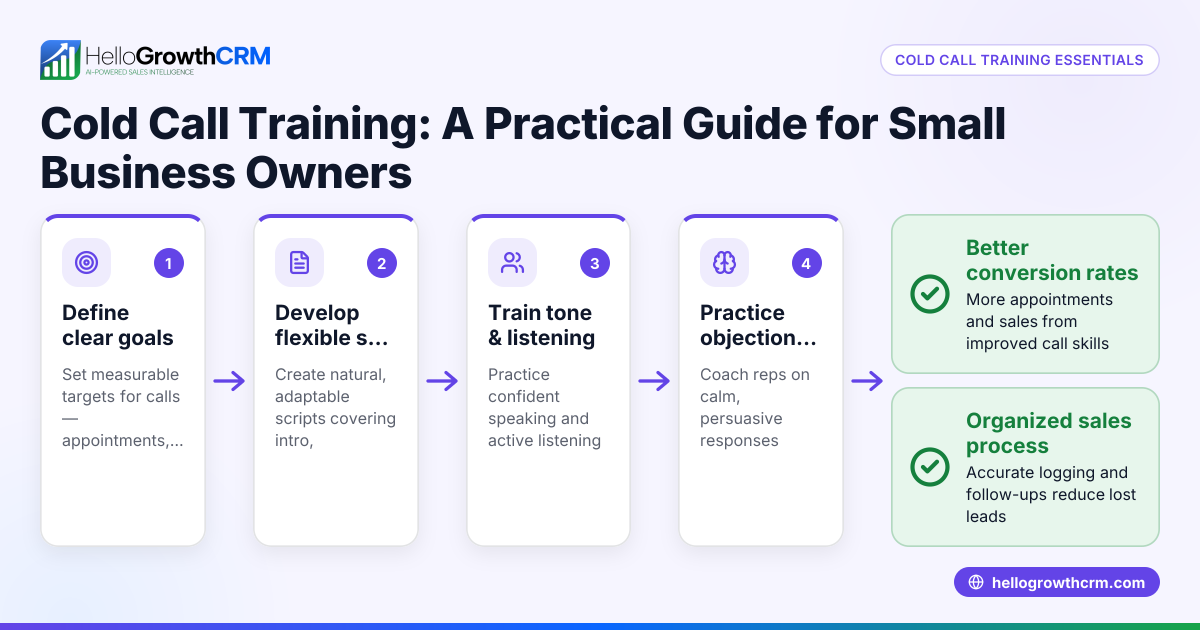
Small-business owners in the US often rely on cold calling to generate new leads and grow sales. However, many sales teams struggle with slow follow-up, inconsistent messaging, or nervousness during calls. Without practice, reps may fumble through calls, miss key points, or fail to handle objections effectively. This leads to lost leads and wasted time. Cold call role play helps teams prepare for real conversations by simulating calls, getting feedback, and building skills in a low-pressure setting.
Step-by-step
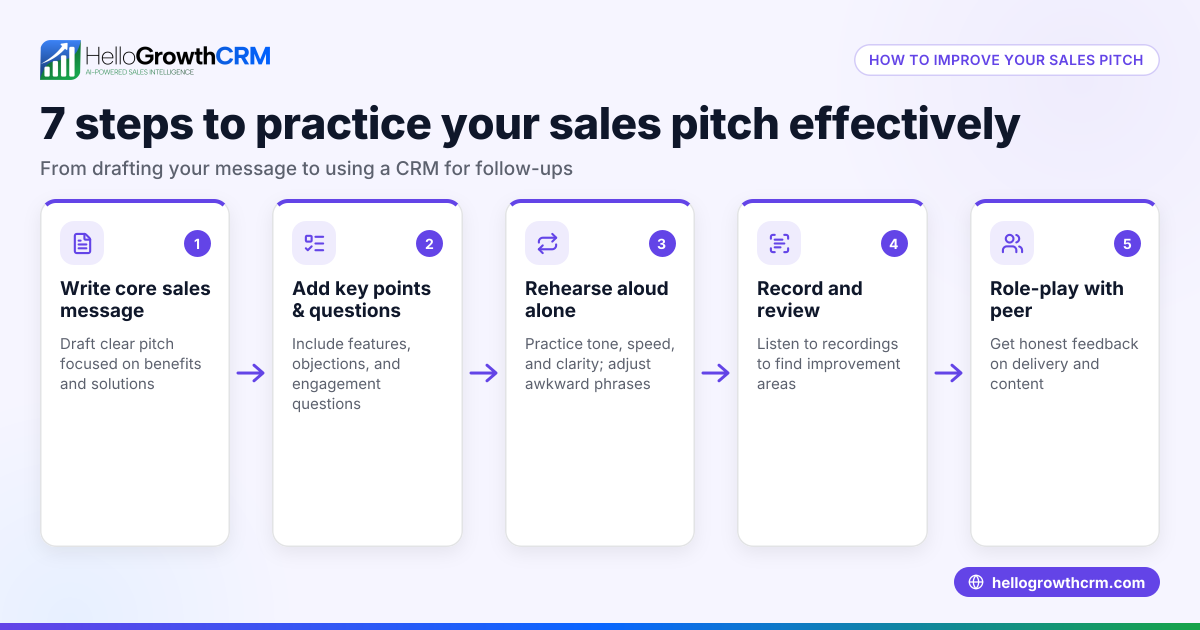
- Set clear goals for the role play. Decide what specific skills or scenarios to practice, such as opening the call, handling objections, qualifying leads, or closing.
- Create a realistic script or call outline. Include key points, qualifying questions, and responses to common objections your team faces.
- Assign roles. One person acts as the caller (sales rep), another plays the prospect. Switch roles regularly to build empathy and understanding.
- Conduct the role play. Perform the call as naturally as possible, following the script but staying flexible to simulate real dialogue.
- Give and receive feedback. Discuss what worked well, what didn’t, and how to improve tone, pacing, messaging, and objection handling.
- Repeat with variations. Practice different scenarios, prospect types, or objections to build confidence and adaptability.
- Record outcomes and progress. Track improvements, challenges, and areas needing more practice.
- Apply learnings to real calls. Use the skills honed during role play in actual cold calls to improve success rates.
Role playing is most effective when done regularly and with honest, constructive feedback. Using tools like a built-in CRM dialer can simulate real calling conditions and log call outcomes.
Example (fictional figures)
A B2B software reseller in Denver, Colorado wants to improve their cold call success rate. They set a goal to increase lead conversion by practicing objection handling through role play.
- The sales rep uses a script with these key points:
- Introduction
- Qualifying questions
- Handling the objection “We’re not interested”
- Setting a follow-up meeting
- The coach plays the prospect giving the “not interested” response.
- After the role play, feedback includes:
- Speak slower and clearer
- Ask a question to uncover the prospect’s needs
- Use a benefit-focused response
- The rep tries again incorporating the feedback.
- Over 4 weeks, the reps practice twice a week. Their conversion rate improves from 5% to 12%, increasing monthly sales.
Calculation of sales increase:
Assumed monthly cold call leads: 1,000 Initial conversion rate: 5% Initial sales = 1,000 × 5% = 50 sales Average sale value = $2,000 Initial monthly revenue = 50 × $2,000 = $100,000
New conversion rate after role play: 12% New sales = 1,000 × 12% = 120 sales New monthly revenue = 120 × $2,000 = $240,000
Revenue increase = $240,000 − $100,000 = $140,000
This example shows how regular role play with clear goals and feedback can significantly boost real sales results.
Common mistakes
- Skipping role play sessions. Prevent this by scheduling regular practice and making it mandatory to keep skills sharp.
- Using unrealistic scripts. Prevent by basing scripts on actual calls and common objections your team encounters.
- Giving vague feedback. Prevent by focusing on specific behaviors and examples to guide improvement.
- Role playing without switching roles. Prevent by having reps alternate as caller and prospect to build empathy.
- Not tracking progress. Prevent by logging call outcomes and improvements to measure effectiveness.
- Ignoring emotional readiness. Prevent by encouraging a positive attitude and confidence-building exercises.
Using a WhatsApp and SMS CRM alongside calls can help keep messaging consistent across channels.
Doing this in HelloGrowthCRM
HelloGrowthCRM offers a built-in dialer that lets your rep work a list directly inside the CRM. Each call’s outcome is logged on the lead record, making it easy to track role play progress and real call results. Practicing with the dialer simulates real calling conditions and helps reps get comfortable using the CRM for follow-up and pipeline management. Learn more about the built-in CRM dialer.
Frequently asked questions
What is the main purpose of cold call role play? Cold call role play helps sales reps practice and improve their calling skills in a safe environment. It builds confidence, refines messaging, and prepares reps to handle objections effectively.
How often should sales teams do cold call role play? Ideally, teams should practice role play regularly, at least once or twice a week. Frequent practice helps maintain skills and adapt to new scenarios or products.
Can role play improve actual sales performance? Yes. Role play allows reps to experiment with scripts, get feedback, and build confidence, which translates into better real calls and higher conversion rates.
How do I make role play realistic? Use real objections and scenarios your team faces. Switch roles between caller and prospect to understand both sides. Incorporate tools like a CRM dialer to simulate actual calling conditions.
What if my team resists role play? Explain the benefits clearly and start with low-pressure, supportive sessions. Encourage positive feedback and celebrate improvements to build buy-in.
Key takeaways
- Cold call role play simulates real sales calls to improve skills and confidence.
- Set clear goals, use realistic scripts, and provide specific feedback.
- Regular practice builds adaptability and improves conversion rates.
- Avoid skipping sessions, vague feedback, and unrealistic scenarios.
- Tracking progress and switching roles enhances learning.
- HelloGrowthCRM’s built-in dialer supports role play by logging call outcomes and simulating real calls.
Start improving your cold calling skills today. Start on the Free Forever plan (200 leads, no credit card) and practice with HelloGrowthCRM’s dialer.
Ready to put this into practice?
Set up your pipeline, WhatsApp follow-ups, and AI lead scoring in minutes — free, no credit card.
Try HelloGrowthCRM freeGet CRM tips in your inbox
Join thousands of sales professionals who get weekly insights on CRM strategy, AI automation, and pipeline optimization.

The HelloGrowthCRM team publishes guides on CRM strategy, AI sales tools, and revenue operations for small business sales teams.