HelloGrowthCRM software
Built for real small-business sales teams
HelloGrowthCRM helps reps qualify faster, follow up on time, and close more deals—with practical automation in one place.
- AI lead scoring and pipeline visibility
- Built-in dialer, WhatsApp, and email automation
- Sales forecasting and RevOps-ready reporting
Contact center forecasting is the practice of estimating future contact volumes, required staffing, and expected sales results in a contact center environment. Accurate forecasting allows small businesses to allocate the right number of agents, reduce wait times, and improve customer satisfaction while managing costs efficiently. This article covers why forecasting is important, step-by-step instructions to create forecasts, a realistic example, common pitfalls to avoid, and how HelloGrowthCRM can support your forecasting efforts.
Why this comes up / what goes wrong
Small-business owners who operate contact centers or sales teams often struggle to predict how many customer contacts (calls, chats, messages) they will receive on any given day or week. Without a reliable forecast, they may either understaff—leading to long wait times and lost sales—or overstaff, increasing labor costs unnecessarily. Many run their sales and customer communication through scattered tools like text messages, email, and spreadsheets, which makes it hard to see patterns or plan ahead. This lack of forecasting leads to slow follow-up, lost leads, and frustrated customers.
Step-by-step
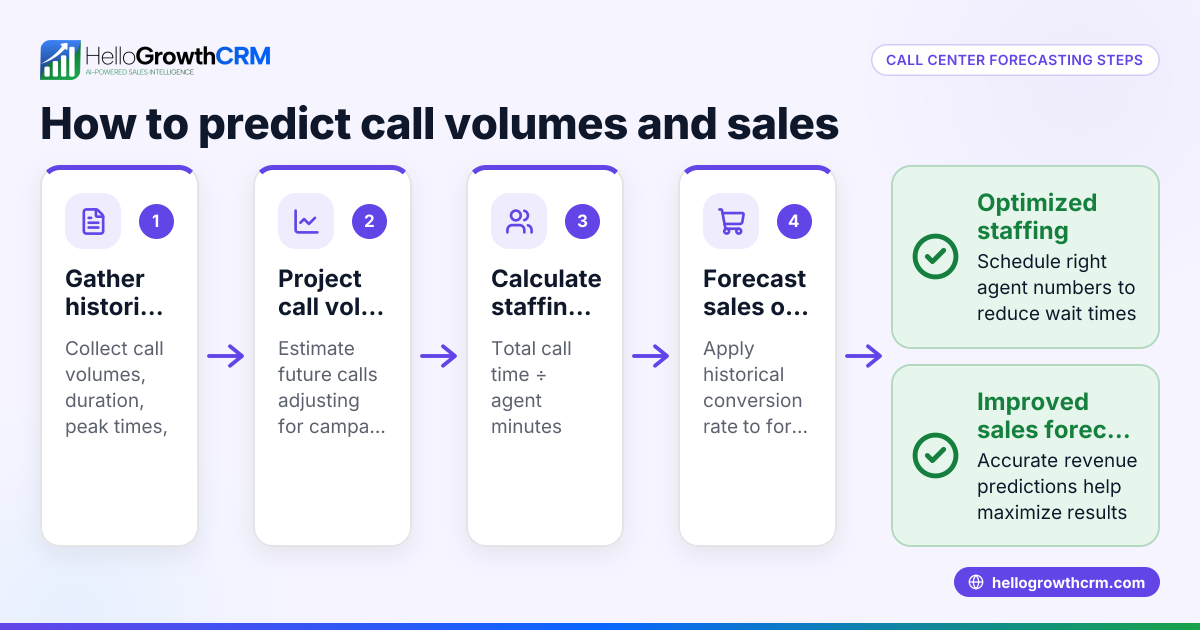
- Gather historical contact data: Collect past data on call volumes, chat sessions, and message counts by day and hour. Check for seasonal trends or spikes.
- Analyze sales and conversion rates: Review how many contacts turn into sales or qualified leads. Check the average time to close deals.
- Estimate future contact volumes: Use historical averages and adjust for upcoming promotions, seasonality, or market changes.
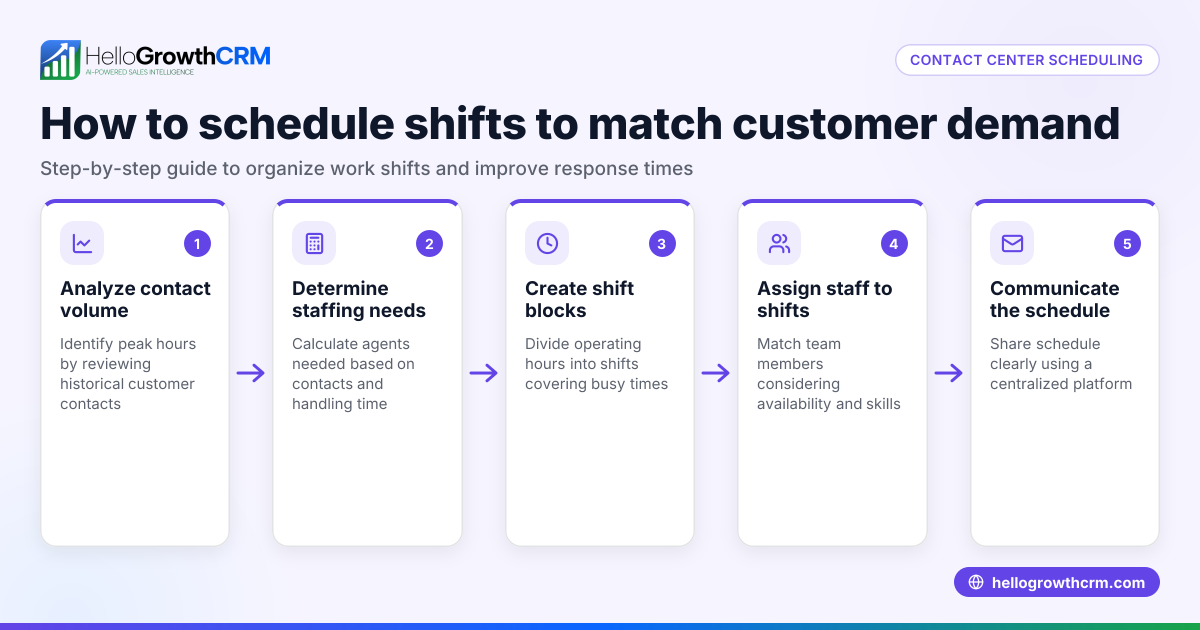
- Calculate staffing needs: Determine how many agents are required to handle forecasted contacts within acceptable wait times. Check agent productivity and average handling time.
- Forecast sales outcomes: Project expected revenue based on pipeline stages and historical conversion rates.
- Review and adjust regularly: Update forecasts weekly or monthly as new data comes in. Check for pipeline bottlenecks or stalled deals.
Example (fictional figures)
A residential real-estate team in Phoenix, Arizona, wants to forecast their contact center needs for June 2026.
- Historical average calls per day: 120
- Average call duration: 6 minutes
- Average conversion rate: 30%
- Average sale value: $350,000
- Agents available: 5
Step 1: Calculate total call handling time per day.
120 calls × 6 minutes = 720 minutes = 12 hours
Step 2: Calculate total agent work hours available per day.
5 agents × 8 hours = 40 hours
Step 3: Compare workload to capacity.
12 hours workload < 40 hours capacity — current staffing sufficient
Step 4: Forecast sales revenue.
120 calls × 30% conversion = 36 sales
36 sales × $350,000 = $12,600,000 projected revenue
Step 5: Adjust for upcoming summer market increase (assume 20% more calls).
120 calls × 1.20 = 144 calls
New workload:
144 calls × 6 minutes = 864 minutes = 14.4 hours
14.4 hours workload < 40 hours capacity — still sufficient
Projected sales:
144 calls × 30% = 43.2 sales
43.2 × $350,000 = $15,120,000 projected revenue
The team can plan to maintain current staffing but prepare for higher sales volume.
Common mistakes
- Ignoring seasonality or promotions: Prevent by reviewing historical trends and adjusting forecasts accordingly.
- Using incomplete or inaccurate data: Prevent by collecting comprehensive contact and sales data consistently.
- Failing to update forecasts regularly: Prevent by scheduling weekly or monthly forecast reviews.
- Not accounting for agent productivity variations: Prevent by measuring average handling times and adjusting staffing needs.
- Relying solely on spreadsheets without automation: Prevent by using CRM tools with forecasting features to avoid errors and save time. See how HelloGrowthCRM helps with pipeline forecast and AI insights below.
Doing this in HelloGrowthCRM
HelloGrowthCRM offers pipeline forecast and AI insights that project expected close amounts based on current pipeline stage, velocity, and historical conversion patterns. This lets you see which stages deals are stalling in without building a spreadsheet. The AI-generated analysis helps identify pipeline health, rep performance, and revenue signals, making it easier for small businesses to forecast sales and staffing needs accurately. Learn more about sales forecasting and how our AI CRM supports your contact center. For US businesses, see HelloGrowthCRM for the United States.
Frequently asked questions
What is the difference between contact center forecasting and sales forecasting? Contact center forecasting focuses on predicting contact volumes and staffing needs to handle customer interactions effectively. Sales forecasting estimates future revenue based on pipeline data and conversion rates. Both are related and often used together to optimize operations.
How often should I update my contact center forecast? Updating forecasts weekly or monthly is recommended to incorporate new data, market changes, and pipeline progress. Frequent updates help you react quickly to shifts in demand or sales cycles.
Can small businesses do contact center forecasting without advanced software? Yes, by collecting historical contact and sales data, analyzing trends, and using spreadsheets or simple tools. However, CRM software with AI forecasting features can save time and reduce errors.
How does forecasting improve customer experience? Accurate forecasting ensures you have enough agents to handle contacts promptly, reducing wait times and missed opportunities. It helps maintain consistent service levels even during peak periods.
What factors affect contact center forecasting accuracy? Key factors include quality of historical data, seasonality, marketing campaigns, agent productivity, and external events. Regular review and adjustment improve accuracy.
Key takeaways
- Contact center forecasting predicts future contact volumes, staffing needs, and sales outcomes.
- Use historical data, analyze trends, and adjust for seasonality or promotions.
- Regularly update forecasts to reflect pipeline changes and market conditions.
- Avoid common mistakes like ignoring agent productivity or relying only on spreadsheets.
- HelloGrowthCRM’s pipeline forecast and AI insights help identify stalled deals and improve forecasting accuracy.
Start improving your contact center forecasting today. Start on the Free Forever plan (200 leads, no credit card).
Ready to put this into practice?
Set up your pipeline, WhatsApp follow-ups, and AI lead scoring in minutes — free, no credit card.
Try HelloGrowthCRM freeGet CRM tips in your inbox
Join thousands of sales professionals who get weekly insights on CRM strategy, AI automation, and pipeline optimization.

The HelloGrowthCRM team publishes guides on CRM strategy, AI sales tools, and revenue operations for small business sales teams.