HelloGrowthCRM software
Built for real small-business sales teams
HelloGrowthCRM helps reps qualify faster, follow up on time, and close more deals—with practical automation in one place.
- AI lead scoring and pipeline visibility
- Built-in dialer, WhatsApp, and email automation
- Sales forecasting and RevOps-ready reporting
A CRM for Arkansas manufacturing businesses should help manage leads, streamline sales processes, and integrate communication channels like WhatsApp to reduce lead loss and improve follow-up speed. This article covers why manufacturing firms search for CRM solutions, step-by-step guidance to choose one, common mistakes to avoid, a UAE-based manufacturing example, and how HelloGrowthCRM supports such businesses.
Why this comes up / what goes wrong
Manufacturing business owners or accountants in Arkansas often find themselves overwhelmed by managing leads, customer communication, and sales data across multiple platforms such as WhatsApp, phone calls, and spreadsheets. This fragmentation causes slow or missed follow-ups, lost sales opportunities, and difficulty forecasting revenue. The need for a CRM tailored to manufacturing is critical because manufacturers handle complex sales cycles involving quotations, order tracking, and technical details that generic CRMs may not support efficiently. Furthermore, local Arkansas businesses want solutions that can integrate easily with their existing communication habits and workflows.
Step-by-step
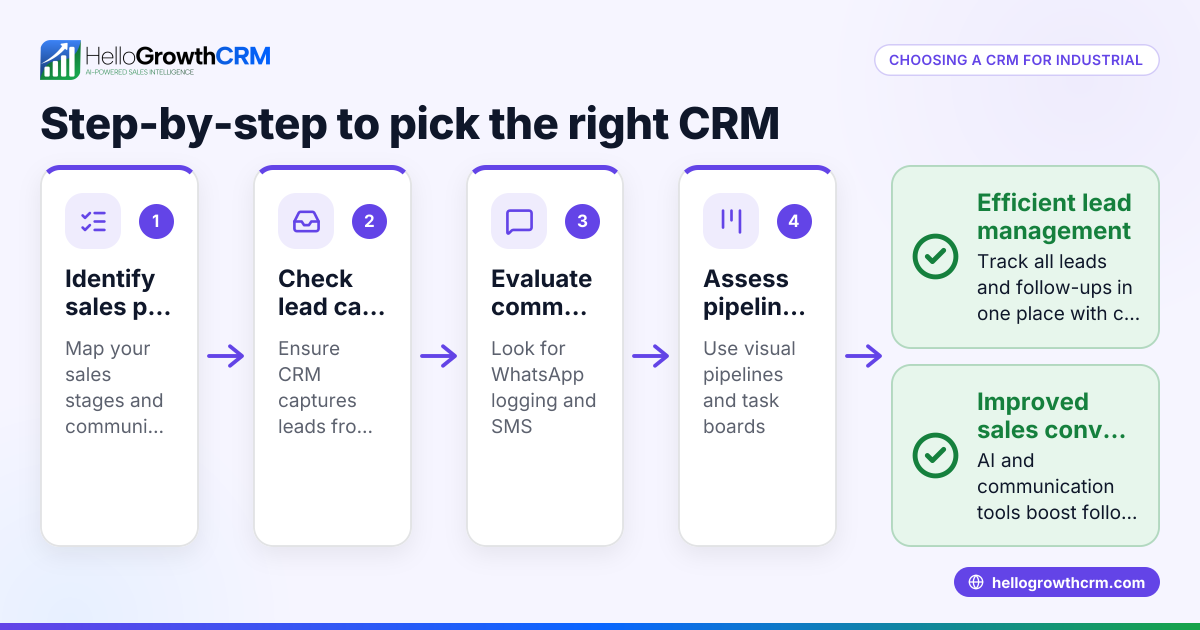
- Identify your manufacturing sales process needs: List the key stages in your sales pipeline, such as lead capture, quotation, negotiation, order confirmation, and delivery tracking. Check if the CRM supports custom pipelines or boards for these stages.
- Check integration with communication channels: Confirm the CRM can log and manage WhatsApp and SMS conversations since many Arkansas manufacturers use these channels to communicate with clients. This ensures all follow-ups and conversations are tracked centrally.
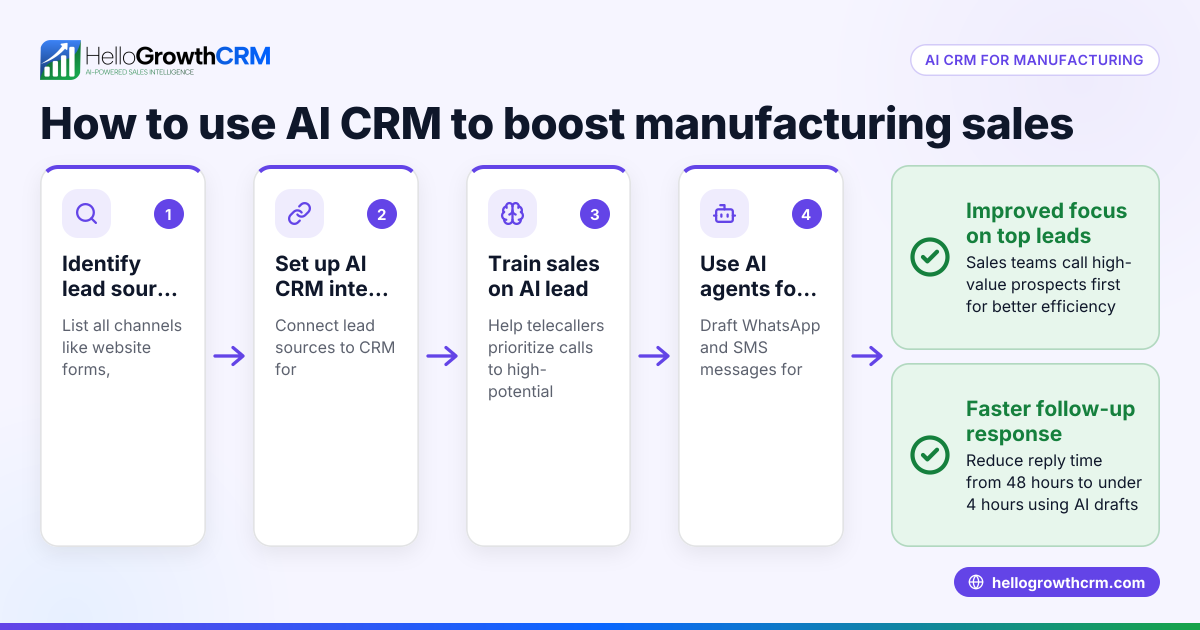
- Evaluate automation capabilities: Look for AI or automation features that can draft follow-up messages or update lead records automatically, reducing manual workload for your sales reps.
- Consider your team size and budget: Choose a CRM plan that fits your current team size and budget, with the option to scale as you grow. Some CRMs offer free plans for small teams.
- Test usability and adoption potential: Ensure the CRM interface is user-friendly for your sales team and that it encourages consistent use, avoiding data silos.
- Review reporting and forecasting tools: Confirm the CRM provides sales forecasting and reporting features to help you track performance and plan growth.
- Ask about local support and compliance: Check if the CRM provider offers support tailored for your region and understands manufacturing industry requirements.
For more on manufacturing-specific solutions, see Manufacturing.
Example (fictional figures)
Consider a UAE-based manufacturing business called GulfTech Supplies, located in Dubai Marina. They want to improve lead follow-up and sales tracking using a CRM.
- Monthly leads captured: AED 150,000 worth of potential sales
- Average conversion rate: 20%
- Average deal size: AED 7,500
Calculations:
Leads value × conversion rate = Expected sales AED 150,000 × 20% = AED 30,000
Number of deals expected: AED 30,000 ÷ AED 7,500 = 4 deals
If GulfTech delays follow-up, they risk losing some deals, impacting revenue.
By implementing a CRM that logs WhatsApp conversations and automates follow-ups, GulfTech can reduce lost deals and increase revenue.
Common mistakes
- Ignoring communication channel integration: Not ensuring the CRM supports WhatsApp and SMS leads to fragmented conversations. Prevent this by confirming channel support upfront.
- Choosing overly complex CRMs: Selecting a CRM with features that your team won’t use causes low adoption. Prevent by testing usability and focusing on core needs.
- Neglecting automation: Manually drafting follow-ups wastes time and causes delays. Prevent by choosing CRMs with AI agents or automation features.
- Underestimating data entry discipline: Incomplete or inconsistent data entry leads to inaccurate reports. Prevent by training staff and choosing CRMs that simplify data capture.
- Skipping sales forecasting features: Without forecasting, planning growth is guesswork. Prevent by verifying reporting capabilities.
Learn more about CRM communication tools at WhatsApp and SMS CRM.
Doing this in HelloGrowthCRM
HelloGrowthCRM offers WhatsApp and SMS integration where conversations with leads are logged on the lead record, and follow-ups can be sent as messages, keeping communication organised. Its AI agents (currently in beta on the Growth plan) draft follow-up messages post-call, reducing manual effort for sales reps. For small teams, the Free Forever plan allows managing a pipeline for up to two users at no cost until calling or WhatsApp automation is needed. This makes it suitable for manufacturing teams wanting to streamline sales and communication.
Frequently asked questions
What features should a CRM for manufacturing have? A manufacturing CRM should support custom sales pipelines, integration with communication channels like WhatsApp and SMS, automation for follow-ups, and reporting tools for sales forecasting. These features help manage complex sales cycles and improve lead conversion.
Can I use WhatsApp within a CRM for manufacturing sales? Yes, many modern CRMs integrate WhatsApp so that conversations are logged and follow-ups can be sent directly, ensuring no lead communication is lost.
Is there a free CRM plan suitable for small manufacturing teams? Some CRMs offer free plans for small teams with basic pipeline and task management features. The Free Forever plan supports up to two users managing leads without cost until advanced calling or automation is needed.
How do AI agents help in manufacturing CRM? AI agents can draft follow-up messages and update records automatically, saving time for sales reps and ensuring timely communication with leads, which is crucial in manufacturing sales cycles.
Why is sales forecasting important for manufacturing businesses? Sales forecasting helps manufacturers plan inventory, production schedules, and cash flow by predicting future revenue based on current pipeline data.
For more about HelloGrowthCRM in the UAE, visit HelloGrowthCRM for the United Arab Emirates.
Key takeaways
- Choose a CRM that supports your manufacturing sales stages and pipeline.
- Integration with WhatsApp and SMS is essential for effective lead communication.
- Automation and AI agents reduce manual work and improve follow-up speed.
- Test CRM usability to ensure team adoption and consistent data entry.
- Use sales forecasting to plan growth and production.
- HelloGrowthCRM offers relevant features for manufacturing teams in the UAE.
Start managing your manufacturing leads efficiently. Start on the Free Forever plan (200 leads, no credit card).
Ready to put this into practice?
Set up your pipeline, WhatsApp follow-ups, and AI lead scoring in minutes — free, no credit card.
Try HelloGrowthCRM freeGet CRM tips in your inbox
Join thousands of sales professionals who get weekly insights on CRM strategy, AI automation, and pipeline optimization.

The HelloGrowthCRM team publishes guides on CRM strategy, AI sales tools, and revenue operations for small business sales teams.