HelloGrowthCRM software
Built for real small-business sales teams
HelloGrowthCRM helps reps qualify faster, follow up on time, and close more deals—with practical automation in one place.
- AI lead scoring and pipeline visibility
- Built-in dialer, WhatsApp, and email automation
- Sales forecasting and RevOps-ready reporting
A CRM for auto parts businesses is essential to managing customer relationships, tracking orders, and speeding up follow-up communication. Many small and mid-sized auto parts sellers lose leads or sales because they rely on text messages, emails, or spreadsheets that don’t centralize information or automate tasks.
Why this comes up / what goes wrong
Small auto parts businesses often start by managing contacts and sales manually or with basic tools. Over time, as leads grow and follow-up delays increase, they lose customers to faster competitors. Without a dedicated CRM, sales teams struggle to keep track of conversations, order histories, and next steps. Auto parts sales also often involve multiple communications by phone, WhatsApp, or SMS, which can scatter information across apps.
The search for "crm auto parts" shows a business owner wants software that can capture leads, log calls, and send follow-ups efficiently. They want a system that fits the sales process for auto parts—from inquiry to delivery—without adding complexity.
Step-by-step
- Identify Your Sales Process Needs
- Map out how your team finds leads, contacts customers, and closes sales.
- Check if you need to handle phone calls, WhatsApp messages, or SMS regularly.
- Check Lead Capture and Contact Management
- Confirm the CRM can import leads from your website or other sources.
- Ensure all customer details and communication history stay in one place.
- Evaluate Communication Features
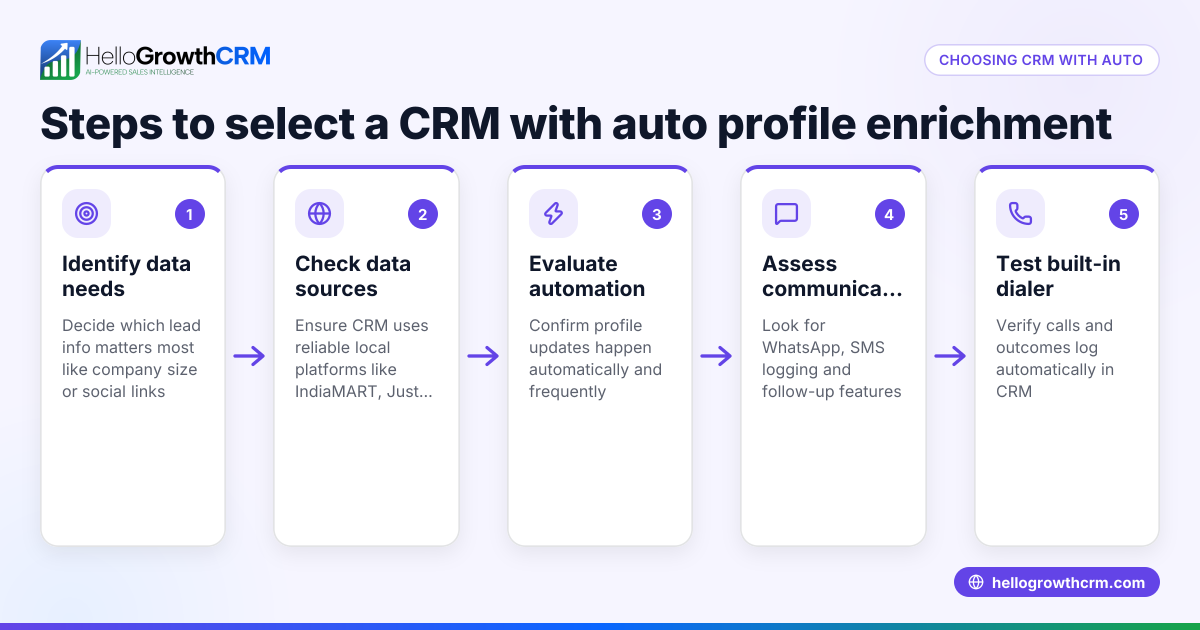
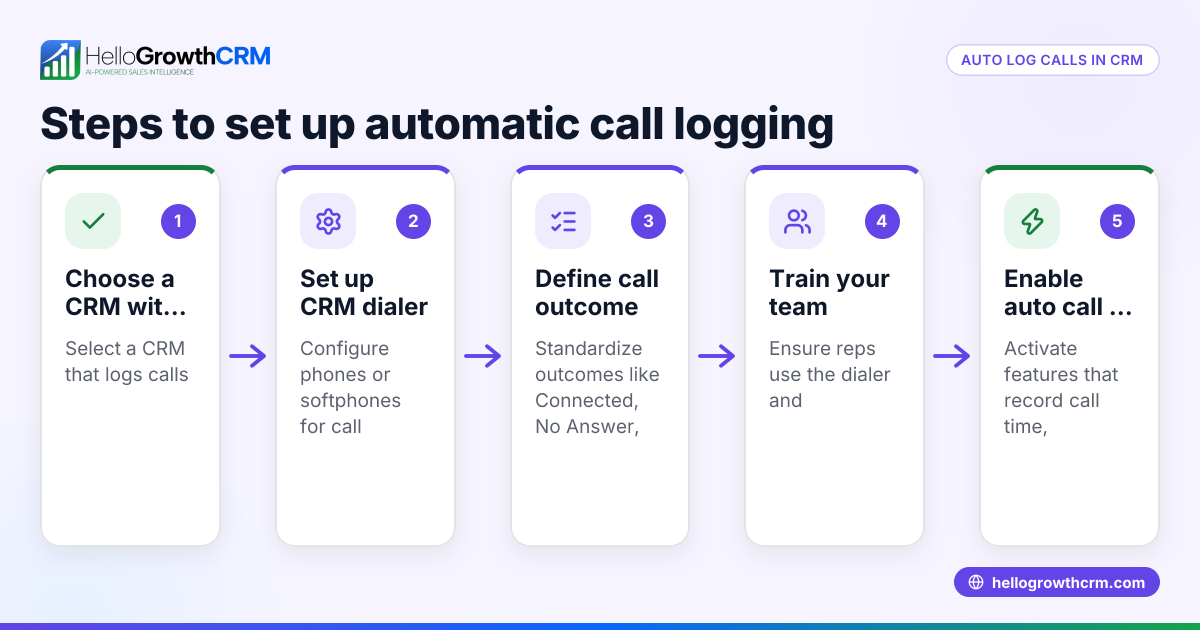
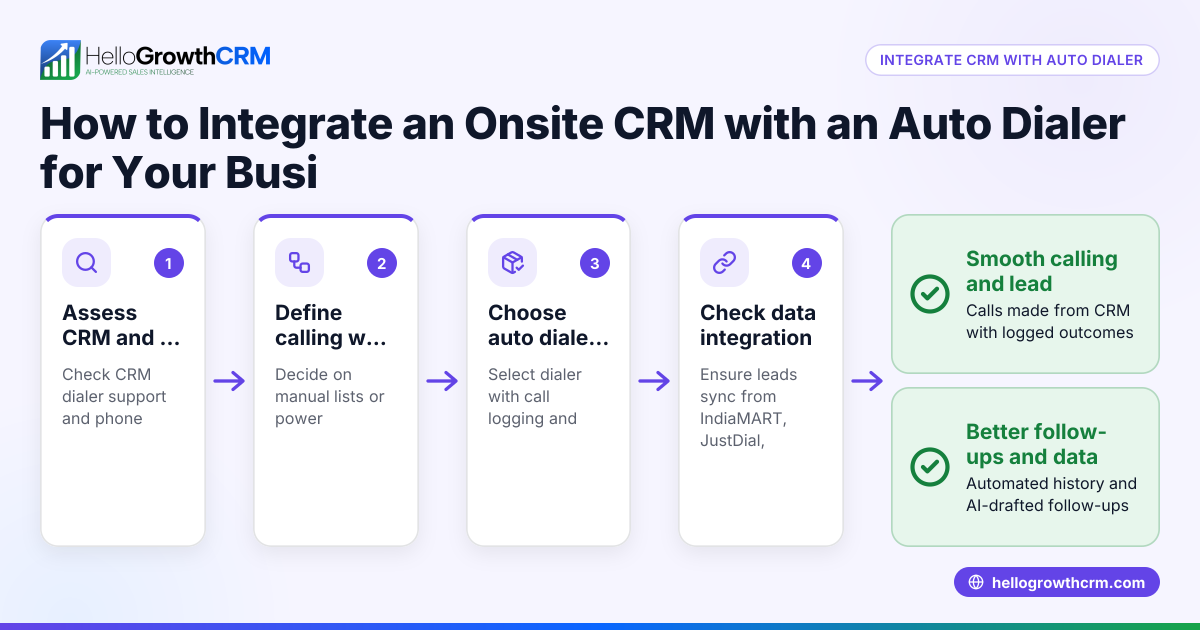
- Look for built-in calling features to make and log calls inside the CRM.
- See if WhatsApp and SMS messaging can be sent and recorded on lead records.
- Assess Automation and AI Support
- Determine if the CRM offers AI agents to draft follow-up messages after calls.
- Automation should reduce manual work and speed up responses.
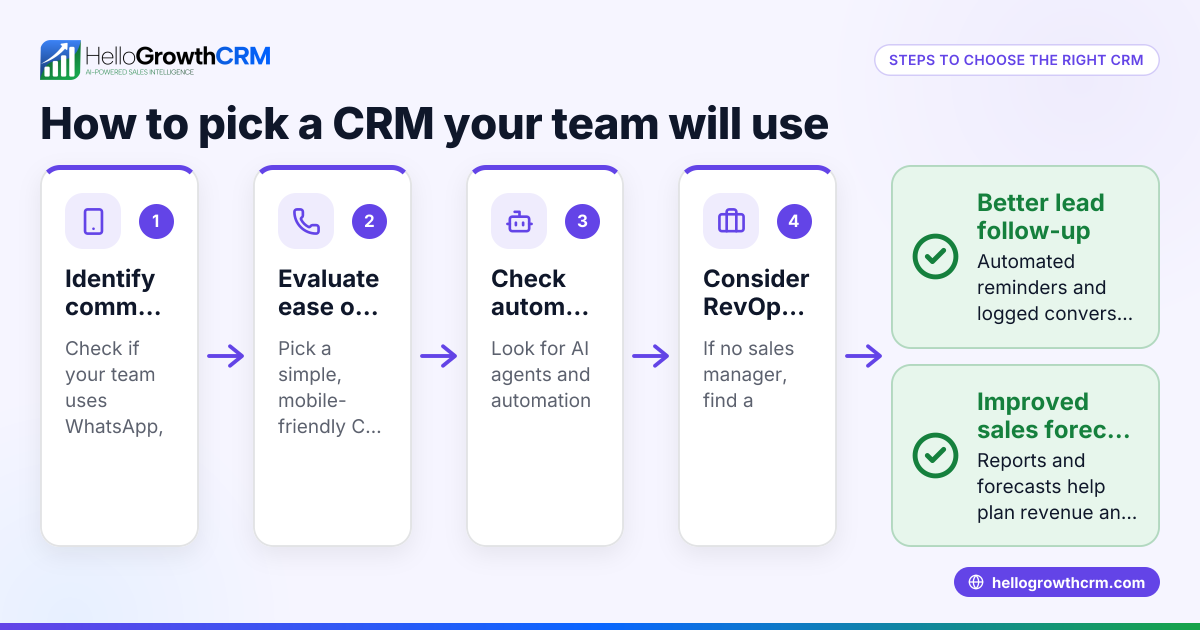
- Consider Usability for Your Team
- The CRM must be easy to learn and use daily, especially on mobile.
- Check if your team can manage pipelines and tasks without extra training.
- Review Reporting and Pipeline Tracking
- The CRM should provide clear sales pipeline views and task boards.
- Sales forecasting and reporting help you plan inventory and staffing.
- Trial and Compare Pricing
- Use free trials or free plans to test real workflows.
- Compare features against your business size and growth plans.
Example (fictional figures)
Auto Parts Austin, a small parts supplier in Austin, Texas, wants to improve sales follow-up. They handle about 500 leads monthly and want a CRM to track calls and WhatsApp messages.
- They estimate 500 leads × $150 average sale = $75,000 potential monthly revenue.
- Currently, a 20% lead loss occurs due to slow follow-up: $75,000 × 20% = $15,000 lost monthly.
- By implementing a CRM with call logging and AI follow-up drafts, they aim to reduce lead loss by half.
Calculation: $75,000 × 20% = $15,000 (current losses) $15,000 ÷ 2 = $7,500 (expected new losses) $75,000 - $7,500 = $67,500 (improved monthly revenue)
This shows a potential $7,500 monthly revenue increase by improving lead management.
Common mistakes
- Choosing a CRM without communication integration
- Prevent by selecting a CRM that supports calls, WhatsApp, and SMS logging.
- Overlooking ease of use for the sales team
- Prevent by involving your team in CRM trials before purchase.
- Not automating follow-ups
- Prevent by using AI agents or automation features to draft and schedule messages.
- Ignoring pipeline visibility
- Prevent by choosing a CRM with clear task boards and sales forecasting.
- Failing to test lead capture from your website or sources
- Prevent by verifying lead imports work smoothly during trials.
- Picking a CRM with hidden costs or complex pricing
- Prevent by reviewing pricing carefully and starting with free plans.
Doing this in HelloGrowthCRM
HelloGrowthCRM offers features designed for small and mid-sized sales teams like those in the auto parts industry. Its built-in dialer lets your telecaller work a lead list and logs every call outcome on the lead record, ensuring no information is lost. WhatsApp and SMS conversations with leads are stored in one place, and follow-ups can be sent directly as messages. AI agents (currently in Beta) draft follow-up messages after calls, so your reps only need to review and send, saving time and reducing errors.
Learn more about HelloGrowthCRM’s built-in CRM dialer and WhatsApp and SMS CRM features to see how they fit your auto parts sales process.
Frequently asked questions
What features should a CRM for auto parts include? A CRM for auto parts should handle lead capture, call logging, and messaging via WhatsApp and SMS. It should also support pipeline tracking and automate follow-ups to keep your sales process efficient.
Can I use WhatsApp within a CRM for my auto parts business? Yes, some CRMs like HelloGrowthCRM integrate WhatsApp messaging directly, logging conversations on lead records and enabling automated follow-ups.
How does a built-in dialer help auto parts sales teams? A built-in dialer lets reps call leads from inside the CRM, automatically logging call outcomes and history. This keeps customer info centralized and speeds up follow-up actions.
Is AI useful in a CRM for auto parts? AI can draft follow-up messages after calls, reducing manual work and helping reps respond quickly. HelloGrowthCRM offers AI agents in Beta that do this.
What should I test during a CRM trial? Test lead import from your sources, ease of use for calls and messaging, automation features, and pipeline visibility to ensure the CRM fits your workflow.
Can a CRM improve sales forecasting for auto parts? Yes, a CRM with pipeline and task boards helps you track sales stages and predict revenue, aiding inventory and staffing decisions.
Key takeaways
- A CRM for auto parts centralizes contacts, calls, WhatsApp, and SMS conversations.
- Evaluate CRMs based on lead capture, communication features, automation, and usability.
- Avoid common mistakes by testing integrations, usability, and automation during trials.
- HelloGrowthCRM offers a built-in dialer, WhatsApp and SMS integration, and AI agents to streamline follow-ups.
- Clear pipeline views and sales forecasting help plan your business growth.
Start managing your auto parts leads efficiently with HelloGrowthCRM. Start on the Free Forever plan (200 leads, no credit card) to see how it fits your business.
Ready to put this into practice?
Set up your pipeline, WhatsApp follow-ups, and AI lead scoring in minutes — free, no credit card.
Try HelloGrowthCRM freeGet CRM tips in your inbox
Join thousands of sales professionals who get weekly insights on CRM strategy, AI automation, and pipeline optimization.

The HelloGrowthCRM team publishes guides on CRM strategy, AI sales tools, and revenue operations for small business sales teams.