HelloGrowthCRM software
Built for real small-business sales teams
HelloGrowthCRM helps reps qualify faster, follow up on time, and close more deals—with practical automation in one place.
- AI lead scoring and pipeline visibility
- Built-in dialer, WhatsApp, and email automation
- Sales forecasting and RevOps-ready reporting
In Singapore, a neurology clinic should choose a CRM that fits how specialist care is actually booked, documented, followed up and paid for here: PDPA-sensitive enquiries, MOH-regulated communications, mixed payment rails such as PayNow and cards, and referral-heavy lead flow from GPs, hospitals and digital channels.
Neurology is not a high-volume retail clinic business. The sales and service problem is usually slower and more delicate: a patient or caregiver makes an enquiry, records may need to be requested, a referral source may be involved, appointments can stretch across consults and tests, and staff must separate operational messages from marketing. A generic pipeline can store names and dates, but it often misses the local details that create admin risk in Singapore.
If you are comparing systems, judge them on whether they help front-desk and practice managers keep enquiries moving without collecting data they should not ask for, sending messages they should not send, or losing track of payments that arrived outside a card terminal.
Neurology enquiries in Singapore usually begin with a caregiver, not the patient
For many neurology practices, the first contact is a spouse, adult child or domestic helper acting for the patient. That changes what a useful CRM record looks like. You often need separate fields for patient, caregiver, referral source and preferred contact method, plus notes on who may receive updates. Without that structure, staff start free-typing important distinctions into comments, which is where consent and communication errors begin.
Singapore adds practical complexity. English is the working language, but customer-facing replies in Mandarin or Malay can matter depending on the segment you serve. Clinics in Novena or Orchard may see different enquiry patterns from practices serving heartland catchments, and lunch-hour or after-work requests tend to be more contested than mid-morning slots. A CRM should therefore help your team capture enquiry source, language preference and urgency at first touch, then route the case into the right queue rather than leaving it in a shared inbox.
This is also where lead sources matter. Singapore specialist clinics commonly see enquiries arrive through Google Business Profile, WhatsApp, Instagram, Facebook and referrals. A referral from a GP or another specialist needs a different follow-up path from a self-referred message on social media. If all of these land in the same unstructured queue, staff spend their time triaging rather than serving.
Tools for lead capture and qualification are useful here only if you map your own categories first: caregiver enquiry, referring doctor, returning patient, second opinion, diagnostic follow-up, medico-legal request, and so on. The software matters less than the clinic deciding what counts as a qualified enquiry.
PDPA changes what your forms should ask for on day one
In Singapore, neurology enquiries can involve health information from the first message, which means your intake design needs care under the Personal Data Protection Act and PDPC guidance. Many clinics over-collect on web forms because they fear having to ask twice later. That instinct creates risk. A new enquiry form asking for NRIC by default is hard to justify operationally, and PDPC guidance on NRIC collection is restrictive enough that most clinics should avoid requesting it at the enquiry stage.
A better first-contact form usually asks only for what the clinic needs to decide whether and how to respond: patient name, contact details, broad reason for visit, whether there is an existing referral, and preferred callback method. If records or identification are genuinely needed later, ask then, in the right context, with a documented reason.
The other PDPA issue is message classification. The Do Not Call provisions sit under the PDPA, and the duty to check the relevant Do Not Call Registry before sending specified messages to Singapore numbers rests on the sender, not the software vendor. For a neurology clinic, that means the difference between a booking reminder and a promotional message about a service line is not academic. Purely transactional messages sit differently from marketing, and clear and unambiguous consent can change the position again. Your CRM should help staff label communication purpose and store consent notes, but the clinic still owns the decision.
If you want a quick internal review, ask only these questions:
- Does the enquiry form avoid asking for NRIC unless there is a documented necessity?
- Can staff record whether the contact is the patient, caregiver or referrer?
- Can the team distinguish operational reminders from marketing outreach?
- Is there a place to note consent, preferred channel and language?
- Can you suppress non-permitted campaigns to Singapore numbers when needed?
MOH advertising rules mean your CRM cannot be treated like a promotion engine
Specialist clinics in Singapore do not communicate in the same way as a tuition centre or air-conditioning contractor. Licensed medical practices sit within a regulated environment shaped by the Ministry of Health and professional rules on advertising and patient communication. That matters because many CRM setups are built around nurture campaigns, reactivation pushes and promotional sequences. In neurology, some of that posture is simply unsuitable.
A clinic may still use automation, but the safe use cases are narrower and more operational: acknowledging an enquiry, requesting a referral letter, sending a location map, confirming a consultation, prompting completion of a pre-visit questionnaire, or reminding a caregiver to bring scans. Those are different from broad promotional campaigns. When reviewing CRM workflows, ask whether the system encourages staff to send the same cadence to every contact, or whether it supports controlled templates tied to real operational events.
This is one reason a shared inbox and activity history matter more than fancy broadcast features for many specialist practices. If the person answering email today can see the prior WhatsApp exchange, the referral note request and the booked slot, the clinic avoids inconsistent or over-eager communication. Shared inbox and message workflow tools can help if they are used to keep context together rather than to push volume.
PayNow, FAST and card payments create reconciliation work your receptionist already feels
Singapore clinics do not get paid through one tidy rail. A patient may place a deposit by card, a caregiver may transfer money by PayNow, an insurer may settle differently, and a corporate health arrangement may follow its own paperwork. The operational issue is not only taking payment; it is matching payment to the right patient and appointment quickly enough that the desk is not calling people back to check what was already paid.
This is where local payment reality matters. PayNow and ordinary bank transfers do not show up in a card processor dashboard, so staff often need to record them manually against the patient or invoice record. If your current process relies on someone checking a bank app and then editing a spreadsheet, you do not have a CRM problem in the abstract; you have a reconciliation bottleneck.
GST adds another layer. In Singapore, GST is administered by IRAS. Whether a medical supply is exempt, out of scope or taxable depends on the nature of the supply, and registration obligations depend on taxable turnover under rules published by IRAS. If your clinic charges deposits for taxable items or services, remember that a payment received for a taxable supply can trigger the time of supply at the earlier of invoice or payment, so a deposit can matter on the day it arrives. For the current position, check IRAS guidance on GST and, if needed, obtain advice specific to healthcare supplies and mixed billing.
A CRM with quoting, invoicing and payment-received tracking can reduce this friction by tying money to the record the staff already use, instead of leaving payment status in a separate note. If you are evaluating systems, look for whether they can support internal reconciliation discipline rather than whether they promise to replace your finance process outright.
Referral source tracking matters more in neurology than raw lead volume
Many neurology clinics in Singapore grow through professional referrals and reputation rather than pure ad spend. That means your CRM should tell you which channels actually send suitable patients, not just how many enquiries arrived. A referral from a GP clinic, hospital department, rehabilitation provider or corporate medical panel may produce fewer initial leads than social media, but the conversion pattern and admin burden can be very different.
This is especially important when the clinic works across multiple service types such as movement disorders, headache, sleep, epilepsy or memory-related consults. Different referrers may send different case mixes. If all opportunities are pooled into one generic “new lead” stage, the clinic cannot see where delays are happening. A memory assessment enquiry with a caregiver involved does not behave like a self-booked migraine consult.
The arithmetic below is illustrative; the figures are made up to show the shape of the decision. Imagine a clinic receives S$18,000 in monthly booked consults linked to digital enquiries and S$27,000 linked to professional referrals. The digital side requires roughly S$3,200 of admin and outreach effort across staff time and platform spend, while the referral side needs S$1,400 of admin time but more careful document chasing. If the clinic only counts top-line booked value, it may overinvest in the louder source. If it tracks source, stage delay and no-show pattern inside the pipeline, it may decide that improving referral handling produces a better result. This leaves out clinician capacity, downstream investigations, payer mix and clinical appropriateness, so it is not a profit model; it is only a way to compare operational drag.
Pipeline management is useful in this setting when stages reflect the real journey: enquiry received, referral requested, records received, consult booked, diagnostics pending, follow-up booked, closed. That gives practice managers something concrete to improve.
Booking rules should reflect Singapore calendars, not a generic scheduler
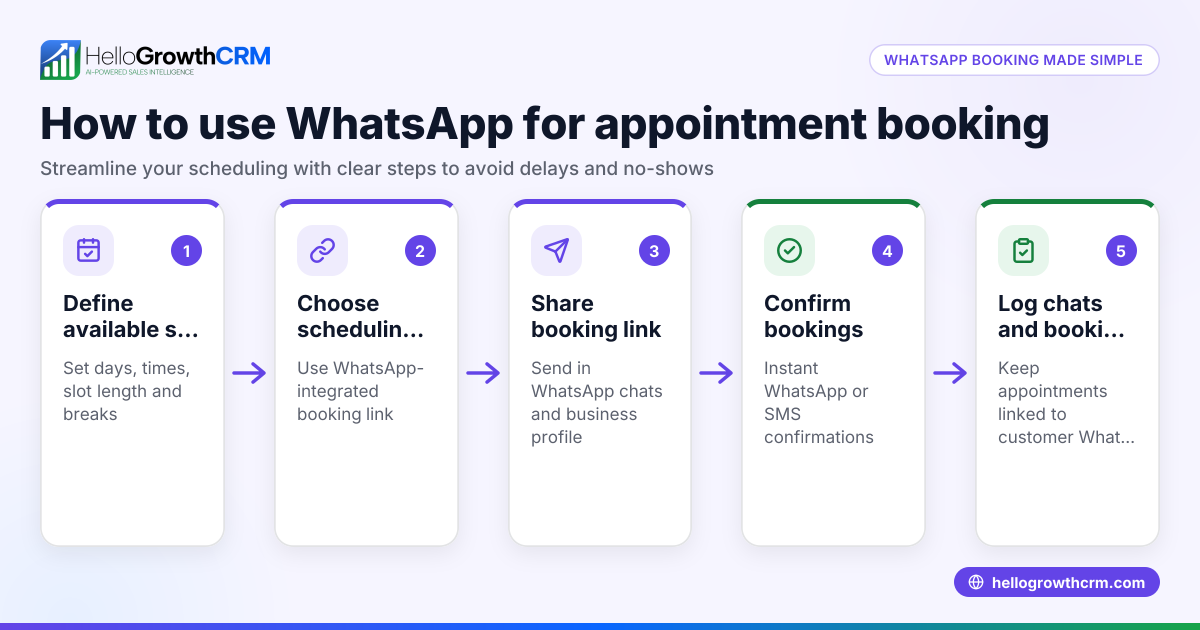
Neurology appointments are often longer than routine primary care slots, and some require caregiver attendance or prior imaging. In Singapore, scheduling also has a local rhythm that generic booking pages miss. Public holidays span several communities and some dates move with the lunar and Islamic calendars, so clinic rules need annual checking rather than a fixed recurring template. Demand also clusters around lunch breaks and after-work periods, particularly in central areas where patients travel from the CBD.
A useful CRM-linked scheduler should therefore do more than show empty time. It should help the clinic separate first consults from follow-ups, reserve room for urgent cases, and ask the minimum necessary intake questions before a slot is offered. If your practice sees overseas or regional ASEAN patients, note that Singapore is in one time zone while some nearby patients are not; the booking confirmation should make the clinic’s time explicit.
This matters because a bad scheduler does not only create inconvenience. It creates wasted consultant time, front-desk rework and confused arrivals with missing documents. Scheduling and booking tools help most when they reduce those specific failure points rather than simply allowing self-service bookings.
What to configure in the CRM before you migrate a single contact
The most expensive part of a CRM project in a specialist clinic is usually not the subscription. It is migrating bad habits into a cleaner interface. Before importing contacts, decide the fields and rules that match Singapore practice operations.
At minimum, define separate record elements for patient, caregiver, referral source, language preference, communication consent status, primary channel, and outstanding document requests. Build validation rules so staff cannot create a “booked consult” record without the information the clinic genuinely needs. Keep those rules tight. If you force too many fields, staff will type placeholders just to move on.
You should also decide which events create tasks. For example: a new WhatsApp enquiry from a caregiver should create a callback task for the front desk; a referral letter received should notify the booking team; a deposit noted as received by bank transfer should prompt reconciliation. If your software supports workflows and task boards, this is where they earn their keep, because they turn tribal memory into repeatable operations. Activity logging and task boards are often more valuable to a clinic than elaborate dashboards, simply because they stop handoff errors between front desk, care coordinator and doctor.
If the clinic has no internal operations lead, it may be worth using structured implementation help rather than leaving configuration to the busiest receptionist. The issue is process design, not just software setup.
Where HelloGrowthCRM fits for a Singapore neurology clinic
HelloGrowthCRM is useful for this type of clinic when the goal is to organize enquiries, move them through a defined pipeline, keep tasks and message history attached to the right record, and shorten the path from first contact to booked consultation. Its lead capture, pipeline, task boards, WhatsApp and SMS messaging, shared inbox, scheduling, workflow automation and payment-received tracking are the features most relevant to the neurology use case described here. If your team is still testing process fit, the free CRM plan is a low-risk way to map stages and fields before a broader rollout.
Whatever system you choose, the winning setup in Singapore is usually the one that reflects PDPA constraints, MOH communication boundaries, referral-driven demand and local payment habits better than your current spreadsheet-and-inbox routine.
Ready to put this into practice?
Set up your pipeline, WhatsApp follow-ups, and AI lead scoring in minutes — free, no credit card.
Try HelloGrowthCRM freeGet CRM tips in your inbox
Join thousands of sales professionals who get weekly insights on CRM strategy, AI automation, and pipeline optimization.

The HelloGrowthCRM team publishes guides on CRM strategy, AI sales tools, and revenue operations for small business sales teams.