HelloGrowthCRM software
Built for real small-business sales teams
HelloGrowthCRM helps reps qualify faster, follow up on time, and close more deals—with practical automation in one place.
- AI lead scoring and pipeline visibility
- Built-in dialer, WhatsApp, and email automation
- Sales forecasting and RevOps-ready reporting
In Canada, the right CRM for a real estate agent is one that records consent properly, handles bilingual and province-specific workflows, and keeps every inquiry, showing, offer and referral attached to a usable deal record.
The old advice on real estate CRMs is often written as if every market behaves the same. Canada does not. A brokerage team working across Ontario and Quebec faces different customer expectations, different privacy obligations, and different sales tax treatment on some charges than a solo agent working only in Alberta. Even basic scheduling can break if your system treats all appointments as one time zone or ignores how daylight saving differs across the country. A useful choice starts with those operating realities, not with a generic feature checklist.
Canada lead sources shape what your CRM has to capture
Canadian real estate leads do not arrive from one clean channel. They commonly come through Google Business Profile, Facebook, LinkedIn, Kijiji, referrals, and in some markets HomeStars or Yellow Pages. That matters because each source gives you different evidence about intent and different follow-up expectations. A referral from a mortgage broker is not worked the same way as a cold Facebook message asking whether a condo is still available.
Your CRM should therefore store source at first touch, not after an agent has already made contact. If source is added later, teams usually collapse everything into “web” or “referral,” which makes it harder to see where serious buyer and seller conversations actually begin. For Canadian teams, source also helps with compliance. If a person came in through a past business relationship, that may affect how you assess consent under Canada’s Anti-Spam Legislation, known as CASL. The system should let you keep the source, date and exact path by which the inquiry was received.
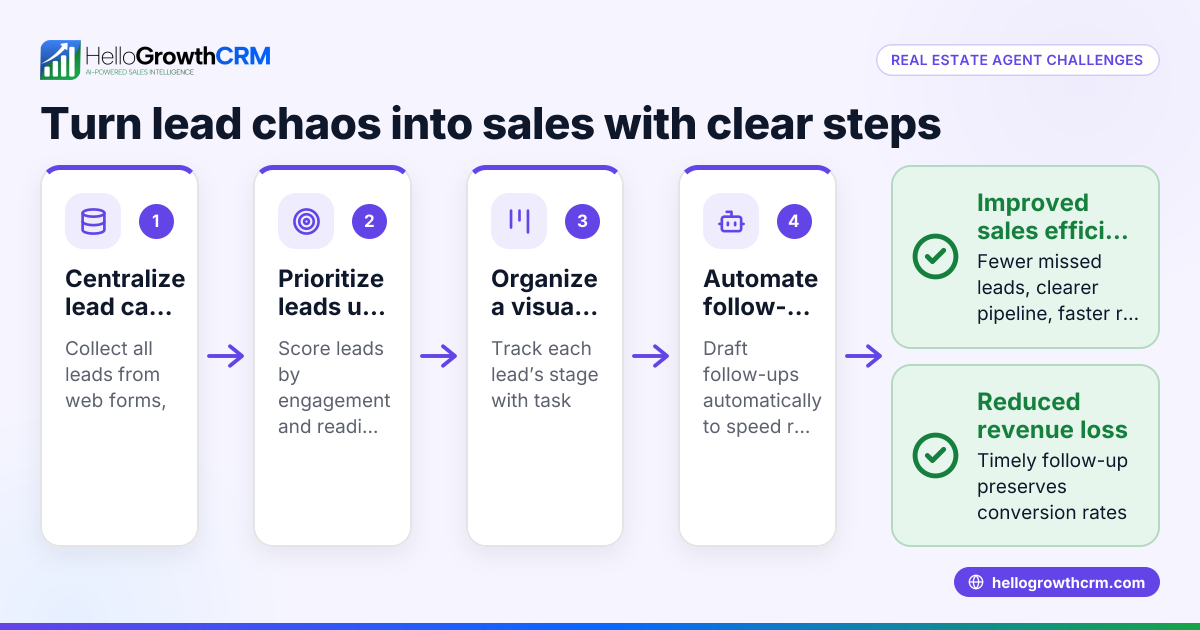
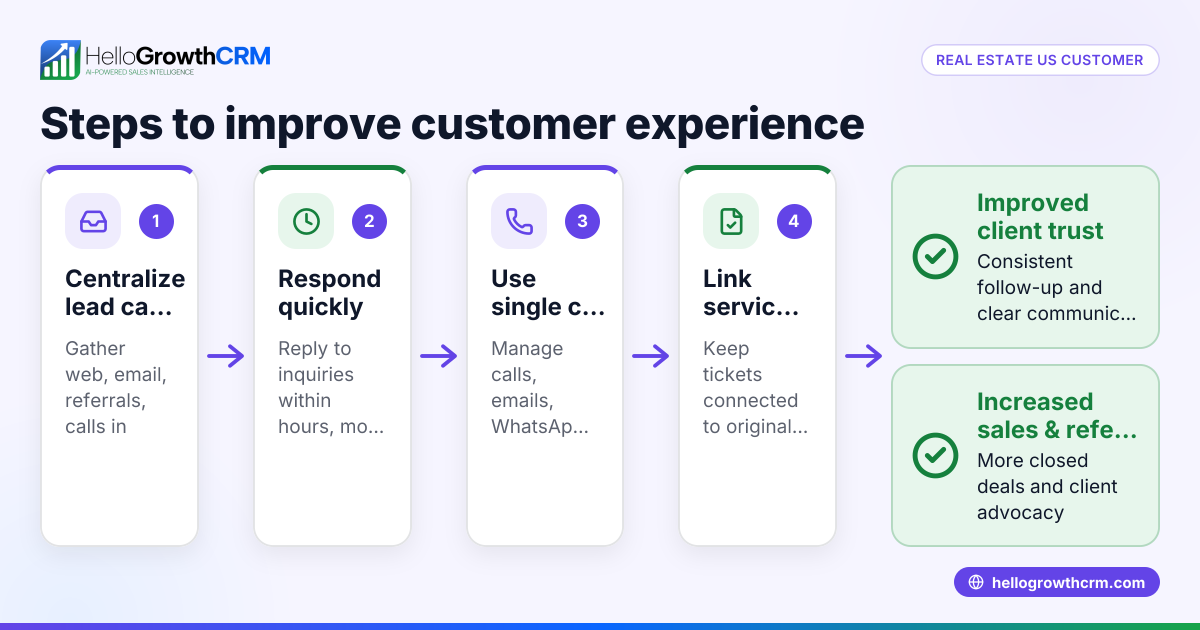
This is where organized lead capture and pipeline entry matter more than flashy dashboards. If a new inquiry from Kijiji sits in one inbox, a Google Business Profile message sits in another, and referrals live in an agent’s phone, no one can measure response time or confirm what follow-up happened. A CRM with lead capture and qualification tools helps put every inquiry into one place quickly enough to be worked before it goes stale.
CASL turns follow-up records into evidence, not just reminders
Real estate agents in Canada market heavily by email and text, but CASL changes how that outreach must be handled. The law is enforced by the CRTC and requires consent for commercial electronic messages, plus sender identification and a working unsubscribe mechanism. The practical issue is that a CRM cannot merely show that a message was sent. It has to show why you were allowed to send it.
A good record for a real estate contact includes the consent type, when it was obtained, where it came from, and when it should be reviewed. Implied consent does not last forever, so a static checkbox is poor evidence. If your team sends property alerts, market updates, new listing notices and follow-up texts, the CRM should separate people who asked for those communications from people who only asked one transactional question.
This is especially important because a service message can fall into CASL’s scope if someone adds a promotional line. A showing confirmation that also advertises another listing may not be treated the same way as a pure service notice. Marketing templates and transactional templates should live separately so agents do not improvise their way into a compliance problem. If you use sequences and campaigns or SMS and messaging workflows, they should be tied to clear consent records rather than broad assumptions about who is fair game.
PIPEDA and Quebec Law 25 affect how contact records are designed
Canadian real estate records often contain more personal information than many small businesses realise: income hints from qualification calls, family details, move dates, addresses, copies of IDs, tenancy history, and notes about accessibility needs. That pushes CRM design into privacy law territory. Outside Quebec, the federal private-sector framework is PIPEDA, overseen by the Office of the Privacy Commissioner of Canada. In Quebec, Law 25 adds its own obligations, with oversight by the Commission d'accès à l'information.
For a brokerage or team, this means the contact record should not become a dumping ground. Ask whether the CRM lets you control who sees sensitive notes, whether customer-facing forms explain what data is being collected, and whether the team can respond sensibly if there is a confidentiality incident. Law 25 is not just a policy issue for the office manual; it changes how forms, lead capture pages and internal access should work.
Quebec also raises a language issue. If you market to consumers there, French customer-facing communication is not optional in practice. Listing inquiry confirmations, booking pages, reminders and follow-up templates should be available in French where needed. Bilingual service is partly a staffing issue, but it is also a software issue: if the CRM cannot keep language preference visible at contact level, teams default to English and create friction at the first interaction.
If you are comparing systems, this is one of the few areas where the right questions are narrow and concrete:
- Can we store consent source, date and type on every contact?
- Can we separate transactional messages from promotional ones?
- Can we flag a contact’s language preference and use it in templates?
- Can access to sensitive notes be limited by role?
- Can we export a clear history of messages, notes and status changes if a regulator or client asks?
Canadian scheduling breaks when time zones are treated as an afterthought
Real estate work depends on appointments: buyer calls, listing presentations, inspections, virtual walkthroughs and handoffs to lawyers or mortgage brokers. In Canada, scheduling becomes more complex because there are six time zones and one of them has a half-hour offset. Daylight saving is also not observed uniformly, and Saskatchewan is a frequent source of confusion for teams that assume clocks move everywhere in the same way.
If your CRM or booking page does not preserve the intended local time, a March viewing booked in October can drift by an hour. That sounds minor until a seller vacates the property for a showing that the buyer reaches late because two systems interpreted the appointment differently. For agents working with relocations, out-of-province buyers, or teams spread across several provinces, this is not edge-case administration; it is core service delivery.
Statutory holidays also differ by province. A reminder workflow that treats all Canadian offices the same can schedule calls on a provincial holiday when your client is unavailable or your staff is off. Booking and reminder tools should therefore support location-aware scheduling rather than a single national calendar. If your inquiry flow depends on fast handoff from form fill to consult, a proper booking system reduces the back-and-forth and preserves the context of who booked, for what property, in which time zone.
Deposits, retainers and ancillary charges need province-of-supply detail
Most real estate agents are not trying to turn a CRM into accounting software, but some money details still belong in the deal record because they affect paperwork and reporting. In Canada, indirect tax is not one national rule. Depending on where the supply takes place, the applicable treatment may involve GST, HST, provincial sales tax, and in Quebec, QST. The authorities to check are the Canada Revenue Agency and, for Quebec matters, Revenu Québec.
That matters when a brokerage charges for ancillary services, administrative fees, marketing packages, or retains a deposit connected to a cancelled arrangement. CRA publishes guidance on the timing of tax obligations and on how deposits and forfeited amounts are treated, and those are not identical topics. A CRM that stores only amount and payment status but not province of supply leaves your back office reconstructing facts later from email trails.
For teams operating in more than one province, every charge tied to a deal should carry enough location information to tell finance which rules to verify. The CRM does not need to calculate the tax itself to be useful; it needs to preserve the facts that determine the tax treatment. If you send quotes or invoices from a deal record, ensure staff can see the property province, service province where relevant, and whether the amount is a deposit, a fee, or a payment against a final invoice. The current tax treatment, registration obligations and filing requirements should always be confirmed on official CRA and Revenu Québec guidance under the Excise Tax Act and the provincial rules in force at the time.
Canadian payment rails create blind spots if your CRM assumes cards only
Canadian customers and counterparties do not pay only by card. Interac e-Transfer is common, especially for small amounts and fast reimbursements. Pre-authorised debit, cheque and wire transfer still appear in property-related transactions, and some offices will also take card payments for certain charges. This matters because Interac e-Transfers land in the bank rather than a card processor, so card-only payment tracking systematically misses money that staff believe has been “taken care of.”
In practice, an agent may mark a staging deposit as settled because the client texted a transfer confirmation, while the office administrator is still waiting to match the amount in the bank. A CRM should let the deal record distinguish between a payment promise, money received, and money reconciled to the invoice or charge. Where teams issue quotes, proposals or invoices from the CRM, payment status should stay tied to the commercial document rather than floating in private notes.
The arithmetic below is illustrative; the figures are made up to show the shape of the decision. Suppose a Toronto team charges C$450 for a premium photography add-on, collects a C$150 deposit by Interac e-Transfer, then issues the balance for C$300 after the work is delivered. If the client cancels before delivery and the office intends to retain part of the deposit, the CRM record should still show the original charge, the amount received, the province connected to the supply, and the reason the retained amount was not simply applied as an ordinary final payment. What this leaves out is the actual tax treatment, any trust-account rules, and brokerage-specific legal obligations; those have to be confirmed with current CRA or Revenu Québec guidance and your own adviser.
Pipeline stages for Canadian real estate should mirror the deal, not generic sales
Many CRMs fail real estate teams because they impose broad B2B sales stages that do not reflect how agency work moves. In Canada, the useful stages are usually closer to inquiry received, qualified buyer or seller, consultation booked, property shortlist or listing prep, showing or valuation complete, offer active, conditions period, closed, and post-close referral follow-up. Those stages create a record that brokers and administrators can actually work from.
The value of that structure is operational rather than cosmetic. If an opportunity is still in “contacted” after a showing has happened, your forecast and workload planning are already distorted. A pipeline should make stage movement visible, attach notes and tasks to each deal, and preserve a full interaction history for the office and the individual agent. That is more useful than a bloated contact profile with no current next step.
HelloGrowthCRM is relevant here in a limited, practical sense. Its pipeline tools can track open opportunities from first contact through close, and its task boards and activity logging keep calls, meetings, notes and follow-ups tied to the same record. For a team that wants faster intake, lead capture and qualification features can keep inquiries organized before they hit an agent’s personal spreadsheet.
Referrals, repeat clients and neighbourhood farming need different records
In Canadian real estate, not every valuable contact is an immediate buyer or seller. Some are referral partners, some are past clients likely to transact later, and some are homeowners in a neighbourhood farming area who may respond to market updates long before they request a valuation. If the CRM treats all of them as the same kind of lead, agents either over-message them or ignore them until memory fades.
A stronger setup distinguishes contacts, active deals and referral relationships. A mortgage broker who sends business should not sit in the same nurture path as a homeowner who downloaded a guide. A past client should carry a property history, communication preference and referral potential even when there is no open opportunity today. This is especially useful in Canada, where community reputation and referrals are often stronger than pure portal volume in many local markets.
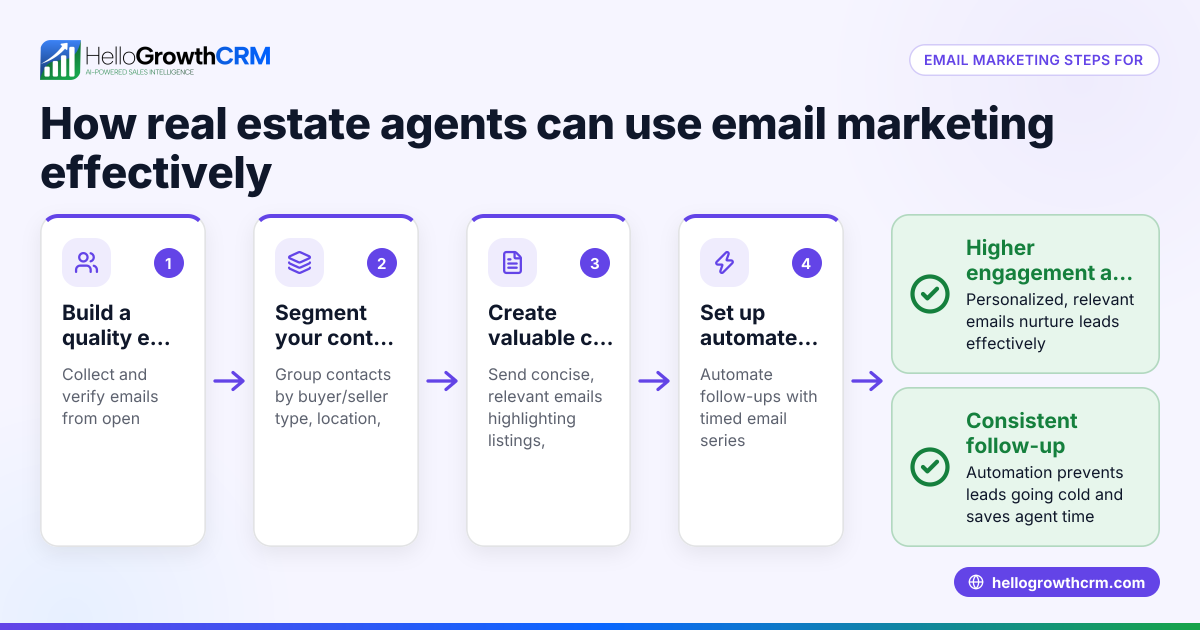
If you are starting from scratch, focus less on “all-in-one” promises and more on whether the CRM helps you segment your database by relationship, language, geography and current intent. That is what makes later automation sensible rather than noisy. If you want a low-friction place to test that structure before a larger rollout, a free CRM can be enough to prove whether your stages, tasks and contact fields match the way your team actually works in Canada.
Choose for Canadian operating reality first, then features second; that is the difference between a CRM your agents use every day and one they quietly work around.
Ready to put this into practice?
Set up your pipeline, WhatsApp follow-ups, and AI lead scoring in minutes — free, no credit card.
Try HelloGrowthCRM freeGet CRM tips in your inbox
Join thousands of sales professionals who get weekly insights on CRM strategy, AI automation, and pipeline optimization.

The HelloGrowthCRM team publishes guides on CRM strategy, AI sales tools, and revenue operations for small business sales teams.