HelloGrowthCRM software
Built for real small-business sales teams
HelloGrowthCRM helps reps qualify faster, follow up on time, and close more deals—with practical automation in one place.
- AI lead scoring and pipeline visibility
- Built-in dialer, WhatsApp, and email automation
- Sales forecasting and RevOps-ready reporting
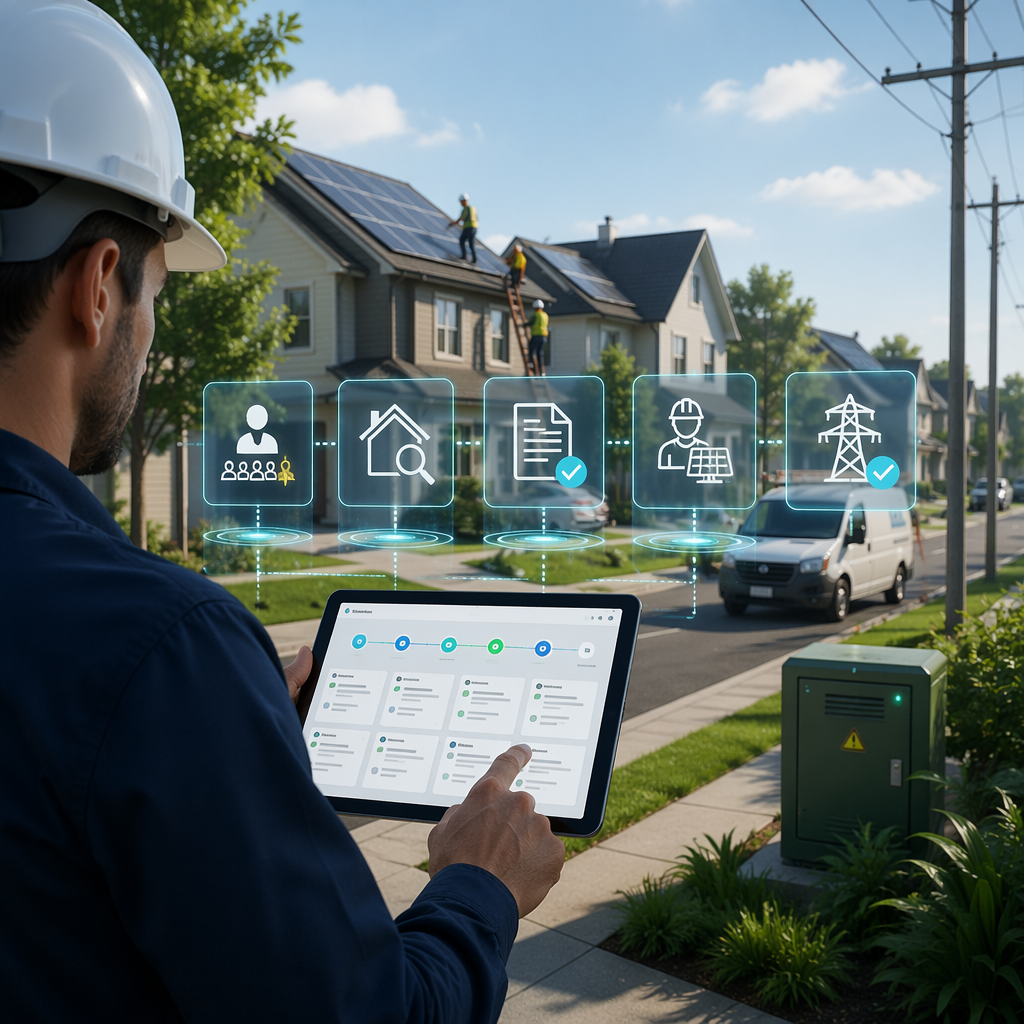
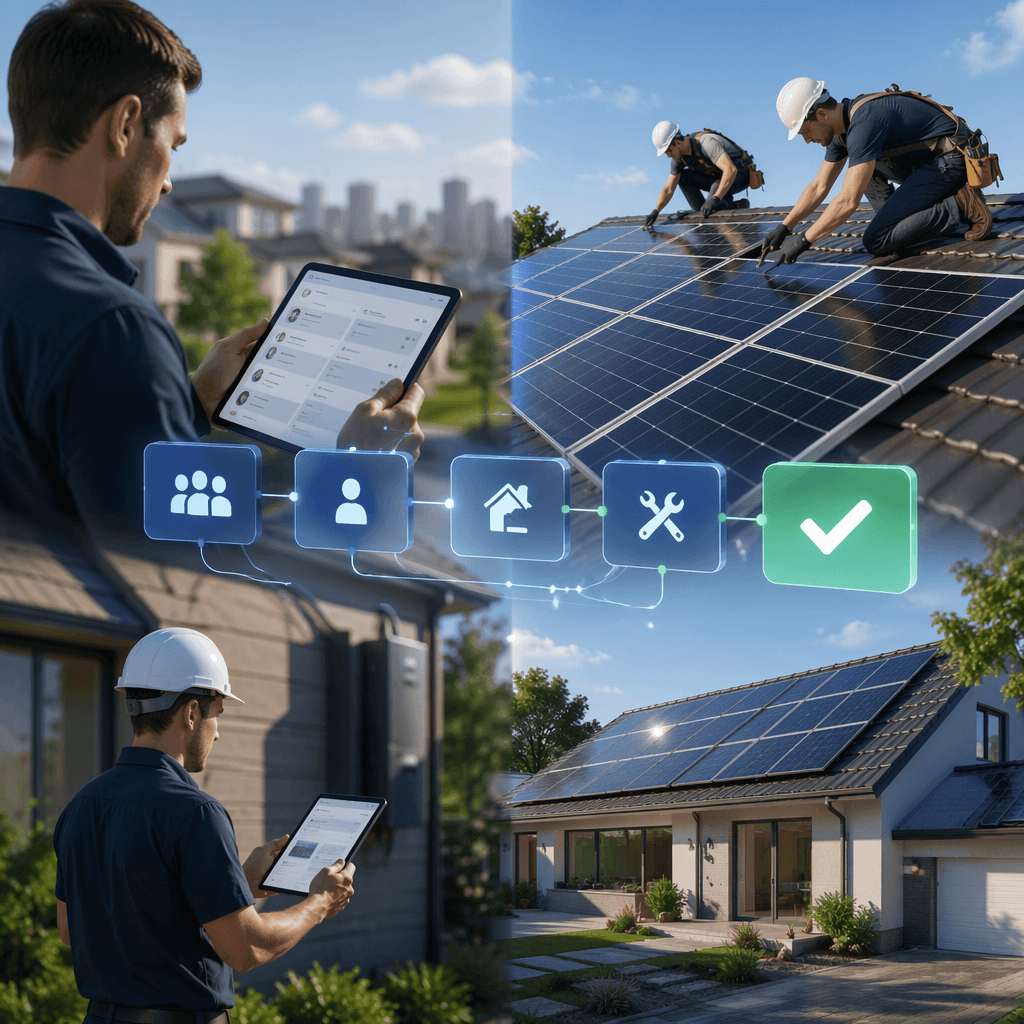
A CRM for solar installation companies is a customer relationship management system designed to manage the full solar sales lifecycle. It tracks homeowner inquiries, manages site surveys, stores proposal details, schedules installations, and keeps sales, operations, and dealer partners aligned. A modern solar CRM also automates follow-ups, tracks pipeline stages, and forecasts installation revenue so solar companies can grow without losing deals or missing projects.
Solar installation companies deal with complex, multi-step sales processes. A single residential project can involve marketing leads, qualification calls, property assessments, financing approvals, permitting, and installation scheduling. Without a structured system, these steps quickly become messy.
That is where a specialized platform like AI CRM from HelloGrowthCRM helps. It gives solar teams one place to manage leads, proposals, site surveys, and installations while keeping every follow-up organized.
Why Solar Installation Companies Need a Specialized CRM
Selling solar is not a simple one-call close. Most deals take weeks or months to complete. Teams must coordinate homeowners, survey technicians, financing providers, and installers.
Without the right system, teams face several common problems:
- Leads get lost between marketing and sales teams
- Site survey scheduling becomes manual and chaotic
- Proposal approvals are difficult to track
- Installations get delayed due to poor coordination
- Dealers and channel partners lack visibility into progress
A CRM designed for solar workflows helps solve these issues by creating a clear pipeline from inquiry to installation.
With HelloGrowthCRM, teams manage every stage inside a single system. Features like AI Pipeline Management give managers real-time visibility into each project.
The Complexity of the Solar Lead-to-Installation Journey
The solar buying process usually follows a long sequence of steps. Each stage requires coordination between teams.
Typical solar sales pipelines include:
- Lead generation from ads, referrals, or website forms
- Initial homeowner qualification call
- Site survey scheduling
- Roof assessment and system design
- Proposal creation and pricing approval
- Financing or payment confirmation
- Contract signing
- Permit applications
- Installation scheduling
- Post-installation follow-up
Managing this process with spreadsheets quickly becomes impossible. A CRM keeps every step organized.
Managing Inbound Solar Leads Effectively
Solar companies receive leads from many channels. These may include digital ads, website forms, call centers, or local dealer networks.
When these leads are not tracked properly, response times slow down. That often means losing the homeowner to another installer.
A CRM solves this problem by automatically capturing and routing leads.
For example, HelloGrowthCRM integrates with tools like Meta Ads and Zapier. Leads from ads, landing pages, or partner platforms automatically appear inside the CRM.
Sales teams can then:
- Assign leads to local reps
- Trigger automated follow-ups
- Schedule consultations quickly
- Track communication history
This ensures every homeowner inquiry receives a fast response.
Prioritizing the Best Solar Opportunities
Not every homeowner inquiry turns into a qualified project. Some homes may not have the right roof orientation or budget.
AI-powered scoring helps teams focus on the most promising opportunities.
Using AI Lead Scoring, solar sales teams can prioritize leads based on factors like:
- Property location
- Estimated system size
- Budget indicators
- Engagement level with emails or calls
High-scoring leads move to the top of the sales queue. This improves close rates and saves time for sales reps.
Scheduling Site Surveys and Consultations
After qualification, the next step is usually a site visit or virtual consultation. This stage often creates scheduling problems.
Many solar companies still coordinate surveys through phone calls and email threads. This slows down the process.
A CRM simplifies scheduling by allowing homeowners to book available slots online.
With the Meeting Scheduler, solar teams can:
- Offer available consultation times
- Automatically assign technicians
- Sync with calendars
- Send reminders to homeowners
This reduces missed appointments and speeds up the evaluation process.
Survey notes, roof photos, and energy usage details can also be stored directly inside the CRM record.
Creating and Managing Solar Proposals
Solar proposals involve system size calculations, equipment recommendations, financing options, and expected energy savings.
Managing proposals across spreadsheets and PDF files creates confusion for both sales reps and homeowners.
A CRM helps teams generate and track proposals from a single platform.
With tools like the Proposal Builder, solar sales reps can:
- Create standardized proposals quickly
- Include pricing tiers and financing options
- Track when homeowners view proposals
- Update pricing without sending new documents manually
This helps keep the sales process moving forward.
Tracking Proposal Approvals and Contract Signatures
Solar projects often require multiple approvals before installation begins. These approvals may involve homeowners, financing partners, or internal managers.
A CRM tracks these steps clearly.
Using pipeline tracking features such as AI Deal Insights, teams can see:
- Which proposals are awaiting approval
- Which deals are likely to close
- Which projects are stalled
Sales managers can quickly step in when deals slow down.
Coordinating Installation Scheduling
After a contract is signed, the focus shifts to operations. Installation scheduling must coordinate technicians, equipment availability, and homeowner timelines.
This stage is often where delays occur.
A CRM helps by linking the sales pipeline directly to operational workflows.
Solar operations teams can use pipeline stages to track:
- Permit approvals
- Equipment delivery
- Installation scheduling
- Final inspections
Each project moves through clear stages, giving the entire team visibility.
Revenue forecasting tools such as Sales Forecasting help leadership estimate upcoming installation revenue based on pipeline activity.
This improves financial planning and staffing decisions.
Automating Homeowner Follow-Ups
Solar deals require many touchpoints with homeowners. Without automation, reps spend too much time sending manual messages.
Automated communication helps maintain momentum during the sales process.
Using Email Automation, solar companies can send:
- Consultation confirmations
- Proposal follow-ups
- Financing reminders
- Installation updates
These automated messages keep homeowners informed without overwhelming sales reps.
For companies that communicate heavily through messaging apps, tools like WhatsApp & SMS CRM allow teams to manage text conversations directly inside the CRM.
All communication stays attached to the homeowner record. This prevents miscommunication across teams.
Managing Dealer and Channel Partner Relationships
Many solar companies grow through dealer networks or local installation partners. These relationships require careful coordination.
Dealers need updates on project status, commissions, and lead assignments.
A CRM makes dealer management easier by keeping everything visible in one place.
Solar companies can use the CRM to:
- Assign leads to dealer partners
- Track dealer performance
- Monitor project progress by partner
- Automates partner follow-ups
Territory-based lead distribution also becomes easier using tools like Territory Management.
This ensures leads are routed to the correct local dealer or installation team.
Keeping Dealer Communication Organized
Dealer communication often happens across email, calls, and messaging platforms.
This scattered communication causes confusion.
A centralized system such as the Smart Inbox collects messages from different channels into one shared workspace.
Sales managers can easily track dealer conversations and ensure projects move forward.
Forecasting Solar Project Revenue
Revenue forecasting is difficult for solar companies because project timelines vary.
Some deals close quickly. Others stall due to permits, financing approvals, or scheduling issues.
Without reliable forecasting, leadership struggles to plan hiring, inventory, and installation capacity.
A CRM with pipeline analytics helps solve this problem.
Tools like Sales Forecasting analyze:
- Deals in each stage
- Historical conversion rates
- Expected installation timelines
This creates more accurate revenue projections.
Managers can quickly identify pipeline gaps and increase marketing efforts when needed.
For deeper insights into pipeline health, teams can also use the Pipeline Health Score tool to measure deal flow quality.
Using AI to Improve Solar Sales Performance
AI is becoming a powerful tool for solar sales teams. It helps reps manage complex pipelines while reducing manual work.
Inside HelloGrowthCRM, AI tools analyze pipeline activity and recommend next actions.
For example, the AI Sales Copilot helps reps by:
- Suggesting follow-up messages
- Summarizing customer conversations
- Highlighting stalled deals
- Recommending next best actions
AI can also analyze call recordings using the Post-Call Agent. This tool captures key details from consultations and adds them to the CRM automatically.
This ensures important project information is never lost.
Key Features Solar Installation Companies Should Look For in a CRM
Not all CRM platforms support solar workflows. Many generic systems require heavy customization.
Solar companies should look for features designed for project-based sales pipelines.
Important capabilities include:
- Lead capture from ads, website forms, and partner channels
- AI-powered lead prioritization
- Appointment scheduling for consultations and surveys
- Proposal creation and tracking
- Installation pipeline management
- Automated homeowner communication
- Dealer and territory management
- Revenue forecasting and pipeline analytics
HelloGrowthCRM combines these capabilities in a single platform designed for growing sales teams.
Teams can explore the full set of capabilities on the Features page to understand how the platform supports complex sales workflows.
How HelloGrowthCRM Supports Solar Growth
Solar installation companies operate in a highly competitive market. Speed, organization, and follow-up consistency make a big difference.
HelloGrowthCRM helps solar businesses scale by improving how they manage leads and projects.
The platform supports solar teams by:
- Capturing leads from multiple channels automatically
- Organizing projects from inquiry to installation
- Automating homeowner and dealer follow-ups
- Providing AI-driven pipeline insights
- Improving forecasting and revenue visibility
Teams also benefit from integrated communication tools, automation, and AI-driven insights.
Solar companies that want to test the system can start with a Free Trial to explore how the CRM supports their workflow.
Frequently Asked Questions
What is a CRM for solar installation companies?
A CRM for solar installation companies is a platform that manages the entire solar sales process. It tracks leads, proposals, site surveys, contracts, and installations in one system.
Why do solar companies need a CRM?
Solar projects involve many steps and stakeholders. A CRM keeps teams organized, automates follow-ups, and ensures no leads or projects fall through the cracks.
How does a CRM help with solar lead management?
A CRM captures leads from ads, websites, and referrals automatically. It assigns them to sales reps and tracks all interactions with homeowners.
Can a CRM help schedule solar site surveys?
Yes. Many CRM platforms include scheduling tools that allow homeowners to book consultations or surveys directly from available time slots.
How does CRM software help forecast solar revenue?
CRM systems analyze pipeline data and deal stages. This allows managers to estimate future installation revenue more accurately.
Is HelloGrowthCRM suitable for solar installation businesses?
Yes. HelloGrowthCRM supports long sales cycles, proposal management, automated follow-ups, dealer coordination, and installation pipeline tracking.
Solar installation companies manage complex workflows that span sales, operations, and partnerships. A specialized CRM makes this process far easier.
HelloGrowthCRM gives solar teams one platform to manage leads, proposals, installations, and dealer communication. The result is faster deal cycles and better revenue visibility.
Start exploring the platform today with a Free Trial or schedule a personalized Demo to see how HelloGrowthCRM can power your solar sales pipeline.
Frequently Asked Questions
Ready to put this into practice?
Set up your pipeline, WhatsApp follow-ups, and AI lead scoring in minutes — free, no credit card.
Try HelloGrowthCRM freeGet CRM tips in your inbox
Join thousands of sales professionals who get weekly insights on CRM strategy, AI automation, and pipeline optimization.

The HelloGrowthCRM team publishes guides on CRM strategy, AI sales tools, and revenue operations for small business sales teams.