HelloGrowthCRM software
Built for real small-business sales teams
HelloGrowthCRM helps reps qualify faster, follow up on time, and close more deals—with practical automation in one place.
- AI lead scoring and pipeline visibility
- Built-in dialer, WhatsApp, and email automation
- Sales forecasting and RevOps-ready reporting
A customer acquisition plan is a detailed strategy outlining how your business attracts and converts new customers. It defines your target audience, marketing channels, sales processes, and budget to grow efficiently. This article explains why a plan is essential, guides you step-by-step, highlights common mistakes, and shows how HelloGrowthCRM can support your efforts.
Why this comes up / what goes wrong
Small-business owners often find themselves struggling to grow sales consistently. They may rely on informal methods like texting, spreadsheets, or scattered email follow-ups that lead to slow responses and lost leads. Without a clear plan, marketing efforts can be unfocused, budgets can be wasted, and sales teams may not know which prospects to prioritize. This lack of structure causes missed opportunities and unpredictable revenue.
Step-by-step
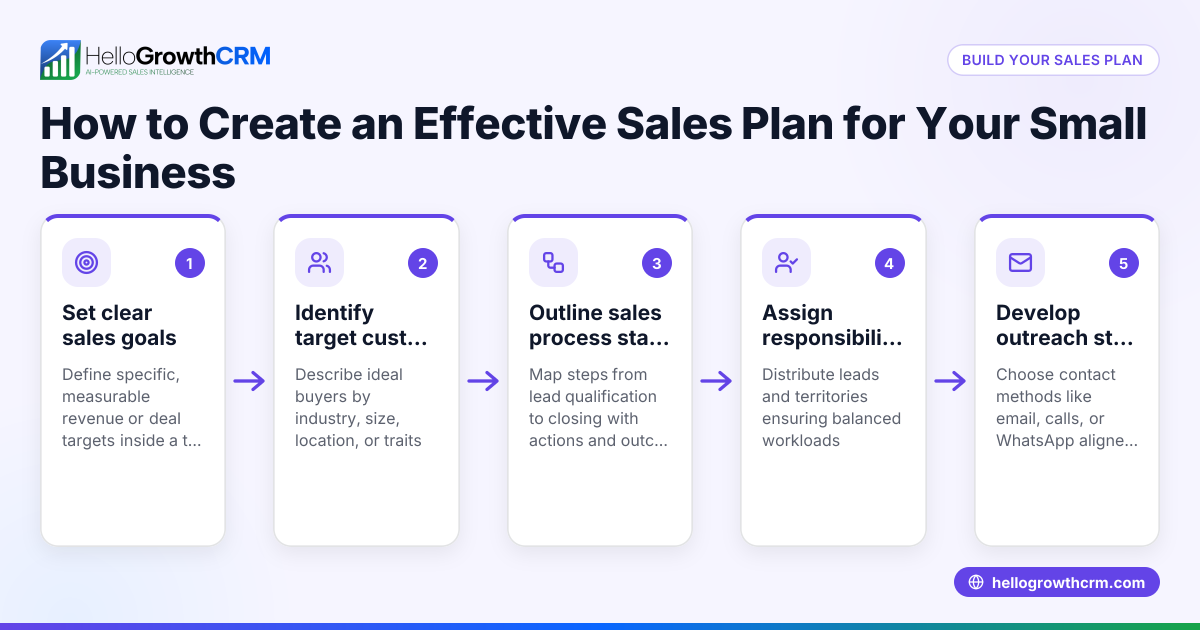
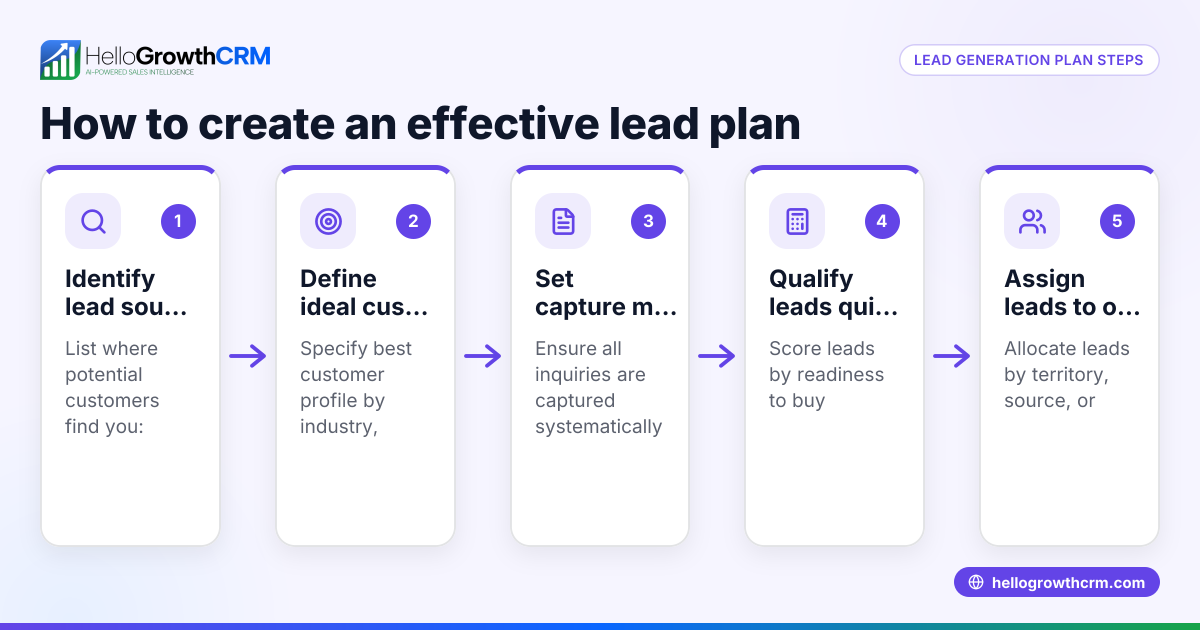
- Define your target customer: Identify who your ideal customers are by demographics, needs, location, and behaviors. Check that your profile is specific enough to guide marketing messaging.
- Set clear acquisition goals: Decide how many new customers you want to gain over a set period (monthly or quarterly). Verify these goals are realistic based on your resources.
- Choose marketing channels: Pick the best ways to reach your target customers, such as social media, email, Google ads, referrals, or events. Confirm you have the skills or budget to run campaigns on these channels.
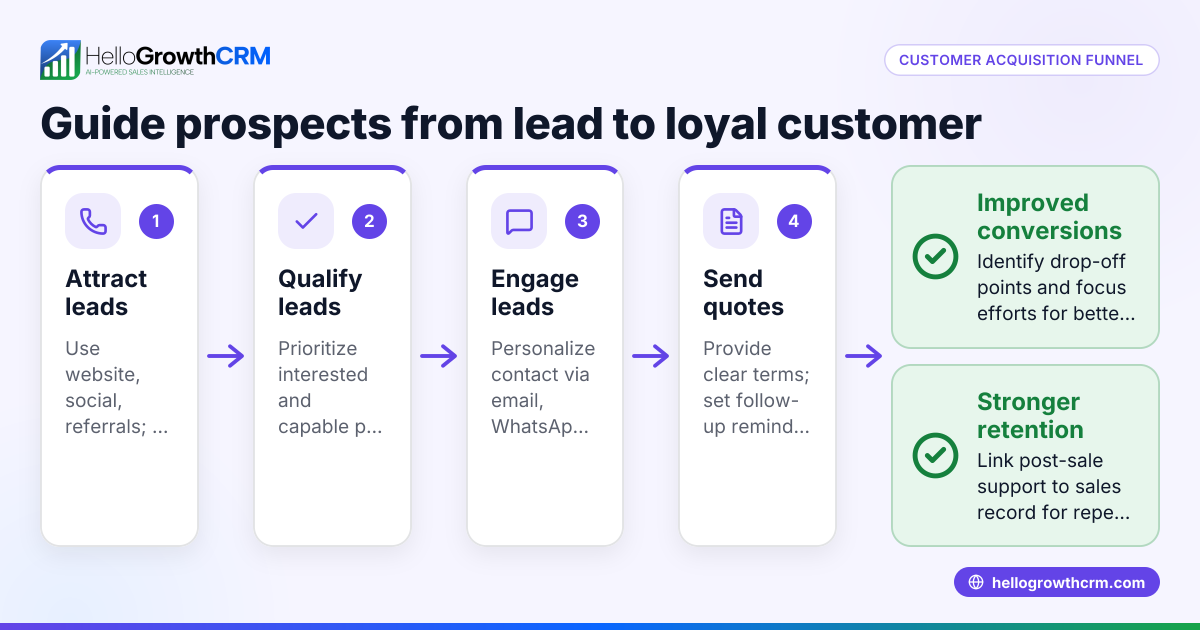
- Develop your sales process: Outline how leads will be contacted, followed up, and converted. Include steps like initial contact, qualification, demos, and closing. Check that follow-up times are quick to avoid losing leads.
- Allocate budget and resources: Assign spending for marketing campaigns, tools, and sales team time. Ensure your budget matches your acquisition goals.
- Implement tracking and measurement: Use tools to monitor leads, conversion rates, and customer acquisition costs. Check data regularly to see what works.
- Adjust and optimize: Based on data, tweak your marketing messages, channels, or sales tactics to improve results.
Using a CRM with AI lead scoring and pipeline management can help manage this process efficiently and keep your team aligned. See how HelloGrowthCRM for the United States supports this.
Example (fictional figures)
Consider a plumbing company in Austin, Texas, aiming to acquire 20 new customers in the next quarter.
- Goal: 20 new customers in 3 months
- Average revenue per customer: $1,500
- Marketing budget: $6,000
Step 1: Define target customer as homeowners aged 30-55 in Austin needing plumbing repairs.
Step 2: Set acquisition goal = 20 customers
Step 3: Choose marketing channels: Google Ads and referral program.
Step 4: Sales process includes calls within 1 hour of inquiry, follow-up texts, and service scheduling.
Step 5: Budget allocation:
$6,000 total budget
$4,000 for Google Ads
$2,000 for referral incentives
Step 6: Track leads and conversions via CRM
Step 7: Evaluate monthly; if Google Ads cost per lead is too high, shift more to referrals.
Calculations:
Assuming Google Ads cost per lead = $50
Google Ads leads = $4,000 ÷ $50 = 80 leads
Google Ads conversion rate = 20%
Customers from Google Ads = 80 × 20% = 16 customers
Customers still needed from referrals = 20 − 16 = 4 customers
Referral conversion rate = 25%
Referral leads needed = 4 ÷ 25% = 16 referral leads
Total leads needed = 80 + 16 = 96 leads for 20 customers
This plan aligns budget, goals, and marketing channels to acquire 20 new customers.
Common mistakes
- Not defining a clear target customer: Leads to wasted marketing on uninterested audiences. Prevent by researching and specifying your ideal customer profile.
- Setting unrealistic goals: Causes frustration and poor planning. Prevent by basing goals on past data and resources.
- Ignoring follow-up speed: Slow responses lose leads. Prevent by setting quick follow-up steps and using tools like WhatsApp and SMS CRM for automation.
- Not tracking results: Without data, you can’t improve. Prevent by using CRM reports and sales forecasting.
- Overcomplicating the sales process: Confuses your team and customers. Prevent by keeping steps clear and simple.
- Failing to allocate budget properly: Underfunded channels don’t perform. Prevent by assigning budget based on expected ROI.
Doing this in HelloGrowthCRM
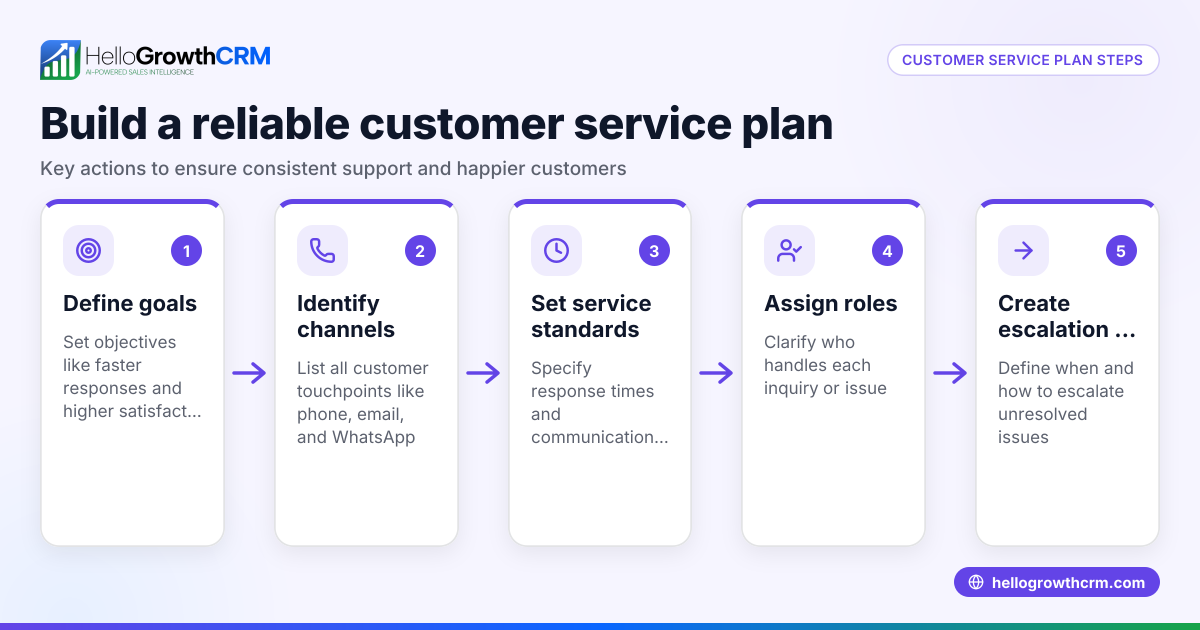
HelloGrowthCRM helps you keep customer acquisition organized with features like a customer portal, referrals tracking, tickets, and a knowledge base. After a sale, service requests stay linked to the same customer record as the deal, making follow-up and upselling easier. For small teams, the Free Forever plan lets you run your sales pipeline at no cost until you need calling or WhatsApp automation. Learn more about these features and get started on the Free Forever plan.
Frequently asked questions
What is the difference between customer acquisition and customer retention? Customer acquisition focuses on gaining new customers, while retention is about keeping existing ones. Both are important but require different strategies.
How do I measure the success of my customer acquisition plan? Track metrics like number of new customers, cost per acquisition, conversion rates, and revenue generated. Use these to compare against your goals.
Can I use referrals in my customer acquisition plan? Yes, referrals are a cost-effective way to gain new customers. Tracking referral programs within your CRM helps manage and reward referrals efficiently.
How often should I update my customer acquisition plan? Review your plan quarterly or whenever major changes happen in your market or business. Regular updates keep your strategy aligned with current conditions.
What tools can help with customer acquisition? A CRM with pipeline management, lead capture, qualification, and communication tools like HelloGrowthCRM can streamline your sales process and improve follow-up speed. See also the customer health score feature.
Key takeaways
- A customer acquisition plan defines how your business gains new customers through targeted marketing and sales steps.
- Clear goals, defined target customers, and chosen channels are essential to focus your efforts.
- Tracking results and adjusting your plan regularly improve effectiveness.
- Avoid common mistakes like slow follow-up and unclear sales processes.
- Using a CRM like HelloGrowthCRM supports organized lead management, referrals, and customer service.
Start building your customer acquisition plan today and manage it efficiently with HelloGrowthCRM. You can start on the Free Forever plan (200 leads, no credit card) to try these features at no cost.
Ready to put this into practice?
Set up your pipeline, WhatsApp follow-ups, and AI lead scoring in minutes — free, no credit card.
Try HelloGrowthCRM freeGet CRM tips in your inbox
Join thousands of sales professionals who get weekly insights on CRM strategy, AI automation, and pipeline optimization.

The HelloGrowthCRM team publishes guides on CRM strategy, AI sales tools, and revenue operations for small business sales teams.