HelloGrowthCRM software
Built for real small-business sales teams
HelloGrowthCRM helps reps qualify faster, follow up on time, and close more deals—with practical automation in one place.
- AI lead scoring and pipeline visibility
- Built-in dialer, WhatsApp, and email automation
- Sales forecasting and RevOps-ready reporting
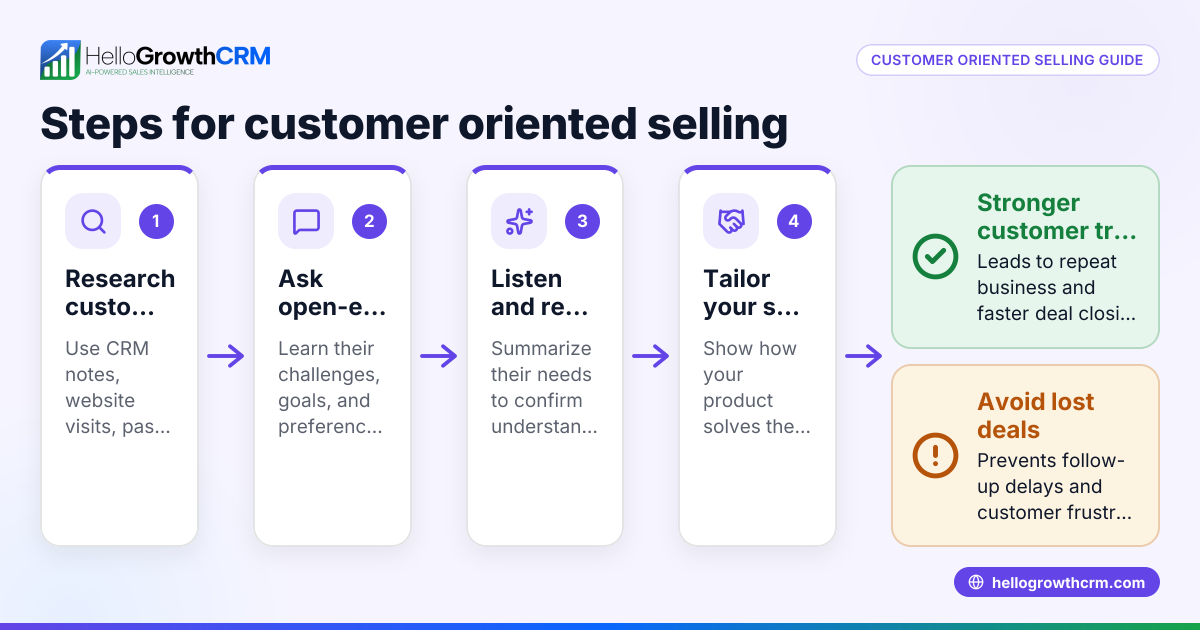
Customer orientation means putting your customers’ needs and preferences at the core of your business decisions and daily operations. It requires gathering accurate customer information, understanding their pain points, and adapting your products and services to meet those needs effectively. This customer-first approach helps build loyalty, increase sales, and improve your reputation.
Why this comes up / what goes wrong
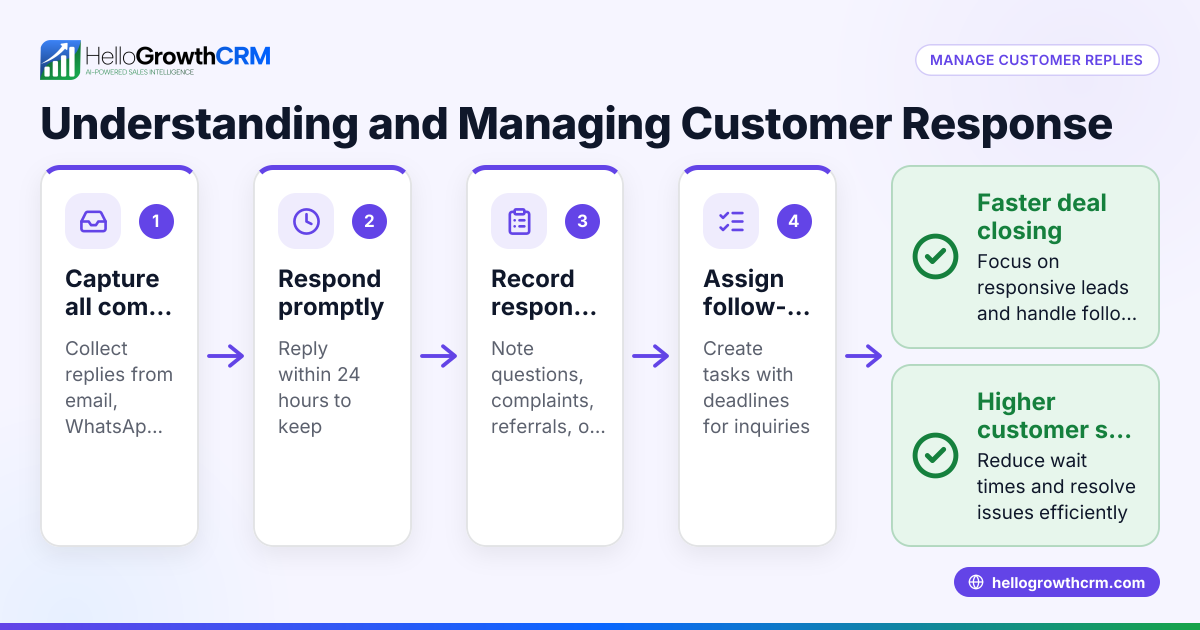
Small business owners often struggle with customer orientation because they manage many roles simultaneously, including sales, marketing, and customer service. They may rely on disconnected tools such as text messages, emails, and spreadsheets to track customer interactions. This fragmented approach results in slow responses, lost leads, and missed opportunities to satisfy customers. Without a clear system to capture and use customer insights, businesses risk falling behind competitors who respond faster and better to customer needs.
Step-by-step
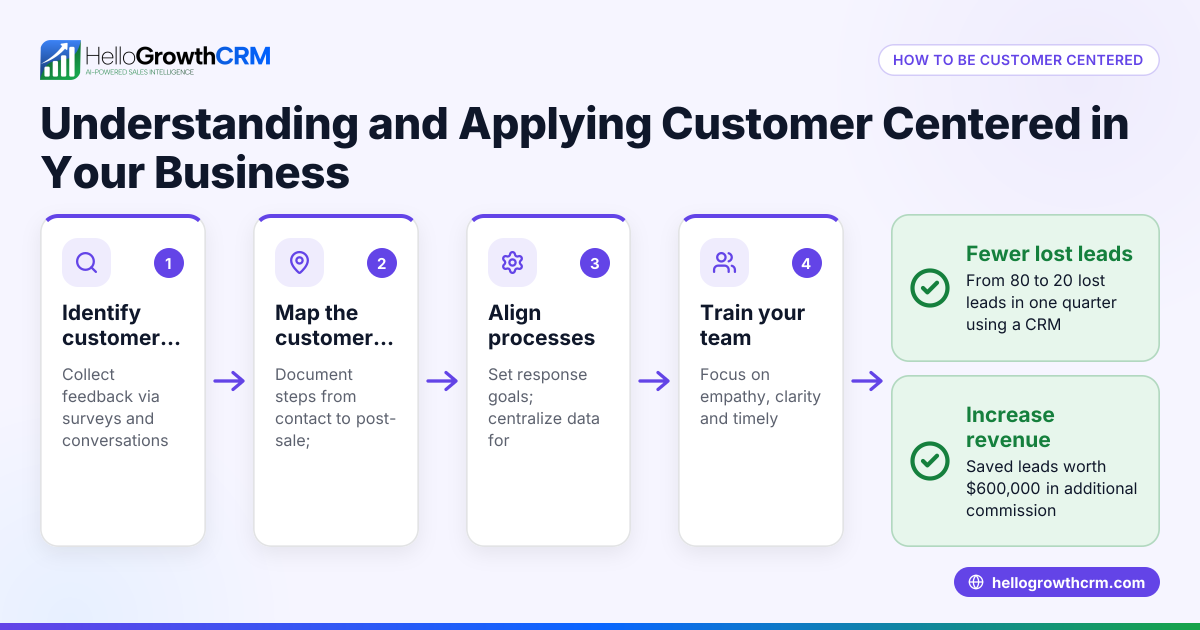
- Identify your target customers: Define your ideal customers by demographics, behaviors, and preferences. Check that your marketing messages and sales pitches clearly address this group.
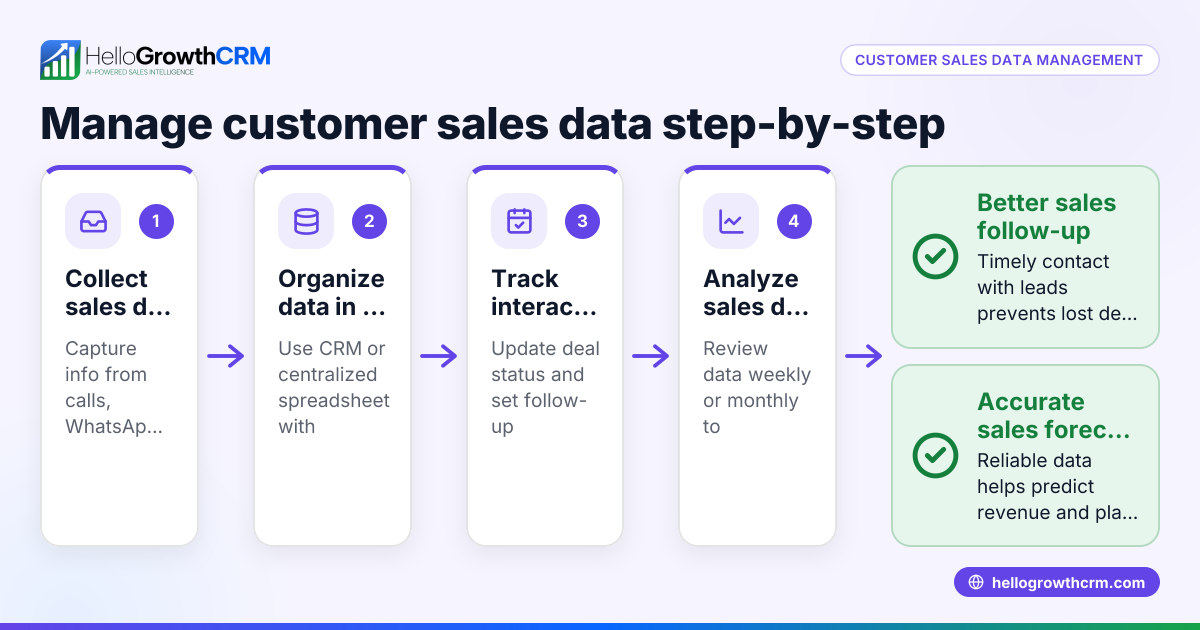
- Collect customer data consistently: Use web forms, phone calls, and face-to-face meetings to gather contact details and preferences. Verify regularly that this data is complete and accurate.
- Understand customer needs and problems: Conduct surveys, hold conversations, and gather feedback to learn what your customers want solved.
- Adjust your products and services: Align your offerings with the identified customer needs. Check that features, pricing, and support options reflect what customers value most.
- Train your team on customer focus: Ensure sales and support staff understand customer orientation principles and can communicate clearly. Review their performance and encourage ongoing learning.
- Use a CRM system to centralize data: Implement a CRM that collects customer information, tracks interactions, and automates follow-ups. Confirm it supports communication channels your customers prefer, such as WhatsApp or SMS.
- Monitor customer satisfaction and loyalty: Track repeat sales, referrals, and complaints. Use these insights to improve your customer orientation continuously.
For tools that help track customer engagement, see the customer health score.
Example (fictional figures)
Joe runs a landscaping business in Charlotte, North Carolina. On 01/15/2026, he decides to improve customer orientation to increase repeat customers.
- Joe identifies his target customers as homeowners aged 30-60 with household incomes above $75,000.
- He collects customer data from web inquiry forms and phone calls, ensuring contact info and preferences are accurate.
- Customer surveys show a demand for weekend service and organic lawn care.
- Joe updates his service packages to include organic options and weekend availability.
- He trains his team on the new services and customer communication techniques.
- Joe implements HelloGrowthCRM to manage leads and follow-ups via WhatsApp and SMS.
- After 6 months, Joe tracks an increase in repeat customers and referrals.
Calculation of repeat customer increase:
Starting repeat customers = 80
Repeat customers after 6 months = 96
Increase = 96 - 80 = 16
Percentage increase = (16 / 80) × 100 = 20%
Referral revenue increase:
Average sale per referral = $1,200
New referrals = 10
Total referral revenue = $1,200 × 10 = $12,000
Common mistakes
- Ignoring customer feedback: Prevent by regularly asking for and acting on feedback.
- Using multiple disconnected tools: Prevent by consolidating all customer data and communication in one CRM.
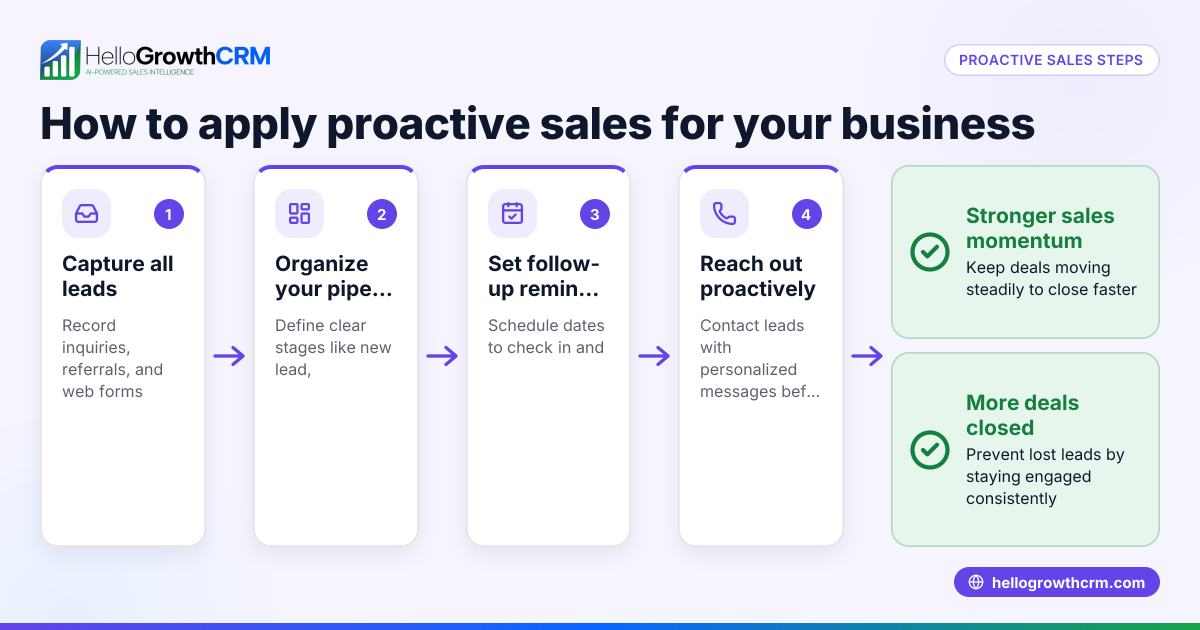
- Delaying follow-up communications: Prevent by automating reminders and follow-up sequences.
- Not training staff on customer focus: Prevent by scheduling regular training sessions.
- Failing to update products or services based on customer needs: Prevent by reviewing and adjusting offerings quarterly.
A CRM that integrates WhatsApp and SMS like HelloGrowthCRM helps avoid these mistakes by centralizing customer communication and data WhatsApp and SMS CRM.
Doing this in HelloGrowthCRM
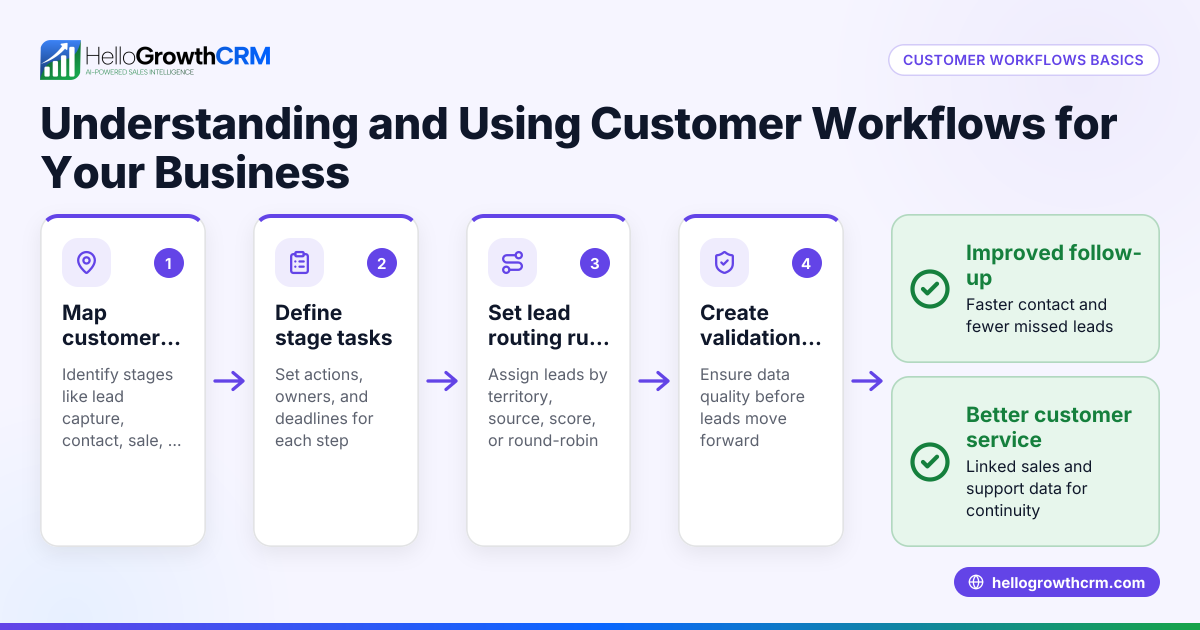
HelloGrowthCRM helps maintain customer orientation by keeping service requests linked to the same customer record as the deal, so your team can easily track all interactions after the sale. It also supports referrals, tickets, and a knowledge base to provide consistent service and information. Learn more about HelloGrowthCRM for the United States here.
Frequently asked questions
What is the difference between customer orientation and customer service? Customer orientation is a business approach that focuses on understanding and meeting customer needs across all areas, including product development, marketing, and sales. Customer service is one part of this approach, dealing directly with assisting customers before, during, and after a purchase.
How can I measure if my business is customer-oriented? You can measure customer orientation by tracking customer satisfaction surveys, repeat purchase rates, referral numbers, and response times. Tools like a customer health score help quantify engagement and loyalty customer health score.
Why is customer orientation important for small businesses? Small businesses often rely on personalized service and trust to compete. Customer orientation builds strong relationships that lead to repeat business and word-of-mouth referrals, which are vital for growth.
Can technology help improve customer orientation? Yes, using a CRM that integrates communication channels like WhatsApp and SMS streamlines customer interactions and data management, improving responsiveness and personalization WhatsApp and SMS CRM.
How often should I update my customer orientation strategy? It is best to review your customer orientation strategy at least quarterly to incorporate new feedback, market trends, and business goals.
Key takeaways
- Customer orientation means organizing your business to consistently meet customer needs.
- It requires identifying target customers, collecting accurate data, and aligning products and services accordingly.
- Avoid common mistakes by centralizing customer data and communication in a CRM.
- HelloGrowthCRM helps maintain customer orientation by linking service requests, referrals, tickets, and knowledge base to customer records.
- Measure success using customer satisfaction, repeat business, and referral metrics, updating your strategy regularly.
Start improving your customer orientation today. Start on the Free Forever plan (200 leads, no credit card) and organize your customer data efficiently.
Ready to put this into practice?
Set up your pipeline, WhatsApp follow-ups, and AI lead scoring in minutes — free, no credit card.
Try HelloGrowthCRM freeGet CRM tips in your inbox
Join thousands of sales professionals who get weekly insights on CRM strategy, AI automation, and pipeline optimization.

The HelloGrowthCRM team publishes guides on CRM strategy, AI sales tools, and revenue operations for small business sales teams.