HelloGrowthCRM software
Built for real small-business sales teams
HelloGrowthCRM helps reps qualify faster, follow up on time, and close more deals—with practical automation in one place.
- AI lead scoring and pipeline visibility
- Built-in dialer, WhatsApp, and email automation
- Sales forecasting and RevOps-ready reporting
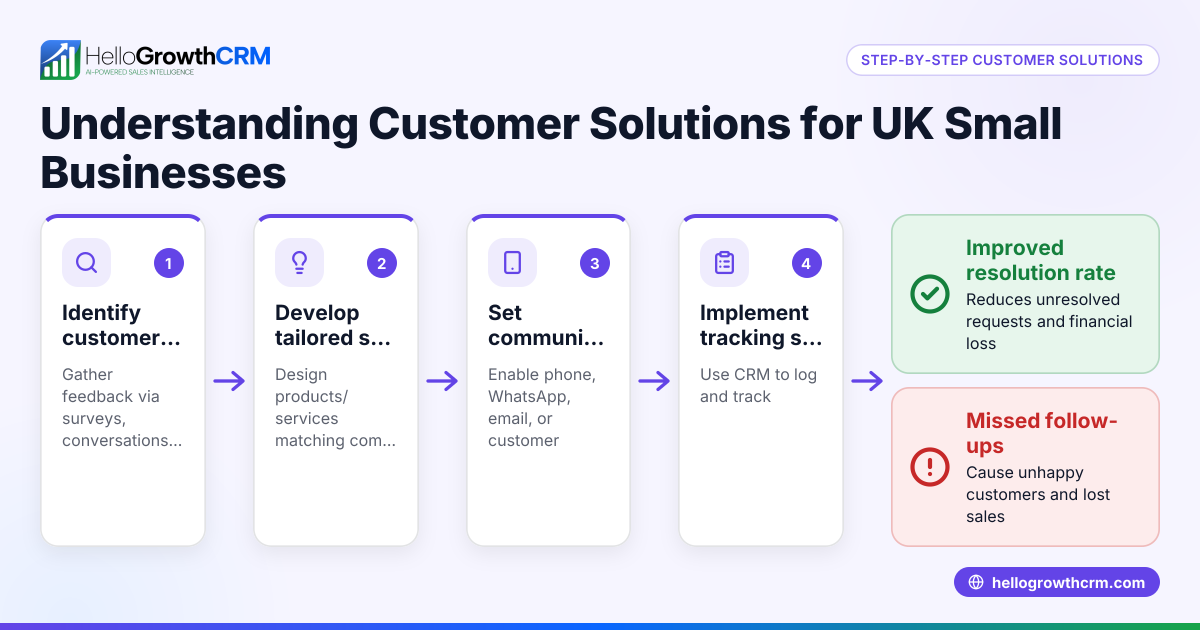
Customer research is the process of collecting and analysing information about your customers to better understand their needs, preferences and buying behaviours. This helps you tailor your products, services and marketing to increase sales and customer satisfaction. This article covers why customer research is important for UK small businesses, a step-by-step guide on how to do it, a practical example with figures, common pitfalls to avoid, and how HelloGrowthCRM can help you manage customer insights after the sale.
Why this comes up / what goes wrong
Many small business owners in the UK struggle to keep up with what their customers really want. They might rely on assumptions, outdated spreadsheets or informal chats that miss key details. Without proper customer research, businesses often lose leads due to slow or irrelevant follow-up, or fail to spot changing customer needs. Sales teams working across WhatsApp, email and spreadsheets can find it hard to centralise customer information, leading to inconsistent service and missed opportunities. Understanding customer research helps you avoid these problems by gathering clear, actionable data.
Step-by-step
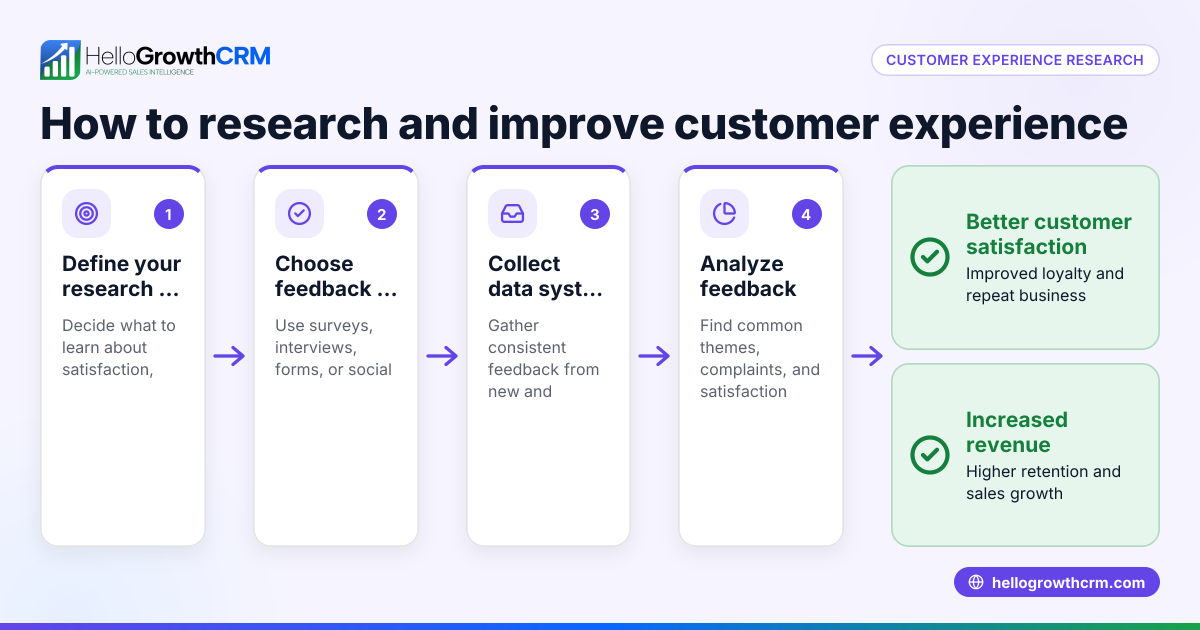
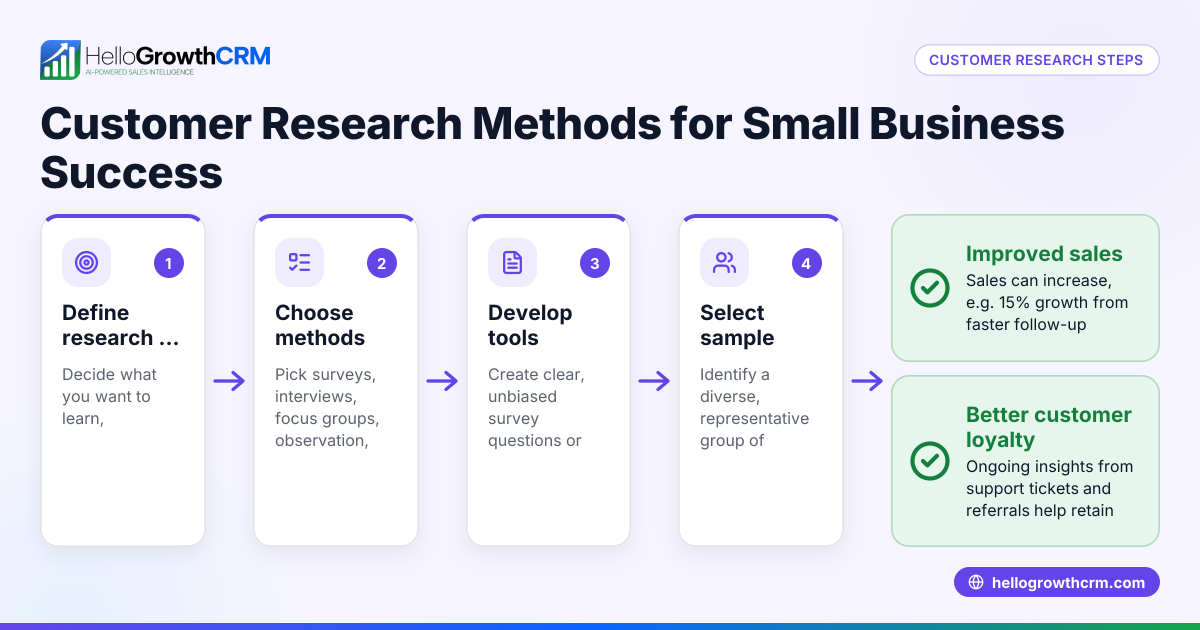
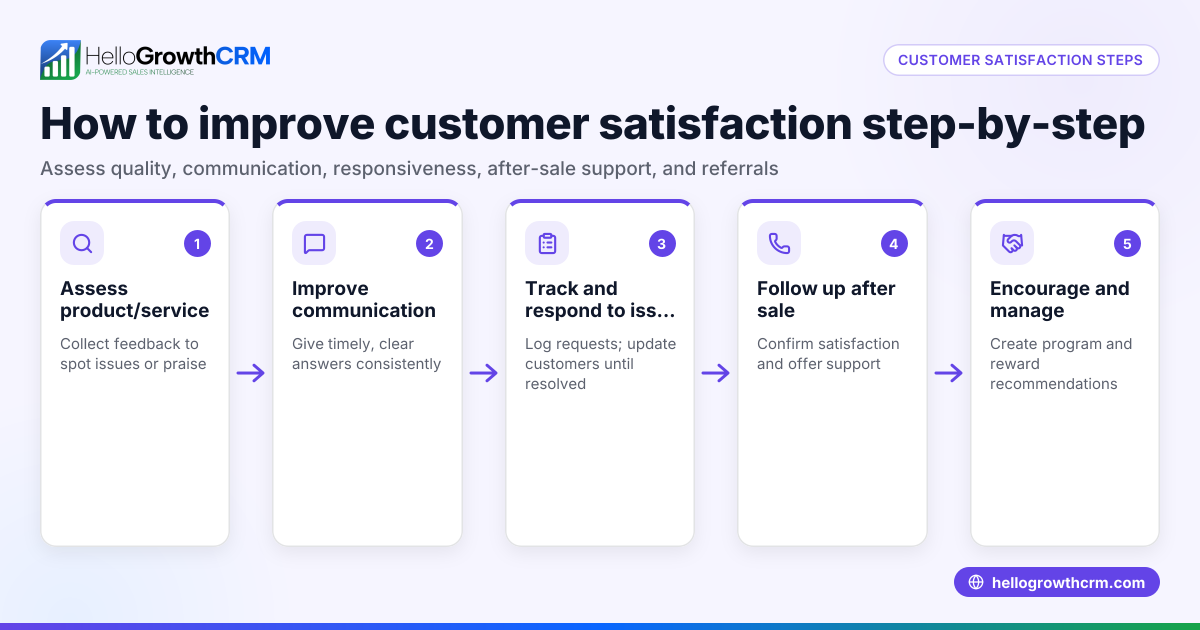
- Define your research goals: Decide what you want to learn — for example, customer satisfaction, product preferences or reasons for lost sales. Check your goals are specific and measurable.
- Identify your target customers: Choose which segments or groups you want to research. This could be recent buyers, long-term customers or lost leads.
- Choose research methods: Select suitable ways to collect data such as surveys, interviews, focus groups or analysing sales records. Check each method’s cost, time and expected insights.
- Prepare your questions or data collection tools: Write clear, unbiased questions or set up data tracking systems. Check your questions cover all your goals without being too long.
- Collect data: Reach out to customers via email, WhatsApp, phone calls or in-person. Ensure you record responses accurately and securely.
- Analyse the data: Look for patterns, common feedback and key metrics. Check for any gaps or inconsistencies.
- Act on insights: Use what you learn to improve products, sales approaches or customer service. Check that your team understands the findings.
- Review and repeat: Customer needs change, so plan regular research cycles. Check if your actions improved results and adjust accordingly.
By following these steps, your small business can make customer research a practical, ongoing part of growth.
Example (fictional figures)
A recruitment consultancy in Bristol wants to understand why some leads do not convert to placements.
- Goal: Identify top 3 reasons for lost sales.
- Target: 100 leads lost in last 6 months.
- Method: Phone interviews.
- Questions prepared: 5 clear questions about experience and objections.
- Data collected: 60 completed interviews.
- Analysis found:
- 25 said timing was wrong.
- 20 said fees were too high.
- 15 said competitor service was preferred.
- Actions:
- Adjust fee structure to offer more flexible options.
- Train sales team on timing follow-ups.
- Highlight unique service benefits in marketing.
- Review planned in 3 months.
This example shows how focused customer research can guide practical changes.
Common mistakes
- Skipping clear goals: Without specific goals, research becomes unfocused. Prevent by writing down what you want to learn first.
- Choosing the wrong customers: Asking the wrong group wastes time. Prevent by defining your target segments carefully.
- Overcomplicating questions: Long or confusing surveys reduce response rates. Prevent by keeping questions short and relevant.
- Ignoring data analysis: Collecting data without analysing it means lost value. Prevent by scheduling time to review and summarise findings.
- Failing to act on insights: Research is wasted if not applied. Prevent by sharing results with your team and planning changes.
- Not updating research regularly: Customer needs evolve. Prevent by setting a regular schedule for customer research.
Using a customer health score can help track ongoing satisfaction and spot issues early.
Doing this in HelloGrowthCRM
HelloGrowthCRM helps small businesses keep all customer information in one place. After the sale, service requests stay on the same customer record as the deal, making it easier to track ongoing needs. Features like the branded customer portal, referrals tracking, support tickets and knowledge base allow you to gather and manage customer feedback efficiently. This centralised approach supports continuous customer research and better service. Learn more about HelloGrowthCRM for the United Kingdom at hellogrowthcrm.com/uk.
Frequently asked questions
What is the difference between customer research and market research? Customer research focuses specifically on understanding your existing or potential customers’ needs and behaviours. Market research covers a broader scope, including competitors, market trends and overall industry conditions.
How often should I do customer research? Regularly updating your understanding is best practice. Many small businesses conduct research quarterly or biannually to keep up with changes. You can also use ongoing tools like surveys or customer health scores to monitor continuously.
Can I do customer research without spending much money? Yes. Simple methods like phone interviews, online surveys or informal chats can provide valuable insights at low cost. Using tools like HelloGrowthCRM’s customer portal can also gather feedback efficiently.
How do I encourage customers to participate in research? Be clear about why you want their input and how it benefits them. Keep surveys short, offer incentives if possible, and make it easy to respond via WhatsApp, email or phone.
How does HelloGrowthCRM support customer research? HelloGrowthCRM centralises customer data including support tickets and referrals on the same record as sales deals. Its customer portal and knowledge base help collect and manage feedback post-sale. This makes ongoing customer research practical and integrated with your sales process. See more about WhatsApp and SMS CRM at WhatsApp and SMS CRM.
Key takeaways
- Customer research gathers insights to improve your products, services and sales.
- Define clear goals, target the right customers, and choose suitable methods.
- Analyse data carefully and act on the findings to avoid wasted effort.
- Regular research helps keep up with changing customer needs.
- HelloGrowthCRM supports ongoing customer understanding with integrated customer records and portals.
Start your customer research today to improve follow-up and sales. To manage your leads and customer data efficiently, start on the Free Forever plan (200 leads, no credit card).
Ready to put this into practice?
Set up your pipeline, WhatsApp follow-ups, and AI lead scoring in minutes — free, no credit card.
Try HelloGrowthCRM freeGet CRM tips in your inbox
Join thousands of sales professionals who get weekly insights on CRM strategy, AI automation, and pipeline optimization.

The HelloGrowthCRM team publishes guides on CRM strategy, AI sales tools, and revenue operations for small business sales teams.