HelloGrowthCRM software
Built for real small-business sales teams
HelloGrowthCRM helps reps qualify faster, follow up on time, and close more deals—with practical automation in one place.
- AI lead scoring and pipeline visibility
- Built-in dialer, WhatsApp, and email automation
- Sales forecasting and RevOps-ready reporting
Customer segmentation splits your customers into groups with similar characteristics, such as demographics or behaviour. Profiling then builds detailed descriptions of each group, outlining their needs, preferences and buying habits. Together, these techniques help businesses target their marketing and sales efforts more effectively.
Why this comes up / what goes wrong
Many small UK businesses face challenges like slow lead follow-up, losing potential sales, or sending generic messages that do not connect with customers. Often, they treat all customers the same because they lack clear insight into who their customers are and what they want. This results in wasted marketing spend, missed sales opportunities, and lower customer satisfaction. Customer segmentation and profiling address these issues by identifying distinct groups and tailoring communications to each, improving engagement and retention.
Step-by-step
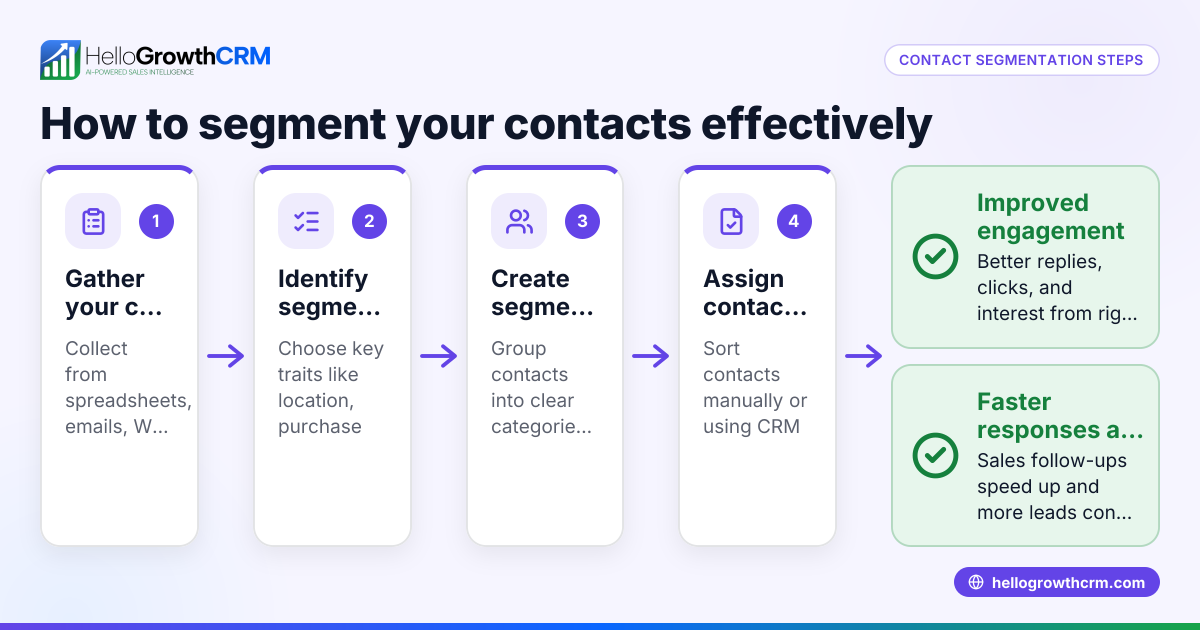
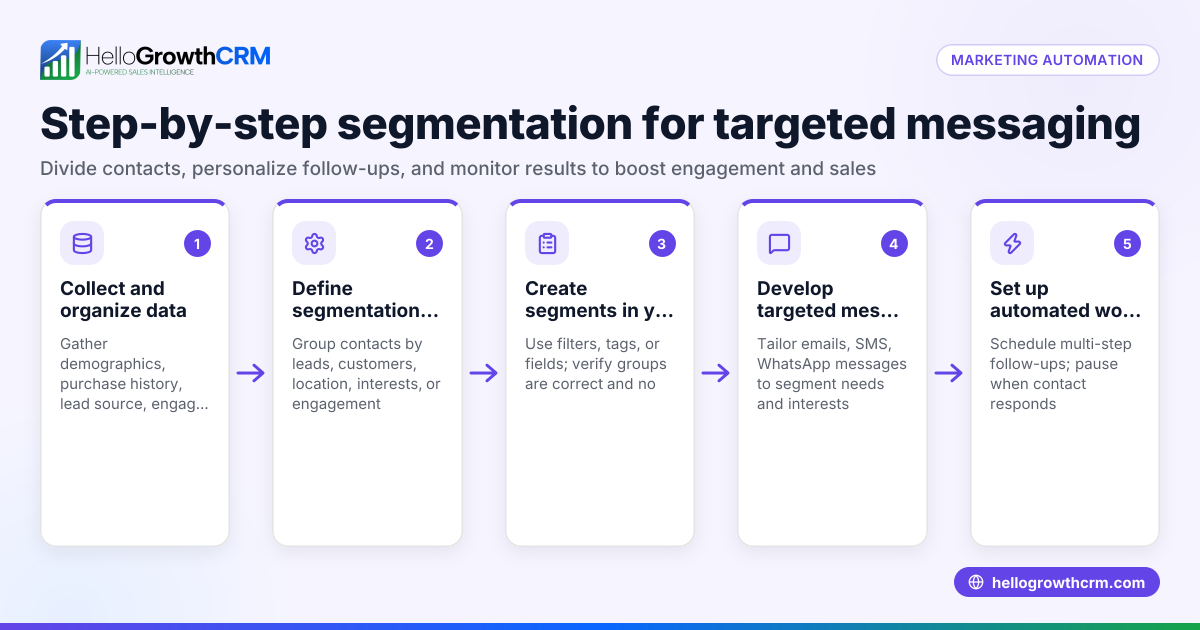
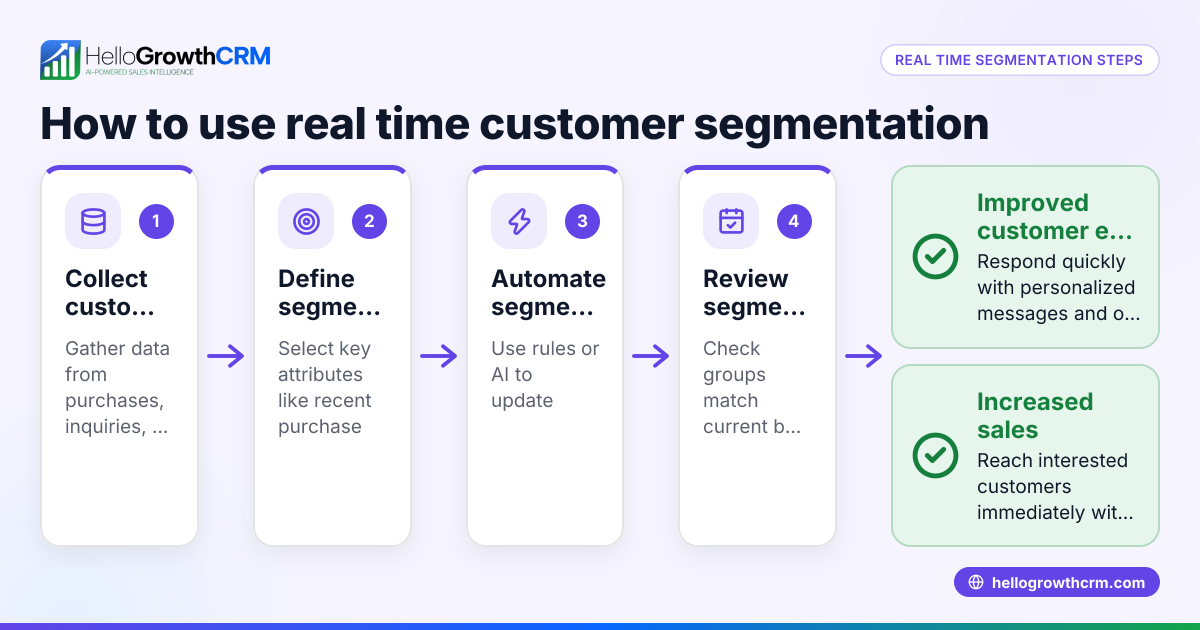
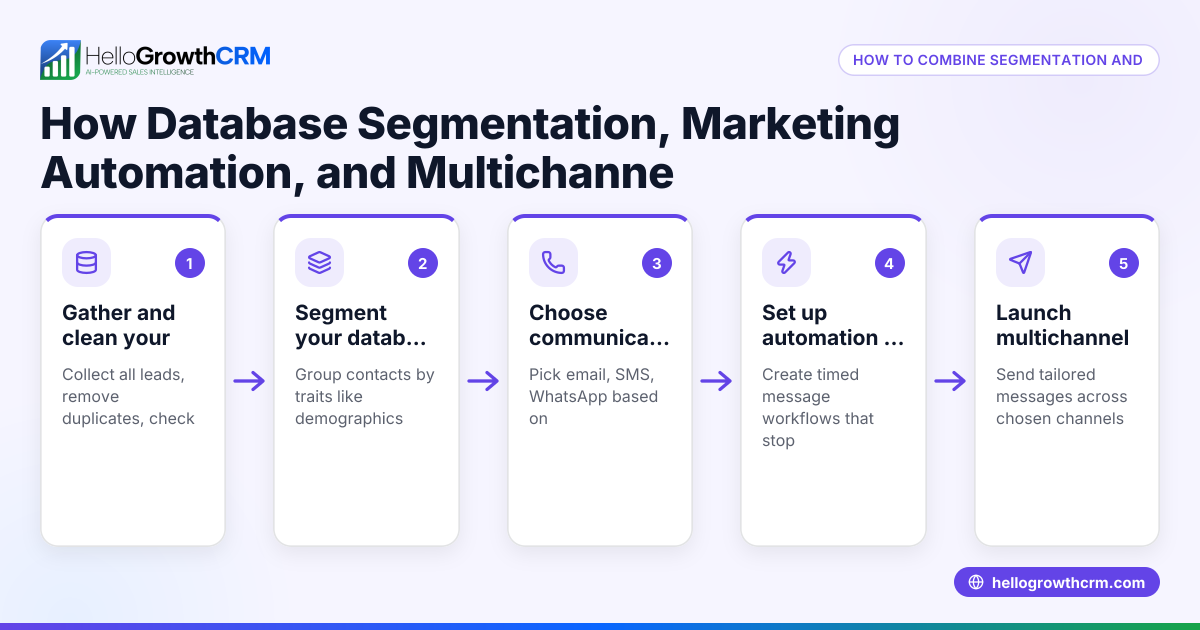
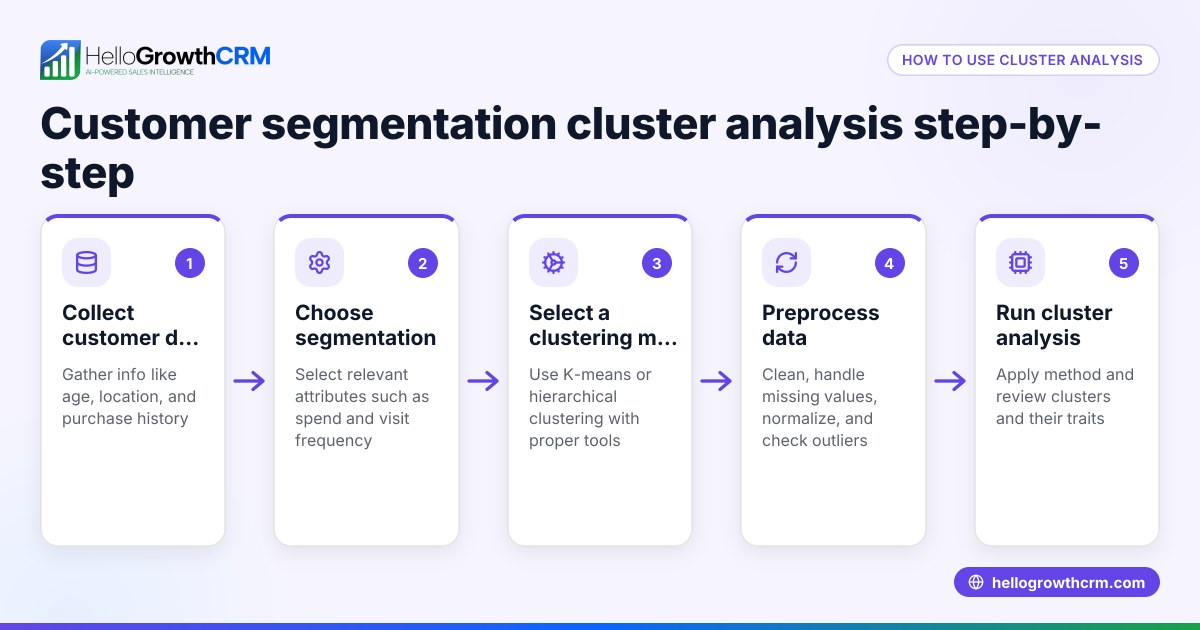
- Collect customer data: Gather information such as age, location, purchase history, communication preferences, and industry. Check the data for completeness and accuracy to ensure reliable segmentation.
- Select segmentation criteria: Decide which customer traits matter most for your business goals. Common criteria include demographics (age, location), behaviour (purchase frequency, product type), and communication channel preference. Confirm these align with your sales and marketing objectives.
- Divide customers into segments: Use your chosen criteria to group customers into distinct segments. Ensure each segment is large enough to be worth targeting and different enough to require specific approaches.
- Develop customer profiles: For each segment, create a detailed profile describing typical needs, challenges, buying behaviour, and preferred communication methods. Verify these profiles are realistic and useful for guiding sales and marketing strategies.
- Tailor marketing and sales efforts: Design messages, offers, and follow-up plans specific to each profile. Monitor customer responses and adjust profiles and strategies as needed.
- Organise and track segments: Keep customer records organised by segment and track all interactions. Use tools to schedule follow-ups and ensure consistent communication. Check that tasks and calls are logged and managed effectively (see activities and task boards).
- Respect communication preferences: Note whether customers prefer WhatsApp, email, SMS or calls, and use those channels accordingly to improve engagement (see WhatsApp and SMS CRM).
Example (fictional figures)
A recruitment consultancy in Bristol wants to improve client service and sales by segmenting its customers.
- Total clients: 500
- Segment 1: Small businesses (1-20 employees), 300 clients
- Segment 2: Medium businesses (21-100 employees), 150 clients
- Segment 3: Large businesses (101-200 employees), 50 clients
They profile Segment 1 as price-sensitive, preferring WhatsApp communication, and needing fast placements. Segment 2 values quality and detailed reports, preferring email. Segment 3 wants customised solutions and regular calls.
Their marketing budget is £30,000:
- 40% to Segment 1: £30,000 × 40% = £12,000
- 40% to Segment 2: £30,000 × 40% = £12,000
- 20% to Segment 3: £30,000 × 20% = £6,000
By focusing on these profiles, the consultancy improves client retention and referral rates.
Common mistakes
- Using too broad or too many segments: This dilutes focus and wastes resources. Prevent this by choosing clear, manageable groups that reflect real differences.
- Ignoring data quality: Poor or incomplete data leads to ineffective segmentation. Prevent this by regularly cleaning and validating customer data.
- Failing to update profiles regularly: Customer needs and markets change. Prevent this by reviewing and adjusting profiles based on new behaviour and feedback.
- Not coordinating sales and marketing teams: Different teams working with different customer views cause inconsistent messaging. Prevent this by sharing segmentation insights and profiles across teams.
- Neglecting follow-up organisation: Without task tracking, leads and customers may be forgotten. Prevent this by using task boards to schedule and track communications (see activities and task boards).
- Overlooking communication preferences: Using the wrong channels reduces engagement. Prevent this by noting and respecting preferred channels such as WhatsApp or email (see WhatsApp and SMS CRM).
Doing this in HelloGrowthCRM
After the sale, HelloGrowthCRM keeps service requests linked to the same customer record as the deal through its customer portal, referrals, tickets and knowledge base. Each follow-up becomes a task with a due date on activities and task boards, so your team never misses a call or message. WhatsApp conversations with leads are logged automatically, and follow-ups can be sent as WhatsApp or SMS messages, making communication smooth and trackable. Learn more at HelloGrowthCRM for the United Kingdom.
Frequently asked questions
What is the difference between customer segmentation and profiling? Segmentation groups customers by shared traits, while profiling creates detailed descriptions of each group to guide targeted marketing and sales.
How often should I update my customer profiles? Review profiles regularly, at least once a year or when you notice changes in customer behaviour or market conditions.
Can small businesses benefit from customer segmentation? Yes, even small businesses with limited customers can use segmentation to focus efforts and improve customer satisfaction.
What data is best for segmentation? Use reliable data like purchase history, demographics, communication channel preferences, and customer feedback.
How can I ensure follow-ups are not missed? Use task boards to schedule and track all follow-ups with due dates so no lead or customer is forgotten (see activities and task boards).
Is it necessary to use software for segmentation? While manual segmentation is possible, software helps automate follow-ups and keeps communication consistent, saving time and reducing errors.
Key takeaways
- Customer segmentation divides customers into groups based on shared traits to target marketing and sales better.
- Profiling builds detailed descriptions of each segment’s needs and behaviours.
- Use clear criteria and good data quality to create actionable segments.
- Update profiles regularly and coordinate sales and marketing teams.
- Respect communication preferences such as WhatsApp or email.
- Use tools like HelloGrowthCRM to manage customer records, follow-ups, and communication channels effectively.
Start organising your customer data and follow-ups with HelloGrowthCRM. Start on the Free Forever plan (200 leads, no credit card).
This article is general information, not tax or legal advice. Rules change; confirm the current position with HMRC or your accountant before acting.
Ready to put this into practice?
Set up your pipeline, WhatsApp follow-ups, and AI lead scoring in minutes — free, no credit card.
Try HelloGrowthCRM freeGet CRM tips in your inbox
Join thousands of sales professionals who get weekly insights on CRM strategy, AI automation, and pipeline optimization.

The HelloGrowthCRM team publishes guides on CRM strategy, AI sales tools, and revenue operations for small business sales teams.