HelloGrowthCRM software
Built for real small-business sales teams
HelloGrowthCRM helps reps qualify faster, follow up on time, and close more deals—with practical automation in one place.
- AI lead scoring and pipeline visibility
- Built-in dialer, WhatsApp, and email automation
- Sales forecasting and RevOps-ready reporting
Customer segmentation models divide your customers into groups that share characteristics such as age, location, purchase behavior, or preferences. Grouping customers this way allows your business to tailor marketing messages, sales approaches, and customer service to each segment’s specific needs, improving engagement and efficiency.
Why this comes up / what goes wrong
Many small-business owners treat all customers the same, which often limits growth. Without segmentation, marketing campaigns tend to be generic and less effective, sales teams may waste time on unqualified leads, and customer service might not address specific customer needs. For example, a plumbing company in Austin might serve residential customers needing emergency repairs and commercial clients requiring scheduled maintenance. Treating both groups identically misses opportunities to upsell or provide timely service.
Small businesses also face challenges managing customer data across texts, emails, and spreadsheets, making it hard to identify meaningful customer groups. This can cause slow follow-up and lost leads.
Step-by-step
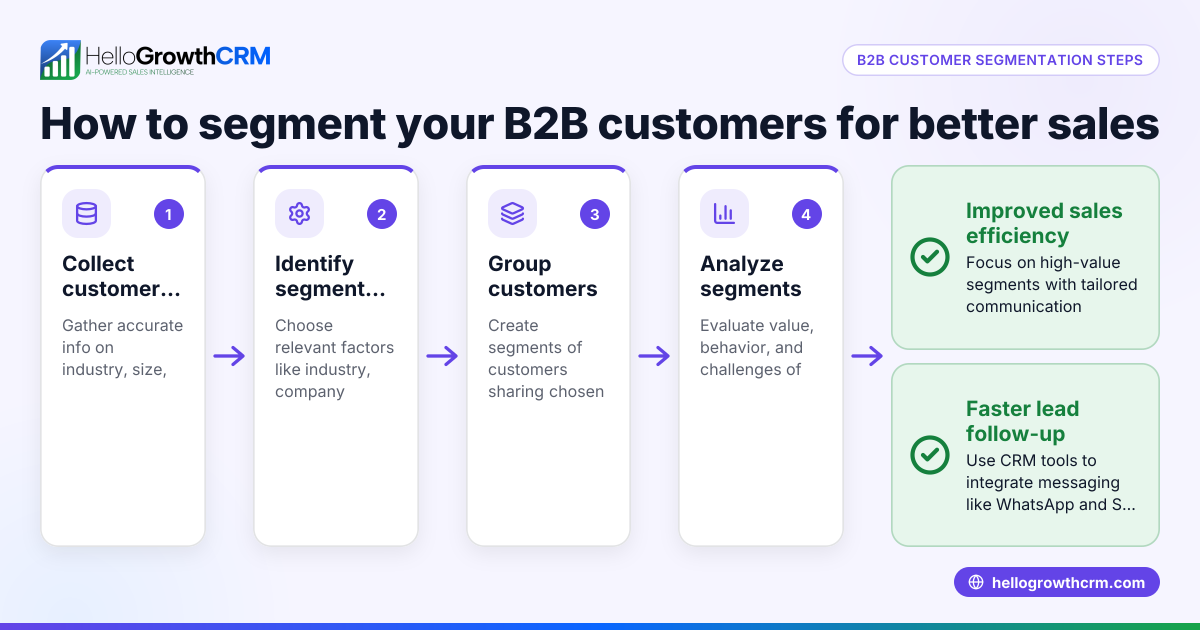
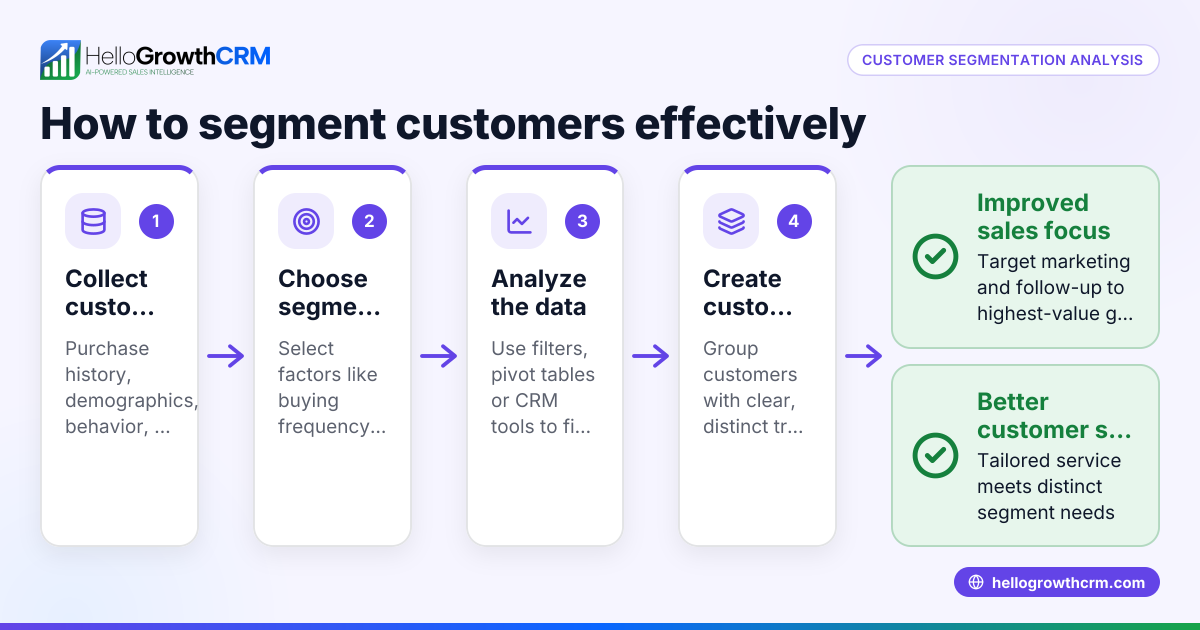
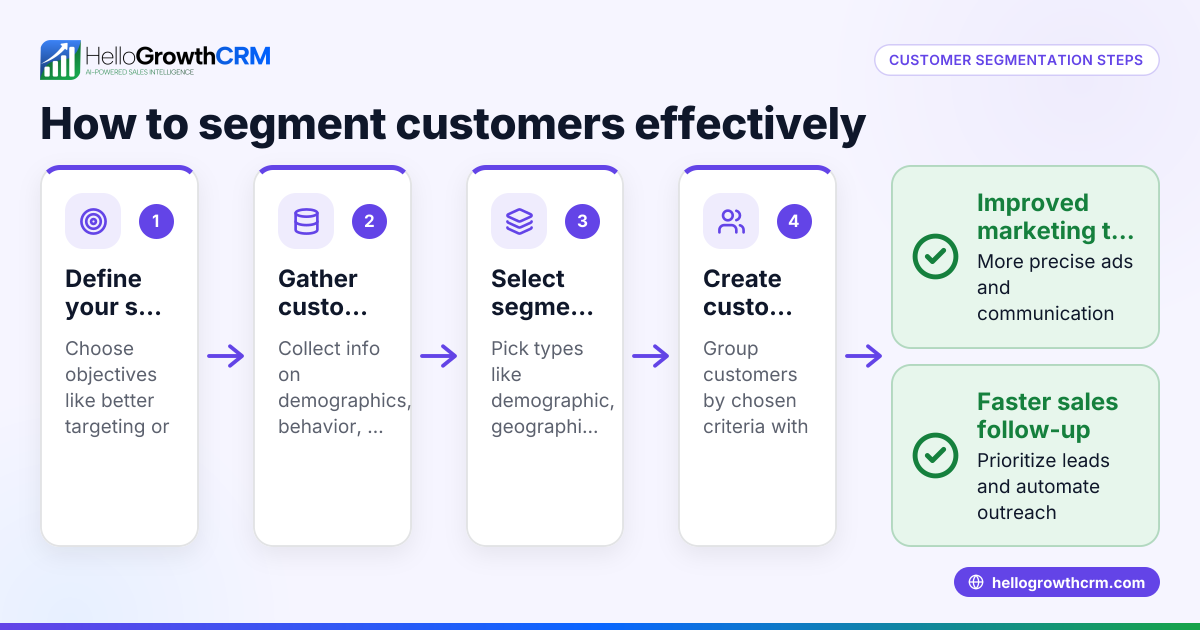
- Collect customer data: Gather details such as age, location, purchase history, service types used, and communication preferences. Check that this data is accurate and complete.
- Choose segmentation criteria: Decide which factors matter most for your business goals—demographics, purchase behavior, frequency of purchases, customer value, or service needs.
- Group customers: Create segments based on your criteria, such as “high-value repeat buyers” or “new customers from social media.”
- Analyze segments: Evaluate each group’s size, profitability, and specific needs. Avoid segments that are too small to be actionable or too broad to be useful.
- Tailor strategies: Develop marketing messages, sales tactics, and service plans specific to each segment. For example, use different offers or communication channels for residential versus commercial clients.
- Implement and track: Use tools to manage segments, track customer interactions, and measure results. Adjust segments and strategies as needed. For instance, a customer health score can help monitor segment engagement over time.
Example (fictional figures)
A plumbing company in Austin, Texas, wants to segment its 2,000 customers by annual spending and service type as of 06/01/2026.
- Segment 1: Residential customers spending over $1,000/year
- Segment 2: Commercial customers spending over $5,000/year
- Segment 3: Customers spending under $1,000/year
Data shows: Total customers = 2,000 Residential high spenders = 400 Commercial high spenders = 150 Low spenders = 1,450
Revenue: Residential high spenders: 400 × $1,200 = $480,000 Commercial high spenders: 150 × $7,000 = $1,050,000 Low spenders: 1,450 × $500 = $725,000
Total revenue = $480,000 + $1,050,000 + $725,000 = $2,255,000
This segmentation helps the company focus marketing on high-spending commercial clients with tailored maintenance contracts and offer promotions to increase residential customer spend.
Common mistakes
- Using too many segments: Creating too many small groups makes management difficult. Keep segments meaningful and actionable.
- Ignoring data quality: Outdated or incorrect data leads to wrong segment assignments. Regularly clean and update your data.
- Not aligning segments with goals: Segments should support your specific sales or marketing objectives, not just be based on available data.
- Failing to update segments: Customer behavior changes over time. Review and revise segments regularly.
- Treating segmentation as one-time: Segmentation is ongoing. Use tools like HelloGrowthCRM to keep segments current and linked to customer records.
- Overlooking customer communication preferences: Tailor contact methods for each segment, using channels like WhatsApp or SMS. See WhatsApp and SMS CRM for options.
Doing this in HelloGrowthCRM
HelloGrowthCRM supports managing customer segments by keeping all service requests, referrals, and support tickets linked to the same customer record after the sale. This centralized view makes it easier to track customer needs and respond quickly. Its customer portal and knowledge base provide tailored service and support for each segment. Learn more about HelloGrowthCRM for the United States.
Frequently asked questions
What are the most common types of customer segmentation models? Common models include demographic (age, gender), geographic (location), behavioral (purchase habits), and psychographic (values, lifestyle) segmentation. Each serves different business goals.
How often should I update my customer segments? Update segments at least quarterly or after major campaigns or market changes. Regular updates keep marketing and sales efforts relevant.
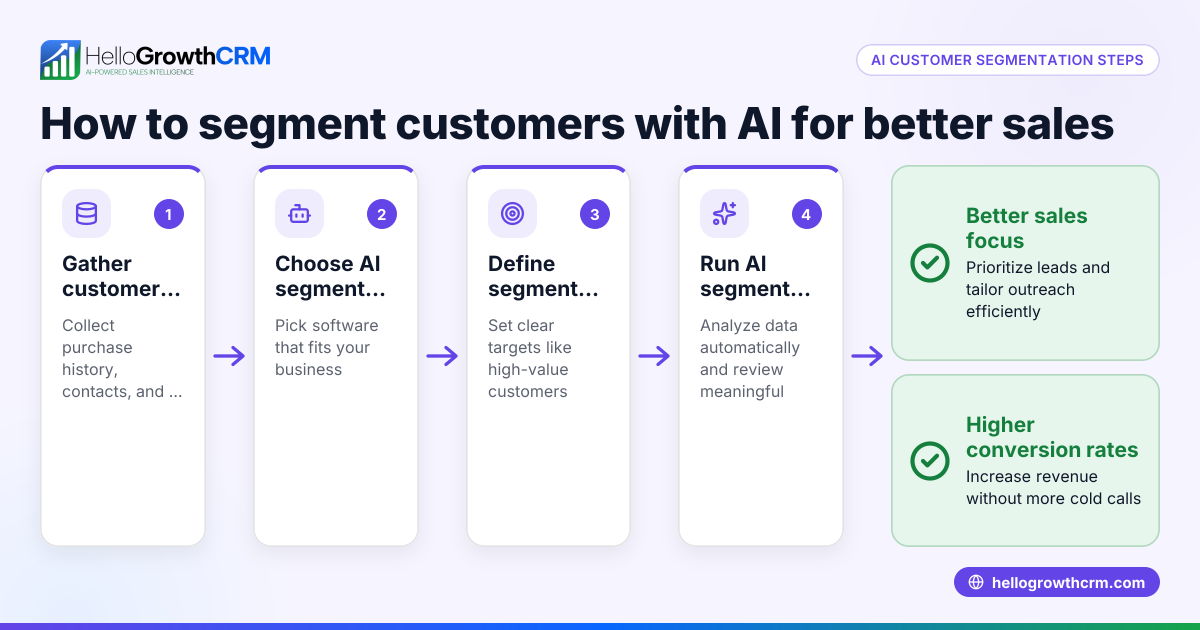
Can I automate customer segmentation? Yes, CRM tools can automate parts of segmentation by using sales, support, and marketing data to score and group customers dynamically.
How does segmentation improve sales forecasting? Segmenting customers helps predict sales more accurately by understanding each group’s buying patterns and potential, improving pipeline management and forecasting.
Is customer segmentation useful for small businesses with fewer than 100 customers? Yes, small businesses benefit by focusing efforts on their most profitable or loyal customers, saving time and marketing costs.
What role does customer communication channel play in segmentation? Knowing how your customers prefer to be contacted (email, WhatsApp, SMS) improves engagement. Using a CRM that supports these channels helps manage communication effectively.
Key takeaways
- Customer segmentation groups customers by shared traits to improve targeting.
- Start with clear business goals and accurate data collection.
- Keep segments actionable, relevant, and review them regularly.
- Avoid creating too many or irrelevant segments.
- Tailor communication channels to each segment’s preferences.
- Use HelloGrowthCRM to manage customer records and service linked to segments.
To start managing your customer segments and sales pipeline, try HelloGrowthCRM’s Free Forever plan with 200 leads and no credit card required at Start on the Free Forever plan (200 leads, no credit card).
Ready to put this into practice?
Set up your pipeline, WhatsApp follow-ups, and AI lead scoring in minutes — free, no credit card.
Try HelloGrowthCRM freeGet CRM tips in your inbox
Join thousands of sales professionals who get weekly insights on CRM strategy, AI automation, and pipeline optimization.

The HelloGrowthCRM team publishes guides on CRM strategy, AI sales tools, and revenue operations for small business sales teams.