HelloGrowthCRM software
Built for real small-business sales teams
HelloGrowthCRM helps reps qualify faster, follow up on time, and close more deals—with practical automation in one place.
- AI lead scoring and pipeline visibility
- Built-in dialer, WhatsApp, and email automation
- Sales forecasting and RevOps-ready reporting
A customer success model is a structured plan your business uses to help customers get the most value from your product or service. It involves anticipating customer needs, providing timely support, and fostering ongoing relationships to keep customers satisfied and loyal. This article explains why small business owners seek this model, offers detailed steps to build it, presents a realistic example, highlights common mistakes, and describes practical tools to help.
Why this comes up / what goes wrong
Small-business owners often find it challenging to keep customers engaged after the sale. Without a clear customer success model, customers may feel neglected, leading to lost renewals and fewer referrals. Many businesses handle support reactively, waiting for customers to report issues instead of proactively addressing needs. This reactive approach can cause slow follow-up and missed chances to upsell or resolve problems early. The problem worsens when sales and support teams rely on disconnected tools like spreadsheets, email, and text messages, making it hard to track customer history and coordinate follow-up.
Step-by-step
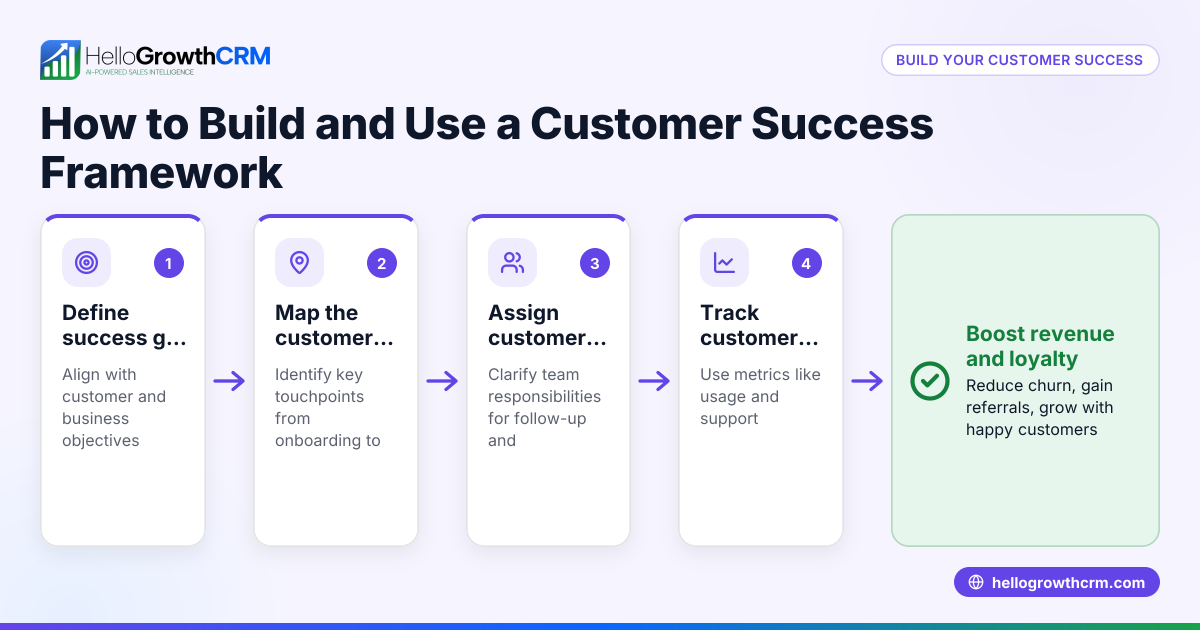
- Define Customer Outcomes: Identify what success means for your customers. Check that these goals align with your product's benefits and your business objectives.
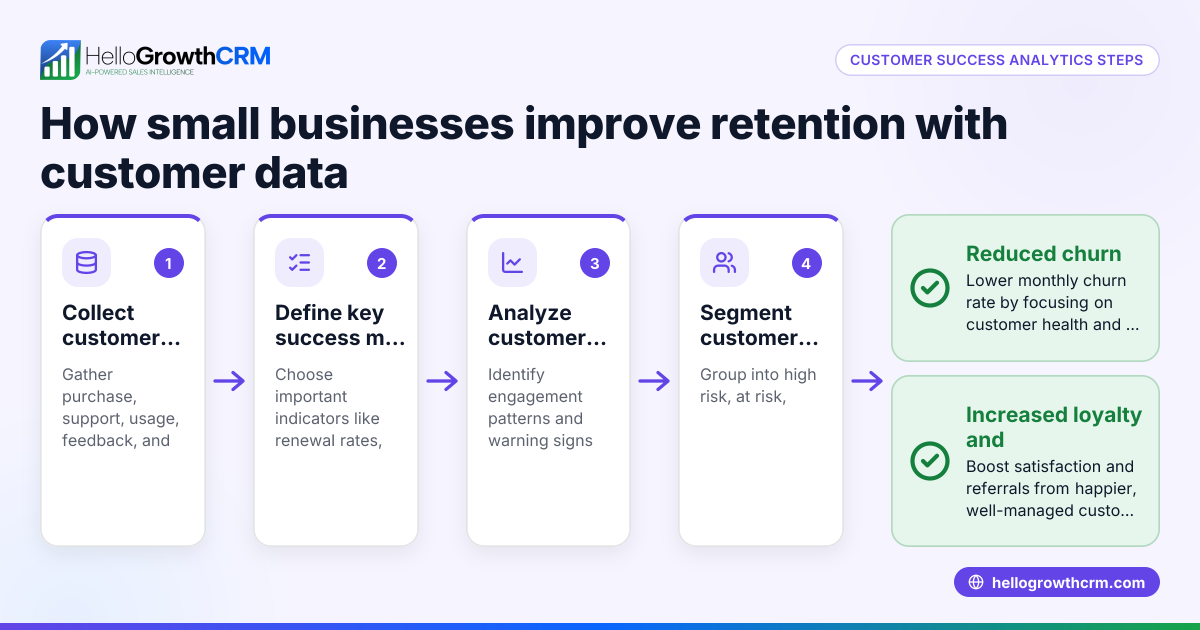
- Segment Your Customers: Group customers by size, usage, or industry. Confirm you have tailored engagement plans for each segment.
- Map the Customer Journey: Outline key stages from onboarding to renewal. Ensure you know what actions and communications are needed at each stage.
- Assign Customer Success Roles: Designate team members to manage customer relationships and support. Verify they have access to customer data and tools.
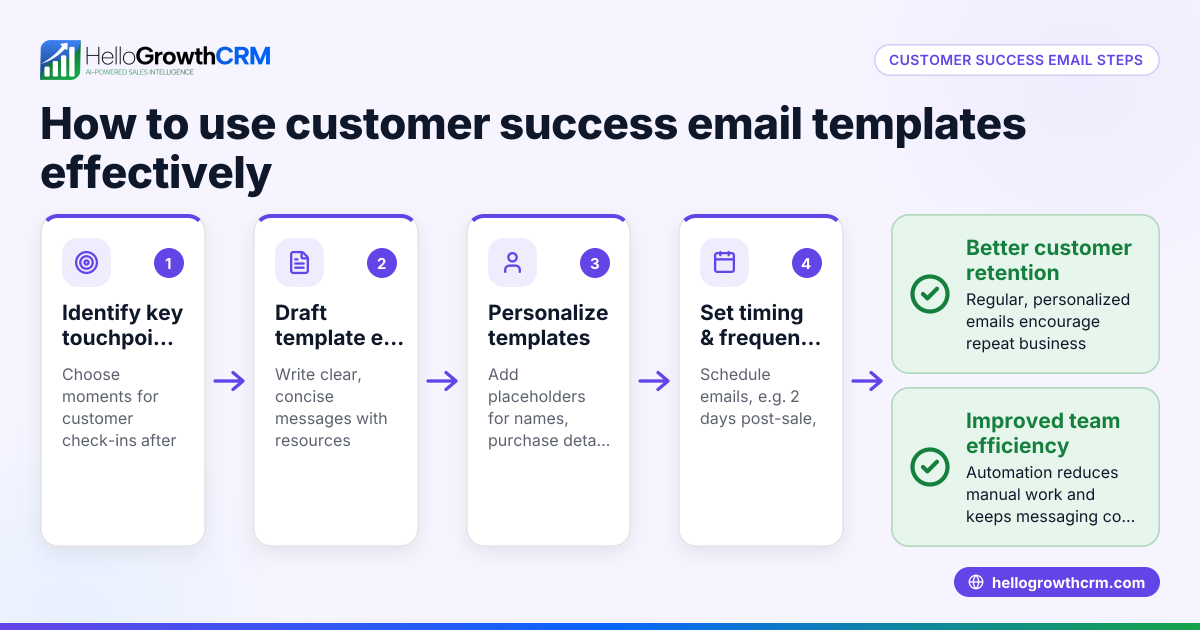
- Implement Proactive Communication: Schedule regular check-ins, share educational content, and set alerts for early signs of issues. Check that communication channels are convenient for customers.
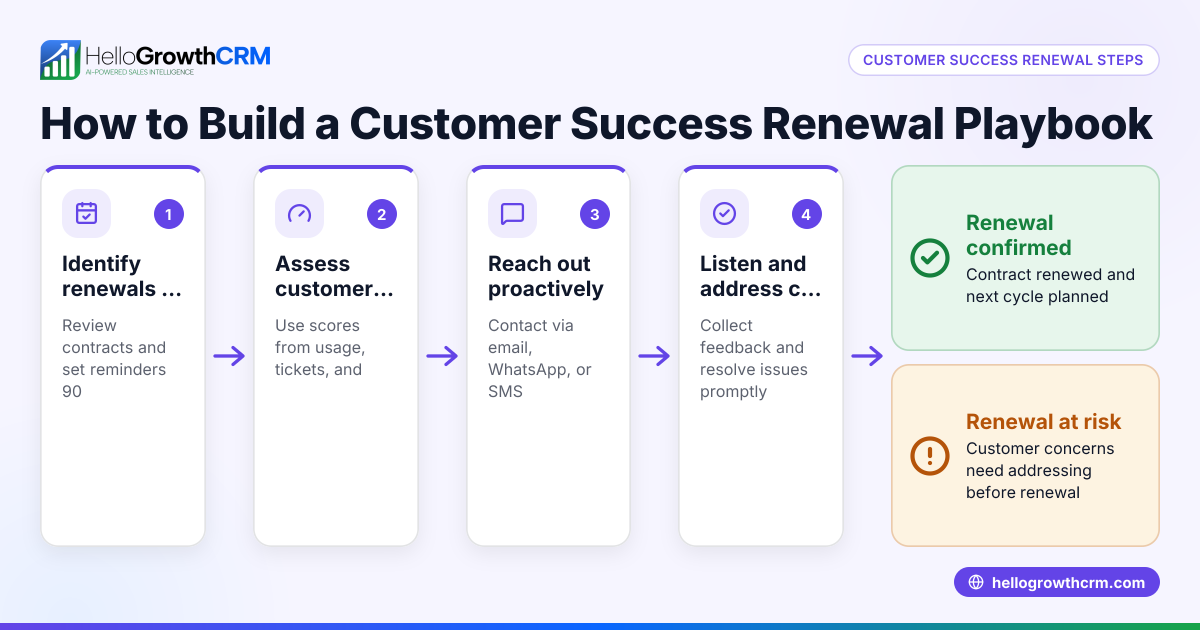
- Track Customer Health: Use metrics like usage frequency, support tickets, and feedback scores to assess satisfaction. Review these regularly to spot risks. For more on measuring customer health, see customer health score.
- Create Feedback Loops: Collect and act on customer feedback to improve products and services. Verify that feedback reaches relevant teams.
- Encourage Referrals and Advocacy: Build programs that reward customers for referrals and positive reviews. Check that these programs are easy to join and track.
- Measure Success and Adjust: Regularly review customer retention rates, upsell revenue, and satisfaction scores. Adjust your model based on these insights.
Example (fictional figures)
Sunrise Realty Group, a residential real estate team in Phoenix, Arizona, wants to improve customer success to increase repeat business and referrals.
- They define success as a customer closing a home purchase and referring at least one friend within 12 months.
- They segment customers into first-time buyers and repeat investors.
- They map a journey: initial consultation, home tours, offer, closing, and post-sale follow-up.
- A team member is assigned as Customer Success Manager (CSM) for each segment.
- They schedule monthly check-ins and send educational emails about market trends.
- They track customer health by noting the number of home tours attended and feedback scores.
- They launch a referral program offering $500 for each successful referral.
Financial impact after 12 months:
Referral income earned: 4 referrals × $500 = $2,000
Repeat sales revenue: 3 repeat buyers × $300,000 average sale = $900,000
Customer success program cost: $15,000 (staff time, email tools, referral rewards)
Net benefit: $900,000 + $2,000 - $15,000 = $887,000
This example shows how a clear customer success model drives measurable revenue and loyalty.
Common mistakes
- Ignoring proactive engagement: Waiting for customers to report problems leads to lost business. Prevent this by scheduling regular check-ins.
- Using disconnected tools: Managing customer info across emails, texts, and spreadsheets causes errors. Use an integrated CRM to keep data unified, such as a WhatsApp and SMS CRM system. See WhatsApp and SMS CRM.
- Failing to segment customers: Treating all customers the same misses chances for tailored support. Segment by relevant criteria.
- Not tracking customer health: Without metrics, risks go unnoticed. Establish clear indicators and review them often.
- Neglecting feedback loops: Not acting on customer input reduces trust. Set up processes to collect and respond to feedback.
- Overcomplicating referral programs: Complex rules discourage participation. Keep referral incentives simple and transparent.
Doing this with customer success tools
A branded self-service customer portal lets customers access support and resources anytime. Service requests, tickets, and knowledge base articles stay linked to the same customer record as the deal, so your team has full context for each customer. Referral tracking helps you reward advocates easily. This unified approach supports an efficient customer success model. Learn more about these features for US businesses at HelloGrowthCRM for the United States.
Frequently asked questions
What is the difference between customer success and customer support? Customer success is proactive, focusing on helping customers achieve their goals over time. Customer support is reactive, addressing specific problems as they come up. Both are important, but customer success aims to prevent issues before they happen.
How do I measure if my customer success model is working? Key metrics include customer retention rates, upsell or cross-sell revenue, customer satisfaction scores, and the number of referrals. Tracking these regularly helps you adjust your approach.
Can a small business implement a customer success model? Yes, small businesses can adopt a customer success model by defining clear customer goals, segmenting customers, and using simple tools to track interactions. Features like tickets and a customer portal simplify this process.
How does segmentation improve customer success? Segmentation allows you to tailor communication and support to different customer needs, increasing satisfaction and reducing churn. For example, new customers may need more onboarding help than experienced ones.
What role does technology play in customer success? Technology centralizes customer data, automates communication, and tracks customer health indicators. Using tools that integrate WhatsApp and SMS communication ensures your team has real-time access to customer interactions and history.
Key takeaways
- A customer success model helps customers achieve their goals to improve retention and growth.
- Define customer outcomes, segment your customers, and map their journey to tailor support.
- Use proactive communication and track customer health to catch issues early.
- Avoid common pitfalls like ignoring segmentation or using disconnected tools.
- Customer portals, tickets, and referral tracking support efficient customer success management.
Start building a customer success model today. Start on the Free Forever plan (200 leads, no credit card) and keep all your customer interactions in one place.
Ready to put this into practice?
Set up your pipeline, WhatsApp follow-ups, and AI lead scoring in minutes — free, no credit card.
Try HelloGrowthCRM freeGet CRM tips in your inbox
Join thousands of sales professionals who get weekly insights on CRM strategy, AI automation, and pipeline optimization.

The HelloGrowthCRM team publishes guides on CRM strategy, AI sales tools, and revenue operations for small business sales teams.