HelloGrowthCRM software
Built for real small-business sales teams
HelloGrowthCRM helps reps qualify faster, follow up on time, and close more deals—with practical automation in one place.
- AI lead scoring and pipeline visibility
- Built-in dialer, WhatsApp, and email automation
- Sales forecasting and RevOps-ready reporting
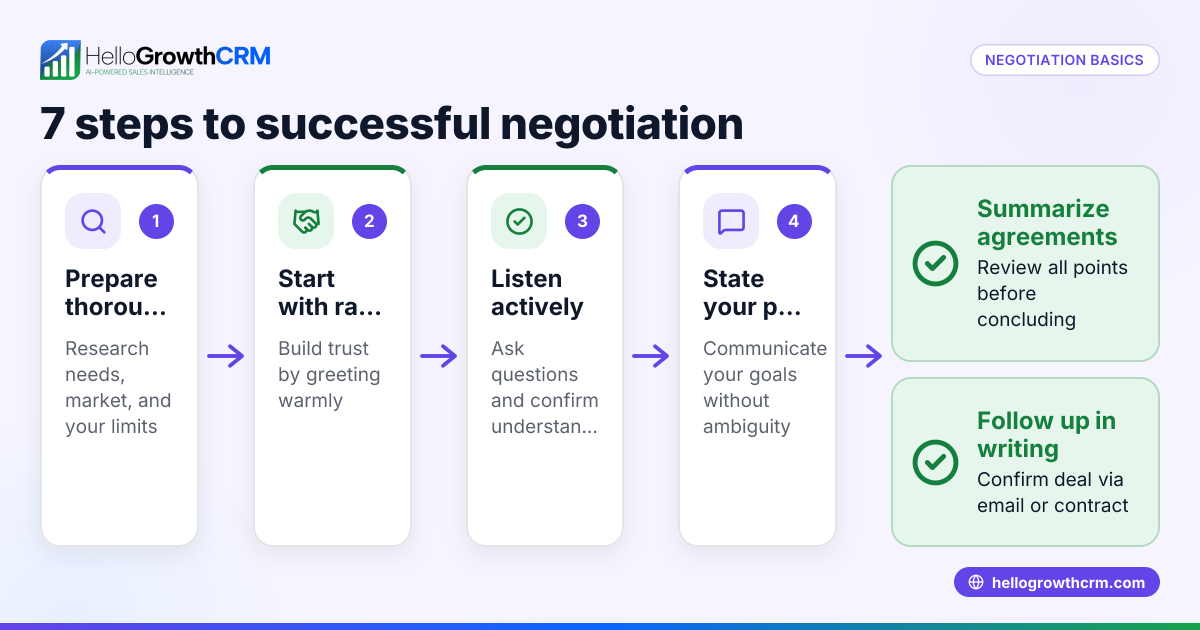
Active listening in negotiation means fully concentrating on what the other party is saying, understanding their perspective, and responding thoughtfully. It helps build trust, uncover needs, and reach agreements that satisfy both sides. This article covers why active listening is crucial for small-business owners, provides step-by-step guidance to practice it, shares a practical example, points out common mistakes, and explains how HelloGrowthCRM’s built-in dialer supports better negotiation follow-up.
Why this comes up / what goes wrong
Small-business owners often negotiate deals with clients, suppliers, or partners where emotions and stakes run high. Without active listening, misunderstandings happen, important details get missed, and the other party may feel ignored or undervalued. This leads to slower deal progress, lost sales, or agreements that don’t last. Owners juggling multiple roles might rely on quick responses or scripted pitches, missing cues that could improve outcomes. Active listening helps avoid these pitfalls by focusing on truly hearing and addressing the other party’s concerns.
Step-by-step
- Prepare mentally: Before the negotiation, clear distractions and set your intention to listen fully. Check your phone is silent and you have no urgent tasks pending.
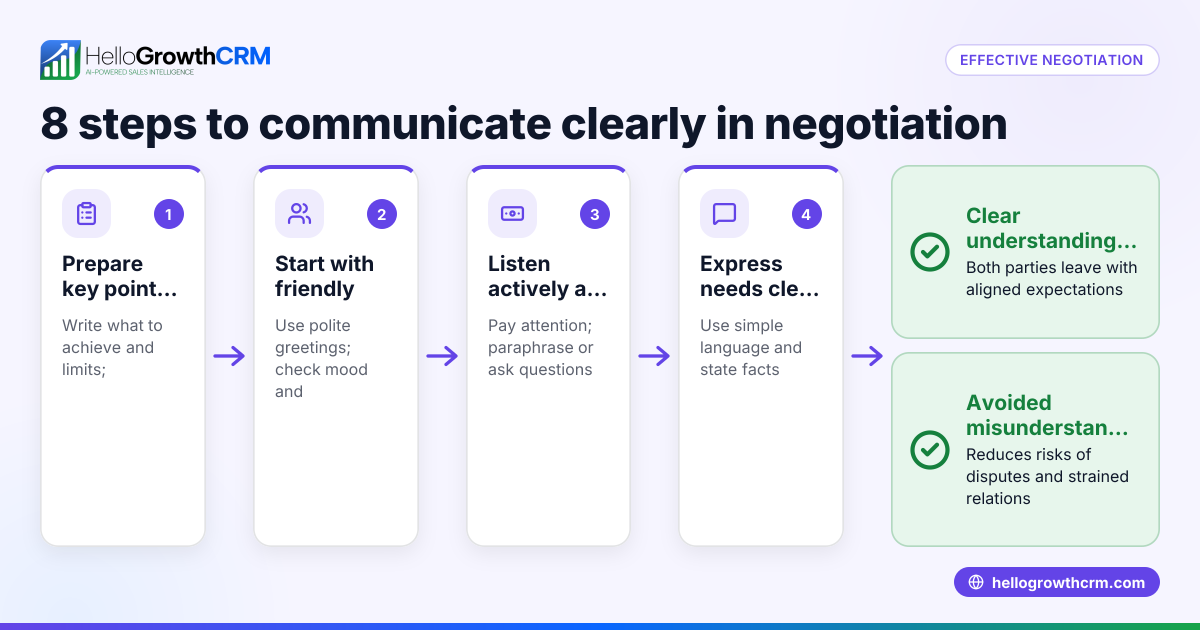
- Give full attention: During the conversation, focus on the speaker’s words, tone, and body language. Avoid interrupting or planning your reply while they talk.
- Use verbal and nonverbal signals: Nod, maintain eye contact, and use brief verbal acknowledgments like “I see,” or “Go on” to show you are engaged.
- Paraphrase and summarize: Repeat key points in your own words to confirm understanding. For example, “So you’re saying the delivery timeline is your main concern?”
- Ask open-ended questions: Encourage the other party to elaborate by asking questions like “Can you tell me more about that?” or “What outcome are you hoping for?”
- Manage emotions: Stay calm and respectful, even if the conversation becomes tense. Recognize emotional cues and respond with empathy.
- Take notes: Write down important points to remember details and show you value their input.
- Confirm agreements and next steps: Before ending, review what you’ve agreed on and clarify follow-up actions.
Check after each step that the other party feels heard and that you have accurately understood their position.
Example (fictional figures)
A B2B software reseller in Denver, Colorado, is negotiating a deal with a potential client on 04/15/2026. The client is concerned about the $48,000 annual license fee and wants to discuss payment terms.
- The reseller listens carefully without interrupting.
- The reseller paraphrases: “You’re concerned about the upfront cost and want to explore payment options.”
- The client confirms.
- The reseller asks: “Would spreading payments over the year help you manage cash flow better?”
- The client agrees this would help.
- They agree on a payment plan of $4,000 per month.
Calculation: $48,000 ÷ 12 months = $4,000 per month
This active listening approach uncovers the client’s real issue and leads to a payment plan that closes the deal.
Common mistakes
- Interrupting the speaker: Prevent by consciously pausing before responding.
- Thinking about your reply instead of listening: Focus fully on the speaker’s words; take notes if needed.
- Ignoring nonverbal cues: Watch body language and tone to understand emotions.
- Failing to confirm understanding: Always paraphrase or summarize to avoid miscommunication.
- Rushing to close the deal: Take time to explore concerns fully before proposing solutions.
- Not managing emotions: Stay calm and empathetic even if discussions get tough.
Using tools like a built-in CRM dialer can help you log call outcomes and keep track of follow-ups, ensuring you respond thoughtfully and on time after negotiations.
Doing this in HelloGrowthCRM
HelloGrowthCRM’s built-in dialer lets your sales team call prospects directly inside the CRM and logs the outcome of each call on the lead record. This helps reps keep track of negotiation progress and follow up promptly with tailored responses based on what was learned during active listening. Managing calls and notes in one place reduces missed details and speeds up deal closure. Learn more about using the built-in CRM dialer and how HelloGrowthCRM supports your sales process.
Frequently asked questions
What is active listening in negotiation? Active listening in negotiation means fully focusing on the other party’s words and feelings, confirming understanding, and responding thoughtfully. It helps build trust and find mutually beneficial solutions.
How can I practice active listening if I’m shy or nervous? Start by preparing beforehand, taking notes to stay focused, and using simple acknowledgments like “I understand.” Practicing in low-stakes conversations can build confidence.
Why is active listening important for small business owners? Small business owners often negotiate directly with clients and suppliers. Active listening helps avoid misunderstandings, uncovers true needs, and strengthens relationships for better deals.
Can technology help with active listening in sales? Yes. Tools like a CRM with a built-in dialer help track conversations and outcomes, so you remember details and follow up effectively.
How do I handle emotional or difficult negotiations? Stay calm, acknowledge emotions without judgment, and use paraphrasing to show understanding. This can defuse tension and keep talks productive.
Key takeaways
- Active listening means fully focusing on and understanding the other party’s words and feelings.
- Use paraphrasing, open questions, and nonverbal cues to confirm understanding.
- Avoid common mistakes like interrupting or rushing to solutions.
- Technology like HelloGrowthCRM’s built-in dialer helps track calls and follow-up for better negotiation results.
- Practicing active listening builds trust and uncovers needs for win-win agreements.
Start practicing active listening today to improve your negotiation outcomes and business relationships. To manage your leads and calls efficiently, start on the Free Forever plan (200 leads, no credit card) with HelloGrowthCRM.
Ready to put this into practice?
Set up your pipeline, WhatsApp follow-ups, and AI lead scoring in minutes — free, no credit card.
Try HelloGrowthCRM freeGet CRM tips in your inbox
Join thousands of sales professionals who get weekly insights on CRM strategy, AI automation, and pipeline optimization.

The HelloGrowthCRM team publishes guides on CRM strategy, AI sales tools, and revenue operations for small business sales teams.