HelloGrowthCRM software
Built for real small-business sales teams
HelloGrowthCRM helps reps qualify faster, follow up on time, and close more deals—with practical automation in one place.
- AI lead scoring and pipeline visibility
- Built-in dialer, WhatsApp, and email automation
- Sales forecasting and RevOps-ready reporting
Dedicated customer support means assigning specific staff or teams to handle customer issues exclusively, ensuring personalized, timely, and consistent help. This article explains why dedicated support matters for small businesses, outlines practical steps to implement it, highlights common pitfalls, and shows how HelloGrowthCRM’s customer portal and ticketing system can help you manage support efficiently.
Why this comes up / what goes wrong
Small-business owners often face challenges with customer support because their teams wear many hats. Without dedicated customer support, inquiries may be handled inconsistently by sales, marketing, or other employees, causing delays and confusion. Customers may receive conflicting information or experience slow responses, leading to dissatisfaction and lost repeat business. As businesses grow, tracking open support issues or following up becomes harder without a clear system. This scattered support approach wastes time resolving repeated problems and damages customer trust.
Step-by-step
- Define your support scope: Identify which types of customer issues need dedicated handling, such as technical help, billing questions, or product returns. Clarify what falls inside and outside your support team's responsibilities.
- Assign dedicated staff or teams: Choose employees focused solely on customer support. This improves accountability and ensures faster, more knowledgeable responses.
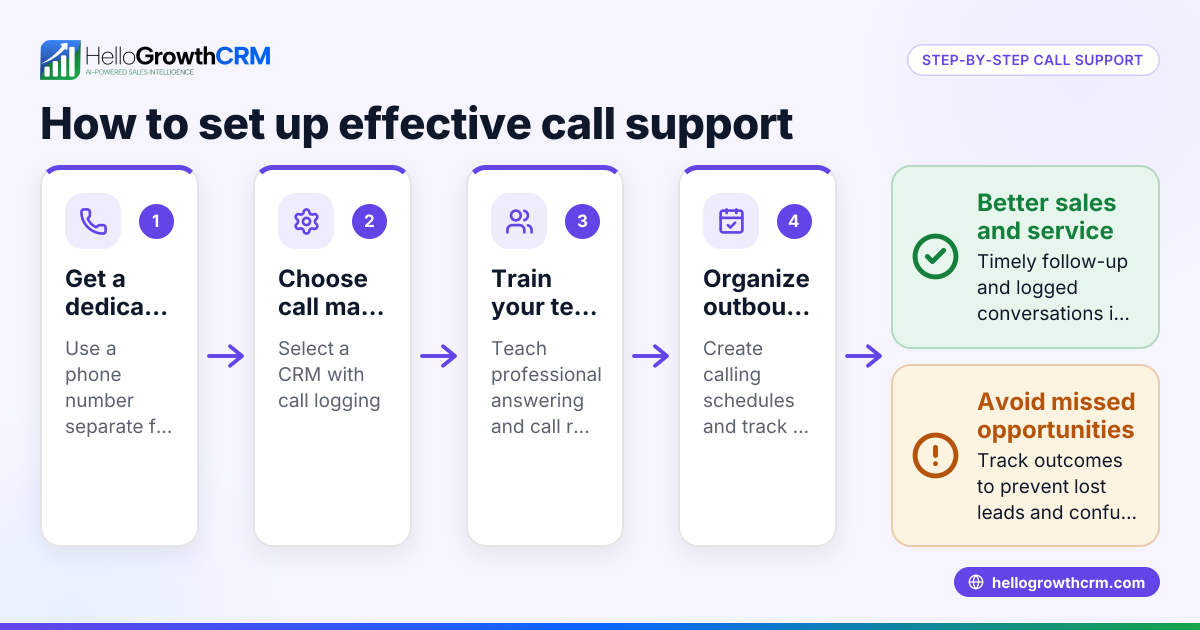
- Set clear communication channels: Establish consistent contact methods like a support email address, phone line, or a branded customer portal. Make sure customers know how to reach support easily.
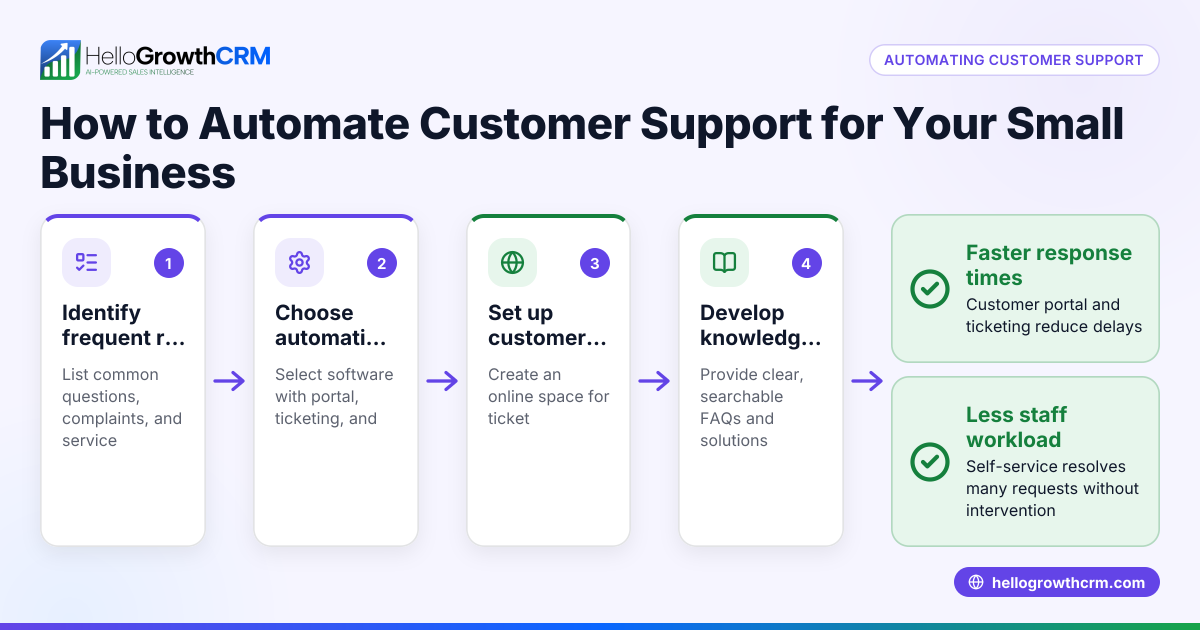
- Implement a ticketing system: Use software to track every customer request from submission to resolution. This prevents issues from being lost or forgotten and helps prioritize urgent cases.
- Create a knowledge base: Develop a library of FAQs, guides, and troubleshooting articles to empower customers to solve common problems themselves, reducing support load.
- Monitor and measure performance: Track key metrics such as response times, resolution rates, and customer satisfaction scores. Use these insights to improve your support processes.
- Integrate support with sales and CRM: Keep all customer interactions, including support tickets and sales history, in one system. This unified view helps personalize service and avoid repeating questions.
Example (fictional figures)
A B2B software reseller in Denver, Colorado, starts dedicated customer support on 07/01/2025. They hire one full-time support agent earning $50,000 per year and purchase a ticketing system subscription for $5,000 annually.
Annual support cost = $50,000 + $5,000 = $55,000
They estimate improved support will reduce customer churn by 10%, saving $120,000 in retained revenue.
Net benefit = $120,000 - $55,000 = $65,000
This investment leads to higher customer retention and satisfaction while providing clear accountability for support issues.
Common mistakes
- Mixing sales and support roles: This can cause delays and confusion. Prevent it by defining clear job responsibilities so support staff focus only on customer issues.
- No system to track support requests: Without tracking, issues get lost or unresolved. Prevent by implementing a ticketing system that logs and monitors all requests.
- Failing to communicate expected response times: Customers get frustrated if they don’t know when to expect help. Prevent by setting and sharing service level agreements (SLAs) for response and resolution times.
- Neglecting customer self-service options: Relying solely on direct support overloads your team. Prevent by creating and maintaining a knowledge base customers can access anytime.
- Not integrating support data with CRM: Disconnected data leads to repeated questions and poor service. Prevent by using tools that keep customer records and support tickets together, as with HelloGrowthCRM.
Doing this in HelloGrowthCRM
HelloGrowthCRM offers a branded self-service customer portal where customers can submit and track support tickets. After the sale, service requests stay linked on the same customer record as the deal, giving your team a complete view of sales history and support issues. The platform also supports a knowledge base and referral tracking to improve customer engagement. Learn more about HelloGrowthCRM for the United States and its WhatsApp and SMS CRM features that help streamline communication and customer health tracking at HelloGrowthCRM for the United States, WhatsApp and SMS CRM, and customer health score.
Frequently asked questions
What is the difference between dedicated and general customer support? Dedicated customer support assigns specific staff or teams to handle customer issues exclusively, providing consistent and specialized help. General support may be handled by multiple people with other responsibilities, risking slower or inconsistent responses.
How can small businesses implement dedicated customer support without large budgets? Start by defining clear roles even if only one person handles support. Use affordable or built-in tools like a customer portal and ticketing system to organize requests and track progress. Prioritize common issues with a knowledge base to reduce workload.
Why is integrating customer support with CRM important? Integration keeps all customer interactions, including sales and support, in one place. This helps your team understand customer history, personalize service, and avoid repeating questions or mistakes.
Can customers track their own support requests? Yes, with a customer portal, customers can submit tickets and monitor updates themselves, reducing phone or email volume and improving transparency.
How do I measure the success of dedicated customer support? Track metrics like average response time, resolution time, customer satisfaction scores, and repeat customer rates. These indicate how well your support team meets customer needs.
Key takeaways
- Dedicated customer support assigns clear responsibility for customer issues to improve response and resolution.
- Use a ticketing system and knowledge base to organize and streamline support.
- Integrate support data with your CRM to keep customer history unified and actionable.
- Avoid mixing roles, lack of tracking, and poor communication to prevent support failures.
- HelloGrowthCRM’s customer portal and ticket features keep support requests linked to deals for better service.
Start providing consistent, accountable customer support today. Start on the Free Forever plan (200 leads, no credit card) to try HelloGrowthCRM’s support tools.
Ready to put this into practice?
Set up your pipeline, WhatsApp follow-ups, and AI lead scoring in minutes — free, no credit card.
Try HelloGrowthCRM freeGet CRM tips in your inbox
Join thousands of sales professionals who get weekly insights on CRM strategy, AI automation, and pipeline optimization.

The HelloGrowthCRM team publishes guides on CRM strategy, AI sales tools, and revenue operations for small business sales teams.