HelloGrowthCRM software
Built for real small-business sales teams
HelloGrowthCRM helps reps qualify faster, follow up on time, and close more deals—with practical automation in one place.
- AI lead scoring and pipeline visibility
- Built-in dialer, WhatsApp, and email automation
- Sales forecasting and RevOps-ready reporting
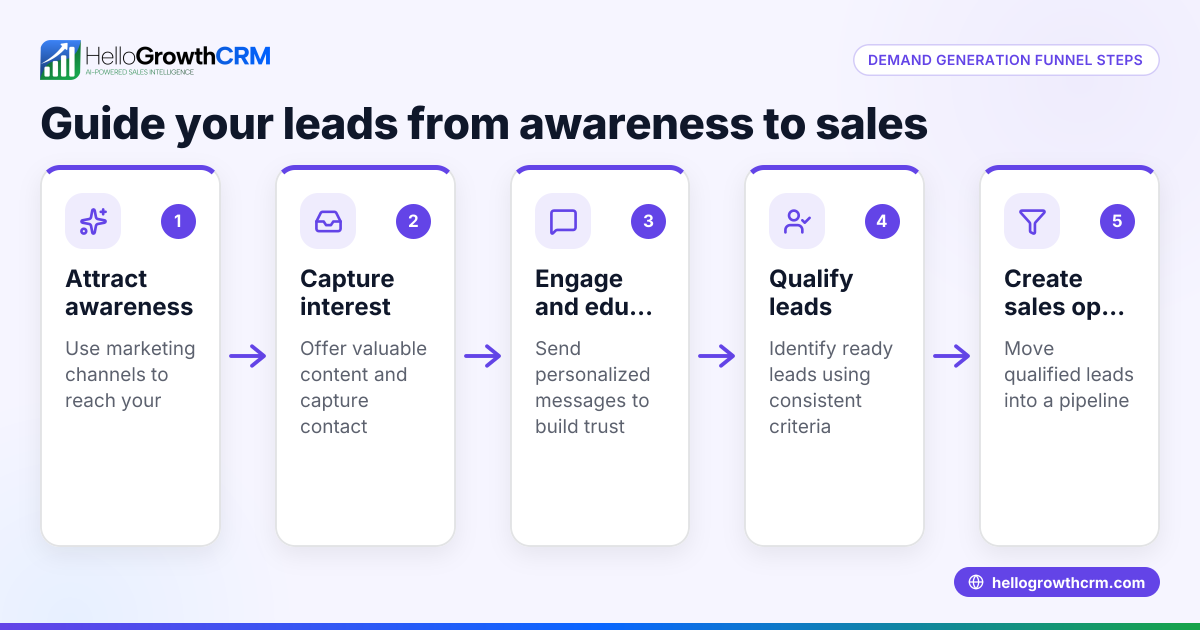
Demand generation activities are the specific marketing and sales tasks that help attract and engage potential customers, building interest that leads to sales opportunities. They focus on creating awareness and nurturing leads through various channels to fill your sales pipeline.
Why this comes up / what goes wrong
Small-business owners often face challenges in consistently attracting new leads and converting interest into sales. Without clear demand generation activities, leads can fall through the cracks, follow-ups get delayed, and marketing efforts become unfocused. This results in lost sales and wasted time. Many small businesses rely on manual methods like spreadsheets, text messages, or email, which are inefficient and error-prone.
Step-by-step
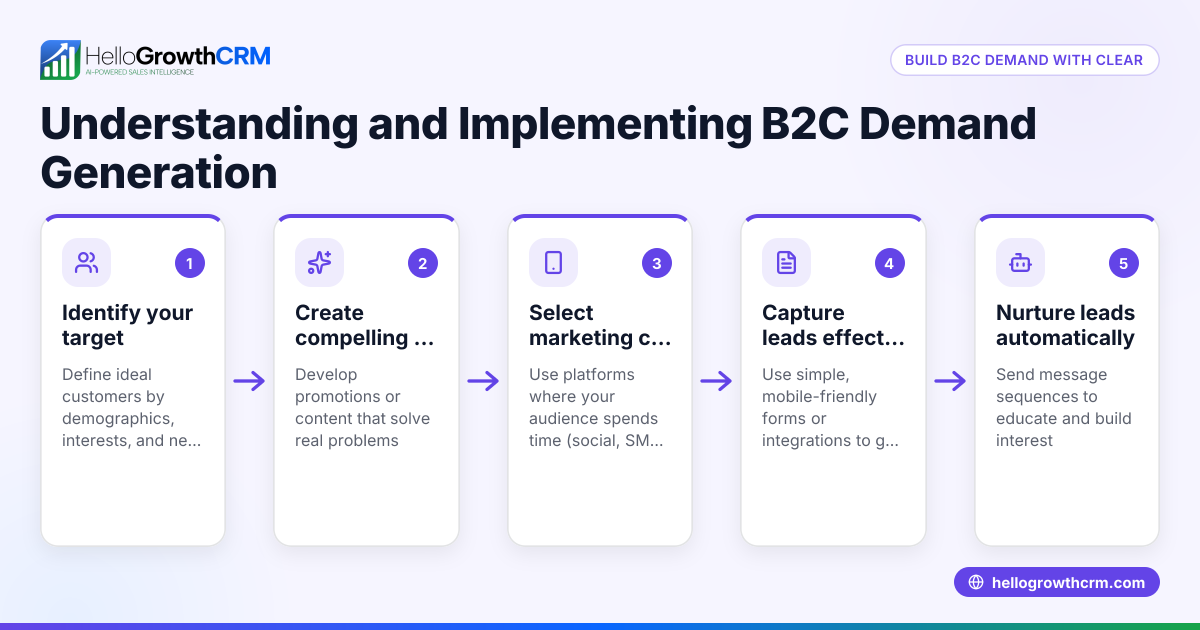
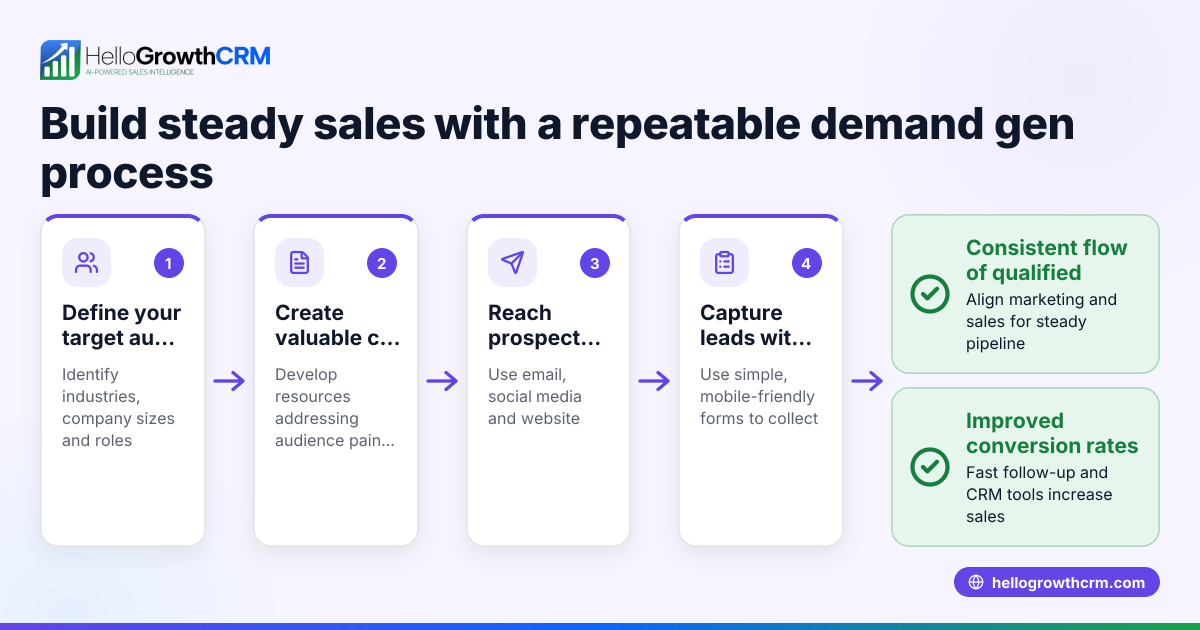
- Identify your target audience: Define who your ideal customers are by demographics, needs, and pain points. Check that your messaging aligns with their interests.
- Create compelling content: Develop blog posts, videos, or guides that address your audience’s problems. Verify the content is clear and actionable.
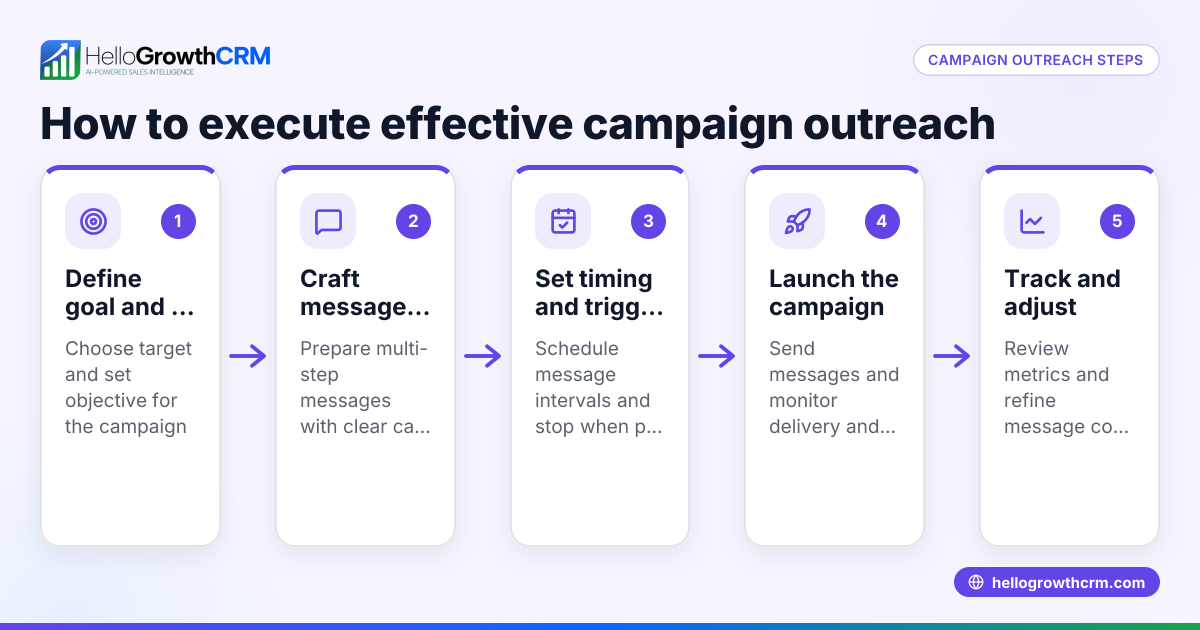
- Launch email and social media campaigns: Use emails, WhatsApp, SMS, or social media posts to share your content and offers. Ensure messages are personalized and scheduled regularly.
- Host webinars or events: Organize online or local events to demonstrate your expertise and engage directly. Confirm registration and follow-up plans.
- Capture and score leads: Collect contact info through web forms or integrations. Use lead scoring to prioritize follow-up efforts.
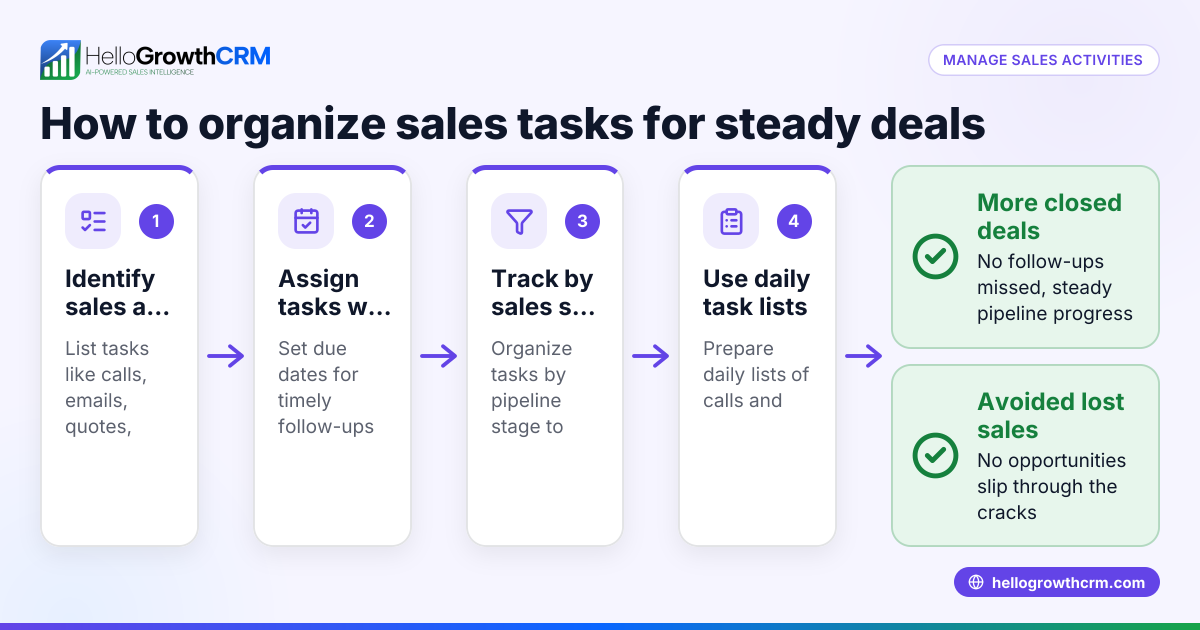
- Follow up promptly: Contact leads quickly with calls, messages, or emails. Track each follow-up as a task with a due date to avoid delays.
- Analyze and adjust: Review which activities generate the most interest and sales. Refine your approach based on results.
For managing these steps, especially follow-ups and calls, consider tools like the built-in CRM dialer and WhatsApp and SMS CRM to streamline communication.
Example (fictional figures)
Imagine a plumbing company in Austin, Texas, called "Austin Pipe Solutions," launching demand generation activities starting 01/15/2026.
- They create a blog post about winter plumbing tips costing $500.
- They run an email campaign to 1,000 contacts at $300.
- They host a webinar attended by 50 prospects, costing $200.
- Their web form captures 40 leads from these efforts.
- They score leads and prioritize 15 as high interest.
If each high-interest lead has a 20% chance to convert to a $1,200 service:
$1,200 × 15 = $18,000 potential revenue $18,000 × 20% = $3,600 expected revenue
Total marketing spend = $500 + $300 + $200 = $1,000
Expected revenue - spend = $3,600 - $1,000 = $2,600 net gain
This example shows how focused demand generation activities can drive measurable business growth.
Common mistakes
- Ignoring lead follow-up timing: Leads lose interest quickly. Prevent this by setting tasks with due dates for each follow-up using activity boards.
- Using inconsistent messaging: Confusing or generic messages reduce engagement. Check your content and campaigns for clarity.
- Overloading with too many channels: Spreading efforts thin dilutes impact. Focus on a few channels your audience uses.
- Not tracking activities: Without tracking, you can’t measure success or improve. Use tools that log calls, emails, and tasks.
- Relying on memory for calls and tasks: This leads to missed opportunities. Use a task board to list daily calls and follow-ups clearly.
Learn more about managing follow-ups with HelloGrowthCRM’s activities and task boards.
Doing this in HelloGrowthCRM
HelloGrowthCRM helps you organize demand generation follow-ups by turning each interaction into a task with a due date. The task boards keep your calls, meetings, and notes in one place, so you don’t have to remember who to contact next. The day’s calls appear as a clear list, reducing errors and missed opportunities. This helps your sales team stay on top of leads and close deals faster.
Frequently asked questions
What are the most effective demand generation activities for small businesses? Content marketing, targeted email campaigns, social media outreach, and webinars are effective because they educate prospects and build trust. Prioritize channels where your audience spends time.
How often should I follow up with leads during demand generation? Follow-ups should happen quickly after lead capture, ideally within 24-48 hours, then at regular intervals based on lead interest. Consistency is key to keeping prospects engaged.
Can demand generation activities work without a CRM? Yes, but it’s harder to track leads, schedule follow-ups, and measure results. A CRM like HelloGrowthCRM helps automate and organize these tasks, improving efficiency.
How do I measure the success of demand generation activities? Track metrics such as number of leads, lead quality, conversion rates, and revenue generated. Adjust your activities based on which channels and messages perform best.
What role does WhatsApp and SMS play in demand generation? WhatsApp and SMS allow direct, personal communication with leads, increasing response rates. HelloGrowthCRM integrates these channels to send sequences and log interactions easily.
Key takeaways
- Demand generation activities create awareness and interest to fill your sales pipeline.
- Follow a clear step-by-step process: identify audience, create content, run campaigns, capture leads, and follow up.
- Avoid common mistakes like delayed follow-up and inconsistent messaging by using task boards.
- Use HelloGrowthCRM’s activities and task boards to organize tasks and calls, ensuring timely follow-up.
- Measure results regularly to refine your demand generation strategy.
Start your demand generation efforts today and manage leads efficiently with HelloGrowthCRM. Start on the Free Forever plan (200 leads, no credit card).
Ready to put this into practice?
Set up your pipeline, WhatsApp follow-ups, and AI lead scoring in minutes — free, no credit card.
Try HelloGrowthCRM freeGet CRM tips in your inbox
Join thousands of sales professionals who get weekly insights on CRM strategy, AI automation, and pipeline optimization.

The HelloGrowthCRM team publishes guides on CRM strategy, AI sales tools, and revenue operations for small business sales teams.