HelloGrowthCRM software
Built for real small-business sales teams
HelloGrowthCRM helps reps qualify faster, follow up on time, and close more deals—with practical automation in one place.
- AI lead scoring and pipeline visibility
- Built-in dialer, WhatsApp, and email automation
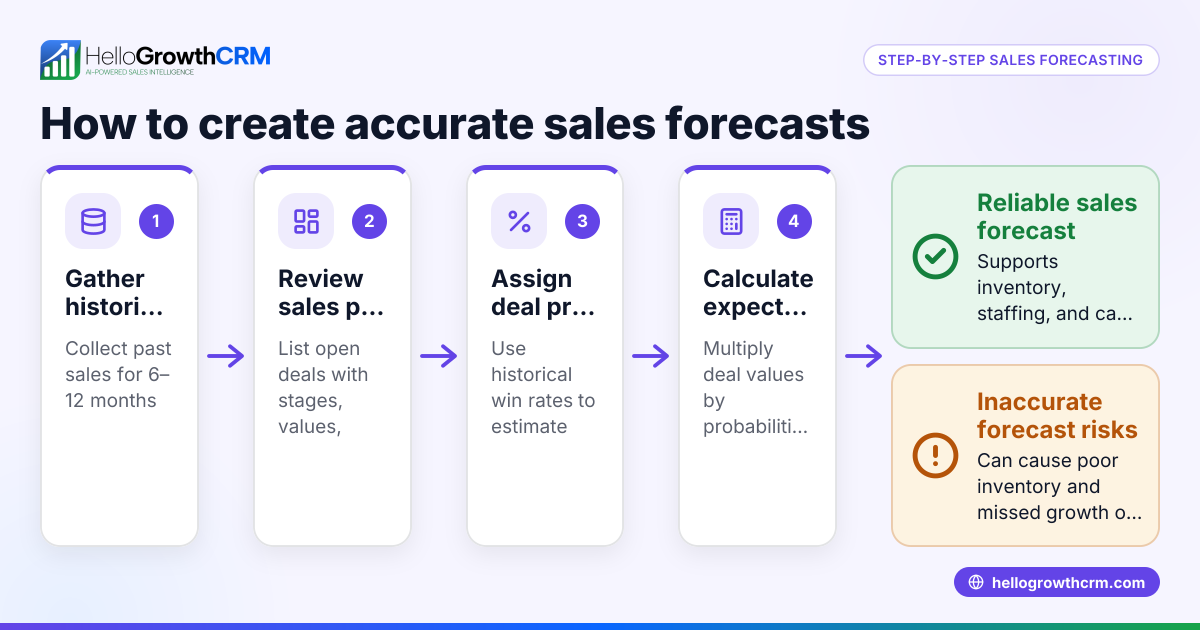
- Sales forecasting and RevOps-ready reporting
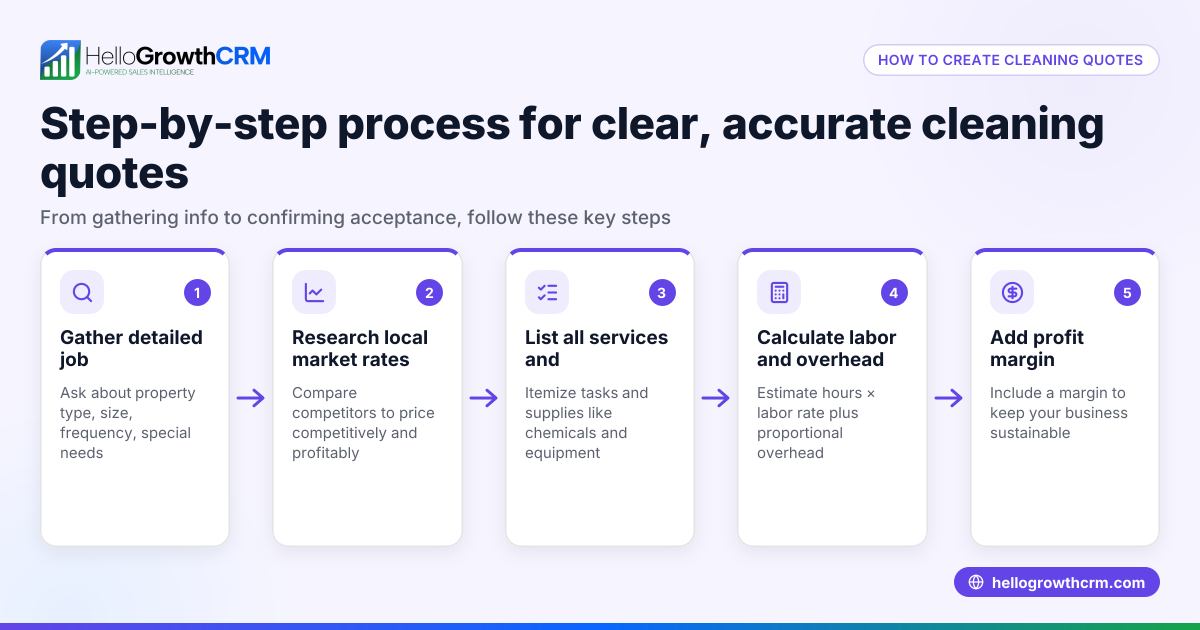
An estimate for house cleaning depends on several factors: the size of the home, how often it’s cleaned, and which specific services the client wants. You calculate the total by estimating labor hours, multiplying by your hourly rate, adding costs for supplies and overhead, and including any extra services like deep cleaning or carpet shampooing. Clear communication of what is included in the estimate is essential to avoid misunderstandings.
Why this comes up / what goes wrong
Cleaning business owners and accountants often struggle with providing consistent and accurate estimates because house cleaning services vary widely. Without a clear and repeatable process, estimates can be too low—leading to lost profits—or too high, which drives away customers. Slow or disorganized follow-up on inquiries also causes lost leads. For local service businesses, competition is fierce, and clients expect transparent, fair pricing. Accountants want estimates that reflect actual costs to ensure profitability. Many cleaning businesses still rely on manual tracking via spreadsheets or text messages, which can delay responses and cause lead loss.
Step-by-step
- Assess the property size and condition: Measure the home's square footage or count the number of rooms. Note any conditions that require extra effort, such as heavy dirt, pet stains, or clutter. This helps you estimate the time needed accurately.
- Determine cleaning frequency: Decide if the cleaning is one-time, weekly, biweekly, or monthly. Regular cleanings usually cost less per visit because of reduced buildup.
- List the cleaning services included: Standard cleaning typically includes dusting, vacuuming, mopping, kitchen and bathroom cleaning. Extras like cleaning inside appliances, windows, or carpet shampooing should be priced separately.
- Choose your pricing method: Decide between hourly rates or flat fees. Hourly rates work best for variable jobs, while flat fees appeal to clients wanting predictable costs.
- Estimate labor hours: Based on the size and services, estimate how many hours the job will take. Include buffer time for unexpected issues.
- Calculate labor costs: Multiply estimated hours by your hourly wage or pay rate.
- Add supplies and materials costs: Include cleaning products and equipment if you provide them. Factor in costs for any specialty items.
- Include travel and overhead expenses: Account for travel time, fuel, insurance, marketing, administrative costs, and any business licenses.
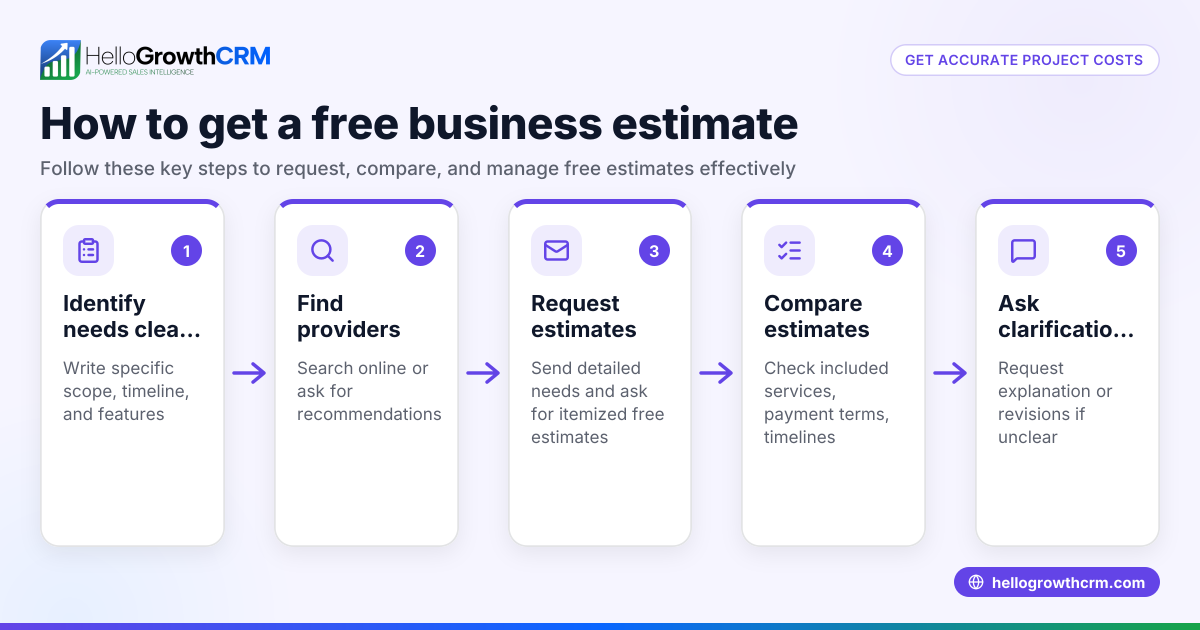
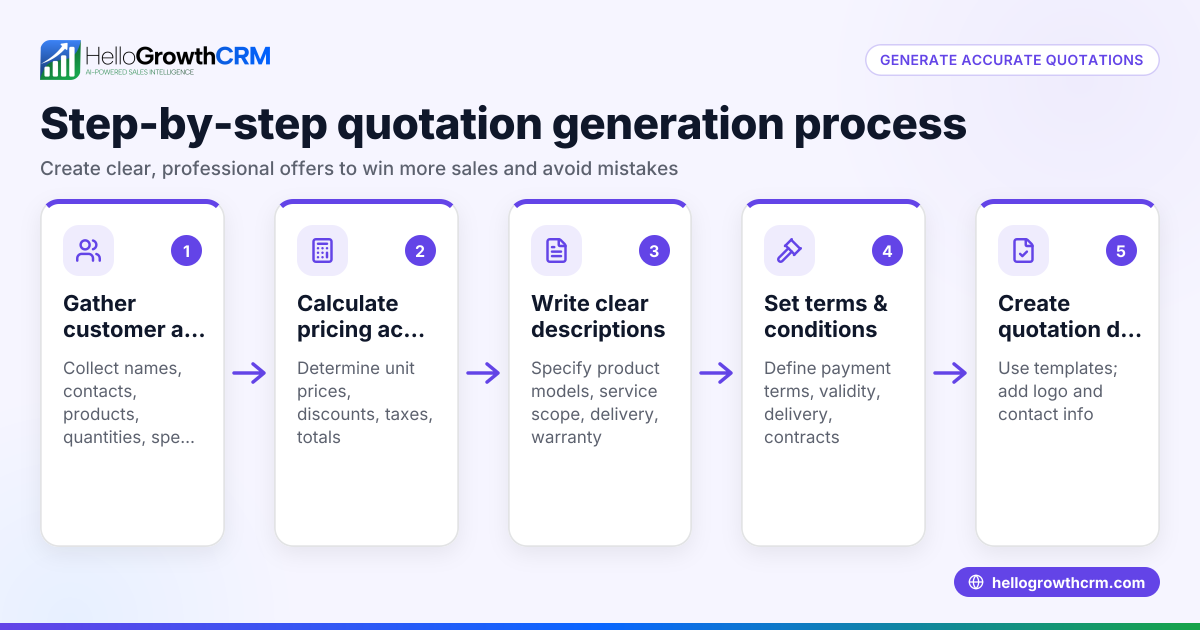
- Prepare a detailed written estimate: Clearly state what services are included, payment terms, cancellation policies, and any conditions. This protects both you and the client.
- Follow up promptly on inquiries: Quick responses increase your chances of winning the job. Using a CRM designed for local service businesses can help manage leads efficiently.
For more guidance on managing local service businesses, see Local service businesses. Also, consider tools tailored for US businesses like HelloGrowthCRM for the United States that streamline communication and sales.
Example (fictional figures)
A house cleaning business in Denver, Colorado, prepares an estimate for a one-time deep cleaning of a 2,000 sq ft home on 07/15/2026.
- Estimated labor time: 5 hours
- Hourly labor rate: $30/hour
- Cleaning supplies cost: $20
- Travel and overhead: $15
Calculations:
$30 × 5 hours = $150 $150 + $20 = $170 $170 + $15 = $185
The total estimate for the job is $185.
This example reflects a typical scenario for a local service business calculating a fair price that covers all costs while remaining competitive.
Common mistakes
- Underestimating time required: Prevent this by conducting a thorough initial assessment and adding buffer time for unexpected challenges.
- Not specifying included services: Prevent misunderstandings by providing a clear written estimate detailing what is and isn’t included.
- Ignoring overhead and travel costs: Many underestimate these expenses. Prevent this by factoring them into your pricing.
- Delaying follow-up on leads: Slow responses lose customers. Prevent this by setting up routines or using tools designed for local service businesses like HelloGrowthCRM for the United States.
- Charging inconsistent rates: Standardize pricing models and train your team to avoid confusion.
- Failing to communicate cancellation policies: Include clear terms in your estimate to protect your business and set client expectations.
Doing this in HelloGrowthCRM
HelloGrowthCRM offers Managed RevOps, which assigns a revenue specialist to handle your sales follow-up every week. This ensures no lead inquiry is missed or delayed, keeping your cleaning business responsive and improving conversion rates. Learn more about this service at /services/managed-revops.
Frequently asked questions
How do I estimate house cleaning for different home sizes? Estimate based on square footage or number of rooms. Larger homes require more time, so multiply your hourly rate by the estimated hours accordingly.
Should I charge hourly or flat rate for house cleaning? Both methods work. Hourly suits variable jobs; flat rate is simpler for repeat clients or standard cleanings. Choose based on your business model and client preferences.
What services should be included in a standard house cleaning estimate? Typically dusting, vacuuming, mopping, and cleaning bathrooms and kitchens. Extras like inside appliances or windows should be quoted separately.
How do I handle cancellations or rescheduling in estimates? Include clear terms about cancellation fees or rescheduling policies in your estimate to protect your business.
Can a CRM help manage house cleaning leads and estimates? Yes. A CRM like HelloGrowthCRM helps capture leads, automate follow-up via WhatsApp, SMS, or email, and keep your sales pipeline organized. See WhatsApp and SMS CRM for details.
Key takeaways
- House cleaning estimates depend on home size, cleaning frequency, and services included.
- Use a clear, step-by-step process to calculate labor, materials, and overhead.
- Provide clients with detailed written estimates that specify included services and terms.
- Avoid common mistakes like underestimating time, ignoring overhead, and delaying follow-up.
- Managed RevOps can help your cleaning business stay on top of leads and improve sales.
Start managing your house cleaning leads more effectively with HelloGrowthCRM. Start on the Free Forever plan (200 leads, no credit card).
Ready to put this into practice?
Set up your pipeline, WhatsApp follow-ups, and AI lead scoring in minutes — free, no credit card.
Try HelloGrowthCRM freeGet CRM tips in your inbox
Join thousands of sales professionals who get weekly insights on CRM strategy, AI automation, and pipeline optimization.

The HelloGrowthCRM team publishes guides on CRM strategy, AI sales tools, and revenue operations for small business sales teams.