HelloGrowthCRM software
Built for real small-business sales teams
HelloGrowthCRM helps reps qualify faster, follow up on time, and close more deals—with practical automation in one place.
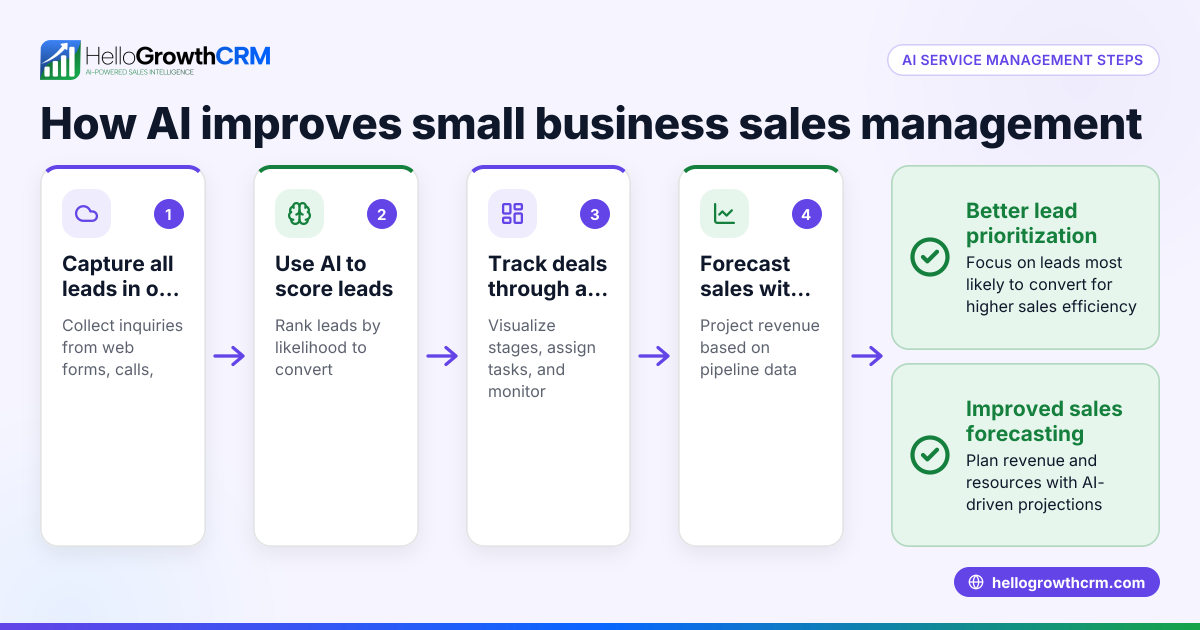
- AI lead scoring and pipeline visibility
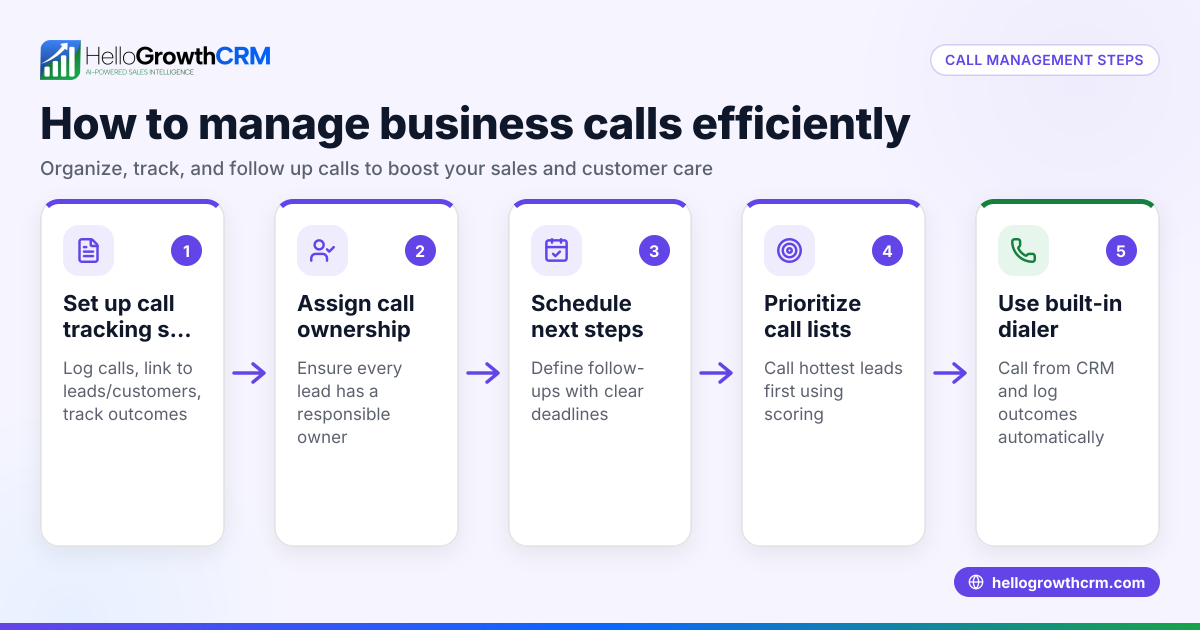
- Built-in dialer, WhatsApp, and email automation
- Sales forecasting and RevOps-ready reporting
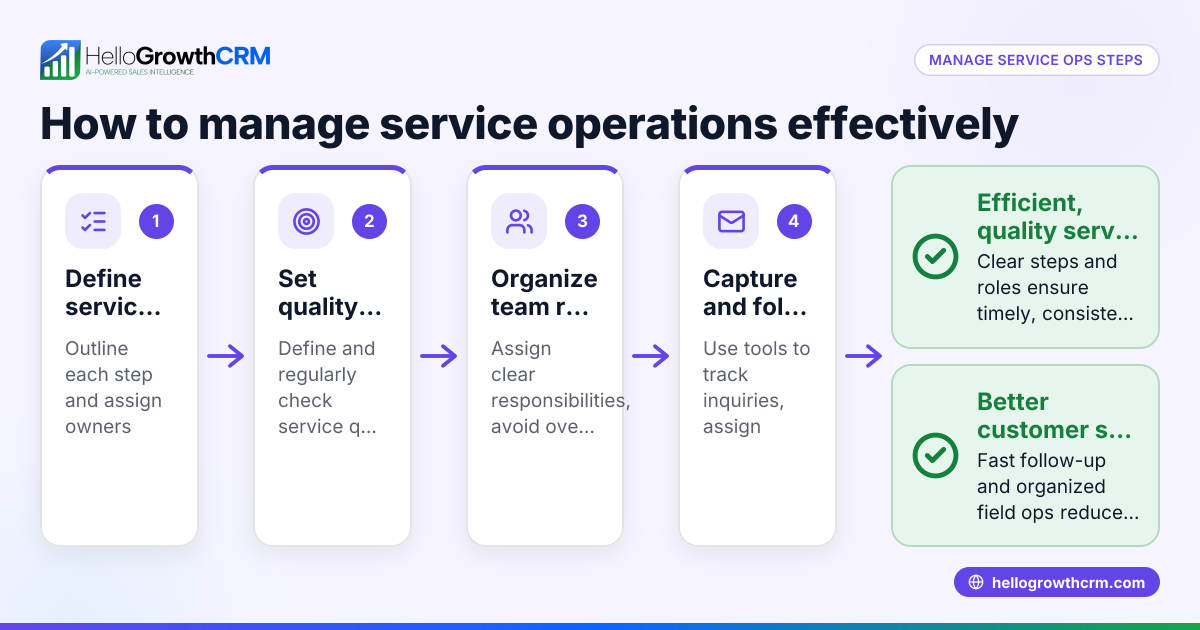
Field service management challenges arise when businesses struggle to coordinate customer appointments, dispatch field workers, and track job progress efficiently. Common problems include missed appointments, unclear task assignments, and difficulty monitoring field reps' activities. These issues lead to lost revenue and unhappy customers.
Why this comes up / what goes wrong
Small-business owners managing field services often rely on manual processes like spreadsheets, phone calls, and text messages. This creates confusion because:
- Scheduling is done without centralized visibility, causing double bookings or missed jobs.
- Communication between office staff and field workers is slow or incomplete.
- Tracking field visits and job status depends on paper logs or memory, leading to inaccurate reporting.
- Lead follow-up is delayed because inquiries are scattered across channels.
These problems reduce efficiency, increase costs, and frustrate customers expecting timely service.
Step-by-step
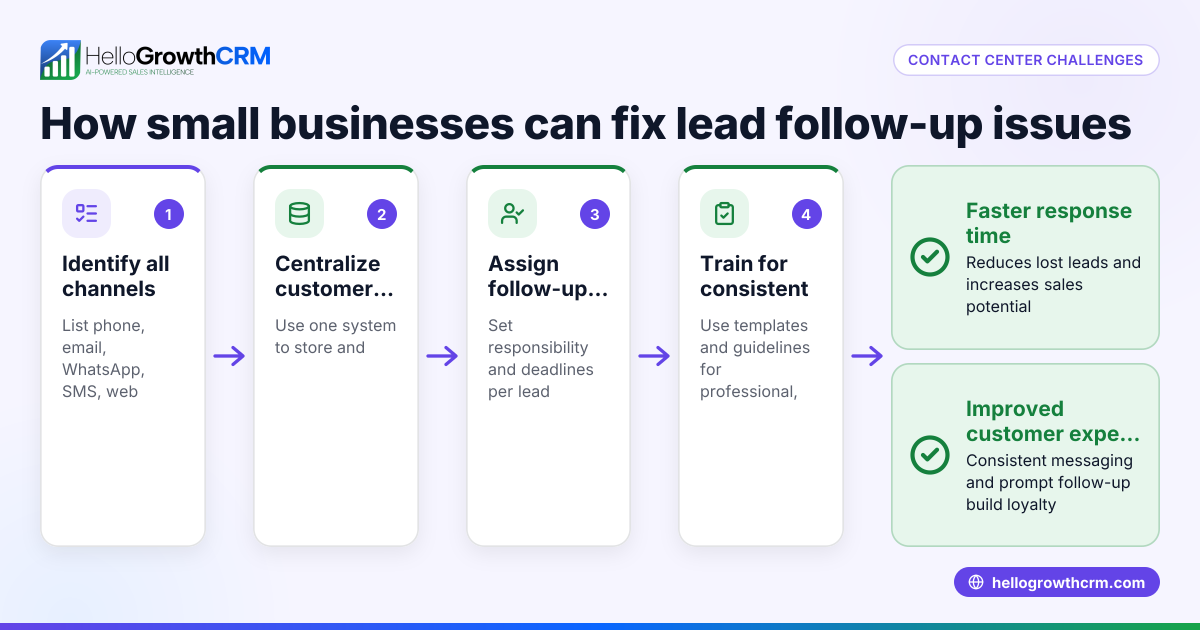
- Centralize lead capture and assignment: Collect all inquiries from web forms, calls, and WhatsApp messages into one system. Assign each lead an owner and a clear next step. Check that no lead is lost or forgotten.
- Define territories and schedule visits: Organize field reps’ work by geographic areas or customer groups. Plan daily routes and visits to avoid overlaps and downtime. Confirm schedules are visible to both managers and reps.
- Enable real-time field activity logging: Have field reps log visits, job details, and outcomes directly from their mobile phones. Check that managers can view these logs during the day to track progress.
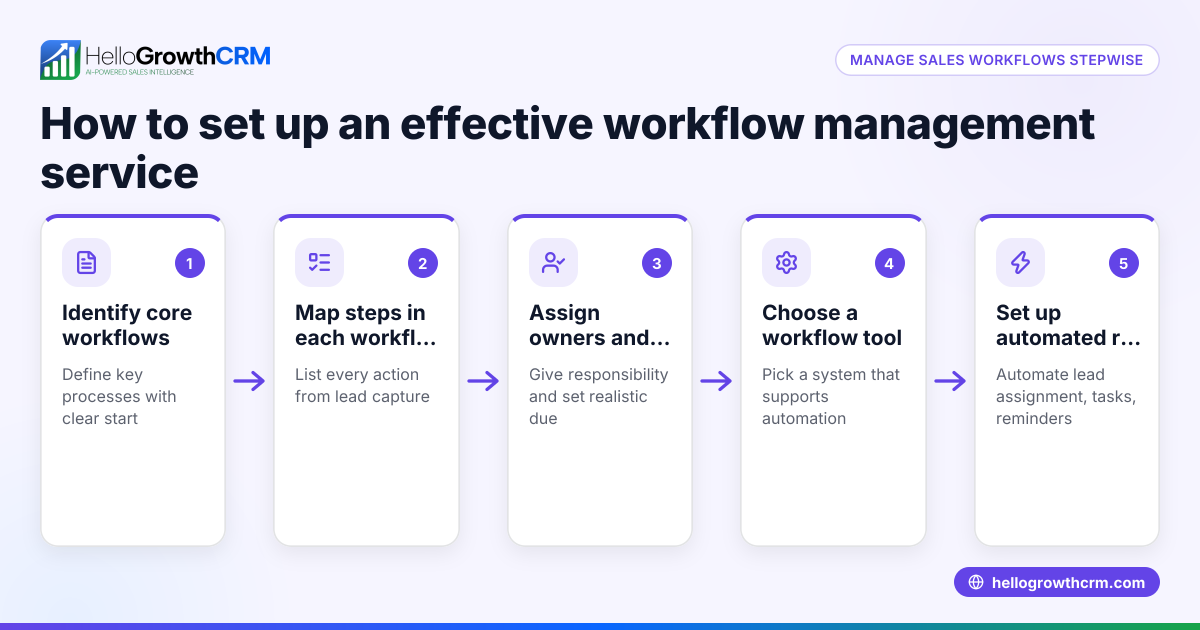
- Automate follow-up and communication sequences: Use email, WhatsApp, and SMS sequences to keep customers informed and remind reps of pending tasks. Verify that messages are timely and relevant.
- Use dashboards and reports to monitor performance: Review sales pipelines, task boards, and commission tracking regularly. Ensure data accuracy and timely updates.
- Train your team on the tools and processes: Provide clear instructions and support so everyone uses the system consistently. Check for adoption and address any issues.
Example (fictional figures)
A plumbing company in Austin, Texas, called Austin Flow Plumbing, faces challenges in managing field service visits and lead follow-up. They receive 500 leads monthly from their website and phone calls but lose 20% due to slow response.
Step 1: Centralize leads
- Total leads = 500
- Lost leads due to slow follow-up = 500 × 20% = 100
- Leads captured and assigned properly = 500 - 100 = 400
Step 2: Define territories
- 5 field reps covering 5 zones
- Each rep assigned 80 leads monthly = 400 ÷ 5 = 80
Step 3: Log visits
- Each rep logs 70 completed jobs monthly
- Visits logged = 70 × 5 = 350
Step 4: Automate follow-ups
- Automated reminders reduce missed appointments by 15%
- Missed appointments before automation = 50
- Missed appointments after automation = 50 - (50 × 15%) = 42.5
Step 5: Monitor performance
- Sales increase by converting 10% more leads
- Additional sales = 500 × 10% = 50
This example shows how organizing leads, territories, and follow-ups improves efficiency and revenue.
Common mistakes
- Using multiple unconnected tools: Leads and schedules spread across notebooks, spreadsheets, and messaging apps cause confusion. Prevent by centralizing data in one CRM system.
- Not assigning clear ownership: Leads without a responsible owner fall through the cracks. Always assign each lead to a team member with a next step.
- Ignoring mobile logging: Without real-time field updates, managers lack visibility. Equip reps with mobile tools to log visits immediately.
- Skipping communication automation: Manual follow-up leads to delays and missed appointments. Use sequences for reminders and updates.
- Failing to monitor performance regularly: Without reviewing reports, problems stay hidden. Schedule regular check-ins on pipeline and field activity data.
- Neglecting team training: Tools are only effective if used properly. Provide training and support to ensure adoption.
For more on managing leads efficiently, see WhatsApp and SMS CRM. To track field visits and commissions, explore territories, field operations and commissions.
Doing this in HelloGrowthCRM
HelloGrowthCRM helps by capturing every inquiry from forms, calls, or WhatsApp as a lead with an owner and a next step, preventing leads from getting lost in notebooks. Its territory and field operations features let field reps log visits directly from their phones, while managers can see the day's route and activity. This makes scheduling, tracking, and commission management easier for small businesses with field teams. Learn more about HelloGrowthCRM for the United States here.
Frequently asked questions
What are the biggest challenges in field service management? The main challenges are inefficient scheduling, poor communication, lack of real-time tracking, and slow lead follow-up. These cause missed appointments, lost revenue, and unhappy customers.
How can technology improve field service management? Technology centralizes lead capture, automates scheduling, enables mobile logging of visits, and provides real-time dashboards. This reduces errors and improves team coordination.
What should I look for in a field service management tool? Look for features like lead capture with ownership, territory and visit management, mobile activity logging, and communication sequences via WhatsApp or SMS.
How does automating communication help? Automated sequences ensure customers get timely reminders and updates, reducing no-shows and improving satisfaction.
Can small businesses afford field service management software? Many CRM solutions offer free or affordable plans tailored to small businesses, making it easier to adopt without large upfront costs.
For more on using WhatsApp and SMS efficiently, see WhatsApp and SMS CRM. To handle calls, check built-in CRM dialer.
Key takeaways
- Centralize all leads and assign clear ownership to prevent losses.
- Define territories and schedule field visits for efficient routing.
- Use mobile logging for real-time tracking of field activities.
- Automate customer communication to reduce missed appointments.
- Monitor pipelines and commissions regularly to spot issues early.
- Train your team to ensure consistent use of tools and processes.
Start managing your field service more effectively today. Start on the Free Forever plan (200 leads, no credit card).
Ready to put this into practice?
Set up your pipeline, WhatsApp follow-ups, and AI lead scoring in minutes — free, no credit card.
Try HelloGrowthCRM freeGet CRM tips in your inbox
Join thousands of sales professionals who get weekly insights on CRM strategy, AI automation, and pipeline optimization.

The HelloGrowthCRM team publishes guides on CRM strategy, AI sales tools, and revenue operations for small business sales teams.