HelloGrowthCRM software
Built for real small-business sales teams
HelloGrowthCRM helps reps qualify faster, follow up on time, and close more deals—with practical automation in one place.
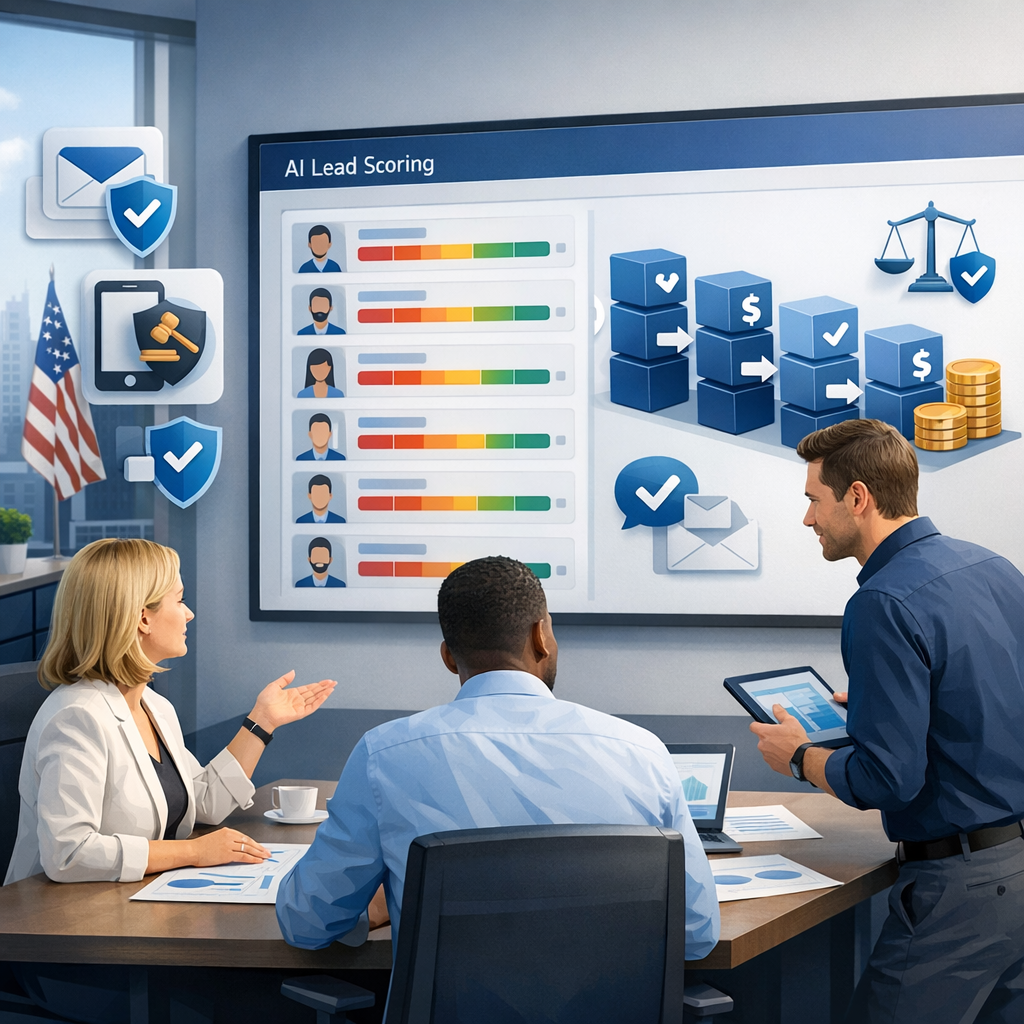
- AI lead scoring and pipeline visibility
- Built-in dialer, WhatsApp, and email automation
- Sales forecasting and RevOps-ready reporting
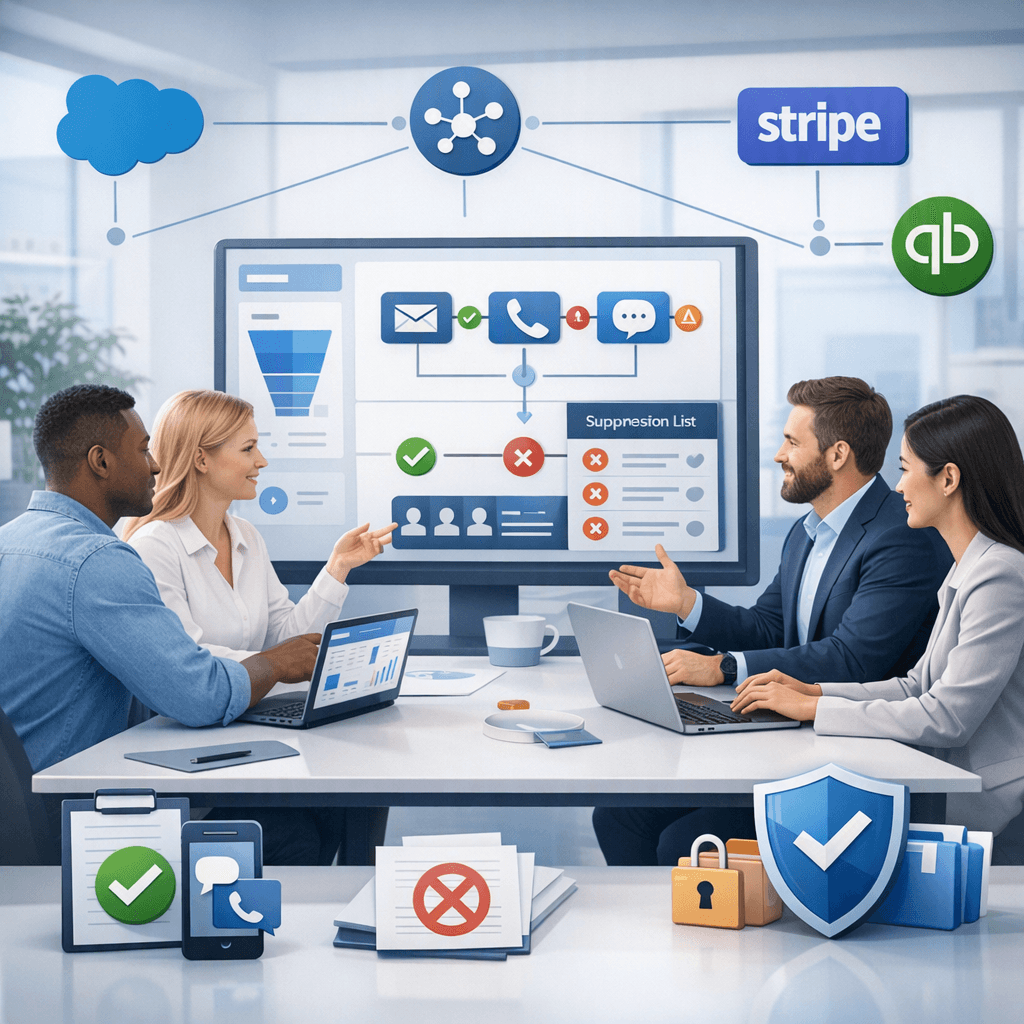
A can-spam and tcpa compliant sales sequence template is a prebuilt outbound workflow that helps US sales teams send lawful email and phone outreach by standardizing consent capture, unsubscribe handling, contact-time rules, suppression logic, and audit trails across tools like Salesforce, HubSpot, Stripe, and QuickBooks.
Key Takeaways
- HelloGrowthCRM helps US mid-market teams turn CAN-SPAM and TCPA policy into repeatable workflows, not manual rep judgment.
- The safest sequence design starts with consent fields, channel-specific suppression lists, and workflow rules before any email or call goes live.
- Teams migrating from Salesforce or HubSpot often need better cross-channel enforcement, especially when email, dialer, SMS, and finance data sit in separate systems.
- For US RevOps leaders in New York, Chicago, and San Francisco, compliance needs to fit SOC 2 expectations, clear reporting, and clean handoffs into Stripe and QuickBooks.
- HelloGrowthCRM’s Email Automation, CRM Dialer, Smart Inbox, and Revenue Attribution features make compliant outbound easier to operationalize.
- This article is practical guidance, not legal advice. Your counsel should review any final compliance policy.
What is a CAN-SPAM and TCPA compliant sales sequence template?
A CAN-SPAM and TCPA compliant sales sequence template is a reusable outreach playbook that combines compliant messaging, consent rules, timing controls, and suppression logic so reps can email and call prospects consistently without breaking core US marketing and sales communication rules.
In practice, a sequence template is not just copy. It is a controlled operating system for outbound. For US B2B teams, that means each step should answer five questions:
- Can we contact this person on this channel?
- Did we record valid consent, prior business relationship, or a lawful basis to reach out?
- Does the message include required disclosures and a working opt-out?
- Are we respecting time-of-day and channel restrictions?
- Can RevOps prove what happened in an audit?
The CAN-SPAM Act sets rules for commercial email, including accurate header information, non-deceptive subject lines, clear identification when needed, a valid postal address, and opt-out processing. The FTC’s CAN-SPAM overview explains that businesses must honor opt-out requests promptly and cannot charge a fee to unsubscribe (FTC).
The Telephone Consumer Protection Act affects calls and text outreach. TCPA risk rises fast when teams use auto-dialing, prerecorded voice, or SMS without proper consent. The FCC maintains official TCPA guidance and enforcement resources for telemarketing and robocall practices (FCC).
When I have audited outbound programs like this, the problem is rarely bad intent. The problem is fragmented systems. Marketing holds email status in HubSpot. Sales calls from a separate dialer. Finance owns customer records in Stripe or QuickBooks. No single rule engine blocks risky outreach. That is where a connected AI CRM becomes useful.
Why US mid-market teams struggle to operationalize compliance
US mid-market teams struggle with CAN-SPAM and TCPA compliance because the risk lives between systems, not inside one message. Email tools, dialers, CRM records, meeting schedulers, and finance apps often store different states, so reps act on partial data and RevOps loses control.
This is especially common in companies with 20 to 150 sellers across New York, Chicago, and San Francisco. They often have:
- Salesforce or HubSpot as the incumbent CRM
- Point tools for sequencing, calling, texting, and meeting booking
- Stripe for billing and QuickBooks for accounting
- Rising buyer expectations around SOC 2 and auditability
- Pressure to migrate or consolidate without hurting pipeline
In one rollout we did with a 12-person sales team, email unsubscribes were synced correctly, but mobile call consent was stored in a custom HubSpot property that the dialer never checked. Reps thought records were safe because “the CRM said active.” The dialer had no channel-specific suppression rule. We fixed it by moving to one rule set with explicit email, call, and SMS permission fields.
A second issue is that compliance and reporting often live apart. Sales leaders want booked meetings and pipeline in USD. Finance wants clean customer status in Stripe and invoice status in QuickBooks. Legal wants proof of consent and opt-out handling. If these functions never meet in one process, the team creates risk each quarter.
Which HelloGrowthCRM features matter most for compliant outbound?
The HelloGrowthCRM features that matter most for compliant outbound are consent fields, workflow automation, channel-specific suppression logic, sequence templates, dialer controls, and reporting that ties activity history back to pipeline and customer records for audit-ready accountability.
For this use case, the core stack is usually:
- Email Automation for compliant email steps
- CRM Dialer for controlled call tasks and call logging
- Smart Inbox for opt-out visibility and rep context
- Meeting Scheduler for safe handoff after contact
- Sales Task Boards for queue-based execution
- Revenue Attribution for tying outreach to pipeline
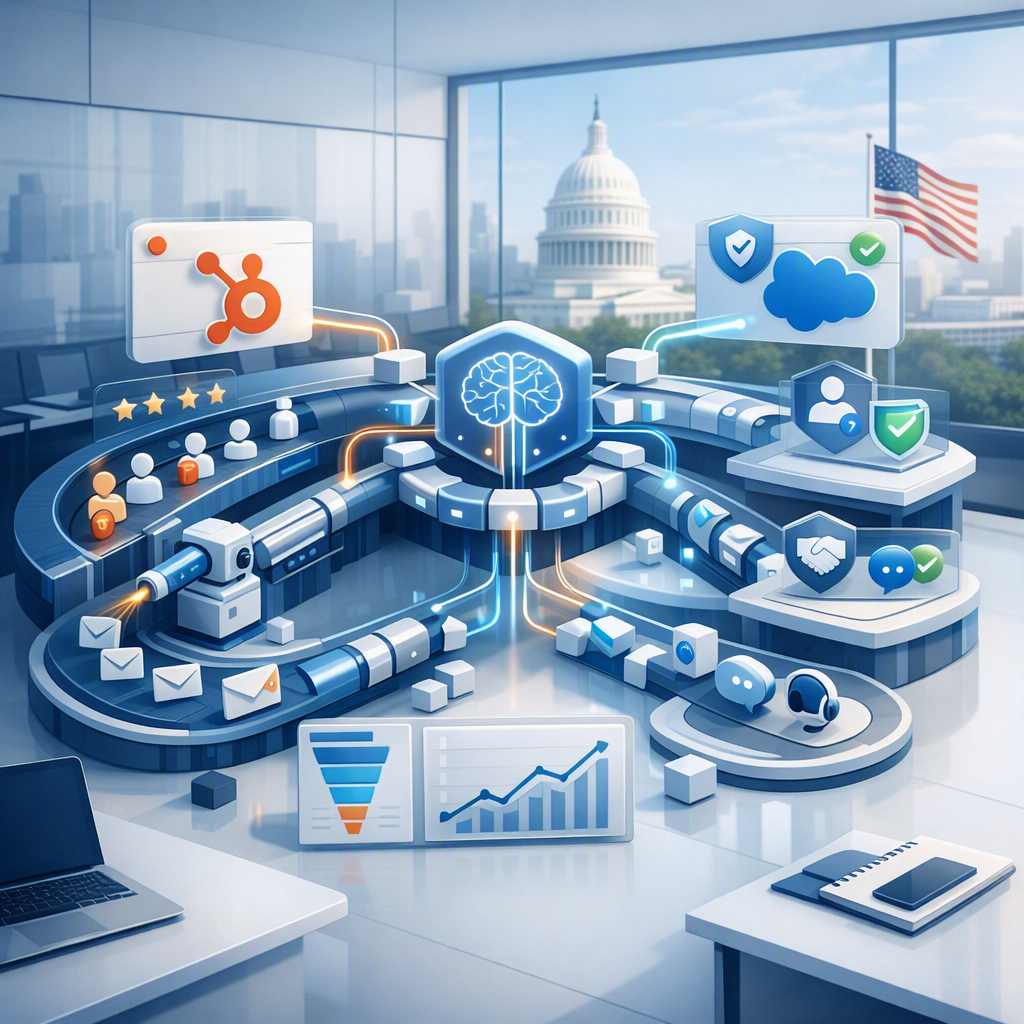
- All Integrations to sync Salesforce, HubSpot, Stripe, QuickBooks, Gmail, and Slack
Consent fields you should create first
Start with explicit, channel-level fields. Do not use one generic “marketing consent” checkbox for everything.
Recommended fields:
- Email status: active, unsubscribed, bounced, suppressed
- Phone call permission: allowed, restricted, unknown
- SMS permission: granted, revoked, unknown
- Consent source: web form, event, manual, contract, import
- Consent timestamp
- Opt-out timestamp
- Do-not-contact reason
- Time zone
- Business relationship status: prospect, customer, former customer, partner
HelloGrowthCRM can map these fields during a HubSpot or Salesforce sync so sales, marketing, and service teams work from one source of truth.
Workflow rules that reduce risk
The real protection comes from automation. Good workflow rules should:
- Block sequence enrollment if email status is unsubscribed or suppressed
- Block call tasks when phone permission is restricted
- Trigger review for records with unknown consent status
- Pause all outreach when a legal hold or complaint flag appears
- Stamp source and timestamp whenever consent changes
- Route edge cases to RevOps in Slack
This is where Managed RevOps can help if your internal ops team is already overloaded.
HelloGrowthCRM vs manual compliance processes for outbound teams
HelloGrowthCRM is stronger than manual compliance processes because it enforces rules at the record and workflow level, while spreadsheets, rep notes, and disconnected tools depend on memory. Manual processes can document policy, but they rarely stop risky sends or calls in real time.
Many teams still run compliance through a mix of SOP docs, Salesforce validation rules, and rep training. That is better than nothing, but it is not enough once you run multi-channel outreach across email, phone, and SMS.
| Capability | Manual process | HelloGrowthCRM |
|---|---|---|
| Email unsubscribe enforcement | Often tool-specific only | Centralized field + workflow enforcement |
| Call permission checks | Usually rep judgment | Rule-based block before task creation |
| Cross-system sync | Slow or inconsistent | CRM and finance integrations through Zapier and native connectors |
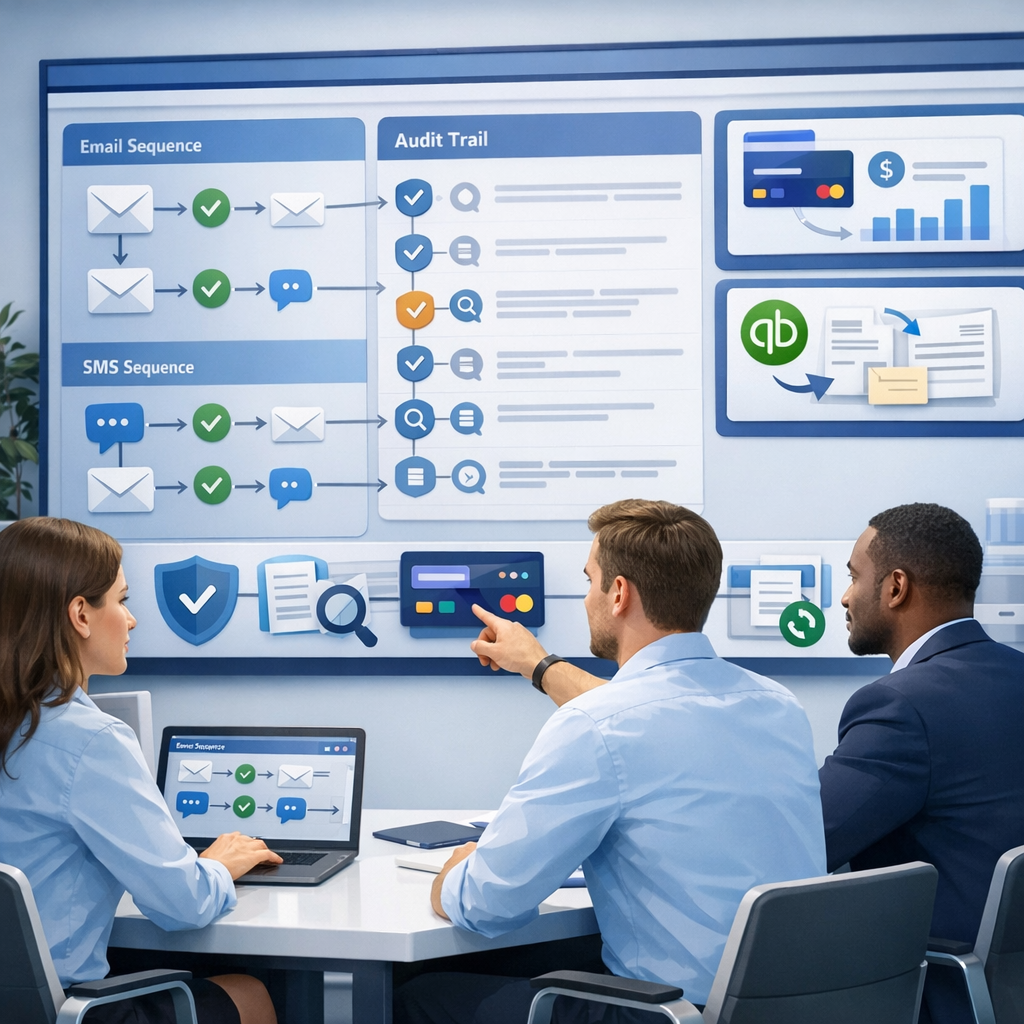
| Audit trail | Spreadsheet or admin export | Timestamped record history and activity logs |
| Sequence governance | Static docs | Template-level controls in Email Automation |
| Finance handoff visibility | Separate reports | Pipeline and customer reporting with Revenue Attribution |
This is also where I need to be transparent. HelloGrowthCRM is our product, so this comparison reflects our point of view. If your team has a highly customized Salesforce compliance engine and a dedicated admin bench, you may be able to keep your current setup. For teams under roughly 50 reps, though, simpler centralized enforcement is often faster and safer.
How to build a compliant outbound template in HelloGrowthCRM
Building a compliant outbound template in HelloGrowthCRM means defining channel permissions, mapping source systems, creating suppression logic, writing compliant sequence steps, and testing every edge case before rollout so reps can work fast without making channel-specific compliance mistakes.
How to build a compliant outbound template: Step-by-Step
- Map your source systems
Connect Salesforce, HubSpot, Gmail, Stripe, and QuickBooks. Confirm which system owns consent, customer status, and suppression rules. - Create channel-specific consent fields
Add separate email, call, and SMS permission fields in the CRM. Include timestamp, source, and reason codes for every status change. - Build suppression segments
Create dynamic audiences for unsubscribed, complaint-risk, restricted-call, and unknown-consent records. Use these segments as hard exclusion lists for every sequence. - Write compliant sequence templates
Draft email steps with accurate sender identity, a real company address, and a working unsubscribe path. Keep phone steps as tasks when consent is unclear, rather than auto-dial actions. - Set workflow guardrails
Use automation to block enrollment on risky records, pause sequences on opt-out, and alert RevOps through Slack when a rep tries to override a rule. - Localize time-zone controls
Use the contact’s time zone for call windows and follow-up timing. This matters when New York reps work West Coast accounts in San Francisco. - Test with a pilot team
Start with one pod, usually 5 to 10 reps. Review exceptions, false positives, and blocked actions before broad rollout. - Measure pipeline and exception rates
Track meetings booked, conversion by channel, suppression-trigger rates, and pipeline created in USD. Use tools like the CRM ROI Calculator and Pipeline Health Score to show whether safer outreach still performs.
A simple sequence structure for US mid-market teams
A practical outbound sequence often looks like this:
- Day 1: Intro email
- Day 3: Call task
- Day 5: Follow-up email
- Day 8: Call task
- Day 12: Breakup email with opt-down path
- Day 20: Recycle or suppress based on response and consent status
Keep each step tied to a rule. If someone opts out from email, email stops immediately. If call permission is unclear, future phone tasks route to manager review. If the lead becomes a paying customer in Stripe, the sequence should stop and move to onboarding or account management.
What should a CAN-SPAM and TCPA-safe sequence template include?
A CAN-SPAM and TCPA-safe sequence template should include compliant copy, sender identification, opt-out handling, channel-specific consent checks, time-zone rules, suppression logic, and reporting fields so each message or task follows policy before a rep takes action.
Use this checklist when reviewing your template:
Email requirements
- Accurate from name and reply path
- Non-misleading subject line
- Company mailing address
- Working unsubscribe method
- Automatic suppression after opt-out
- Activity logging in the contact record
Phone and SMS requirements
- Clear channel permission status
- Calling-window controls by time zone
- No automation where consent is uncertain
- Complaint flag escalation
- Call recording policy review where required
- Task-based fallback if legal status is unclear
RevOps and reporting requirements
- Sequence enrollment source
- Consent source and timestamp
- Exception queue for blocked actions
- Pipeline attribution in USD
- Customer sync to finance stack
- Audit-ready record history
The NIST Cybersecurity Framework is not a marketing law guide, but many mid-market buyers use it as a practical benchmark for governance, logging, and control design. That matters when procurement asks whether your outbound system supports repeatable, reviewable controls.
How compliant outbound connects to Salesforce, HubSpot, Stripe, and QuickBooks
Compliant outbound connects to Salesforce, HubSpot, Stripe, and QuickBooks by syncing consent status, customer lifecycle stage, and financial events so the right teams can stop, start, or reroute outreach based on real account status instead of stale list data.
This matters more than many teams expect.
Salesforce and HubSpot migration pressure
Many US mid-market companies are tired of paying for multiple layers of automation around Salesforce or HubSpot. They want one operating layer for sellers, while preserving core CRM data. HelloGrowthCRM works well here because you can use it as the execution and control layer while syncing records from existing systems.
Typical migration pain points include:
- Duplicate lead and contact records
- Different unsubscribe fields by business unit
- Custom objects that hide true customer status
- Old sequence tools with poor audit history
Finance handoff into Stripe and QuickBooks
Finance is part of compliance operations, even if teams do not label it that way. Once an opportunity closes and a customer appears in Stripe or QuickBooks, the account should exit prospecting sequences. That avoids embarrassing customer outreach and keeps pipeline reporting clean.
In one rollout with an Austin-based SaaS team selling into Chicago and New York accounts, we used billing-created events from Stripe to remove new customers from outbound within minutes. Before that, SDRs were still calling accounts after the first payment cleared. The fix was simple. The value to brand trust was huge.
If you want to test the revenue impact of this cleanup, the RevOps Maturity Assessment is a good starting point.
A Federal Trade Commission civil penalty amount for certain CAN-SPAM violations can exceed $50,000 per email in some circumstances, according to the FTC’s compliance guide (FTC).
How to govern templates across New York, Chicago, and San Francisco teams
Governing templates across New York, Chicago, and San Francisco teams means standardizing one national policy while giving local managers approved variations for territory coverage, time-zone rules, and vertical messaging so compliance stays centralized and execution stays practical.
A workable governance model usually has three layers:
1. Central RevOps control
Central RevOps owns:
- Template approval
- Consent field definitions
- Suppression logic
- Exception review
- Integration health
- Monthly audit reports
2. Sales manager customization
Local leaders can adjust:
- Vertical talk tracks
- Persona language
- Meeting links through Calendly or Meeting Scheduler
- Territory routing with Territory Management
3. Rep-level execution
Reps can personalize:
- Opening lines
- Relevant proof points
- Follow-up timing within approved ranges
- Next-step language after a live call
The key is to limit what reps can change. In my experience, teams create the most risk when they allow fully freeform sequence cloning. A controlled template library is much safer than “everyone builds their own cadence.”
If your team wants to see how this works in practice, explore HelloGrowthCRM’s Features, review Pricing, or start a Free Trial. For US mid-market teams that need safer outreach, cleaner Salesforce or HubSpot handoffs, and better visibility into Stripe and QuickBooks customer status, HelloGrowthCRM gives RevOps a practical way to run compliant outbound at scale.
About the author
I’m Daniel Reeves, Sales Operations Lead at HelloGrowthCRM, with 11 years of experience in B2B SaaS RevOps and outbound system design. I’ve led CRM, sequencing, and attribution rollouts for US sales teams selling into New York, Chicago, San Francisco, and Austin. One project that shaped this article involved rebuilding consent controls and finance-triggered suppression for a 12-person mid-market team migrating off a fragmented HubSpot-plus-dialer setup. That work showed how often compliance failures come from process gaps, not bad reps.
Frequently Asked Questions
Q: What is a CAN-SPAM and TCPA compliant sales sequence template?
A: A CAN-SPAM and TCPA compliant sales sequence template is a prebuilt outreach workflow that applies lawful email and phone rules before reps send or call. It usually includes consent fields, opt-out controls, suppression logic, and channel-specific timing rules.
Q: Does CAN-SPAM apply to B2B sales emails in the United States?
Ready to put this into practice?
Set up your pipeline, WhatsApp follow-ups, and AI lead scoring in minutes — free, no credit card.
Try HelloGrowthCRM freeGet CRM tips in your inbox
Join thousands of sales professionals who get weekly insights on CRM strategy, AI automation, and pipeline optimization.

The HelloGrowthCRM team publishes guides on CRM strategy, AI sales tools, and revenue operations for small business sales teams.