HelloGrowthCRM software
Built for real small-business sales teams
HelloGrowthCRM helps reps qualify faster, follow up on time, and close more deals—with practical automation in one place.
- AI lead scoring and pipeline visibility
- Built-in dialer, WhatsApp, and email automation
- Sales forecasting and RevOps-ready reporting
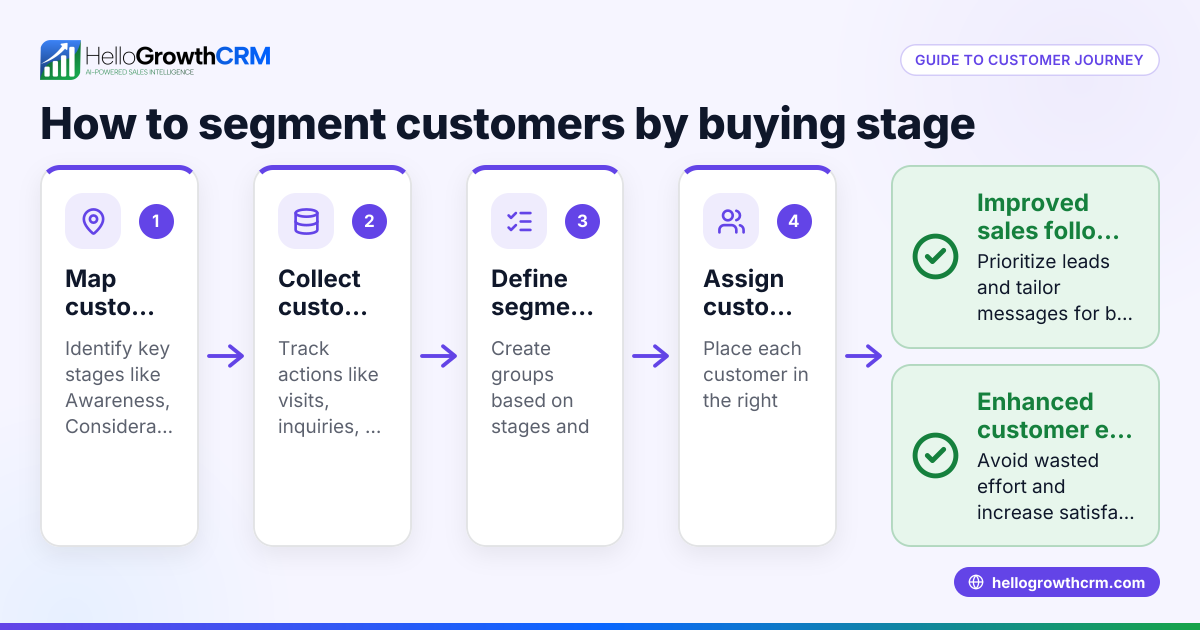
Audience segmentation means dividing your overall market into smaller groups of people who share similar characteristics such as demographics, behaviors, or interests. This targeted approach makes your inbound marketing more relevant and effective by delivering the right message to the right audience at the right time.
Why this comes up / what goes wrong
Small-business owners often face challenges because they treat all potential customers as one uniform group. Without segmentation, marketing messages become generic and less appealing, leading to slower lead follow-up, lower engagement, and lost sales opportunities. For example, sending the same email to new leads and long-term customers ignores their different needs and buying stages. This wastes time and resources and reduces your marketing impact.
Step-by-step
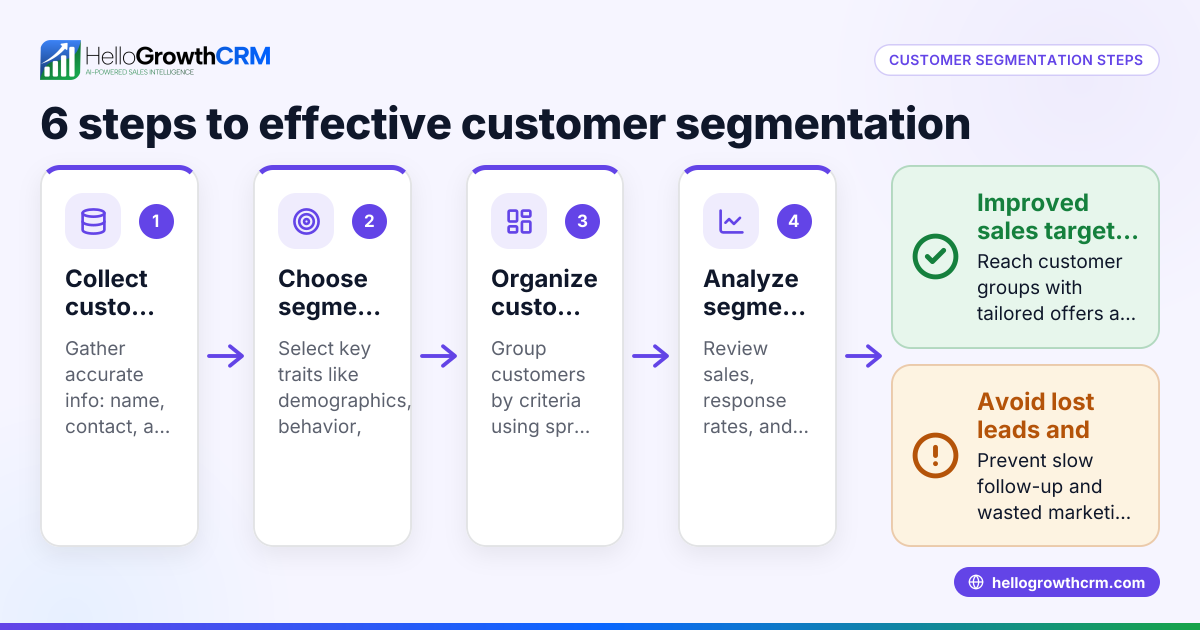
- Collect Data About Your Audience
- Gather information from website forms, past purchases, customer surveys, and social media interactions.
- Check for key attributes like age, location, industry, purchase history, and communication preferences.
- Define Segmentation Criteria
- Choose criteria relevant to your business goals, such as geographic location, buyer persona, or product interest.
- Verify you have enough data to create meaningful segments without making them too narrow.
- Create Audience Segments
- Group your contacts based on the selected criteria.
- Check each segment for size and potential value to ensure they are actionable.
- Customize Marketing Messages and Offers
- Develop tailored content and promotions that speak directly to each segment’s needs.
- Test different messaging styles and offers to find what works best.
- Deliver Segmented Campaigns
- Use email, WhatsApp, SMS, or other channels to send targeted sequences.
- Monitor engagement metrics like open rates, click-throughs, and conversions by segment.
- Analyze and Refine Segments
- Review campaign results to identify which segments perform well.
- Adjust segmentation criteria or messaging based on feedback and data.
Example (fictional figures)
A two-location dental practice in Columbus, Ohio, wants to improve inbound marketing by segmenting its audience.
- Total leads collected in Q1 2026: 2,000
- Segments created:
- New patients (never visited): 1,200
- Returning patients (visited in last 12 months): 500
- Patients interested in cosmetic dentistry: 300
They send a welcome email with a first-visit discount to new patients, appointment reminders to returning patients, and a brochure about cosmetic services to the interested group.
Results after one month:
- New patients who opened the email: 600
- Returning patients who opened the email: 300
- Cosmetic dentistry interest who opened the email: 150
Conversion rates:
- New patients booked appointments: 120
- Returning patients booked appointments: 90
- Cosmetic dentistry consultations booked: 38
Total appointments booked = 120 + 90 + 38 = 248
This targeted approach helped the practice convert more leads by addressing each group’s specific interests and needs.
Common mistakes
- Over-segmentation
- Creating too many small groups makes campaigns complex and hard to manage.
- Prevent this by focusing on key segments that represent meaningful differences.
- Using outdated or incomplete data
- Segments based on old information lose relevance quickly.
- Prevent this by regularly updating your contact data and verifying accuracy.
- Failing to personalize content within segments
- Sending generic messages to segments misses engagement opportunities.
- Prevent this by customizing offers, subject lines, and calls to action.
- Ignoring channel preferences
- Not all segments prefer the same communication channels.
- Prevent this by asking leads how they prefer to be contacted and segmenting by channel.
- Neglecting to measure results by segment
- Without tracking, you can’t know which segments perform best.
- Prevent this by using tools that report engagement and conversion metrics per segment.
For managing segmented campaigns efficiently, consider a WhatsApp and SMS CRM that supports targeted sequences and tracking, and a built-in CRM dialer to follow up on leads quickly. Learn more about WhatsApp and SMS CRM and the built-in CRM dialer.
Frequently asked questions
What is the difference between segmentation and targeting? Segmentation divides your audience into groups based on shared traits, while targeting means choosing which segments to focus your marketing efforts on. You segment first, then target the most valuable or relevant groups.
How often should I update my audience segments? Segments should be reviewed and updated regularly, ideally monthly or quarterly, to reflect new data, changes in customer behavior, or shifts in your business strategy.
Can small businesses benefit from audience segmentation? Yes, even small businesses with limited leads benefit by sending more relevant messages, which improves engagement and saves time. Segmentation helps prioritize follow-up and tailor offers without needing a large marketing budget.
What tools can help with audience segmentation? Customer Relationship Management (CRM) systems that integrate lead capture, messaging, and reporting simplify segmentation. For example, a CRM that supports WhatsApp and SMS sequences can automate sending targeted campaigns and track results. See HelloGrowthCRM for the United States for options.
Is segmentation only useful for email marketing? No, segmentation applies to all inbound marketing channels including email, SMS, WhatsApp, social media, and website content. Tailoring messages across channels reinforces your marketing impact.
Key takeaways
- Audience segmentation divides your leads into groups with shared characteristics to improve message relevance.
- Tailored marketing increases engagement, lead quality, and conversion rates.
- Collect accurate data, choose meaningful criteria, and customize your campaigns for each segment.
- Avoid common mistakes like over-segmentation and ignoring channel preferences.
- Use CRM tools that support segmented campaigns and tracking to manage your efforts efficiently.
Start improving your inbound marketing by segmenting your audience today. Start on the Free Forever plan (200 leads, no credit card).
Ready to put this into practice?
Set up your pipeline, WhatsApp follow-ups, and AI lead scoring in minutes — free, no credit card.
Try HelloGrowthCRM freeGet CRM tips in your inbox
Join thousands of sales professionals who get weekly insights on CRM strategy, AI automation, and pipeline optimization.

The HelloGrowthCRM team publishes guides on CRM strategy, AI sales tools, and revenue operations for small business sales teams.