HelloGrowthCRM software
Built for real small-business sales teams
HelloGrowthCRM helps reps qualify faster, follow up on time, and close more deals—with practical automation in one place.
- AI lead scoring and pipeline visibility
- Built-in dialer, WhatsApp, and email automation
- Sales forecasting and RevOps-ready reporting
Generally, sending more than five follow up emails without a response is considered too many. This often leads to diminishing returns and can annoy potential customers. This article explains why this question matters, offers a step-by-step approach to follow-up, shares a practical example, highlights common mistakes, and shows how HelloGrowthCRM can help manage follow-ups efficiently.
Why this comes up / what goes wrong
Small-business owners often struggle with balancing persistence and politeness in sales follow-ups. They want to convert leads but worry about pushing too hard and losing goodwill. Without a clear strategy, some send too few follow-ups and miss opportunities, while others send too many, causing frustration. Many small teams rely on manual tracking via email, text messages, or spreadsheets, which increases the chance of mistakes like forgetting to stop follow-ups after a reply or sending repetitive messages. This uncertainty leads to the question: how many follow up emails is too many?
Step-by-step
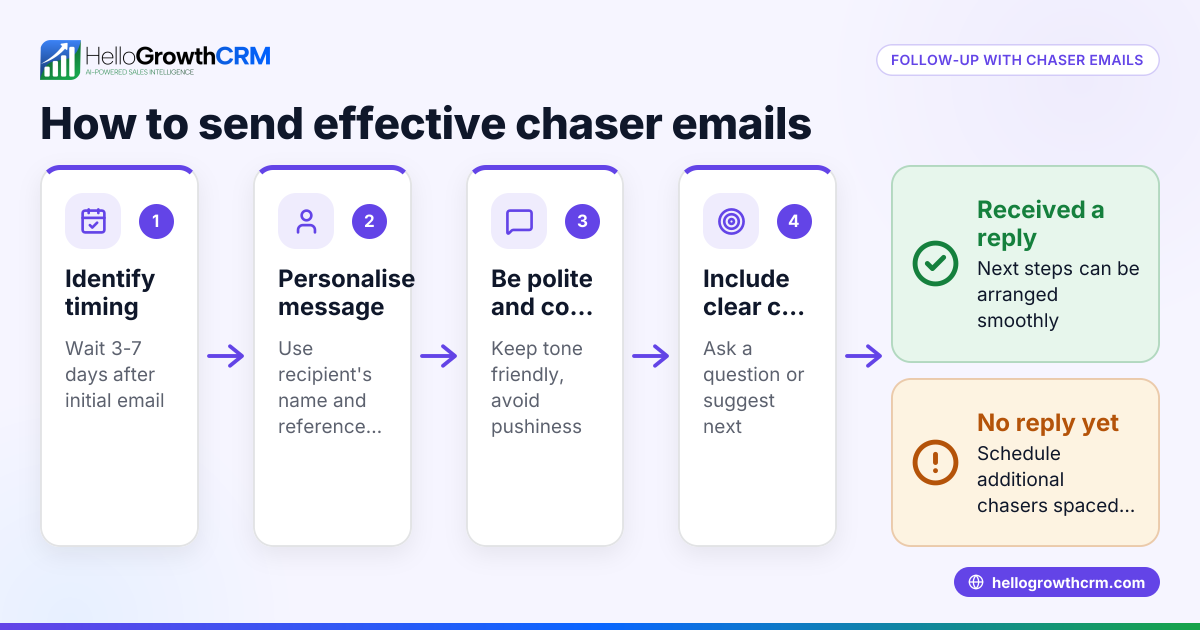
- Start with a clear plan: Limit your follow-up sequence to about five emails over two weeks. This balances being persistent without overwhelming the prospect.
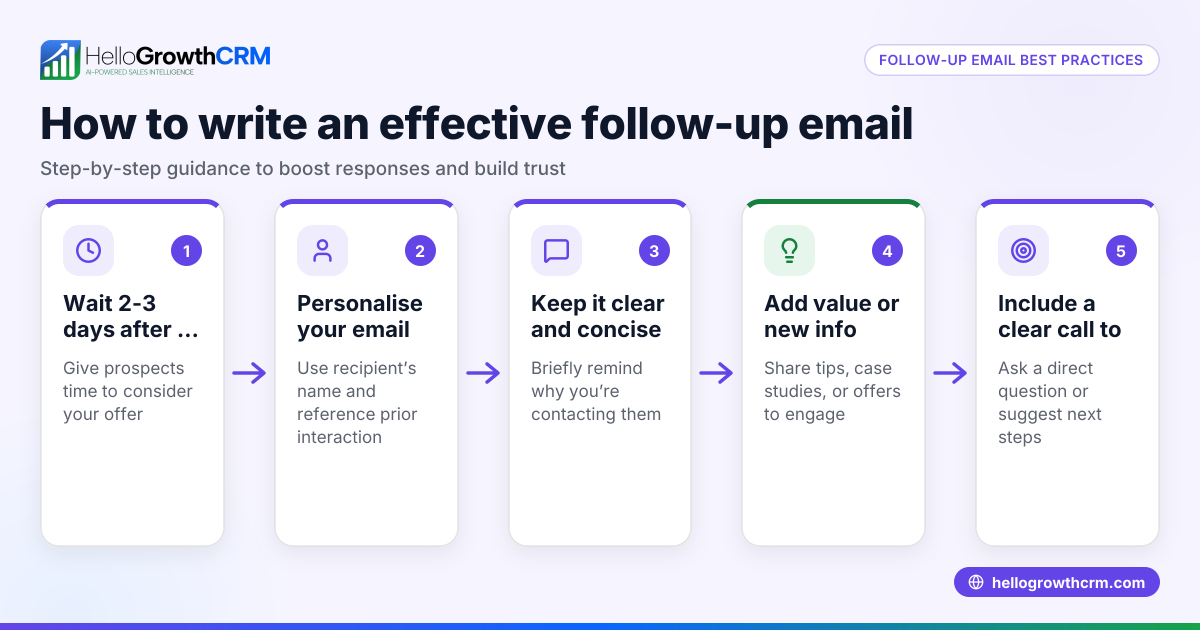
- Craft varied messages: Each follow-up should have a different focus or call to action. Avoid repeating the same message to prevent annoyance.
- Schedule follow-ups thoughtfully: Space them out logically—e.g., after 2 days, then 3 days, then 5 days—to give prospects time to respond without feeling pressured.
- Track responses carefully: Stop sending follow-ups immediately when the prospect replies, whether the response is positive or negative.
- Review and adjust: Monitor response rates and adjust the number or timing of follow-ups based on what works best for your audience.
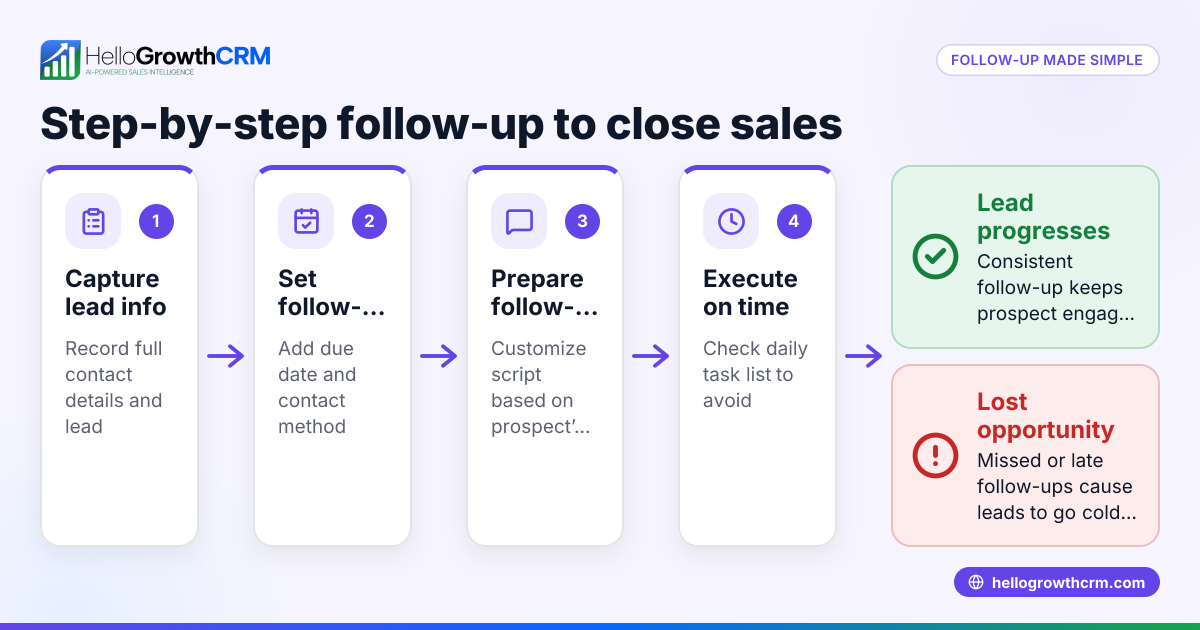
- Use tools to manage tasks: Assign each follow-up as a task with a due date to avoid missing or sending duplicate emails.
- Respect opt-outs: If a prospect asks not to be contacted, remove them from follow-up sequences promptly.
For more on managing follow-up tasks, see sales task boards. For automating follow-ups, explore email automation and sequences.
Example (fictional figures)
A residential real-estate team in Phoenix, Arizona, wants to follow up on 100 leads generated from a recent online campaign. They decide on a five-step follow-up email sequence over 14 days.
- Step 1: Send initial email on 03/01/2026.
- Step 2: Follow-up email #1 on 03/03/2026.
- Step 3: Follow-up email #2 on 03/06/2026.
- Step 4: Follow-up email #3 on 03/11/2026.
- Step 5: Follow-up email #4 on 03/15/2026.
Assuming a 10% positive response rate after the first email, 20% after the second, 15% after the third, and 5% after the final follow-up:
- Initial emails sent: 100
- Responses after Step 1: 100 × 10% = 10 responses
- Remaining leads: 100 - 10 = 90
- Responses after Step 2: 90 × 20% = 18 responses
- Remaining leads: 90 - 18 = 72
- Responses after Step 3: 72 × 15% = 11 responses
- Remaining leads: 72 - 11 = 61
- Responses after Step 4: 61 × 5% = 3 responses
- Remaining leads: 61 - 3 = 58
Total responses: 10 + 18 + 11 + 3 = 42
The team avoids sending more than five follow-ups, preventing annoyance and focusing efforts on engaged leads.
Common mistakes
- Sending too many follow-ups: Over five emails can irritate prospects. Prevent this by setting a maximum follow-up limit.
- Ignoring responses: Continuing follow-ups after a reply wastes time and harms reputation. Use tools to track replies and stop sequences automatically.
- Repeating the same message: Sending identical emails reduces interest. Vary your content and calls to action.
- Poor timing: Following up too frequently or too sparsely reduces effectiveness. Schedule follow-ups with thoughtful intervals.
- Manual tracking errors: Relying on memory or spreadsheets can cause missed or duplicate emails. Use task boards to organize follow-ups.
- Not respecting opt-outs: Failing to remove uninterested prospects can lead to complaints. Always honor unsubscribe requests.
For help with managing tasks and follow-ups, see sales task boards.
Doing this in HelloGrowthCRM
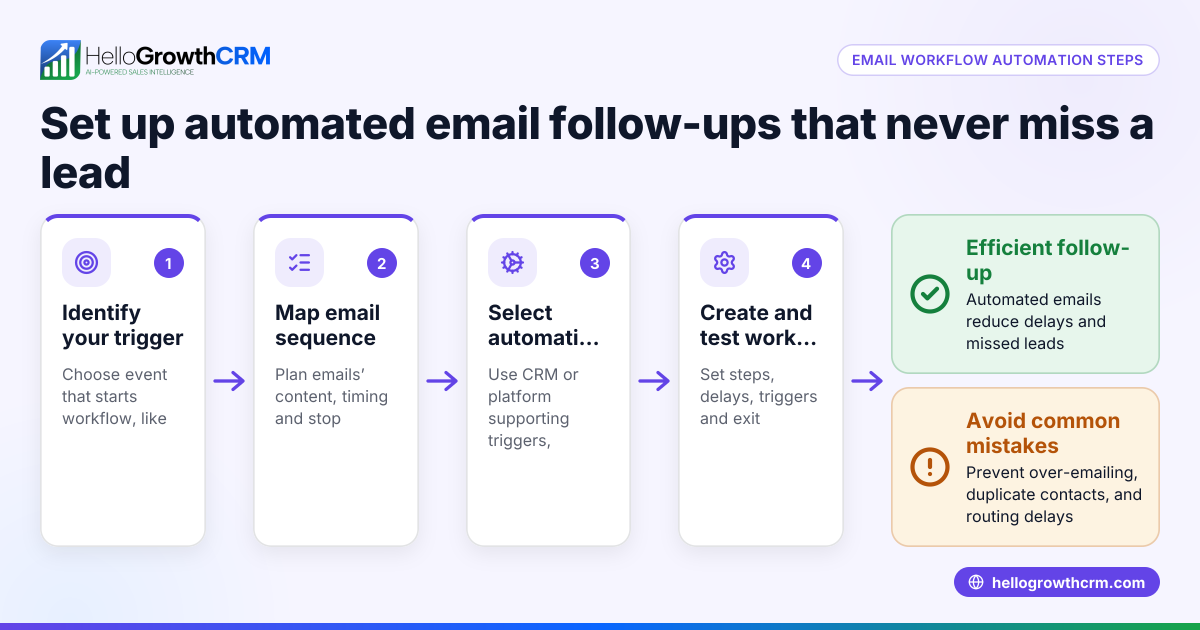
HelloGrowthCRM helps small and mid-sized businesses manage follow-ups effectively. Each follow-up becomes a task with a due date on an easy-to-use task board, so your team never misses or duplicates messages. Automated sequences let you set a five-step follow-up over two weeks that runs on its own and stops immediately when a prospect replies. Additionally, AI agents draft follow-up messages after calls for your review and sending, saving time and ensuring consistency. Learn more about these features at HelloGrowthCRM for the United States.
Frequently asked questions
How many follow up emails should I send before stopping? Aim for no more than five follow-up emails. This number balances persistence with respect for your prospect's time and reduces annoyance.
What if my prospect never replies? After five follow-ups without a reply, it’s best to stop and focus on warmer leads. Continuing beyond this often wastes resources and harms your brand.
How often should I space my follow-up emails? Start with a follow-up 2 days after the first email, then space subsequent emails by 3 to 5 days. This gives prospects time to respond without feeling pressured.
Can I automate follow-ups to save time? Yes, using tools like HelloGrowthCRM’s sequences and campaigns, you can automate a multi-step follow-up that stops as soon as the prospect replies. See email automation and sequences.
How do I avoid annoying prospects with follow-ups? Vary your message content, space out follow-ups logically, and always stop when a prospect responds. Respect opt-outs promptly.
What if I accidentally send a follow-up after a reply? This can damage trust. Use CRM tools to track interactions and stop follow-ups automatically to avoid this mistake.
Key takeaways
- Sending more than five follow-up emails without a response is usually too many.
- Space follow-ups over two weeks with varied messages to keep prospects engaged.
- Stop follow-ups immediately when a prospect replies or opts out.
- Use task boards and automation to manage follow-ups efficiently and avoid errors.
- Respect prospect preferences to maintain goodwill and increase chances of conversion.
Start managing your follow-ups efficiently and avoid losing leads to slow or excessive follow-up. Start on the Free Forever plan (200 leads, no credit card).
Ready to put this into practice?
Set up your pipeline, WhatsApp follow-ups, and AI lead scoring in minutes — free, no credit card.
Try HelloGrowthCRM freeGet CRM tips in your inbox
Join thousands of sales professionals who get weekly insights on CRM strategy, AI automation, and pipeline optimization.

The HelloGrowthCRM team publishes guides on CRM strategy, AI sales tools, and revenue operations for small business sales teams.