HelloGrowthCRM software
Built for real small-business sales teams
HelloGrowthCRM helps reps qualify faster, follow up on time, and close more deals—with practical automation in one place.
- AI lead scoring and pipeline visibility
- Built-in dialer, WhatsApp, and email automation
- Sales forecasting and RevOps-ready reporting
To build an effective marketing campaign calendar for your Indian business, follow clear steps that organise your marketing around important dates, customer needs, and resources. This guide explains why a calendar is essential, walks you through the process step-by-step, shows a worked example with Indian figures, highlights common mistakes, and describes how HelloGrowthCRM can support your campaigns.
Why this comes up / what goes wrong
Many small-business owners in India struggle to keep marketing organised. Without a campaign calendar, efforts become reactive instead of planned, causing missed opportunities during key festivals like Diwali or Eid, inconsistent messaging, and wasted budget. Businesses often run campaigns on WhatsApp or spreadsheets without clear timelines or follow-up plans, letting leads go cold. A marketing campaign calendar aligns your team, budget, and messaging with market rhythms and customer buying behaviour.
Step-by-step
- Define your marketing goals: Decide what you want to achieve—brand awareness, lead generation, or sales growth. Make goals specific and measurable.
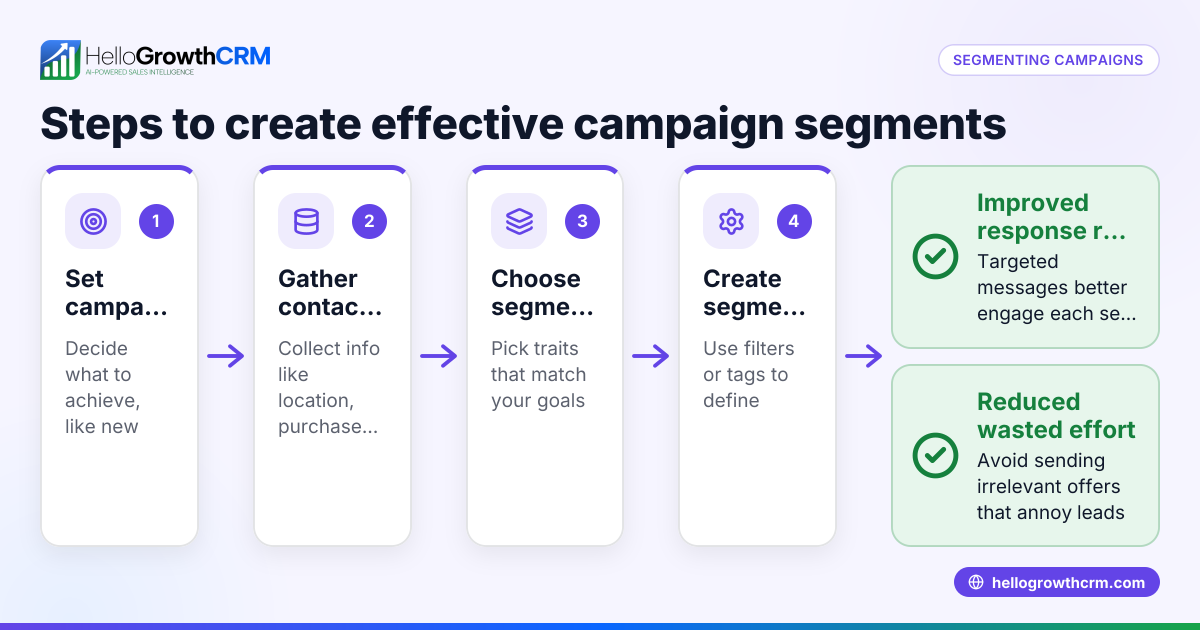
- Identify your target audience: Segment customers by demographics, location, or buying behaviour to tailor campaigns.
- List key dates and events: Mark Indian festivals (e.g., Diwali, Navratri), national holidays, industry events, and your product launches or sales periods.
- Set your budget: Allocate funds for each campaign based on expected returns and total marketing budget.
- Choose campaign types and channels: Decide whether to use WhatsApp, SMS, email, social media, or offline methods. Check your team’s ability to manage these channels.
- Create a timeline: Assign start and end dates for campaigns, including preparation and follow-up periods.
- Plan content and messaging: Draft messages and offers suitable for each campaign and audience segment.
- Assign responsibilities: Specify who handles content creation, messaging, follow-up calls, and reporting.
- Set follow-up schedules: Plan when and how to follow up with leads, using reminders or automation.
- Track and review: Monitor campaign performance and update the calendar monthly based on results.
Make your calendar accessible to all team members and update it regularly.
Use tools like the built-in CRM dialer to help your telecalling team follow up efficiently.
Example (fictional figures)
Rajesh runs a small textile business in Surat and wants to plan a marketing campaign calendar for the next three months.
- Goal: Increase sales by ₹3,00,000 over three months.
- Target audience: Retail shops in Gujarat.
- Key dates: Navratri (1 October), Diwali (24 October), Christmas (25 December).
- Budget: ₹1,50,000 total.
Step 1: Allocate budget for each festival:
- Navratri: ₹50,000
- Diwali: ₹70,000
- Christmas: ₹30,000
Step 2: Plan WhatsApp and SMS campaigns for each festival.
Step 3: Set campaign dates:
- Navratri: 15 September to 5 October (21 days)
- Diwali: 10 October to 30 October (21 days)
- Christmas: 1 December to 26 December (26 days)
Step 4: Assign team members for content, messaging, and follow-up.
Step 5: Schedule a 5-step follow-up sequence over two weeks after each campaign launch.
Budget check example for Diwali:
₹70,000 allocated
Campaign duration: 21 days
Daily budget = ₹70,000 ÷ 21 = ₹3,333 per day
Expected sales target for Diwali = ₹1,50,000
Rajesh monitors daily spends and adjusts campaigns accordingly.
Common mistakes
- Not aligning campaigns with key dates: Prevent by researching Indian festivals and industry events well in advance.
- Ignoring follow-up: Leads go cold without timely follow-up. Use reminders or automation.
- Overloading channels: Don’t spam customers on WhatsApp or SMS; space out messages respectfully.
- Unclear responsibilities: Assign tasks clearly to avoid confusion.
- No budget monitoring: Track spends daily to avoid overspending.
- Using spreadsheets without updates: Keep your calendar live and accessible to your team.
Doing this in HelloGrowthCRM
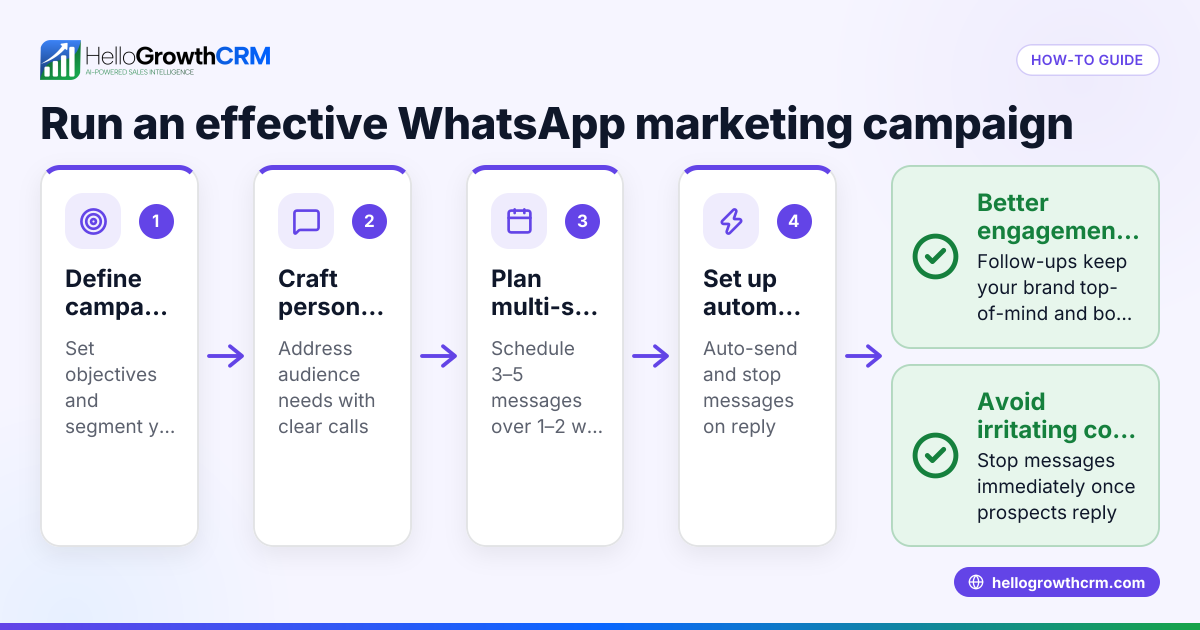
HelloGrowthCRM offers automated sequences that run a five-step follow-up over two weeks and stop immediately when a prospect replies. This saves time and improves engagement by automating respectful follow-ups. Learn more about WhatsApp and SMS CRM and how these features fit into your campaign calendar.
Frequently asked questions
What is a marketing campaign calendar? A marketing campaign calendar is a schedule that outlines when and how marketing activities will happen throughout the year. It helps businesses plan campaigns around key dates and track progress.
How often should I update my campaign calendar? Update your calendar monthly or after each campaign to reflect results and new opportunities. This keeps your marketing agile and relevant.
Can I use WhatsApp for marketing campaigns in India? Yes, WhatsApp is widely used in India for business communication. However, campaigns should respect customer preferences and avoid spamming. HelloGrowthCRM’s sequences help automate respectful follow-ups.
How do I measure the success of my campaigns? Track metrics like leads generated, sales closed, and engagement rates. Use these insights to improve future campaigns.
Can small teams manage multiple campaigns? Yes, with clear responsibilities and tools like HelloGrowthCRM’s automated sequences, small teams can manage follow-ups effectively without overload.
Key takeaways
- Define clear goals, audience, and budget before planning.
- Align campaigns with Indian festivals and key dates.
- Schedule follow-ups to keep leads engaged.
- Assign clear roles and track progress regularly.
- Avoid spamming by spacing messages and respecting customer preferences.
- Use tools like HelloGrowthCRM to automate follow-ups and improve efficiency.
Start organising your marketing efforts today with a clear campaign calendar to boost sales and customer engagement.
Try HelloGrowthCRM and start on the Free Forever plan (200 leads, no credit card) to manage your campaigns and follow-ups efficiently.
Ready to put this into practice?
Set up your pipeline, WhatsApp follow-ups, and AI lead scoring in minutes — free, no credit card.
Try HelloGrowthCRM freeGet CRM tips in your inbox
Join thousands of sales professionals who get weekly insights on CRM strategy, AI automation, and pipeline optimization.

The HelloGrowthCRM team publishes guides on CRM strategy, AI sales tools, and revenue operations for small business sales teams.