HelloGrowthCRM software
Built for real small-business sales teams
HelloGrowthCRM helps reps qualify faster, follow up on time, and close more deals—with practical automation in one place.
- AI lead scoring and pipeline visibility
- Built-in dialer, WhatsApp, and email automation
- Sales forecasting and RevOps-ready reporting
To build a marketing campaign calendar in the UK, begin by clearly defining your marketing goals. Then identify important UK-specific dates such as public holidays, industry events, and product launches. Plan campaigns to align with these dates, break them down into tasks with assigned owners and deadlines, and set reminders to track progress. This article explains why a calendar is essential, provides detailed steps, a worked example with GBP figures, common mistakes to avoid, and how HelloGrowthCRM can help automate follow-ups.
Why this comes up / what goes wrong
Many UK small-business owners juggle multiple marketing activities across email, social media, WhatsApp, and SMS. Without a marketing campaign calendar, campaigns often overlap or miss key dates, leading to wasted budget and missed sales opportunities. Teams can lose track of who is responsible for what and when deadlines are due, causing slow lead follow-up and lost prospects. A clear marketing campaign calendar organises efforts, coordinates tasks, and maintains consistent outreach.
Step-by-step
- Define your marketing goals: Decide on specific, measurable goals such as increasing brand awareness, generating leads, boosting sales, or improving customer retention. Check that goals are clear and realistic.
- Identify key dates and events: List UK public holidays, seasonal trends, industry trade shows, and planned product launches. Use UK calendars and industry newsletters to confirm dates.
- Choose campaign types and channels: Select the marketing channels you will use, such as email blasts, WhatsApp sequences, social media posts, or SMS offers. Check which channels your audience prefers.
- Map campaigns to dates: Schedule each campaign to start and end on dates that align with your goals and key events. Check for overlapping campaigns that might compete for attention.
- Break campaigns into tasks: For each campaign, list tasks like content writing, design, approvals, scheduling, and follow-up calls. Assign each task to a team member and set deadlines.
- Set reminders and checkpoints: Use calendar alerts or project management tools to notify team members of upcoming deadlines and review progress regularly.
- Track results and update: After campaigns finish, record outcomes such as leads generated or sales made. Use this data to adjust your future marketing calendar.
Example (fictional figures)
A Birmingham accountancy practice plans a marketing campaign calendar for Q3 2024 to increase client leads.
- Goal: Generate 50 new leads by 30/09/2024
- Key dates: 01/08/2024 (campaign start), 31/08/2024 (end of summer offer), 15/09/2024 (industry seminar)
Campaigns:
- Campaign 1: Email blast on 01/08/2024 offering a 10% discount on tax planning services
- Campaign 2: WhatsApp follow-up sequence starting 02/08/2024 for two weeks
- Campaign 3: Social media posts promoting the seminar on 10/09/2024
Task schedule:
- Content writing deadline: 15/07/2024
- Design approval deadline: 20/07/2024
- Email scheduling deadline: 25/07/2024
- Follow-up calls: daily from 02/08/2024 to 16/08/2024
Lead expectations:
- Leads from email blast: 30
- Leads from WhatsApp follow-up: 15
- Leads from seminar promotion: 5
Calculation: 30 + 15 + 5 = 50 new leads target
Common mistakes
- Overloading the calendar: Scheduling too many campaigns simultaneously causes poor execution. Prevent this by prioritising campaigns and spacing them out.
- Ignoring UK-specific dates: Missing public holidays or local events reduces campaign relevance. Always check a UK calendar to plan accordingly.
- No task assignments or deadlines: Without clear responsibilities, tasks get delayed. Assign tasks to team members and set firm deadlines.
- Failing to track results: Not reviewing campaign outcomes means missing opportunities to improve. Track results and adjust future plans.
- Using uncoordinated tools: Managing campaigns separately on WhatsApp, email, and spreadsheets leads to confusion. Use integrated solutions like HelloGrowthCRM to streamline outreach and follow-ups (see WhatsApp and SMS CRM).
Doing this in HelloGrowthCRM
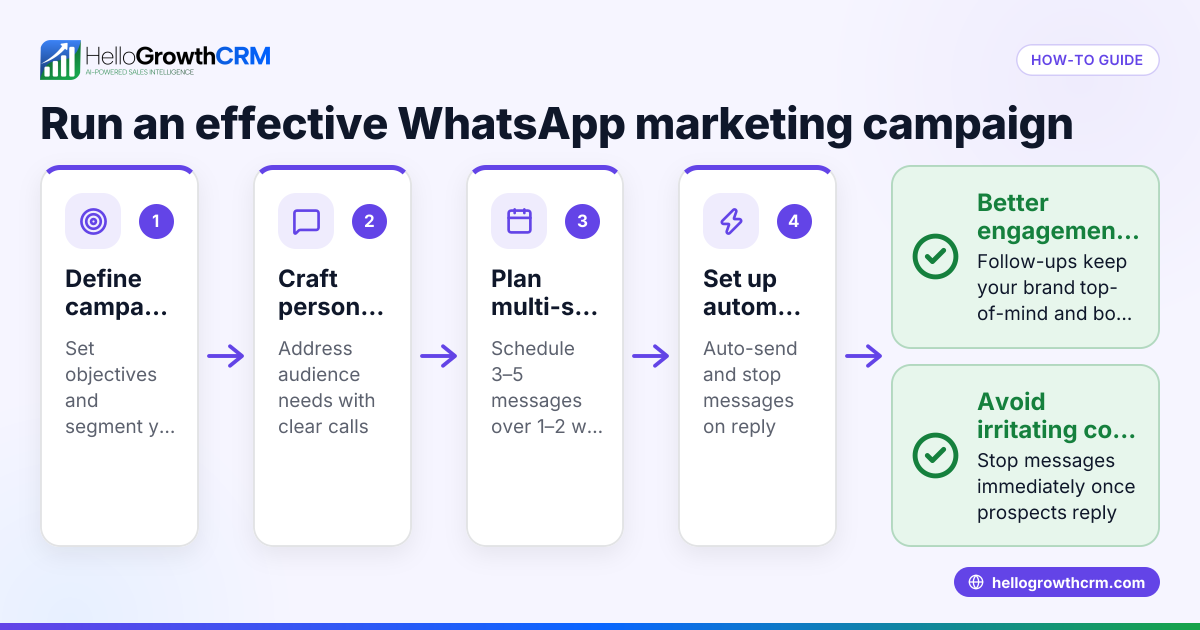
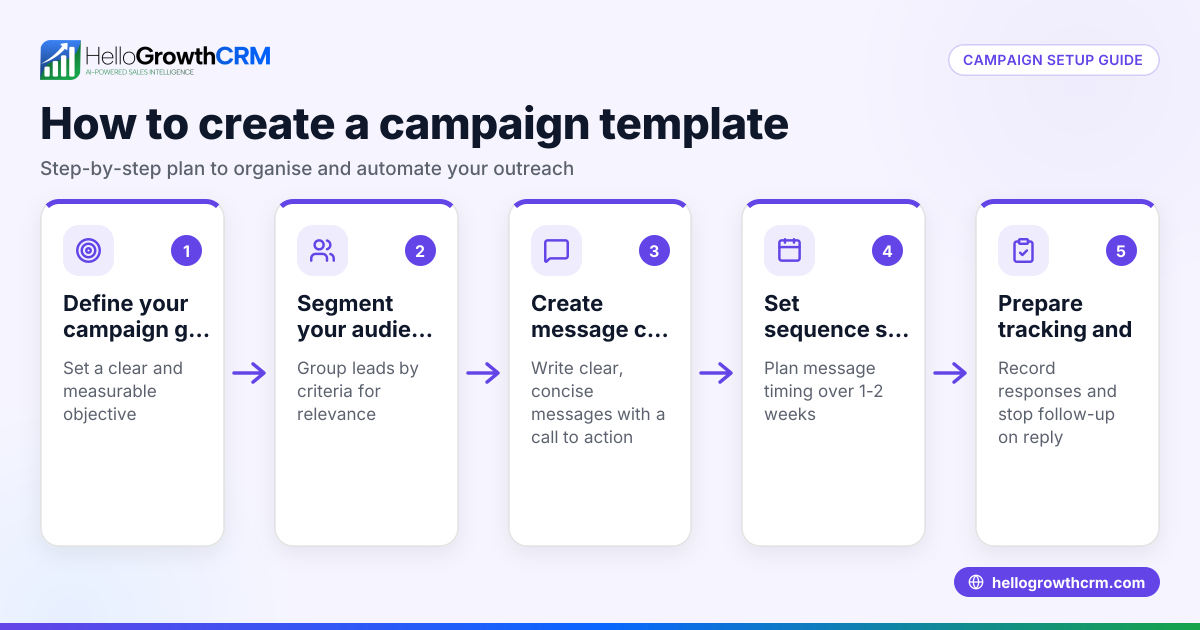
HelloGrowthCRM offers Sequences and campaigns that automate multi-step outreach workflows. For example, a five-step follow-up over two weeks runs automatically and stops immediately when a prospect replies. This helps UK small and mid-sized businesses keep campaigns on schedule and maintain consistent contact without manual effort. Learn more about these features at HelloGrowthCRM for the United Kingdom.
Frequently asked questions
What is a marketing campaign calendar? It is a schedule that maps out marketing activities over time, showing campaign start and end dates, tasks, and deadlines. It helps businesses organise marketing efforts and ensure they happen on time.
How often should I update my marketing calendar? Review and update your calendar monthly or after major campaigns to keep it aligned with business goals and market changes.
Can I automate follow-ups with HelloGrowthCRM? Yes. HelloGrowthCRM’s Sequences feature automates multi-step outreach via email, SMS, and WhatsApp, running follow-ups until a prospect replies.
How do I decide which campaigns to run? Choose campaigns based on your marketing goals, audience preferences, and key dates. Prioritise those with the highest potential impact.
What tools help with marketing calendars besides spreadsheets? CRM platforms like HelloGrowthCRM can automate campaign sequences, track leads, and integrate communication channels, reducing manual work.
Key takeaways
- Define clear, measurable marketing goals before planning.
- Identify UK-specific key dates and events to schedule campaigns effectively.
- Break campaigns into tasks with assigned owners and deadlines.
- Use reminders and checkpoints to keep tasks on track.
- Track results and update your calendar regularly.
- Avoid uncoordinated tools; consider integrated CRM solutions like HelloGrowthCRM.
Start organising your marketing campaigns today with HelloGrowthCRM. Start on the Free Forever plan (200 leads, no credit card).
Ready to put this into practice?
Set up your pipeline, WhatsApp follow-ups, and AI lead scoring in minutes — free, no credit card.
Try HelloGrowthCRM freeGet CRM tips in your inbox
Join thousands of sales professionals who get weekly insights on CRM strategy, AI automation, and pipeline optimization.

The HelloGrowthCRM team publishes guides on CRM strategy, AI sales tools, and revenue operations for small business sales teams.