HelloGrowthCRM software
Built for real small-business sales teams
HelloGrowthCRM helps reps qualify faster, follow up on time, and close more deals—with practical automation in one place.
- AI lead scoring and pipeline visibility
- Built-in dialer, WhatsApp, and email automation
- Sales forecasting and RevOps-ready reporting
To create an email drip campaign in the USA, start by defining your goal, segmenting your audience, designing a sequence of timed emails, and setting up automation to send these emails over days or weeks. This article covers why you need a drip campaign, detailed steps to build one, a worked example with US figures, common mistakes to avoid, and how HelloGrowthCRM can simplify the process.
Why this comes up / what goes wrong
Small business owners often want to nurture leads without overwhelming them or losing contact. They struggle with manual follow-ups, forgetting to send emails, or sending the wrong message at the wrong time. This leads to lost sales and wasted effort. An email drip campaign automates follow-up emails in a sequence, helping businesses stay top-of-mind and move prospects closer to buying.
Many small teams use email, text, and spreadsheets separately, making it hard to track who received what and when. Without clear steps, owners waste time guessing the right frequency and content for follow-ups.
Step-by-step
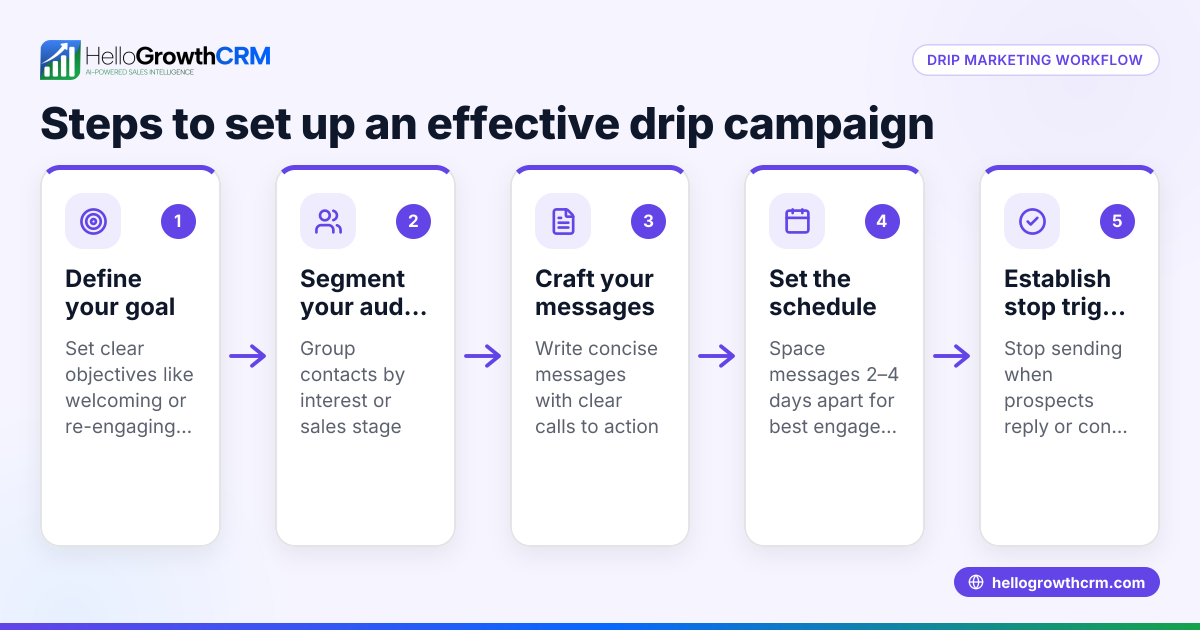
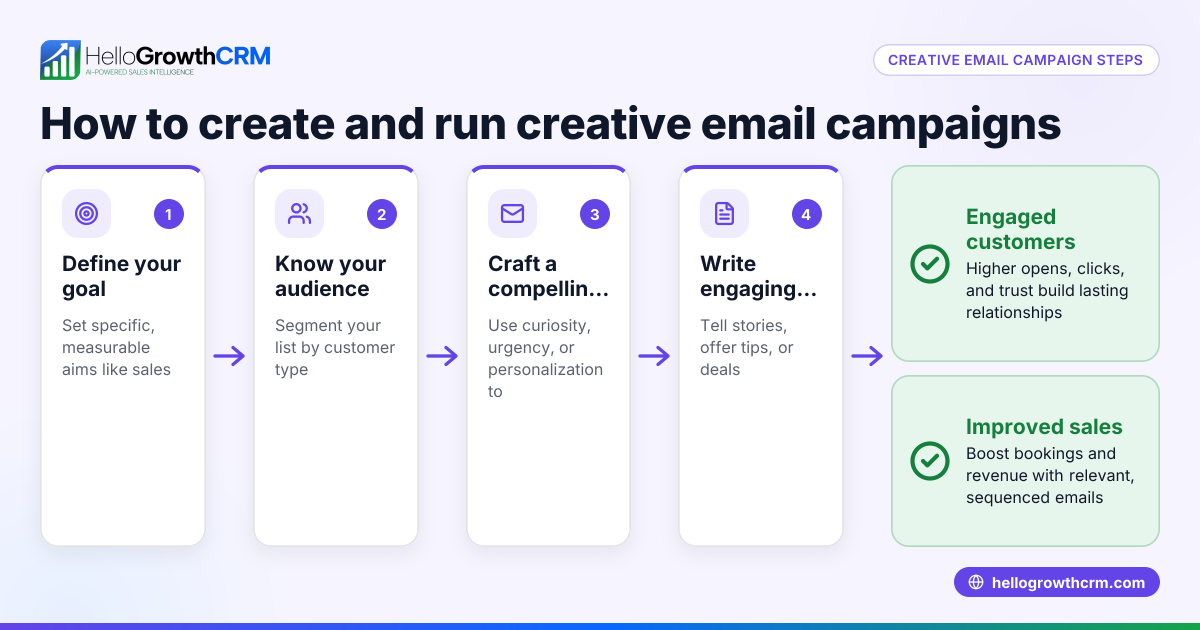
- Define your campaign goal: Decide what you want to achieve, such as booking a demo, confirming a purchase, or educating prospects. Check that your goal is specific and measurable.
- Segment your audience: Group your contacts by relevant criteria like interest, location, or stage in the sales funnel. This ensures messages are relevant.
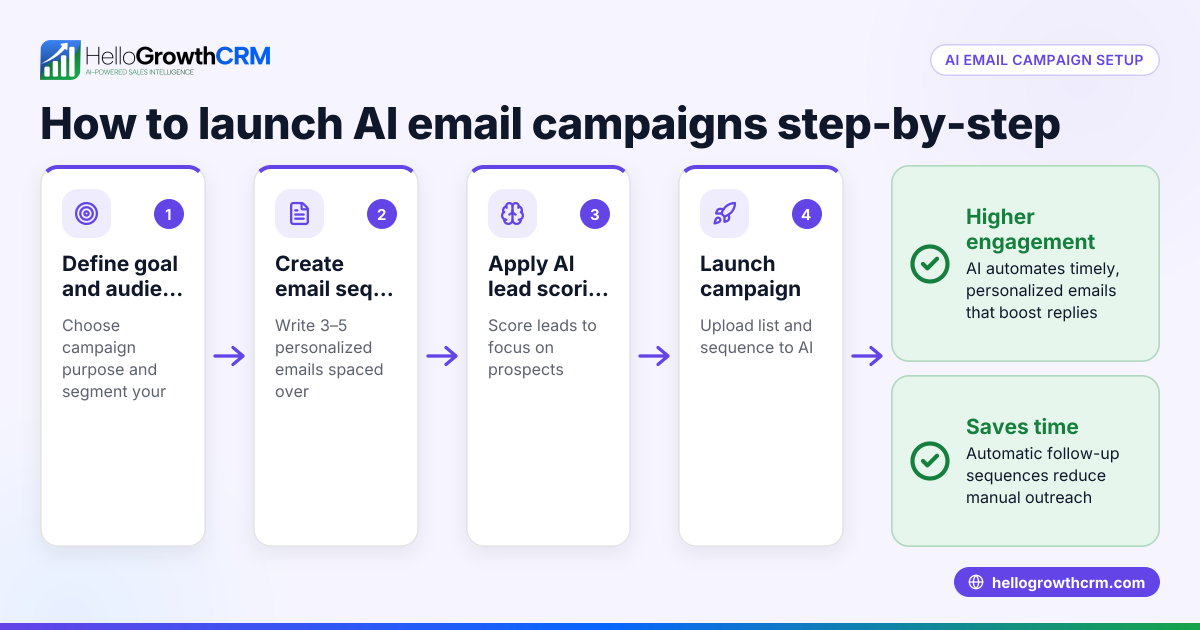
- Plan your email sequence: Write 3 to 5 emails spaced over 1 to 2 weeks. Each email should have a clear purpose and call to action. For example, an introduction, a follow-up with benefits, a case study, and a final reminder.
- Set timing between emails: Common intervals are 2-3 days between emails. The timing should balance staying in touch without spamming.
- Choose your email subject lines and content: Make subject lines clear and engaging. Keep emails concise and focused on the recipient's needs.
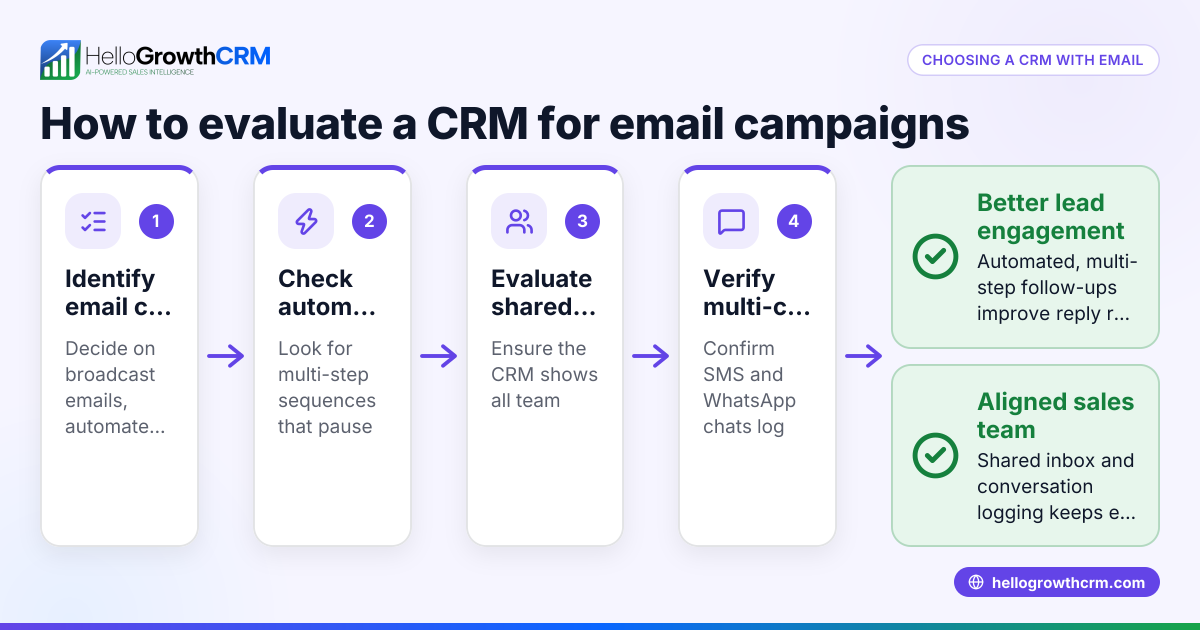
- Set up automation: Use an email tool or CRM that supports sequences to schedule sending. Automation should stop if the prospect replies.
- Test your sequence internally: Send the emails to yourself or your team to check formatting, links, and timing.
- Launch your campaign: Start sending to your selected segment.
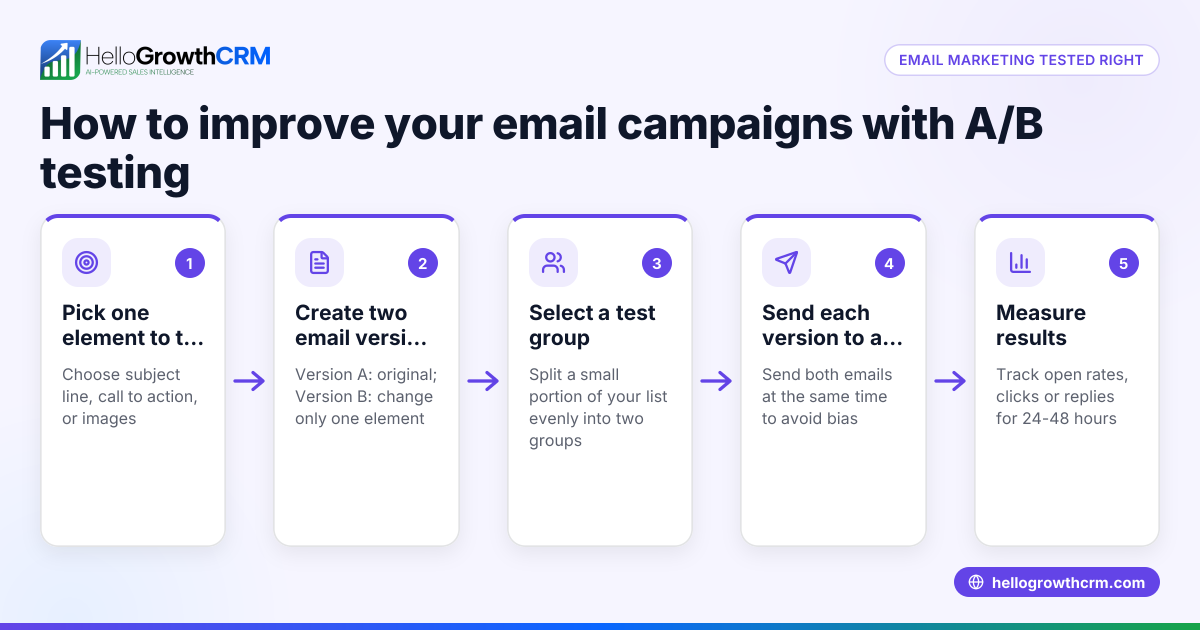
- Monitor and adjust: Track open rates, replies, and conversions. Adjust timing or content based on results.
- Follow up personally when prospects reply: Respond promptly to keep the conversation going.
For more about automated sequences, see email automation and sequences.
Example (fictional figures)
A B2B software reseller in Denver, Colorado, wants to book demos with leads from a recent trade show.
- Goal: Book 10 demos within 3 weeks.
- Audience: 100 qualified leads.
- Sequence: 5 emails over 14 days.
Email schedule:
- Day 1: Introduction and demo offer.
- Day 4: Benefits of the software.
- Day 7: Customer success story.
- Day 11: Reminder and limited-time offer.
- Day 14: Final follow-up.
Assuming a 20% open rate and 10% reply rate per email:
- Day 1: 100 emails sent.
- Replies expected: 100 × 10% = 10 replies (goal met early if all convert).
- If no reply, Day 4 email sent to 90 leads.
- Replies expected: 90 × 10% = 9 replies.
Total replies could exceed the goal, but the campaign stops sending once a prospect replies.
This example shows how spreading messages over time and stopping on reply saves effort and increases chances of booking demos.
Common mistakes
- Sending too many emails too quickly: This can annoy leads. Prevent by spacing emails 2-3 days apart.
- Ignoring segmentation: Sending the same emails to all contacts reduces relevance. Prevent by grouping contacts by interest or behavior.
- No call to action or unclear next step: Leads won’t know what to do next. Prevent by including a clear, simple call to action in every email.
- Not stopping the sequence when a prospect replies: This wastes effort and can confuse the prospect. Prevent by using automation that halts on reply.
- Failing to test emails before launch: Broken links or formatting errors reduce professionalism. Prevent by sending test emails internally.
- Not monitoring results or adjusting: Without tracking, you miss chances to improve. Prevent by reviewing open and reply rates regularly.
For help managing multi-channel outreach that stops on reply, see WhatsApp and SMS CRM.
Doing this in HelloGrowthCRM
HelloGrowthCRM offers Sequences and campaigns that automate a five-step follow-up over two weeks. The sequence runs on its own and stops the moment the prospect replies, ensuring no wasted effort. Additionally, the HelloMail shared inbox lets your team see replies to quotation emails together on the deal, improving collaboration and response times. Learn more at email automation and sequences.
Frequently asked questions
How long should an email drip campaign last? A typical drip campaign lasts between one and two weeks, with 3 to 5 emails spaced every 2-3 days. This timing keeps your business top-of-mind without overwhelming the prospect.
What content should I include in each email? Start with a friendly introduction and value proposition. Follow with emails that highlight benefits, share testimonials or case studies, and end with a clear call to action like booking a call or demo.
How do I know if my drip campaign is working? Track open rates, click-throughs, and reply rates. If these metrics are low, try adjusting your subject lines, email content, or timing.
Can I use text messages or WhatsApp in my drip campaigns? Yes, multi-channel sequences that include email, SMS, and WhatsApp can increase engagement. HelloGrowthCRM supports this kind of outreach.
How do I handle replies during a drip campaign? Your automation should stop sending further emails to a prospect once they reply. Respond promptly and personally to keep the conversation moving.
Key takeaways
- Define a clear goal and segment your audience before starting.
- Plan 3-5 emails spaced 2-3 days apart with distinct messages.
- Use automation to send emails and stop when prospects reply.
- Test emails internally to avoid errors and track results to improve.
- Avoid sending irrelevant or too frequent emails to prevent annoyance.
- Multi-channel sequences including email, SMS, and WhatsApp improve outreach.
Start your email drip campaign today with HelloGrowthCRM. Start on the Free Forever plan (200 leads, no credit card).
Ready to put this into practice?
Set up your pipeline, WhatsApp follow-ups, and AI lead scoring in minutes — free, no credit card.
Try HelloGrowthCRM freeGet CRM tips in your inbox
Join thousands of sales professionals who get weekly insights on CRM strategy, AI automation, and pipeline optimization.

The HelloGrowthCRM team publishes guides on CRM strategy, AI sales tools, and revenue operations for small business sales teams.