HelloGrowthCRM software
Built for real small-business sales teams
HelloGrowthCRM helps reps qualify faster, follow up on time, and close more deals—with practical automation in one place.
- AI lead scoring and pipeline visibility
- Built-in dialer, WhatsApp, and email automation
- Sales forecasting and RevOps-ready reporting
To bring back customers who have stopped engaging or buying, follow these practical steps to build a customer reactivation campaign suited for Indian small businesses. You will learn how to identify and segment customers, prepare personalized messages, schedule follow-ups, and measure results.
Why this comes up / what goes wrong
Many Indian small and mid-sized businesses face lost revenue when customers become inactive. This happens because:
- Customers forget your brand or products over time.
- No timely reminders or offers reach them to prompt action.
- Sales teams focus mainly on new leads, neglecting past customers.
- Follow-ups are manual, inconsistent, or delayed.
Without a clear process, businesses miss chances to revive valuable customers. Reactivation campaigns are designed to remind customers with relevant, well-timed messages that encourage repeat purchases or engagement.
Step-by-step
- Identify inactive customers: Extract a list of customers who have not purchased or interacted in a chosen period, such as 3 to 6 months. Use your sales records or CRM data to find last purchase or contact dates.
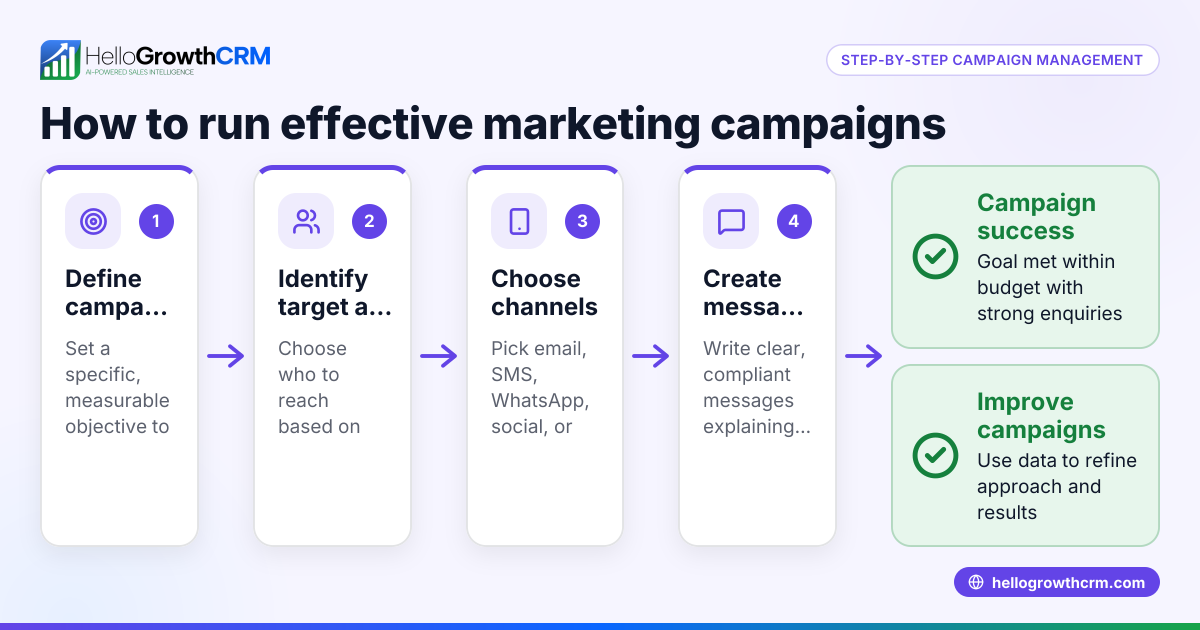
- Segment customers: Group customers by inactivity length (e.g., 3-6 months, 6-12 months), purchase value, or product category. This helps tailor messages to different groups.
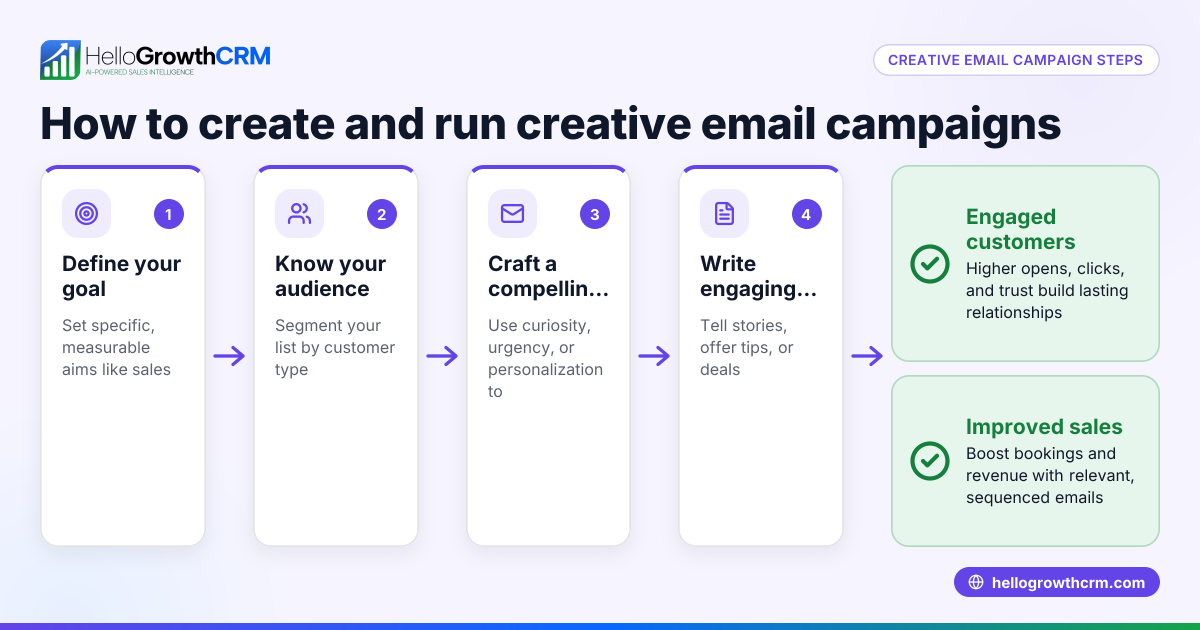
- Define campaign goals: Decide if you want repeat purchases, updated contact details, feedback, or other outcomes.
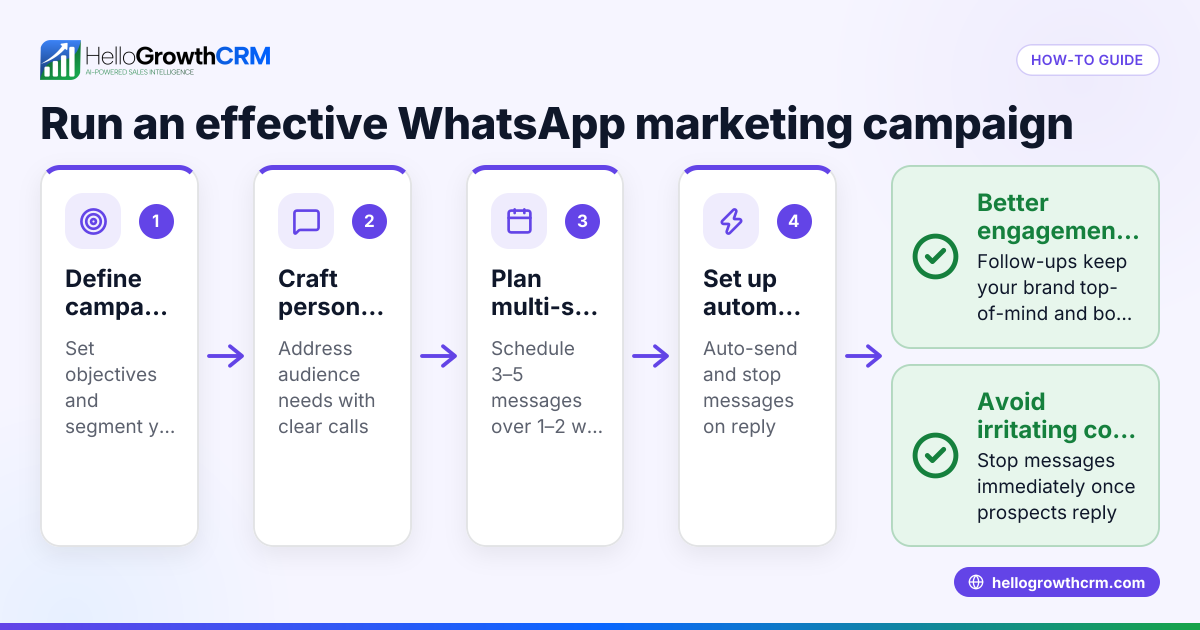
- Craft personalized messages: Prepare 3 to 5 messages addressing customers by name, referencing past purchases, offering discounts or new products, and including a clear call to action.
- Choose communication channels: Select WhatsApp, SMS, or email based on what your customers have responded to before or prefer.
- Schedule multi-step follow-ups: Plan a sequence of messages spaced over 1 to 2 weeks. Each message should build on the previous one, increasing urgency or value.
- Set up tracking: Monitor who opens, replies, or clicks links. Stop sending messages to customers who respond to avoid spamming.
- Analyze results: After the campaign, review which segments responded best, which messages worked, and calculate return on investment.
- Adjust and repeat: Use insights to improve future campaigns.
For managing customer data and scoring their engagement, consider tools integrated with your sales process that automate follow-ups. See customer health score for more.
Example (fictional figures)
A Mumbai-based electronics retailer wants to reactivate customers inactive for 6 months. They have 600 such customers.
- Average past purchase value: ₹3,500
- Campaign offer: 15% discount coupon
- Campaign duration: 2 weeks with 5 messages
Step 1: Segment customers: 600 inactive for over 6 months.
Step 2: Estimate expected response rate: 12% (72 customers).
Step 3: Calculate potential revenue if 72 customers purchase again at average value minus discount.
₹3,500 × 15% discount = ₹3,500 × 0.15 = ₹525 discount per purchase ₹3,500 - ₹525 = ₹2,975 net revenue per reactivated customer ₹2,975 × 72 customers = ₹2,14,200 total revenue
Step 4: Cost of campaign (SMS + WhatsApp messages + staff time): ₹12,000
Step 5: Net gain = ₹2,14,200 - ₹12,000 = ₹2,02,200
This example shows a clear financial benefit from reactivation.
Common mistakes
- Not segmenting customers: Sending the same message to all reduces relevance. Prevent this by grouping customers by inactivity and purchase types.
- Sending too many messages too quickly: Over-messaging annoys customers. Space messages over days and stop once they respond.
- Using generic messaging: Avoid impersonal texts. Use customer names and past purchase references.
- Ignoring customer communication preferences: Use channels your customers engage with, like WhatsApp or SMS. Learn how to manage this in WhatsApp and SMS CRM.
- Not tracking responses or stopping follow-ups: Without tracking, you may waste effort on uninterested customers.
- Failing to analyze campaign results: Without reviewing outcomes, improvements are difficult.
Doing this in HelloGrowthCRM
HelloGrowthCRM offers sequences and campaigns that automate a five-step follow-up over two weeks. These sequences run automatically and stop immediately when a customer replies, preventing over-messaging. After reactivation or sale, service requests remain linked to the same customer record, helping your team manage ongoing relationships efficiently. Learn more about HelloGrowthCRM for India.
Frequently asked questions
How often should I run customer reactivation campaigns? Typically, run reactivation campaigns every 3 to 6 months for customers inactive that long. Running them too frequently may annoy customers, so monitor responses carefully.
Which communication channel works best for reactivation in India? WhatsApp and SMS often have higher engagement rates in India, especially for small businesses. Email can work if your customers regularly check it. Use the channel your customers prefer and respond to.
How do I measure the success of a reactivation campaign? Track response rates such as replies and clicks, repeat purchases, and revenue generated compared to campaign costs. Use these insights to adjust future campaigns.
Can reactivation campaigns be automated? Yes, automation tools like HelloGrowthCRM allow scheduling multi-step sequences that stop when customers respond, saving time and improving follow-up efficiency.
What if customers don’t respond to reactivation campaigns? Consider updating customer data, offering better incentives, or trying different messaging. Some customers may be permanently lost.
Key takeaways
- Identify and segment inactive customers for targeted messaging
- Prepare personalized, multi-step follow-ups over 1-2 weeks
- Use communication channels such as WhatsApp or SMS suited to your customers
- Track responses and stop messaging once customers engage
- Analyze campaign results to improve future efforts
- Use automation tools to simplify and enhance reactivation campaigns
Start your customer reactivation campaigns today with HelloGrowthCRM’s automated sequences and customer management features. Start on the Free Forever plan (200 leads, no credit card).
Ready to put this into practice?
Set up your pipeline, WhatsApp follow-ups, and AI lead scoring in minutes — free, no credit card.
Try HelloGrowthCRM freeGet CRM tips in your inbox
Join thousands of sales professionals who get weekly insights on CRM strategy, AI automation, and pipeline optimization.

The HelloGrowthCRM team publishes guides on CRM strategy, AI sales tools, and revenue operations for small business sales teams.