HelloGrowthCRM software
Built for real small-business sales teams
HelloGrowthCRM helps reps qualify faster, follow up on time, and close more deals—with practical automation in one place.
- AI lead scoring and pipeline visibility
- Built-in dialer, WhatsApp, and email automation
- Sales forecasting and RevOps-ready reporting
To create lead scoring rules in the UAE, you must identify the lead characteristics that indicate a strong chance of conversion. Assign numeric scores to these attributes and total them for each lead to rank and prioritise follow-up efforts. This method helps your sales team focus on leads most likely to convert, improving sales efficiency.
Why this comes up / what goes wrong
Many small and mid-sized businesses in the UAE lose valuable leads because they lack a clear system to prioritise enquiries. Sales activities often run through WhatsApp, phone calls, and spreadsheets, which makes it difficult to organise leads or track follow-ups. Without lead scoring rules, sales teams may spend time on low-potential leads while neglecting the best prospects. This leads to slow follow-up, lost sales, and poor team coordination.
Creating lead scoring rules organises your lead qualification process and helps your team respond faster to high-value leads.
Step-by-step
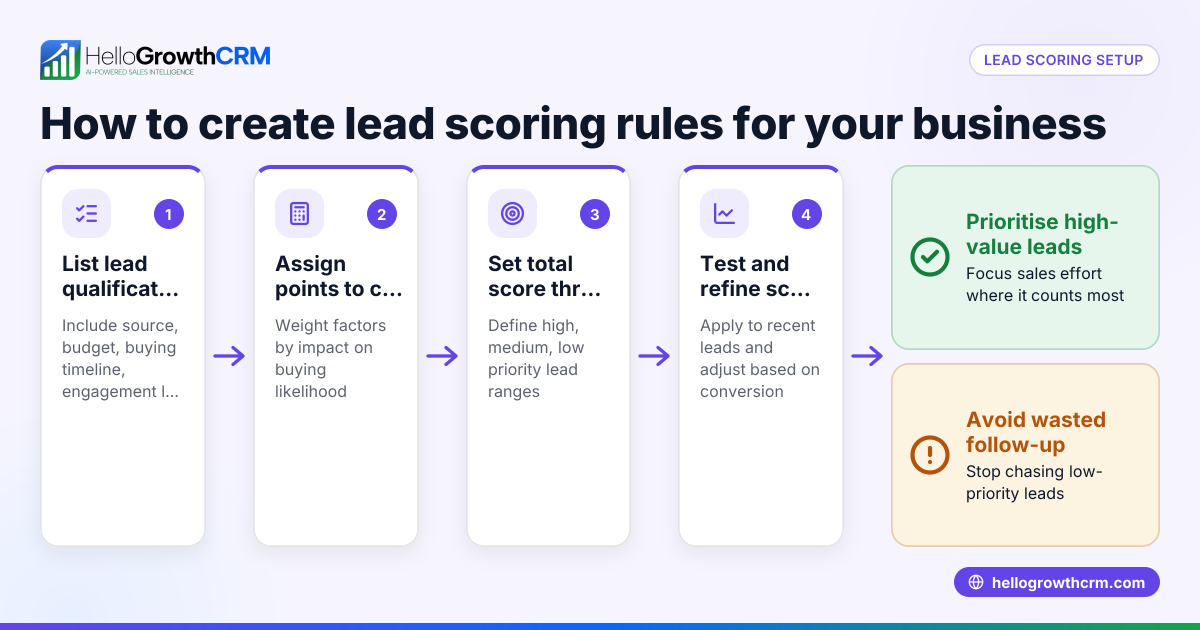
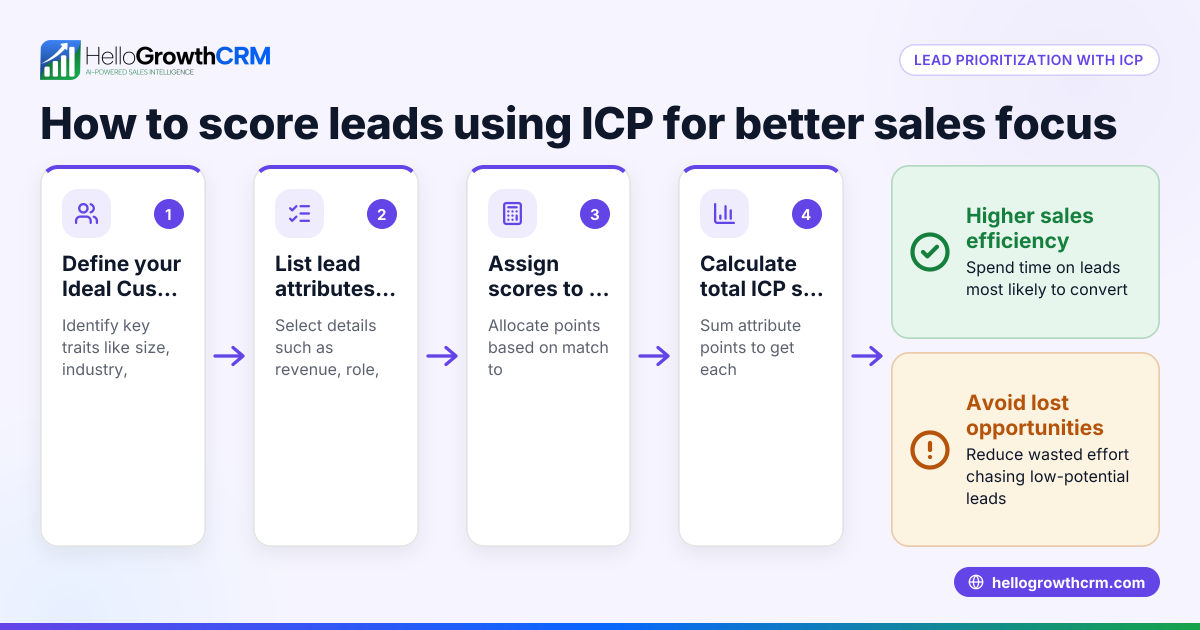
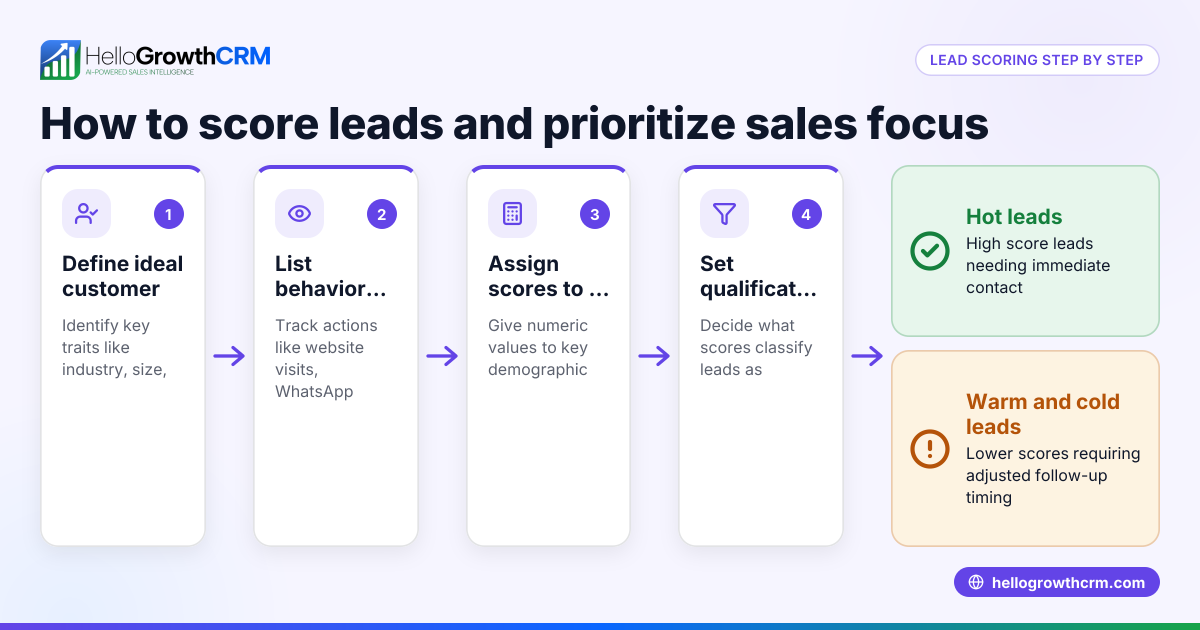
- Identify key lead attributes: Decide which lead details matter most for your business. Typical fields include lead source (website, referral, WhatsApp), budget size, industry sector, company size, and engagement level (number of contacts or messages).
- Assign numeric scores to each attribute: For example, assign 15 points for a budget over AED 50,000, 10 points for medium budgets, and 5 points for lower budgets. Similarly, assign scores for lead source and industry based on their conversion likelihood.
- Set scoring thresholds: Define what total scores mean. For example, 25 points or more could be a hot lead, 15 to 24 a warm lead, and below 15 a cold lead.
- Create a scoring sheet or use a CRM: Use Excel or a CRM system to calculate total lead scores automatically and update them as new data arrives.
- Test your scoring rules: Apply the rules to recent leads and compare scores with actual sales outcomes. Adjust scores if needed to better reflect lead quality.
- Refine your rules regularly: Market conditions and customer behaviour change, so review and update your scoring system every 3-6 months.
- Train your sales team: Make sure everyone understands how scoring works and uses it to prioritise calls and follow-ups.
Regular review and training ensure your lead scoring stays effective and aligned with your sales goals.
Example (fictional figures)
A car rental company in Abu Dhabi wants to prioritise leads using these rules:
- Budget over AED 50,000: 15 points
- Budget AED 20,000 to 50,000: 10 points
- Budget below AED 20,000: 5 points
- Lead source website enquiry: 10 points
- Lead source WhatsApp: 5 points
- Industry fleet rental: 10 points
- Industry individual rental: 5 points
Lead A details:
- Budget: AED 60,000 (15 points)
- Source: Website (10 points)
- Industry: Fleet rental (10 points)
Total score = 15 + 10 + 10 = 35 (hot lead)
Lead B details:
- Budget: AED 15,000 (5 points)
- Source: WhatsApp (5 points)
- Industry: Individual rental (5 points)
Total score = 5 + 5 + 5 = 15 (warm lead)
This scoring helps the sales team prioritise calling Lead A first, improving chances of conversion.
Common mistakes
- Ignoring key attributes: Avoid this by analysing past sales data to find which lead traits correlate with successful sales.
- Assigning arbitrary scores: Base your scores on data or sales team feedback to ensure they reflect real lead value.
- Not updating rules regularly: Review scoring rules every 3-6 months or when market conditions shift to keep them accurate.
- Using too many attributes: Limit scoring to 4-6 important fields to keep the process simple and actionable.
- Failing to train the team: Conduct regular training so the sales team understands and trusts the scoring system.
Using a CRM that supports lead scoring, like HelloGrowthCRM, can automate scoring calculations and keep leads organised, reducing manual errors and delays.
Doing this in HelloGrowthCRM
HelloGrowthCRM captures every enquiry from web forms, calls, or WhatsApp as a lead with an owner and a next step, replacing manual tracking in notebooks. Its AI lead scoring helps telecallers prioritise the leads most likely to convert first. Automated workflows and lead routing assign enquiries round-robin and create first-call tasks automatically. Learn more about AI lead scoring and the WhatsApp and SMS CRM features designed for UAE businesses at HelloGrowthCRM for the United Arab Emirates.
Frequently asked questions
What are lead scoring rules? Lead scoring rules assign numeric values to lead attributes to prioritise follow-up efforts based on lead quality. This helps sales teams focus on the most promising leads first.
How often should I update lead scoring rules? Review and update your scoring rules every 3-6 months or when you notice shifts in lead quality or market conditions to keep them effective.
Can lead scoring improve sales in small UAE businesses? Yes, lead scoring helps sales teams focus on high-potential leads, speeding up follow-up and increasing chances of conversion.
Is it possible to automate lead scoring? Yes, platforms like HelloGrowthCRM offer AI lead scoring and workflows to automate lead assignment and task creation, saving time and reducing errors.
What lead attributes matter most in the UAE? Common attributes include budget, industry, lead source, company size, and engagement level. These help identify leads most likely to convert.
How can I train my sales team to use lead scoring? Provide clear guidelines on scoring criteria, hold training sessions, and regularly review performance to ensure the team understands and applies the scoring system effectively.
Key takeaways
- Identify and score key lead attributes relevant to your business.
- Use clear numeric scores and set thresholds to prioritise leads.
- Test and refine scoring rules regularly to maintain accuracy.
- Keep scoring simple by focusing on a few impactful attributes.
- Train your sales team to use lead scoring for prioritising follow-ups.
- Automate lead capture and scoring with HelloGrowthCRM to save time and improve organisation.
Start creating your lead scoring rules today to improve your sales efficiency. You can Start on the Free Forever plan (200 leads, no credit card) with HelloGrowthCRM to try lead scoring and lead management tools free.
Ready to put this into practice?
Set up your pipeline, WhatsApp follow-ups, and AI lead scoring in minutes — free, no credit card.
Try HelloGrowthCRM freeGet CRM tips in your inbox
Join thousands of sales professionals who get weekly insights on CRM strategy, AI automation, and pipeline optimization.

The HelloGrowthCRM team publishes guides on CRM strategy, AI sales tools, and revenue operations for small business sales teams.