HelloGrowthCRM software
Built for real small-business sales teams
HelloGrowthCRM helps reps qualify faster, follow up on time, and close more deals—with practical automation in one place.
- AI lead scoring and pipeline visibility
- Built-in dialer, WhatsApp, and email automation
- Sales forecasting and RevOps-ready reporting
To develop a sales plan, start by defining your sales goals, target customers, and sales strategies. Then outline your sales activities, assign responsibilities, and set timelines. Finally, track progress and adjust the plan as needed. This article covers why a sales plan matters, detailed steps to create one, a worked example, common pitfalls, and how HelloGrowthCRM supports sales planning.
Why this comes up / what goes wrong
Small-business owners often struggle to grow sales because they lack a clear, written sales plan. Without a plan, sales efforts can be inconsistent, leads get lost, and follow-up is delayed. This can happen when sales run informally over text messages, email, or spreadsheets without a centralized system. Sales teams may not know who to contact, when to follow up, or how to prioritize leads. A well-structured sales plan organizes these activities, sets measurable goals, and assigns accountability.
Step-by-step
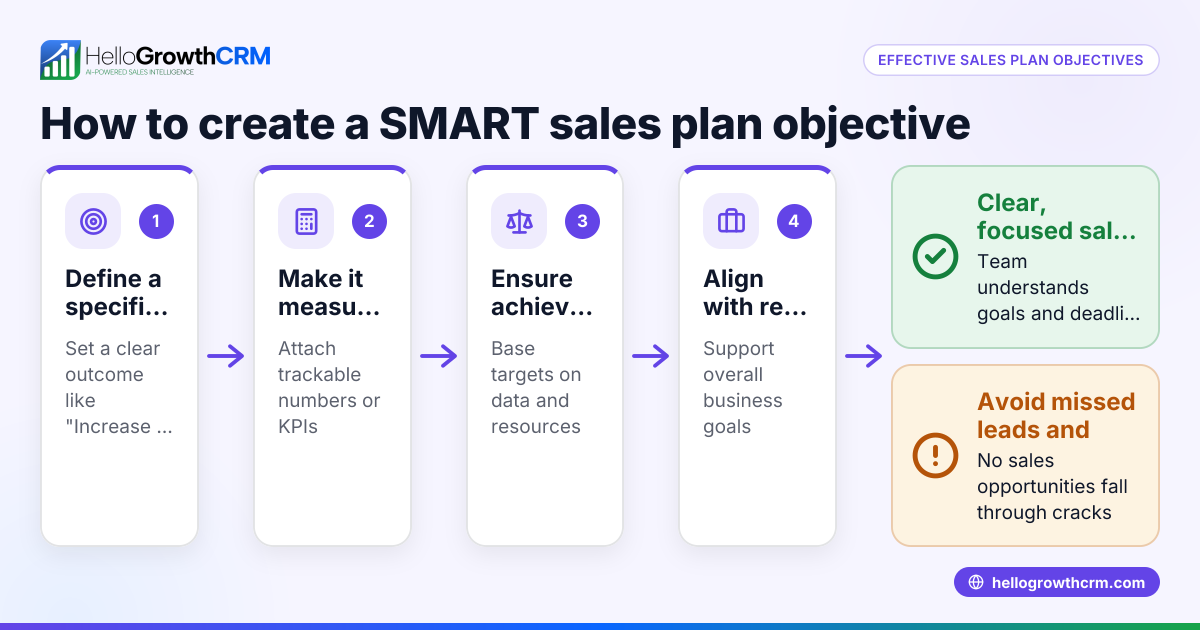
- Set clear sales goals
- Define specific, measurable targets for revenue, units sold, or new customers.
- Check that goals align with your overall business objectives.
- Identify your target customers
- Describe your ideal customer profiles by industry, size, location, or needs.
- Verify you have data or research to support these profiles.
- Analyze your sales process
- Map out each stage from lead generation to closing the deal.
- Check for bottlenecks or stages where leads drop off.
- Develop sales strategies and tactics
- Decide how you will reach and engage prospects (cold calls, email campaigns, WhatsApp messages).
- Assign responsibilities to team members for each tactic.
- Create a sales activity calendar
- Schedule key activities like follow-ups, demos, and proposal submissions.
- Check that timelines are realistic and cover all sales stages.
- Set metrics and tracking methods
- Choose KPIs such as conversion rates, average deal size, and sales cycle length.
- Plan how you will collect and review this data regularly.
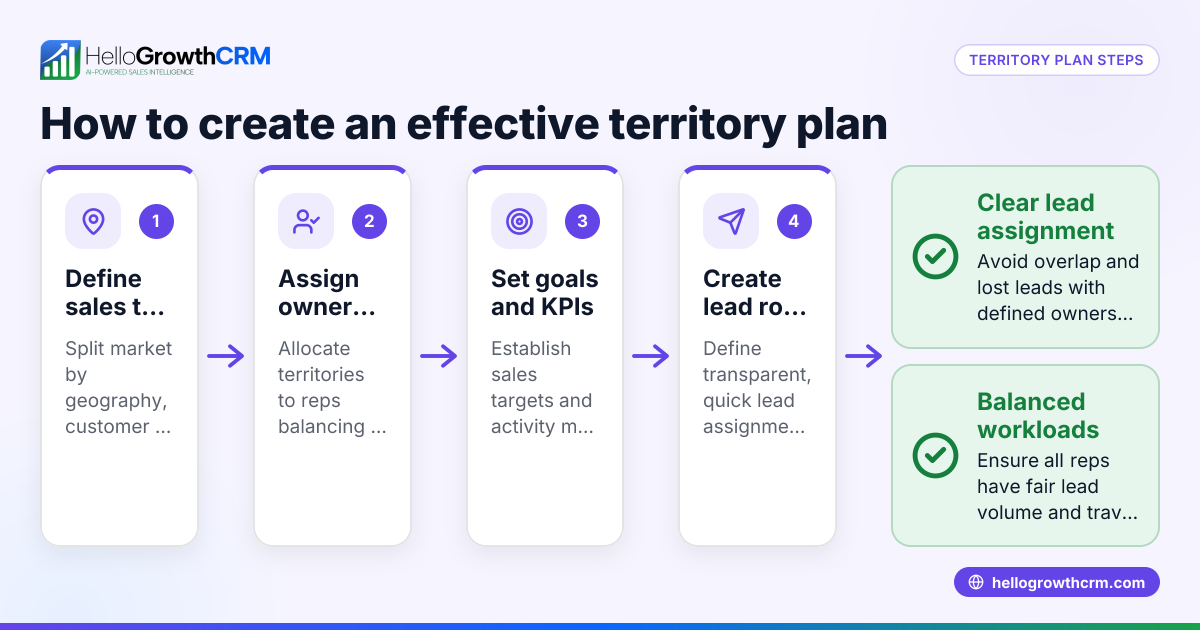
- Assign territories or segments if applicable
- Define sales territories or customer segments to avoid overlap.
- Confirm each rep’s responsibility area.
- Review and adjust regularly
- Schedule weekly or monthly reviews of progress.
- Be ready to update the plan based on results and market changes.
Example (fictional figures)
A two-location dental practice in Columbus, Ohio, wants to increase new patient revenue by 20% over the next year starting 07/01/2026.
- Sales goal:
- Current annual new patient revenue: $1,000,000
- Target increase: 20%
- Target revenue = $1,000,000 × 20% = $200,000
- New revenue goal = $1,000,000 + $200,000 = $1,200,000
- Target customers:
- Adults aged 25-55 in Columbus metro area
- Sales process:
- Lead capture via website form and phone calls
- Initial consultation scheduling
- Treatment plan presentation
- Closing
- Strategies:
- Use email and WhatsApp sequences to follow up leads within 24 hours
- Assign front desk staff to call leads within 2 days
- Activity calendar:
- Weekly review of new leads every Monday
- Follow-up calls scheduled on Tuesdays and Thursdays
- Metrics:
- Conversion rate from lead to booked appointment
- Average revenue per new patient
- Territories:
- Location 1 covers north Columbus
- Location 2 covers south Columbus
- Reviews:
- Monthly sales meeting on first Monday of each month
Common mistakes
- Setting vague goals: Prevent by making goals specific and measurable.
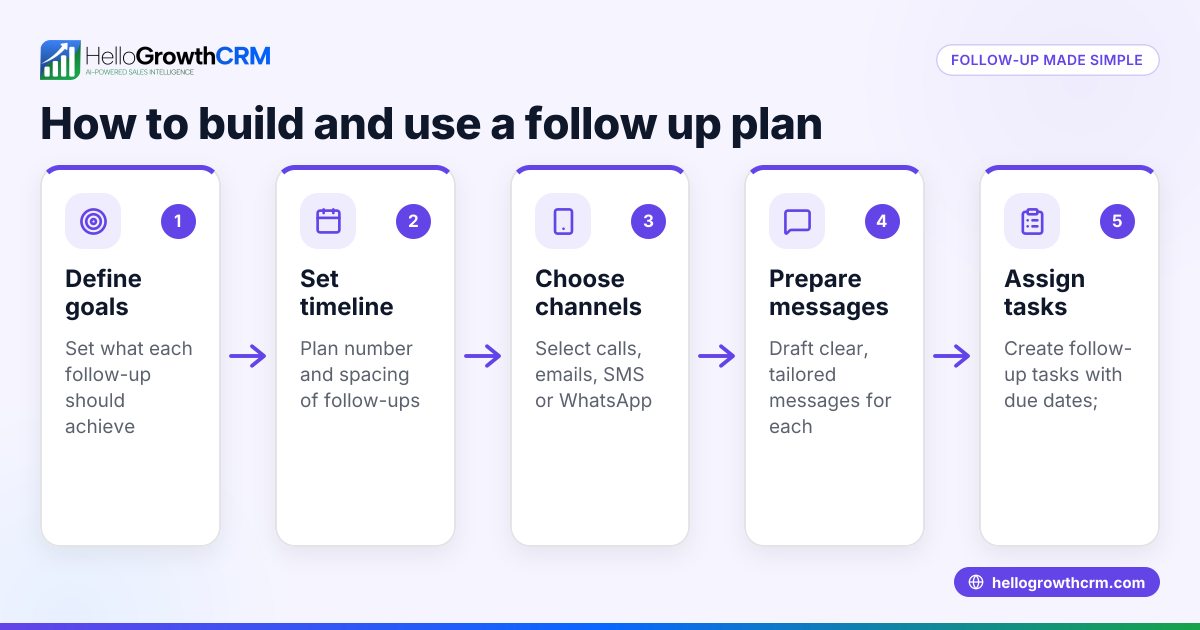
- Ignoring lead follow-up: Prevent by scheduling follow-ups and tracking them in a pipeline.
- Overloading sales reps: Prevent by assigning territories and clear responsibilities.
- Not reviewing the plan: Prevent by setting regular review dates.
- Using multiple disconnected tools: Prevent by using an integrated CRM that supports WhatsApp, SMS, and calls.
Doing this in HelloGrowthCRM
HelloGrowthCRM helps keep your sales plan on track with Deals (pipeline) that show quotations and follow-up dates so no lead is forgotten. If you have field reps, Territories, field operations and commissions tools let reps log visits from their phones and managers monitor daily activities. For founders without sales managers, Managed RevOps provides a dedicated specialist who manages follow-up queues weekly, cleans the pipeline, and delivers KPI reports. Learn more about HelloGrowthCRM for the United States, its WhatsApp and SMS CRM, and the built-in CRM dialer.
Frequently asked questions
What should a sales plan include? A sales plan should include clear sales goals, target customer profiles, an outlined sales process, assigned responsibilities, timelines for activities, and metrics to track progress.
How often should I update my sales plan? You should review and adjust your sales plan regularly, ideally monthly or quarterly, to respond to sales results and market changes.
How can I track sales activities effectively? Using a CRM system that integrates communication channels like WhatsApp, SMS, and phone calls helps track all sales activities and follow-ups in one place.
What is the difference between a sales plan and a sales strategy? A sales strategy defines the approach to reach customers and close deals, while a sales plan details the specific actions, timelines, and responsibilities to execute that strategy.
Can a small business benefit from sales territories? Yes, defining sales territories helps avoid overlap, ensures coverage, and assigns accountability, which is especially useful for businesses with multiple locations or field reps.
Key takeaways
- Define clear, measurable sales goals aligned with business objectives.
- Map your sales process and assign responsibilities.
- Schedule and track sales activities with timelines.
- Use metrics to monitor progress and adjust plans regularly.
- Avoid common pitfalls like vague goals and poor follow-up.
- Use tools like HelloGrowthCRM for pipeline management and field sales tracking.
Start developing your sales plan today and keep it organized with HelloGrowthCRM. To get started, Start on the Free Forever plan (200 leads, no credit card).
Ready to put this into practice?
Set up your pipeline, WhatsApp follow-ups, and AI lead scoring in minutes — free, no credit card.
Try HelloGrowthCRM freeGet CRM tips in your inbox
Join thousands of sales professionals who get weekly insights on CRM strategy, AI automation, and pipeline optimization.

The HelloGrowthCRM team publishes guides on CRM strategy, AI sales tools, and revenue operations for small business sales teams.