HelloGrowthCRM software
Built for real small-business sales teams
HelloGrowthCRM helps reps qualify faster, follow up on time, and close more deals—with practical automation in one place.
- AI lead scoring and pipeline visibility
- Built-in dialer, WhatsApp, and email automation
- Sales forecasting and RevOps-ready reporting
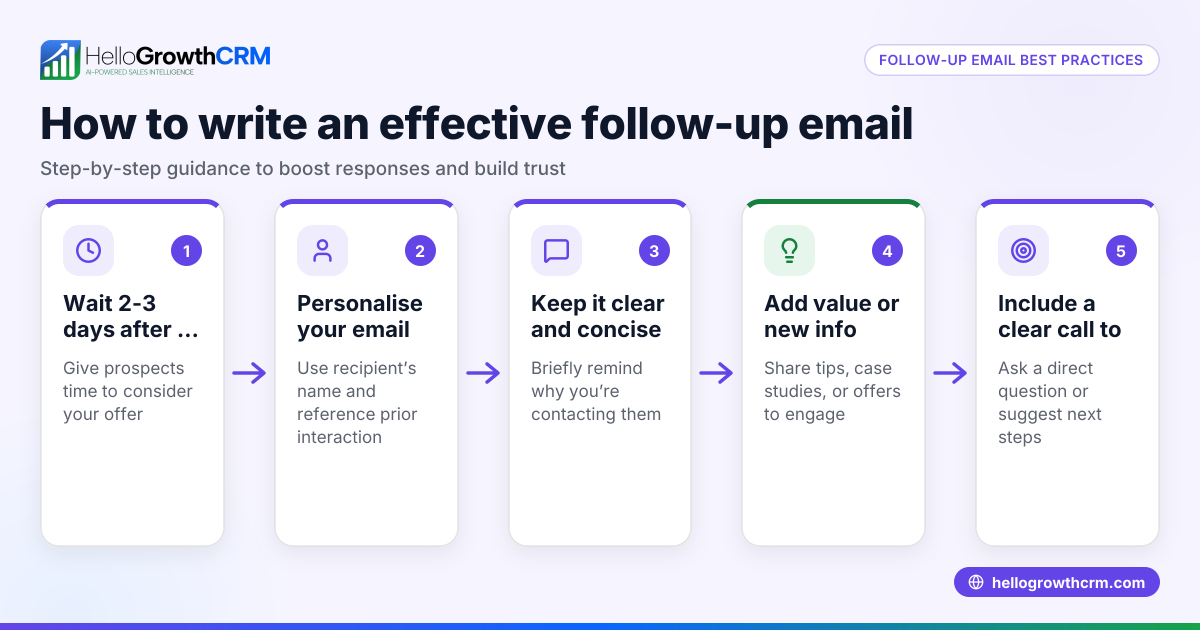
To follow up after sending a quotation in the UAE, wait 2-3 days, then contact the prospect politely by phone or WhatsApp to confirm they received it and ask if they have questions. Schedule a clear next step and record the follow-up task. This article covers why timely follow-up matters, detailed steps, a worked example, common mistakes to avoid, and how HelloGrowthCRM can help.
Why this comes up / what goes wrong
Small business owners in the UAE often send quotations to potential customers but then lose momentum by not following up effectively. They may rely on memory, WhatsApp chats, or spreadsheets to track quotations and forget to check if the client received or viewed the quotation. Without a timely follow-up, leads grow cold and sales opportunities are lost. Owners and sales teams sometimes hesitate to follow up for fear of annoying prospects or because they lack a clear plan on what to say and when. This results in slow responses, unclear next steps, and missed deals.
Step-by-step
- Send the quotation clearly and professionally
- Ensure the quotation includes all agreed details: prices, scope, validity period, payment terms.
- Send it via the agreed channel (email, WhatsApp, or CRM) and confirm delivery if possible.
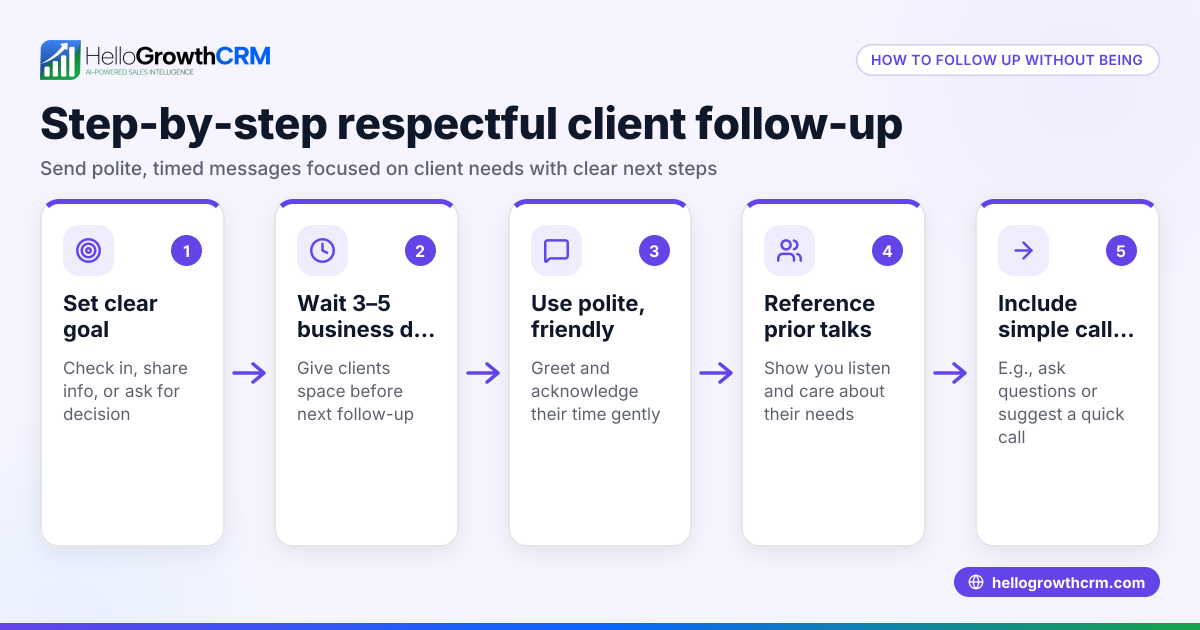
- Wait 2-3 business days before the first follow-up
- This gives the prospect time to review the quotation without pressure.
- If you know their decision timeline is shorter, adjust accordingly.
- Make the first follow-up contact
- Call or send a WhatsApp message politely confirming they received the quotation.
- Ask if they have any questions or need clarification.
- Keep the tone helpful, not pushy.
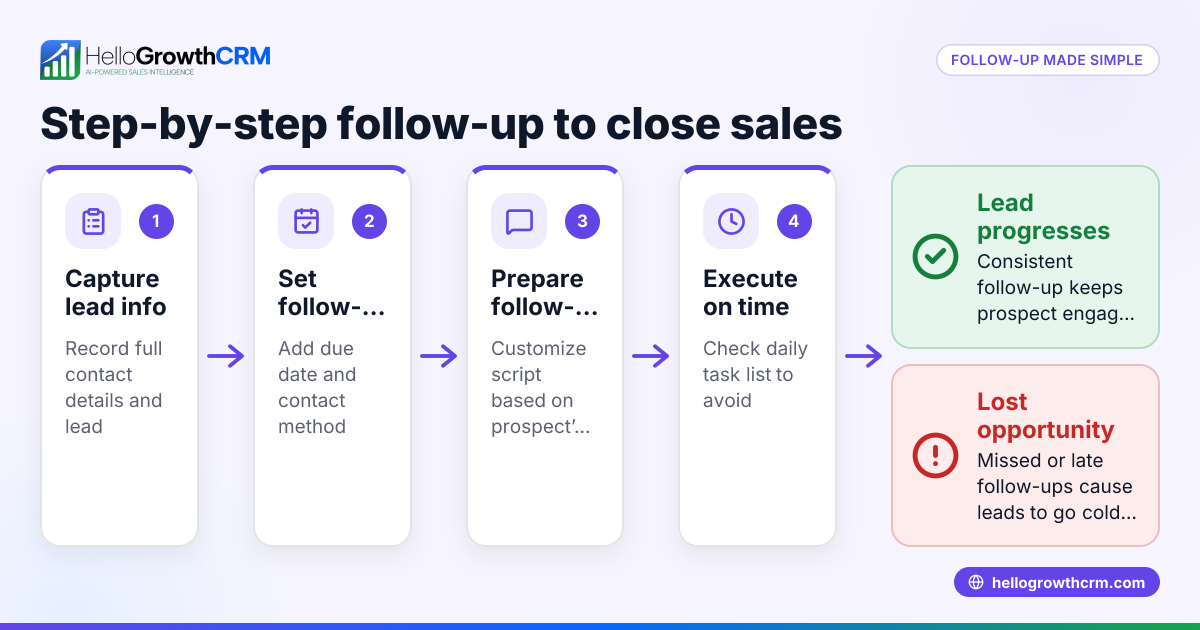
- Record the follow-up task and outcome
- Note the date, time, and summary of the conversation.
- Schedule the next follow-up or agreed action.
- If no response, send a polite reminder after 3-5 days
- Reference the quotation and express willingness to assist.
- Offer to schedule a call or meeting.
- Use a sequence of up to five follow-ups over two weeks
- Space messages 3-4 days apart.
- Vary the message format: call, WhatsApp, email.
- Stop if the prospect replies or accepts.
- Close the loop
- If the quotation is accepted, confirm next steps and update your records.
- If declined, ask for feedback politely and note it.
- Review and adjust your follow-up process regularly
- Track which follow-ups convert best.
- Adjust timing and messaging accordingly.
For managing follow-up tasks efficiently, consider using sales task boards to keep all follow-ups organised and visible to your team. Learn more about sales task boards.
Example (fictional figures)
A business-setup consultancy in Business Bay, Dubai, sends a quotation on 01/06/2024 for AED 48,000 to a client interested in company registration.
- Quotation sent on 01/06/2024.
- First follow-up call scheduled for 04/06/2024 (3 days later).
- On 04/06/2024, the consultant calls and confirms the client received the quotation and asks if they have questions.
- Client requests clarification on payment terms.
- Consultant schedules a second follow-up on 08/06/2024 after sending detailed payment info.
- On 08/06/2024, client accepts the quotation.
Calculations for quotation with assumed VAT (for illustration):
AED 48,000 × 5% VAT = AED 2,400 AED 48,000 + AED 2,400 = AED 50,400 total
This example shows the importance of timing and clear communication in follow-up.
Common mistakes
- Following up too soon or too late: Follow up too soon and you may annoy the prospect; too late and the lead cools. Prevent this by scheduling follow-ups 2-3 days after sending the quotation and spacing reminders by 3-5 days.
- Not recording follow-ups: Relying on memory or WhatsApp chats causes missed or duplicated follow-ups. Use task boards to log each follow-up with due dates and outcomes.
- Being too pushy or vague: Aggressive or unclear follow-ups can damage the relationship. Always be polite, specific about the purpose, and offer help.
- Ignoring prospect responses: Failing to update records when a prospect replies wastes effort. Track responses carefully and stop follow-ups once the prospect engages.
- No clear next steps: Ending follow-ups without scheduling the next action leads to stalled deals. Always confirm the next step or a timeline.
- Using only one communication channel: Some prospects prefer WhatsApp, others email or calls. Mix channels to increase chances of contact. See more on email automation and sequences.
Doing this in HelloGrowthCRM
HelloGrowthCRM helps you manage follow-ups efficiently with:
- Activities and task boards: Each follow-up becomes a task with a due date so your team sees the day’s calls and messages clearly, not relying on memory. See sales task boards.
- Sequences and campaigns: Automate a five-step follow-up over two weeks across email, WhatsApp, and SMS. The sequence stops automatically when the prospect replies, saving time. Learn about email automation and sequences.
- Quotes, proposals, invoices and payments received: Send quotations directly from the deal screen and track their status (sent, viewed, accepted) alongside follow-up tasks, all in one place.
These features help reduce missed follow-ups and speed up closing deals. More on HelloGrowthCRM for the UAE here.
Frequently asked questions
How soon should I follow up after sending a quotation? Wait 2-3 business days to give the prospect time to review the quotation. If you know their decision timeline is shorter, adjust accordingly.
What is the best way to follow up: call, WhatsApp, or email? Use a mix of channels. Calls and WhatsApp are more direct and personal, while emails can provide detailed information. Vary your approach to match the prospect’s preference.
How many follow-ups are appropriate before stopping? Typically, a sequence of up to five follow-ups over two weeks is effective. Stop immediately when the prospect responds to avoid annoyance.
What should I say in a follow-up message? Be polite and clear. Confirm receipt of the quotation, ask if they have questions, and offer help. Avoid pressure or aggressive sales tactics.
How can I keep track of multiple quotations and follow-ups? Use a CRM with task boards and activities to log each follow-up with due dates and notes. This prevents missed or duplicated follow-ups.
Can I automate follow-ups? Yes, tools like HelloGrowthCRM allow you to set up multi-step sequences that send timed messages automatically until a response is received.
Key takeaways
- Wait 2-3 days after sending a quotation before the first follow-up.
- Use polite, clear communication asking if the prospect has questions.
- Record every follow-up as a task with due dates to avoid missed actions.
- Use multiple channels for follow-up: calls, WhatsApp, and email.
- Stop follow-ups immediately once the prospect replies.
- Automate follow-ups with sequences to save time and increase consistency.
Start managing your quotations and follow-ups better today. Start on the Free Forever plan (200 leads, no credit card).
Ready to put this into practice?
Set up your pipeline, WhatsApp follow-ups, and AI lead scoring in minutes — free, no credit card.
Try HelloGrowthCRM freeGet CRM tips in your inbox
Join thousands of sales professionals who get weekly insights on CRM strategy, AI automation, and pipeline optimization.

The HelloGrowthCRM team publishes guides on CRM strategy, AI sales tools, and revenue operations for small business sales teams.