HelloGrowthCRM software
Built for real small-business sales teams
HelloGrowthCRM helps reps qualify faster, follow up on time, and close more deals—with practical automation in one place.
- AI lead scoring and pipeline visibility
- Built-in dialer, WhatsApp, and email automation
- Sales forecasting and RevOps-ready reporting
Handling upset customers is a crucial skill for any small or mid-sized business. When a customer is unhappy, your response can either rebuild trust or lose the sale permanently. This guide explains why customers get upset, provides step-by-step instructions to calm and resolve their concerns, shows a practical example with numbers, highlights common pitfalls, and explains how HelloGrowthCRM can help you keep service requests organized on the same customer record as the deal.
Why this comes up / what goes wrong
Small business owners often face upset customers due to product issues, missed deadlines, miscommunication, or unmet expectations. Without a clear process, follow-up can be slow or inconsistent, making customers feel ignored or undervalued. Sales teams that rely on text messages, email, and spreadsheets risk losing track of complaints or service requests, causing frustration and lost revenue. Handling upset customers well means preventing escalation and turning dissatisfaction into loyalty.
Step-by-step
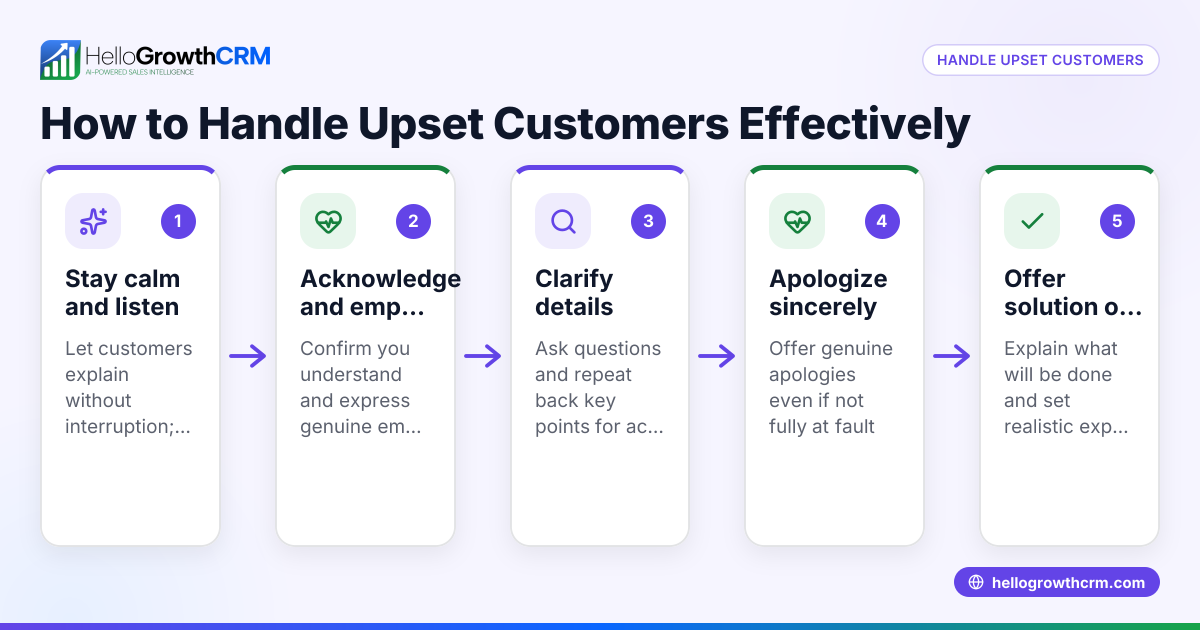
- Listen fully and stay calm: Let the customer explain their issue without interruption. Check that you understand by summarizing their main points.
- Acknowledge feelings and apologize: Show empathy by recognizing their frustration. Offer a sincere apology for the inconvenience, even if the problem was not your fault.
- Ask clarifying questions: Identify the exact problem and what outcome the customer expects. Check details like order number, dates, or service used.
- Offer a clear solution: Propose what you can do to fix the issue. This might be a refund, replacement, discount, or expedited service. Confirm the customer agrees.
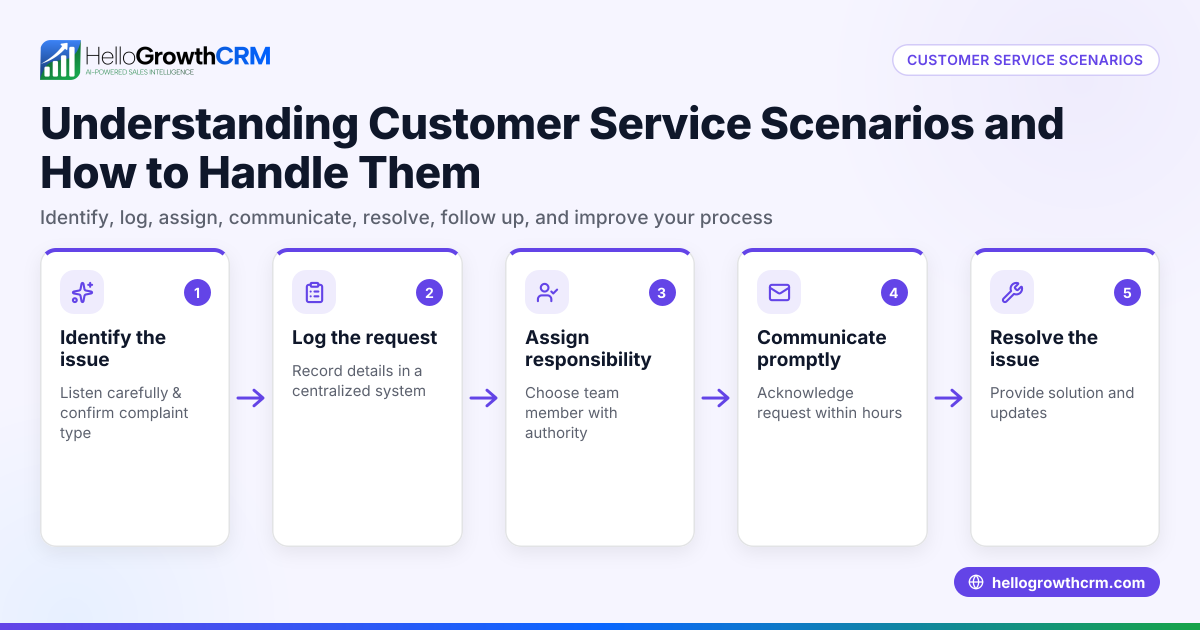
- Take ownership and act quickly: Assure the customer you will handle their case personally or assign a team member. Set a timeline for resolution and follow up.
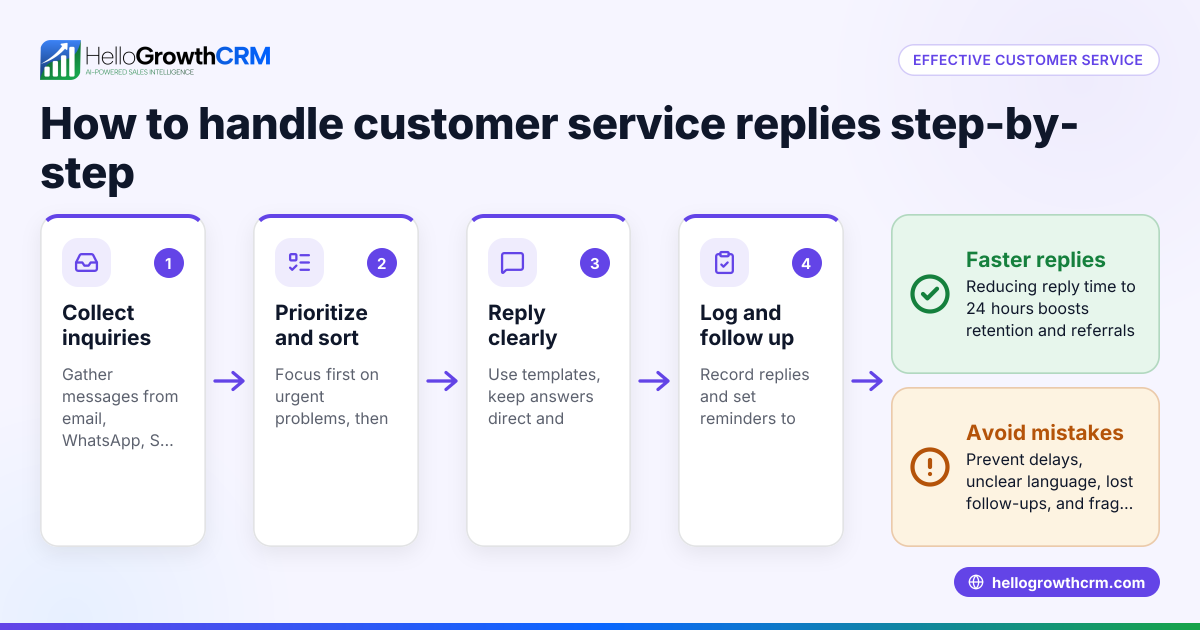
- Document the issue and resolution: Record the complaint and your response in your system. Check that all relevant team members have access to this information.
- Follow up after resolution: Contact the customer to confirm the problem is resolved and ask if they need further help.
- Use feedback to improve: Analyze complaints to identify recurring problems and update processes or training.
Check that your team uses tools like a customer portal to keep service requests linked to customer records, avoiding lost or duplicated tickets.
Example (fictional figures)
A landscaping contractor in Charlotte, North Carolina, receives a complaint on 05/15/2026 from a customer who says the lawn was not mowed on schedule. The contract was for monthly service at $350 per visit.
Step 1: Listen and confirm details.
Step 2: Apologize for the missed service.
Step 3: Ask if the customer wants a refund or reschedule.
Step 4: Customer wants a refund for this missed visit.
Step 5: Contractor agrees to refund $350.
Step 6: Record complaint and refund in system.
Step 7: Follow up on 05/20/2026 to confirm satisfaction.
Calculation for refund:
$350 × 1 missed visit = $350 refund
The contractor processes the refund promptly and updates the schedule to prevent future misses.
Common mistakes
- Interrupting the customer: Prevent by listening fully before responding.
- Being defensive or blaming: Prevent by focusing on solving the issue, not assigning fault.
- Delaying response or resolution: Prevent by setting clear timelines and following up.
- Failing to document the complaint: Prevent by using a CRM or ticket system to track issues.
- Ignoring feedback for improvement: Prevent by reviewing complaints regularly to fix root causes.
Using a WhatsApp and SMS CRM can help your team respond faster and keep conversations organized.
Doing this in HelloGrowthCRM
HelloGrowthCRM offers a branded self-service customer portal where customers can submit tickets and view knowledge base articles. Service requests stay linked on the same customer record as the deal, so your team has full context after the sale. Referral tracking and a knowledge base help reduce repetitive issues and improve customer satisfaction.
Frequently asked questions
How to handle an irate customer? Start by staying calm and listening without interruption. Acknowledge their feelings and apologize sincerely. Then clarify the issue and offer a solution. Avoid arguing or taking it personally. Use clear communication and follow up promptly.
What if the customer refuses my solution? Try to understand their concerns and offer alternative options if possible. If no agreement is reached, explain company policies clearly and professionally. Sometimes escalating to a manager or offering goodwill gestures helps. Document all interactions carefully.
How can I prevent customers from getting upset? Set clear expectations upfront about products, services, and timelines. Communicate proactively about delays or issues. Use a CRM to track customer interactions and follow up regularly. Provide easy access to support through a customer portal.
Why is documenting complaints important? It ensures consistent handling by your team and creates a record for reference if issues escalate. Documentation helps identify patterns and areas for improvement. It also protects your business legally if disputes arise.
Can HelloGrowthCRM help with customer service? Yes, HelloGrowthCRM’s customer portal, tickets, and knowledge base keep service requests organized on the same record as deals. This helps your team respond faster and track resolutions efficiently.
Key takeaways
- Listen carefully and acknowledge customer feelings.
- Apologize sincerely and offer clear solutions.
- Act quickly and follow up after resolution.
- Document complaints and use feedback to improve.
- Avoid defensiveness, interruptions, and delays.
- Use tools like HelloGrowthCRM’s customer portal to keep service organized.
Handling upset customers well protects your business reputation and encourages repeat business. Start managing your customer service more effectively today with HelloGrowthCRM. Start on the Free Forever plan (200 leads, no credit card).
Ready to put this into practice?
Set up your pipeline, WhatsApp follow-ups, and AI lead scoring in minutes — free, no credit card.
Try HelloGrowthCRM freeGet CRM tips in your inbox
Join thousands of sales professionals who get weekly insights on CRM strategy, AI automation, and pipeline optimization.

The HelloGrowthCRM team publishes guides on CRM strategy, AI sales tools, and revenue operations for small business sales teams.