HelloGrowthCRM software
Built for real small-business sales teams
HelloGrowthCRM helps reps qualify faster, follow up on time, and close more deals—with practical automation in one place.
- AI lead scoring and pipeline visibility
- Built-in dialer, WhatsApp, and email automation
- Sales forecasting and RevOps-ready reporting
Handling upset customers means addressing their concerns quickly and respectfully to maintain trust and loyalty. When a customer is upset, the key is to listen actively, acknowledge their feelings, and offer a clear solution or next step. This article explains why upset customers occur, provides a step-by-step guide to handle them, highlights common mistakes, includes a practical example with detailed calculations, and shows how HelloGrowthCRM supports managing customer service efficiently.
Why this comes up / what goes wrong
Small-business owners often face upset customers because of delays, misunderstandings, product or service issues, or communication gaps. Many run sales and support on text messages, email, and spreadsheets without a single system. This can cause follow-up to be slow or inconsistent. Customers may feel ignored or undervalued, which escalates frustration. Without clear tracking, businesses lose visibility on service requests or fail to close the loop, worsening the customer experience. This can lead to lost sales, bad reviews, and damaged reputation.
Step-by-step
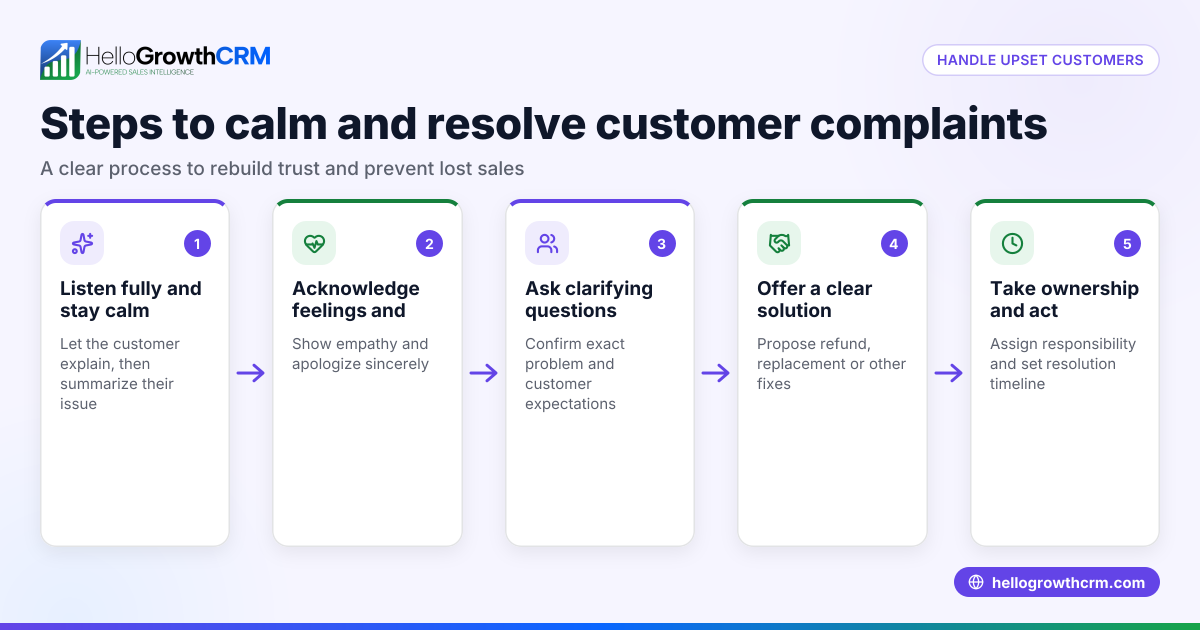
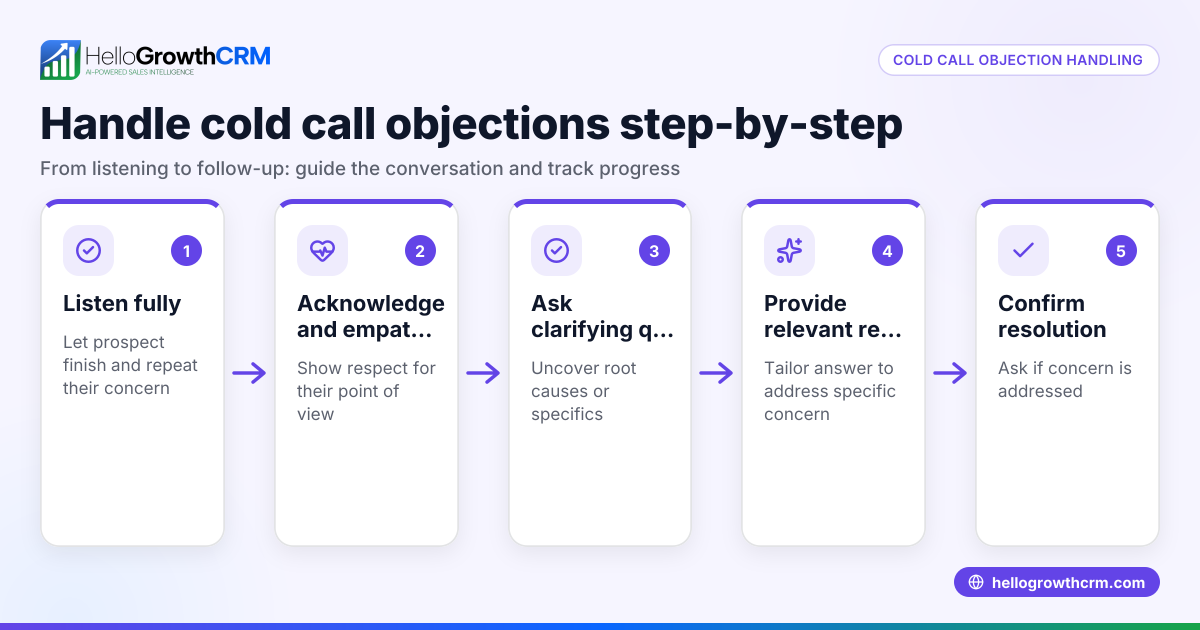
- Stay calm and listen carefully: Let the customer explain their issue fully without interrupting. Check your tone to remain calm and professional. Avoid defensive language.
- Acknowledge the problem and empathize: Confirm you understand their concern and express empathy. For example, say "I understand why this is frustrating for you."
- Clarify details and ask questions: Make sure you have all necessary information to address the issue. Repeat back key points to confirm accuracy.
- Apologize sincerely if appropriate: A genuine apology can defuse tension even if the fault is not fully yours.
- Offer a clear solution or next steps: Explain what you will do or what the customer can expect next, including timelines. Be realistic to avoid overpromising.
- Document the issue and follow up promptly: Use a system to track the complaint and ensure timely updates until resolution. Tools like a customer health score can help monitor ongoing satisfaction.
- Check back after resolution: Confirm the customer is satisfied with the outcome to rebuild trust.
- Review and learn: Analyze complaints regularly to identify patterns and improve processes. This helps prevent repeat issues.
Example (fictional figures)
A landscaping contractor in Charlotte, North Carolina, receives a complaint on 04/10/2026 that a scheduled lawn mowing was missed. The customer paid $150 for a monthly service.
- Service fee: $150
- Missed service date: 04/09/2026
- Contractor offers a free extra mowing worth $75 to compensate.
Calculation:
$150 (monthly fee) - $75 (compensation value) = $75 net revenue for the month
$150 - $75 = $75
The contractor documents the complaint in their CRM, schedules the extra mowing for 04/12/2026, and follows up with the customer on 04/13/2026 to confirm satisfaction.
This approach keeps the customer engaged and limits revenue loss.
Common mistakes
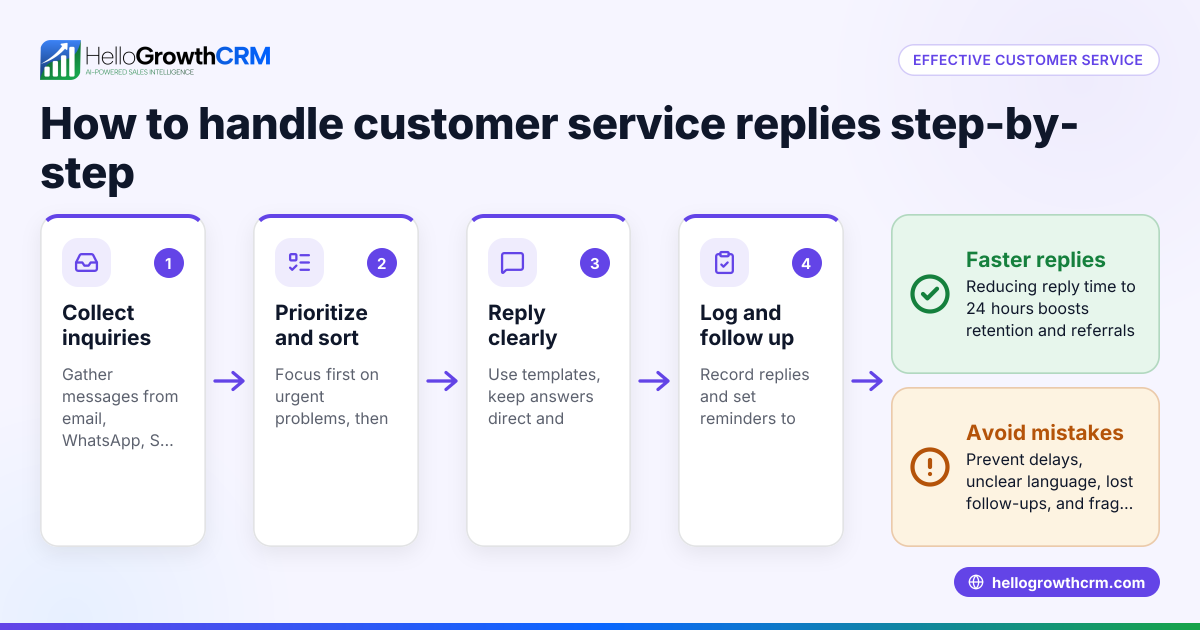
- Ignoring or delaying response: Prevent by setting clear response time goals and tracking complaints in a system. Prompt replies show you value the customer.
- Taking complaints personally: Stay professional and focus on solving the problem. Remember the complaint is about the issue, not you.
- Failing to document issues: Use a CRM or ticketing system to keep records and avoid repeat problems. This creates accountability.
- Not following up after resolution: Always check back to ensure the customer feels heard and satisfied. This rebuilds trust and loyalty.
- Overpromising and underdelivering: Be realistic about what you can fix and when. Set clear expectations.
- Lacking a knowledge base for quick answers: Maintain a reference library to resolve common issues faster and reduce response time.
Using tools like HelloGrowthCRM’s WhatsApp and SMS CRM helps maintain consistent communication and speeds up follow-up.
Doing this in HelloGrowthCRM
HelloGrowthCRM offers a branded customer portal where customers can submit service requests and view updates themselves. Support tickets and a knowledge base help your team resolve issues faster. After the sale, all service requests stay linked to the same customer record as the deal, providing full context. Referral tracking also encourages positive word-of-mouth after resolving complaints. Learn more about these features at HelloGrowthCRM for the United States.
Frequently asked questions
How can I calm an upset customer quickly? Start by listening without interrupting and acknowledge their feelings. A calm, empathetic response helps de-escalate tension before moving to solutions.
What’s the best way to track customer complaints? Use a CRM or ticketing system to log issues, assign responsibility, and set deadlines. This prevents complaints from falling through the cracks and ensures timely follow-up.
How do I prevent upset customers from recurring? Analyze complaint patterns regularly and improve your processes. Tools like a customer health score can help monitor satisfaction trends and highlight areas needing attention.
Can messaging apps like WhatsApp help with upset customers? Yes, using a WhatsApp and SMS CRM keeps communication fast and organized, making follow-up easier and more consistent.
Why follow up after resolving a complaint? Following up confirms the customer is satisfied and shows you value their business, which can rebuild trust and loyalty.
Key takeaways
- Listen actively and stay calm to understand upset customers.
- Acknowledge concerns and offer clear, realistic solutions.
- Document all complaints and follow up promptly.
- Avoid common mistakes like ignoring issues or failing to follow up.
- Use tools like HelloGrowthCRM’s customer portal and ticketing to manage service requests.
- Regularly review complaints to improve customer satisfaction.
Start managing upset customers more effectively today. Start on the Free Forever plan (200 leads, no credit card) with HelloGrowthCRM.
Ready to put this into practice?
Set up your pipeline, WhatsApp follow-ups, and AI lead scoring in minutes — free, no credit card.
Try HelloGrowthCRM freeGet CRM tips in your inbox
Join thousands of sales professionals who get weekly insights on CRM strategy, AI automation, and pipeline optimization.

The HelloGrowthCRM team publishes guides on CRM strategy, AI sales tools, and revenue operations for small business sales teams.