HelloGrowthCRM software
Built for real small-business sales teams
HelloGrowthCRM helps reps qualify faster, follow up on time, and close more deals—with practical automation in one place.
- AI lead scoring and pipeline visibility
- Built-in dialer, WhatsApp, and email automation
- Sales forecasting and RevOps-ready reporting
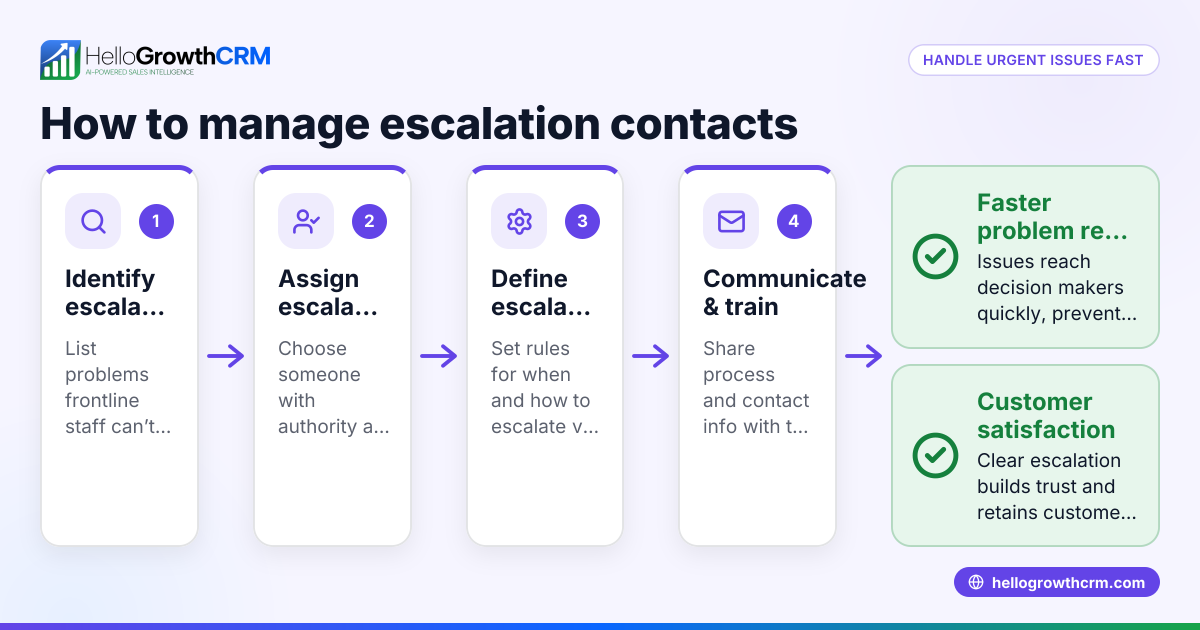
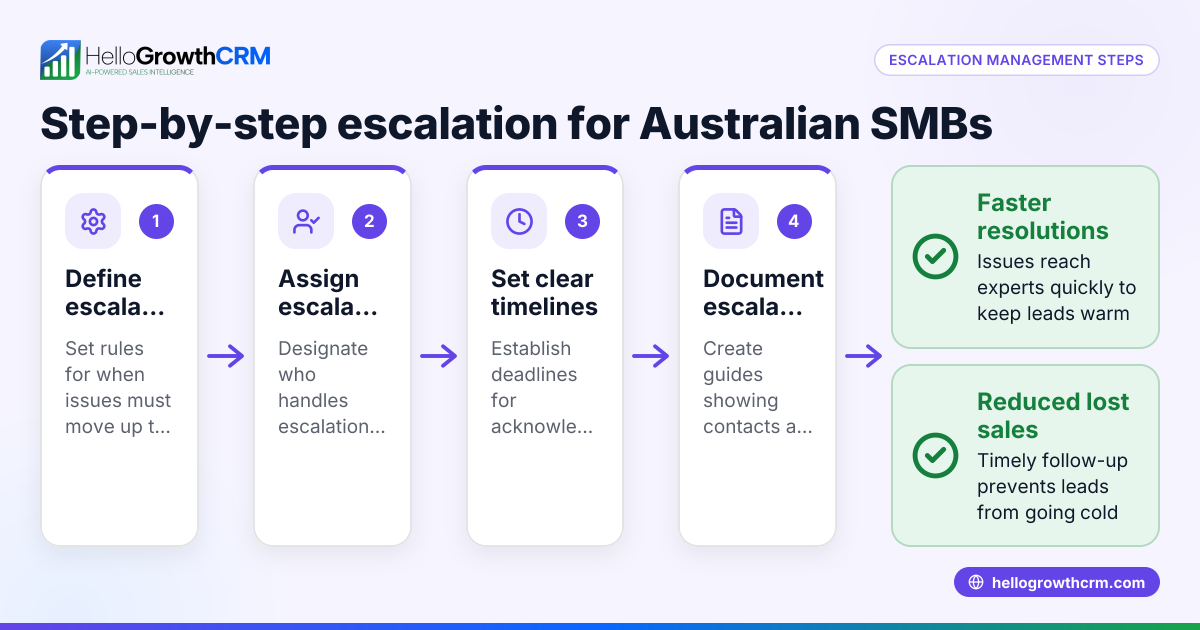
Managing customer service escalations is essential for UAE small businesses to maintain customer satisfaction and protect their reputation. An escalation happens when a customer issue is not resolved at the first point of contact and requires higher-level attention. This article explains why escalations occur, gives detailed step-by-step instructions to manage them, provides a worked example with clear arithmetic, highlights common mistakes to avoid, and shows how HelloGrowthCRM can help streamline the process.
Why this comes up / what goes wrong
Many UAE small business owners use WhatsApp, phone calls, and spreadsheets to manage customer service. These tools often lack structure and tracking, causing delays and lost information. Frontline staff may not have enough authority or information to resolve complex problems immediately, leading customers to escalate their complaints. Without a clear process or system, escalations pile up, increasing resolution time and risking customer dissatisfaction.
Step-by-step
- Acknowledge the Escalation Immediately
- Respond within a few hours to confirm you received the customer's concern.
- Show empathy and assure the customer their issue is being taken seriously.
- Gather Complete Information
- Collect all relevant details from previous interactions, including dates, communication records, product or service details, and any documents.
- Verify the customer's account and purchase history to understand the context.
- Prioritise the Case
- Assess the urgency and impact based on financial loss, service disruption, or compliance risks.
- Use a simple priority scale such as High, Medium, or Low.
- Assign to the Right Team Member
- Escalate the case to a staff member or manager with the authority and expertise to resolve the issue.
- Ensure the assignee receives all gathered information to avoid delays.
- Communicate Regularly with the Customer
- Provide clear updates on progress within agreed timeframes.
- Use WhatsApp, SMS, or email sequences to keep communication logged and transparent.
- Track Resolution Progress
- Use a ticketing system or CRM to monitor the status and deadlines.
- Set reminders for follow-ups to prevent cases from being forgotten.
- Confirm Resolution and Close the Case
- Verify with the customer that the issue has been resolved satisfactorily.
- Document the outcome and any customer feedback.
- Review and Learn
- Analyse escalation cases monthly to identify common causes and training needs.
- Update your procedures and knowledge base to reduce future escalations.
Example (fictional figures)
A business setup consultancy in Business Bay, Dubai, received an escalation on 15/05/2024. A client complained about delayed visa processing which caused them a financial loss.
- The client estimated lost business opportunities worth AED 15,000.
- The company offered compensation of AED 5,000.
Step 1: Acknowledge the escalation on 15/05/2024.
Step 2: Gather all communication records and contract details.
Step 3: Prioritise as High due to financial loss of AED 15,000.
Step 4: Assign to the visa specialist manager.
Step 5: Update the client via WhatsApp every 2 days.
Step 6: Track progress using CRM tickets.
Step 7: Confirm resolution on 30/05/2024 with compensation paid.
Step 8: Review escalations monthly to prevent recurrence.
Calculation:
Lost opportunities = AED 15,000 Compensation offered = AED 5,000 Net loss to client = AED 15,000 - AED 5,000 = AED 10,000
This clear tracking of losses and compensation helps prioritise and resolve escalations fairly.
Common mistakes
- Delaying initial response: Always acknowledge quickly to reassure the customer and reduce frustration.
- Incomplete information gathering: Collect all relevant data before escalating to avoid repeated contacts and delays.
- Wrong assignment: Assign cases to the person with the right authority and knowledge to resolve the issue promptly.
- Poor communication: Keep the customer informed regularly using logged channels like WhatsApp or SMS sequences to maintain transparency.
- No tracking system: Avoid using only spreadsheets or informal notes. Use a CRM or ticketing system to track escalation status and deadlines. HelloGrowthCRM offers ticket and knowledge base tools to help manage this.
- Ignoring feedback: Use escalation insights to improve training, update procedures, and reduce future escalations.
Doing this in HelloGrowthCRM
HelloGrowthCRM helps manage customer service escalations by keeping all service requests on the same customer record as the original deal. Its branded self-service customer portal allows clients to raise tickets directly. Your team can track referrals, tickets, and use the knowledge base to resolve issues faster. This keeps all communication and history in one place, reducing errors and response times. Learn more about the customer health score and the WhatsApp and SMS CRM features that improve customer service in UAE businesses.
Frequently asked questions
How quickly should I respond to an escalation? Respond within a few hours to acknowledge the issue. Prompt acknowledgement reassures customers that their concern is taken seriously and reduces frustration.
What if the frontline team cannot resolve the issue? Escalate the case to a manager or specialist who has the authority and full information needed to resolve it. Proper assignment prevents delays and repeated customer contacts.
How can I keep track of multiple escalations? Use a CRM or ticketing system to log, prioritise, and monitor all cases. This prevents lost or forgotten escalations and helps manage workload efficiently.
Can I use WhatsApp for escalation communication? Yes, WhatsApp sequences in HelloGrowthCRM allow timely, logged communication with customers, improving transparency and customer satisfaction.
How do I prevent escalations from recurring? Review escalation cases regularly to identify patterns and update your knowledge base and staff training accordingly. This continuous improvement reduces repeat issues.
What is the benefit of a customer portal in escalation management? A self-service customer portal lets clients raise tickets directly, speeding up issue reporting and keeping all communication in one place for easier tracking and resolution.
Key takeaways
- Acknowledge escalations quickly to reassure and retain customers.
- Gather complete information before escalating to avoid delays.
- Assign escalations to the right person with authority and knowledge.
- Communicate regularly using logged channels like WhatsApp or SMS sequences.
- Use a CRM or ticketing system to track escalation progress and deadlines.
- Review escalation cases regularly to improve service and reduce future issues.
Managing customer service escalations effectively protects your business reputation and customer loyalty. Follow these clear steps and use the right tools to handle escalations efficiently today.
Start on the Free Forever plan (200 leads, no credit card) at HelloGrowthCRM.
Ready to put this into practice?
Set up your pipeline, WhatsApp follow-ups, and AI lead scoring in minutes — free, no credit card.
Try HelloGrowthCRM freeGet CRM tips in your inbox
Join thousands of sales professionals who get weekly insights on CRM strategy, AI automation, and pipeline optimization.

The HelloGrowthCRM team publishes guides on CRM strategy, AI sales tools, and revenue operations for small business sales teams.