HelloGrowthCRM software
Built for real small-business sales teams
HelloGrowthCRM helps reps qualify faster, follow up on time, and close more deals—with practical automation in one place.
- AI lead scoring and pipeline visibility
- Built-in dialer, WhatsApp, and email automation
- Sales forecasting and RevOps-ready reporting
Managing distributor sales orders efficiently is crucial for wholesale businesses in New Zealand. This guide explains each step you need to follow to process sales orders smoothly, ensuring accuracy and timely delivery. It also highlights common pitfalls and how to avoid them, plus a practical example with realistic figures.
Why this comes up / what goes wrong
Distributor business owners or accountants often face challenges managing sales orders because orders come in various formats—email, phone, text messages—and stock levels change rapidly. Without a clear system, orders can be lost, delayed, or invoiced incorrectly, leading to unhappy customers and cash flow issues. In New Zealand’s wholesale sector, distributors must handle multiple sales channels, coordinate with field reps, and maintain accurate records to meet customer expectations and compliance requirements.
Step-by-step
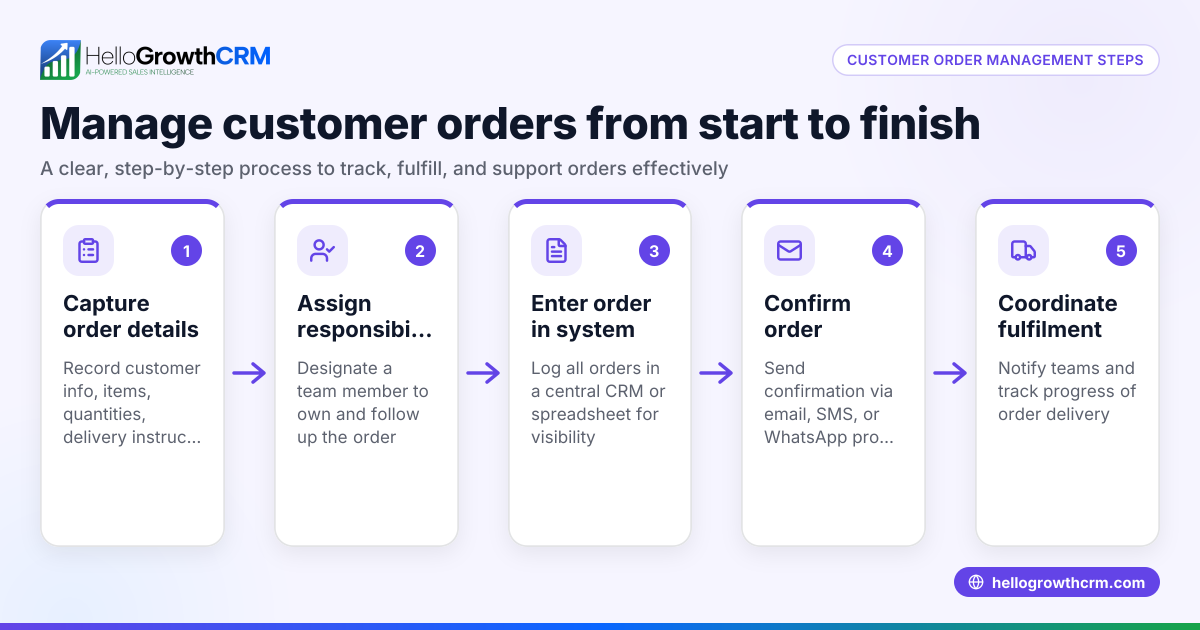
- Receive the Sales Order
- Collect the order details from the customer, whether by email, phone, or WhatsApp.
- Confirm the customer’s identity and delivery address.
- Check that the order includes product codes, quantities, and requested delivery dates.
- Verify Stock Availability
- Check your inventory records to confirm the ordered items are in stock.
- If stock is insufficient, communicate promptly with the customer to adjust the order or delivery date.
- Prepare the Order for Dispatch
- Pick the items from the warehouse or storage.
- Pack the goods securely and prepare shipping labels.
- Schedule the delivery or arrange for courier pickup.
- Generate and Send the Invoice
- Create an invoice with the order details, prices, GST, and payment terms.
- Send the invoice to the customer promptly, ideally within 24 hours of dispatch.
- Update Sales Records and Follow-up
- Record the order and invoice in your sales system or spreadsheet.
- Track payment status and send reminders if needed.
- Follow up with the customer to confirm delivery satisfaction.
- Review and Analyse Sales Data Regularly
- Monitor order patterns and stock turnover.
- Identify top-selling products and slow movers.
- Adjust inventory and sales strategies accordingly.
For wholesalers and distributors, using a CRM system can help streamline this process. See Wholesalers and distributors for more about industry needs.
Example (fictional figures)
Auckland distributor "NorthStar Supplies" receives a sales order on 15/05/2024 from a retail customer for 50 units of Product A and 30 units of Product B.
- Product A unit price: NZ$120
- Product B unit price: NZ$80
- GST assumed at 15% (illustrative)
Step 1: Verify stock
- Product A stock: 100 units available
- Product B stock: 40 units available
Step 2: Calculate order value
- Product A total = 50 × NZ$120 = NZ$6,000
- Product B total = 30 × NZ$80 = NZ$2,400
- Subtotal = NZ$6,000 + NZ$2,400 = NZ$8,400
- GST = NZ$8,400 × 15% = NZ$1,260
- Total invoice amount = NZ$8,400 + NZ$1,260 = NZ$9,660
Step 3: Prepare and dispatch goods
- Pick and pack 50 units of Product A and 30 units of Product B
- Arrange courier for delivery on 16/05/2024
Step 4: Invoice and record
- Send invoice dated 15/05/2024 for NZ$9,660
- Record the sale in sales ledger
Step 5: Follow-up
- Confirm delivery on 17/05/2024
- Track payment due date and send reminder if unpaid by 30/05/2024
This example shows clear calculations and steps to avoid errors.
Common mistakes
- Not confirming order details with the customer: Always double-check product codes, quantities, and delivery addresses to prevent dispatch errors.
- Ignoring stock levels before committing: Check inventory before confirming orders to avoid cancellations or backorders.
- Delaying invoice sending: Send invoices promptly after dispatch to speed up payment.
- Poor record-keeping: Maintain up-to-date sales records to track orders and payments effectively.
- Lack of follow-up on unpaid invoices: Establish a reminder system to manage cash flow.
- No review of sales data: Regularly analyse order trends to optimise stock and sales strategies. Use tools like HelloGrowthCRM for better data management (WhatsApp and SMS CRM).
Doing this in HelloGrowthCRM
HelloGrowthCRM supports distributors with features like Managed RevOps, which provides done-for-you revenue operations support including weekly follow-up execution and pipeline hygiene, helping founders without a sales manager keep on top of orders and leads. The Deals (pipeline) feature tracks quotations as deals in the 'quote sent' stage with follow-up dates, ensuring no sales order is forgotten. For field operations, Territories, field operations and commissions tools allow field reps to log visits from their phones and managers to monitor daily activity, helping coordinate distributor sales teams efficiently. Learn more about HelloGrowthCRM for New Zealand businesses at HelloGrowthCRM for New Zealand.
Frequently asked questions
How do I handle backorders in distributor sales? If stock is unavailable, inform the customer immediately and offer alternatives such as delayed delivery or substitute products. Keep records of backorders separately and update customers regularly.
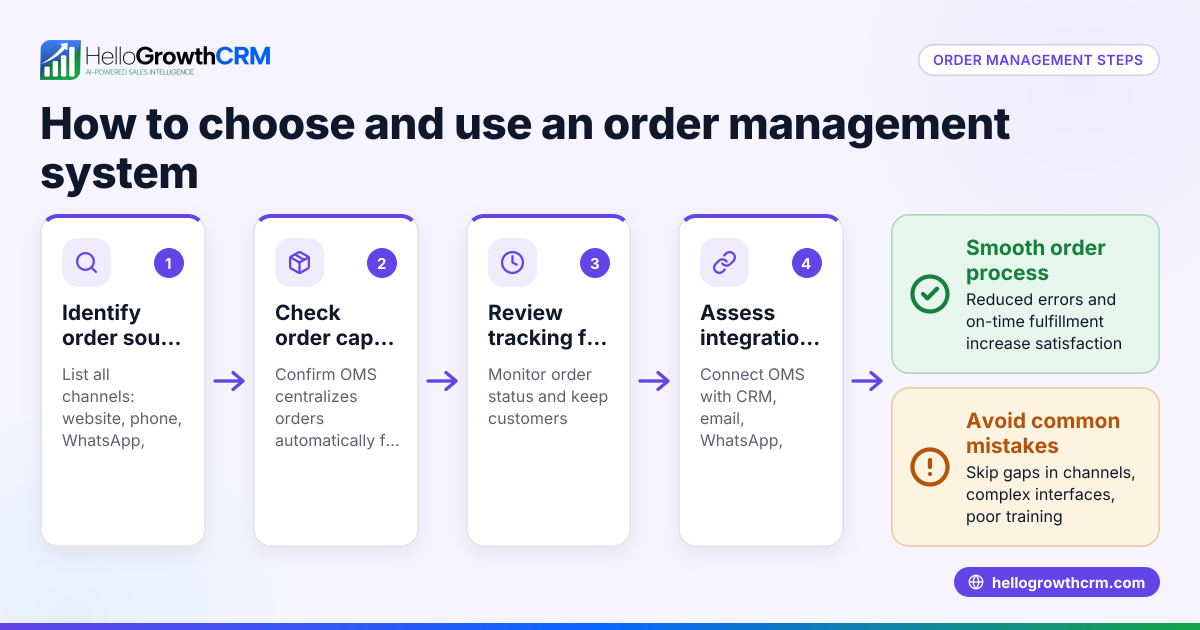
What is the best way to track sales orders across multiple channels? Using a CRM that integrates communications like WhatsApp, email, and SMS helps centralise order tracking and follow-ups, reducing the risk of lost orders.
How can I ensure timely payment from customers? Send invoices promptly, clearly state payment terms, and set reminders for overdue payments. Maintaining good communication helps reduce delays.
What fields should a sales order form include? At minimum: customer name, contact details, delivery address, product codes, quantities, prices, requested delivery date, and special instructions.
How often should I review sales order data? Regularly—ideally weekly or monthly—to spot trends, manage stock levels, and adjust sales strategies. Tools like HelloGrowthCRM can automate reporting.
Key takeaways
- Confirm order details and customer information before processing.
- Always verify stock availability to avoid backorders.
- Send invoices promptly and keep accurate sales records.
- Follow up on deliveries and payments to maintain cash flow.
- Analyse sales data regularly to optimise inventory and sales.
- Use CRM tools designed for distributors to streamline order management.
Managing distributor sales orders well keeps customers happy and your business running smoothly. Start on the Free Forever plan (200 leads, no credit card) today to organise your sales orders and customer follow-up efficiently.
Ready to put this into practice?
Set up your pipeline, WhatsApp follow-ups, and AI lead scoring in minutes — free, no credit card.
Try HelloGrowthCRM freeGet CRM tips in your inbox
Join thousands of sales professionals who get weekly insights on CRM strategy, AI automation, and pipeline optimization.

The HelloGrowthCRM team publishes guides on CRM strategy, AI sales tools, and revenue operations for small business sales teams.