HelloGrowthCRM software
Built for real small-business sales teams
HelloGrowthCRM helps reps qualify faster, follow up on time, and close more deals—with practical automation in one place.
- AI lead scoring and pipeline visibility
- Built-in dialer, WhatsApp, and email automation
- Sales forecasting and RevOps-ready reporting
Repeat customer complaints can damage your business reputation and reduce customer loyalty. For UK small businesses, managing these complaints efficiently means identifying the root causes, responding promptly, and preventing recurrence. You need a clear process to log, track, and resolve complaints while keeping customers informed.
Why this comes up / what goes wrong
Small business owners often face repeat complaints because they lack a structured system to capture and analyse customer feedback. Complaints may come via WhatsApp, email, or phone, making it hard to track the full history. Without clear records, the same issues reoccur, frustrating customers and wasting staff time. Slow follow-up or inconsistent responses can worsen dissatisfaction. This situation arises when sales and service teams use separate tools or spreadsheets, leading to missed or delayed actions.
Step-by-step
- Log every complaint immediately: Record the complaint in one place, noting the customer details, date, issue, and how it was received (WhatsApp, phone, email).
- Link complaints to customer records: Keep all complaints tied to the same customer file to spot repeat issues quickly.
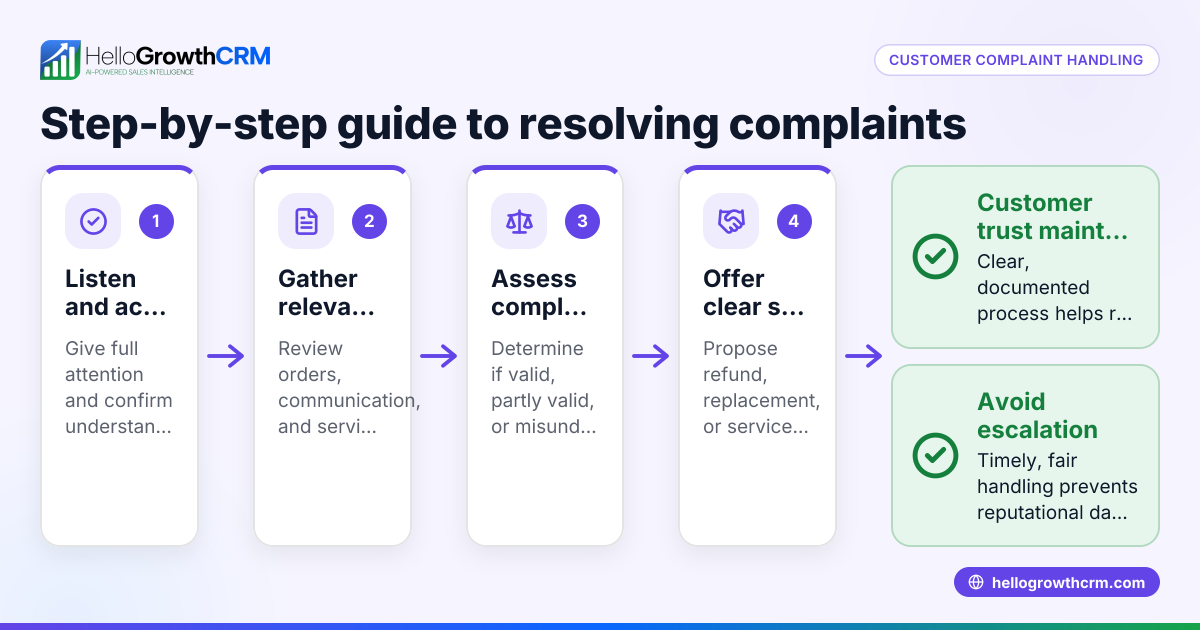
- Categorise and prioritise complaints: Group complaints by type (product fault, delivery delay, service issue) and urgency.
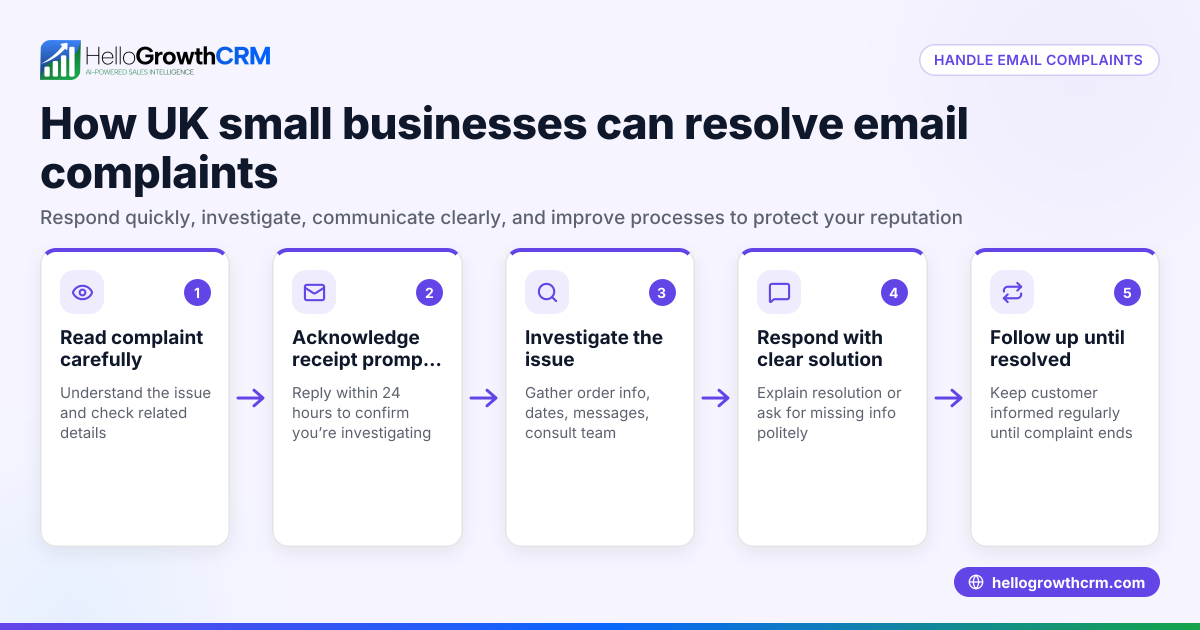
- Acknowledge receipt promptly: Contact the customer within 24 hours to confirm you have received their complaint and are investigating.
- Investigate root causes: Review the complaint details, past interactions, and any related service records.
- Communicate clearly with the customer: Explain what you are doing to resolve the issue and provide realistic timelines.
- Resolve and document the outcome: Fix the problem or offer compensation if appropriate, then update the complaint record with the resolution and date.
- Review complaint patterns regularly: Weekly or monthly, analyse complaint categories and repeat cases to identify systemic problems.
- Implement improvements: Use insights from complaint data to improve products, processes or training.
- Follow up with customers: After resolution, check back to ensure satisfaction and rebuild trust.
- Use a CRM to centralise complaints: A CRM system that manages tickets and keeps service requests on the same customer record helps prevent lost or repeated complaints. See how HelloGrowthCRM supports this below.
Example (fictional figures)
A solar-panel installer in Glasgow receives a repeat complaint from a customer about delayed installation.
- Complaint 1 received on 10/01/2024; delay due to supply chain.
- Complaint 2 received on 25/02/2024; delay due to scheduling error.
Step 1: Log both complaints against the customer record.
Step 2: Categorise as "Installation Delay."
Step 3: Acknowledge complaint 2 within 24 hours.
Step 4: Investigate and find scheduling software was not updated after supply delay.
Step 5: Communicate with customer on 27/02/2024, explaining the cause and offering a new installation date.
Step 6: Reschedule installation for 10/03/2024 and confirm with the customer.
Step 7: After installation, update complaint records as resolved on 11/03/2024.
Step 8: Review complaints monthly and decide to improve scheduling system to prevent future delays.
This example shows how logging and linking complaints help spot repeat issues and fix them.
Common mistakes
- Not recording complaints centrally: Leads to lost information and repeated issues. Use a single system to log all complaints.
- Ignoring or delaying responses: Customers expect quick acknowledgement. Set reminders to reply within 24 hours.
- Failing to link complaints to customer records: Makes it hard to see repeat problems. Always update the same customer file.
- Not analysing complaint trends: Without review, systemic issues persist. Schedule regular analysis sessions.
- Poor communication with customers: Vague or no updates cause frustration. Keep customers informed clearly and honestly.
- No follow-up after resolution: Missed chance to rebuild trust. Contact customers post-resolution to confirm satisfaction.
Doing this in HelloGrowthCRM
HelloGrowthCRM helps manage repeat customer complaints by keeping service requests and support tickets on the same customer record as the deal. Its branded customer portal allows customers to submit complaints directly, while your team tracks and resolves issues using tickets and the knowledge base. This centralised approach prevents lost information and supports faster, consistent responses. Learn more about HelloGrowthCRM's customer portal and ticket features here.
Frequently asked questions
How quickly should I respond to a customer complaint? Respond within 24 hours to acknowledge receipt and set expectations for resolution. Quick replies show customers you value their feedback.
What if a complaint keeps recurring despite fixes? Investigate deeper for root causes, such as supplier issues or training gaps. Use complaint data to spot patterns and consider process changes.
Can I use WhatsApp to manage complaints effectively? Yes, but ensure all WhatsApp messages are logged in your CRM system to maintain a complete record. HelloGrowthCRM supports WhatsApp and SMS CRM to centralise communications see more.
Should I offer compensation for repeat complaints? Compensation depends on the issue and your policy. Sometimes a goodwill gesture helps rebuild trust, but always communicate clearly about what you can offer.
How can I prevent complaints from becoming repeat issues? Use a CRM to track complaints, analyse trends regularly, and update your processes or training accordingly. This proactive approach reduces repeated problems.
What is the benefit of linking complaints to sales deals? Linking complaints to the original deal gives full context to your team, helping resolve issues faster and improving customer satisfaction.
Key takeaways
- Log every complaint centrally and link it to the customer record.
- Respond promptly and communicate clearly with customers.
- Analyse complaint patterns regularly to identify root causes.
- Use a CRM with tickets and customer portal features to streamline complaint management.
- Follow up with customers after resolution to ensure satisfaction.
- Prevent repeat complaints by improving processes based on complaint data.
Managing repeat customer complaints effectively protects your business reputation and builds customer loyalty. Start today by organising your complaint records and responses.
Start managing complaints more efficiently with HelloGrowthCRM. Start on the Free Forever plan (200 leads, no credit card).
Ready to put this into practice?
Set up your pipeline, WhatsApp follow-ups, and AI lead scoring in minutes — free, no credit card.
Try HelloGrowthCRM freeGet CRM tips in your inbox
Join thousands of sales professionals who get weekly insights on CRM strategy, AI automation, and pipeline optimization.

The HelloGrowthCRM team publishes guides on CRM strategy, AI sales tools, and revenue operations for small business sales teams.